
Uttar Pradesh: Yogi Govt Bulldozes Kushinagar Madni Mosque As Court’s Stay Order Expires
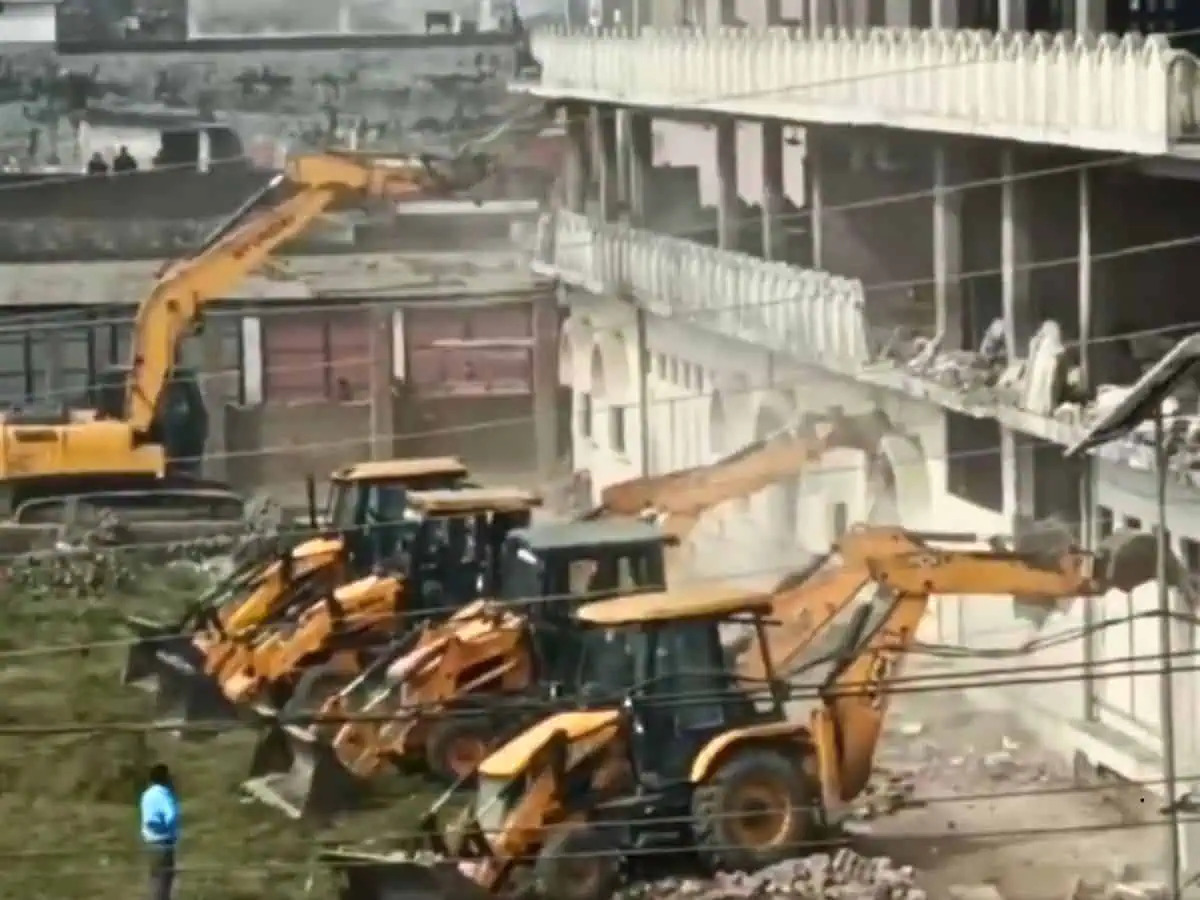
In a move that has sparked widespread controversy and legal debates, the Yogi Adityanath-led government in Uttar Pradesh bulldozed the Madni Mosque in Kushinagar on February 8, 2025, after a court-ordered stay on the demolition expired. The mosque, which has stood as a symbol of religious and community significance for over two decades, was razed to the ground despite protests from local Muslim leaders, residents, and human rights organizations. This incident marks a new chapter in the ongoing tensions surrounding religious places and land disputes in Uttar Pradesh, which has been at the heart of a series of controversial demolitions and urban development projects over the past few years.
The demolition has raised several questions about the balance between law and governance, religious freedoms, and the rights of minority communities. It is also reflective of broader concerns regarding the treatment of religious minorities and the government’s role in managing places of worship. The events in Kushinagar have led to protests, media scrutiny, and legal challenges, making this one of the most talked-about incidents in Uttar Pradesh in recent weeks.
Background of the Madni Mosque in Kushinagar Uttar Pradesh
The Madni Mosque, located in the Kushinagar district of Uttar Pradesh, was established in the late 1990s by the local Muslim community. The mosque, situated in a densely populated residential area, quickly became a central hub for the region’s Muslim population, serving not only as a place of worship but also as a community center for various social and educational activities. For many years, it was a focal point of local religious and cultural life, and its mosque premises were regularly used for Friday prayers, religious festivals, and community gatherings.
However, the mosque’s peaceful existence was interrupted in recent years by a dispute over land ownership and encroachment. The authorities claimed that the mosque was illegally built on land that was designated for public use and argued that the building violated zoning laws and urban development regulations. The mosque’s management denied these claims, asserting that the mosque had been built on private land purchased by the local Muslim community, and that all necessary permissions had been obtained at the time of its construction.
In 2023, the local municipal corporation issued a demolition notice, citing the mosque’s supposed illegal construction on encroached land. The mosque management responded by filing a case in the local court, seeking a stay on the demolition. After several legal proceedings, the court issued a temporary stay order in 2024, preventing the demolition until a final verdict could be reached. This stay order was set to expire on February 7, 2025, leaving the mosque vulnerable to being razed once the court’s ruling had lapsed.
The Demolition: What Happened?
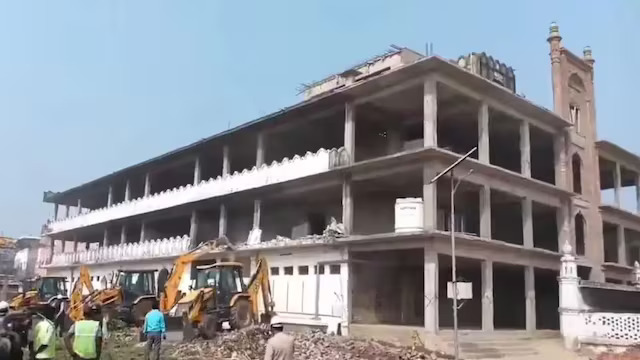
On the morning of February 8, 2025, news broke that the Kushinagar district administration had proceeded with the demolition of the Madni Mosque, despite the fact that the court’s stay order had expired just the day before. The demolition was carried out with bulldozers and heavy machinery, and reports indicated that police and local authorities had cordoned off the area to prevent large-scale protests.
Eyewitnesses at the scene described scenes of chaos as bulldozers flattened the mosque structure, including the prayer hall, minarets, and other facilities. The mosque’s imam, community leaders, and local residents tried to stop the demolition by staging protests, but they were met with a heavy police presence. According to reports, the police used tear gas and force to disperse the crowds.
Several individuals were reportedly injured during the clashes, and multiple arrests were made. Despite efforts from local Muslim leaders to halt the demolition by invoking the court’s stay order, the authorities proceeded with the destruction of the mosque. The demolition operation lasted several hours, with the entire mosque reduced to rubble by the afternoon.
Local residents, particularly members of the Muslim community, expressed outrage over the government’s actions. Many questioned the timing of the demolition, arguing that it had been carried out in a manner that was insensitive and lacked due process. Some Muslim groups alleged that the demolition was part of a larger agenda to marginalize religious minorities in the state and undermine their access to religious spaces.
Legal Implications and Court’s Stay Order
Uttar Pradesh The legal battle surrounding the Madni Mosque’s demolition is not just a matter of urban planning or zoning laws but also involves questions of religious rights and freedoms. When the Uttar Pradesh Municipal Corporation issued the demolition notice, the mosque’s management approached the court, seeking an injunction against the demolition.
Uttar Pradesh The court granted a temporary stay order in 2024, allowing the mosque to remain standing until a final decision was made. The stay order, however, had a clearly defined expiration date: February 7, 2025. After that date, the court’s decision could either be extended, or the demolition could proceed if no further legal intervention occurred.
Uttar Pradesh The expiry of the stay order led to the demolition, and while the authorities argued that they were simply enforcing the law, several legal experts pointed out that the demolition was carried out in a controversial manner. Critics argue that there was a lack of consultation with the local community, and the demolition could have been avoided if more legal measures had been taken, such as an extension of the court’s stay order or the exploration of alternative solutions.
A significant issue in the case is the allegation that the mosque was built on land that was not owned by the mosque management. However, the community disputes this claim, stating that the land had been bought legally and the building was erected with proper permissions at the time. The matter of land ownership and zoning is a complicated one, but the broader issue of religious freedom and minority rights has taken center stage in the aftermath of the demolition.
In the coming weeks, legal challenges are expected to emerge. Several human rights organizations have already indicated their intention to appeal the demolition decision, and Muslim leaders have filed petitions seeking a review of the case in higher courts. Additionally, there are calls for an independent investigation into the conduct of the authorities during the demolition.
Political Reactions and Public Outcry Uttar Pradesh
The demolition of the Madni Mosque has drawn strong reactions from various political and religious leaders. Opposition parties have been quick to condemn the action, accusing the Uttar Pradesh government of targeting minority communities and disregarding the rule of law. Samajwadi Party leader Akhilesh Yadav and Bahujan Samaj Party chief Mayawati both expressed their concern over the demolition, calling it an attack on religious harmony and an attempt to silence minority voices in the state.
Uttar Pradesh The ruling Bharatiya Janata Party (BJP), led by Chief Minister Yogi Adityanath, has defended the demolition, stating that the action was in accordance with legal procedures and necessary to maintain urban planning regulations. The BJP also argued that the government was simply fulfilling its duty to ensure that no illegal structures were allowed to thrive, regardless of their religious affiliation.
On social media, the demolition quickly became a flashpoint for debates about religious freedom, minority rights, and the role of the state in regulating places of worship. Proponents of the government’s actions have argued that the mosque was built illegally and that it was right for the state to intervene. However, critics have pointed out that the demolition could have been avoided if the authorities had worked with the community to find a solution that respected both religious freedoms and urban planning laws.
The Role of Media and Public Perception Uttar Pradesh
The media has played a pivotal role in shaping public perception of the events in Kushinagar. The demolition was widely covered across national and international news outlets, with coverage focusing on the aftermath of the destruction and the legal and political implications. Both local and national news channels ran extensive coverage of the demolition, with some outlets focusing on the human rights violations that took place during the clashes, while others highlighted the legal justifications for the government’s actions.
Public opinion has been divided. While some individuals support the government’s stance on enforcing zoning laws and removing illegal constructions, many others, especially from the Muslim community, view the demolition as part of a broader pattern of discrimination against religious minorities in the state. Social media platforms have been filled with commentary, with many people expressing their dismay at the government’s actions and calling for greater protection of minority rights.
Conclusion: What Lies Ahead?
The demolition of the Madni Mosque in Kushinagar has created a firestorm of controversy, and its consequences will likely continue to reverberate across Uttar Pradesh for weeks to come. The incident raises important questions about the role of the state in managing places of worship, the rights of religious minorities, and the balance between urban planning and religious freedoms.
While the legal battle over the mosque’s fate may continue, the political ramifications of this event are already being felt. For many, the bulldozing of the mosque symbolizes the increasing marginalization of religious minorities in Uttar Pradesh under the current BJP government. Whether or not the authorities can restore public trust and address the concerns of the affected community remains to be seen. What is clear, however, is that the demolition of the Madni Mosque in Kushinagar is a significant moment in the ongoing conversation about religious freedom, governance, and the rights of minority communities in India.
read more latest News

