

Big Relief to India from Donald Trump: Exemption from U.S. Sanctions on Chabahar Port
In a significant diplomatic achievement, India has received a major relief from the United States as the Trump administration granted a six-month exemption from U.S. sanctions on the Chabahar Port in Iran. This move not only safeguards India’s critical infrastructure and investment in Iran but also strengthens its strategic position in the region. The exemption allows India to continue developing and operating the port, which is a key part of New Delhi’s plan to access Afghanistan and Central Asia while bypassing Pakistan.
This development marks a crucial moment in India’s foreign policy — a balance between maintaining ties with Washington and sustaining its strategic partnership with Tehran. Let’s delve into the background, significance, and implications of this relief.
1. Background – The Importance of Chabahar Port
Chabahar Port, located on Iran’s southeastern coast along the Gulf of Oman, is strategically important for India. It serves as India’s gateway to Afghanistan and Central Asia, allowing connectivity and trade without depending on Pakistan’s territory. For years, India has faced logistical challenges in reaching Afghanistan due to Pakistan’s refusal to allow land transit.
India’s investment in Chabahar Port aims to create an alternative route, enhancing its trade and strategic reach. The port also plays a critical role in the International North-South Transport Corridor (INSTC), linking India to Europe via Iran, the Caspian Sea, and Russia.
In May 2024, India signed a 10-year agreement with Iran to operate part of the Shahid Beheshti terminal of Chabahar Port through India Ports Global Limited (IPGL). The goal was to expand India’s trade network and support reconstruction efforts in Afghanistan.
2. The Challenge of U.S. Sanctions
The biggest hurdle to India’s project came from U.S. sanctions on Iran. Since Washington withdrew from the 2015 nuclear deal, it has imposed sweeping sanctions aimed at isolating Tehran economically. These sanctions affect companies and countries dealing with Iran, including those involved in port and energy projects.
Although the U.S. initially granted waivers to Chabahar port in recognition of its importance to Afghanistan’s development, those waivers have been subject to periodic review. With growing tensions between Washington and Tehran, India faced the risk of losing its sanction protection, which could have jeopardized its operations and investments at the port.

3. The Six-Month Exemption – What It Means
In late October 2025, after several rounds of diplomatic discussions, the U.S. officially granted India a six-month exemption from sanctions related to its operations at Chabahar port. This means India can continue port development, trade, and connectivity projects without facing punitive measures.
According to the Ministry of External Affairs, the exemption confirms that the U.S. understands the unique nature of India’s role in Chabahar port — not as a geopolitical provocation, but as a development initiative aimed at improving regional connectivity and stability.
This exemption, valid till April 2026, gives India breathing space to further consolidate its position and strengthen cooperation with Iran. It also reflects the U.S.’s acknowledgment of India’s strategic importance in maintaining stability in South Asia and the Middle East.
4. Why This Is a Big Relief for India
a) Safeguarding Strategic Connectivity
Chabahar Port is India’s lifeline for trade with Afghanistan and Central Asia. The exemption ensures uninterrupted progress in building this connectivity. Without it, India would have risked losing years of investment and influence in the region.
b) Bypassing Pakistan
The port gives India direct access to Afghanistan’s markets, bypassing Pakistan’s territory. This is a massive strategic gain, as Pakistan’s denial of land access has long hampered India’s regional ambitions.
c) Boost to Trade and Humanitarian Aid
Through Chabahar port, India can continue sending humanitarian aid to Afghanistan, particularly essential goods and medicines. The exemption allows these operations to continue smoothly, supporting India’s reputation as a responsible regional partner.
d) Diplomatic Recognition
The U.S. decision also signals its appreciation of India’s balancing role. While Washington maintains pressure on Iran, it acknowledges that India’s engagement in Chabahar port contributes to regional stability, not conflict.
e) Economic Security
For Indian firms operating in Chabahar port, the exemption removes immediate risks of sanctions such as financial restrictions, asset freezes, or penalties. This encourages further investment in logistics, shipping, and infrastructure.
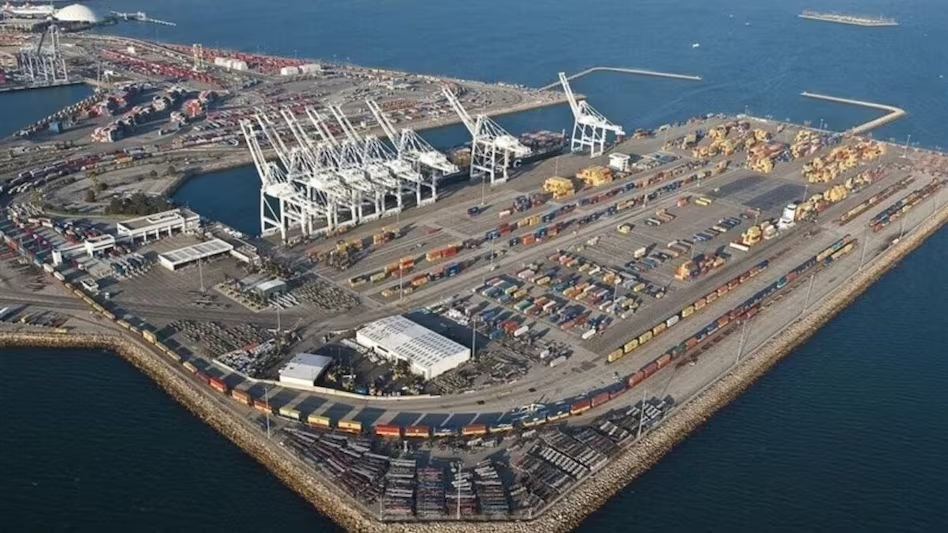
5. Strategic Context – Chabahar port Wider Importance
a) Counter to China-Pakistan Axis
Chabahar is located just 170 kilometers from Pakistan’s Gwadar Port, which is being developed by China under the China-Pakistan Economic Corridor (CPEC). Together, these two ports symbolize a strategic rivalry in the region.
While Gwadar strengthens China’s foothold in the Arabian Sea, Chabahar port enhances India’s access to Central Asia, thereby balancing China’s influence.
b) Central Asia and Beyond
From Chabahar port, India can transport goods to Afghanistan’s Zaranj-Delaram Highway and further into Uzbekistan, Kazakhstan, and Turkmenistan. These land routes open vast opportunities for trade and investment.
c) International North-South Transport Corridor
Chabahar port also integrates into the INSTC, which connects India to Europe via Iran, the Caspian Sea, and Russia. The corridor could reduce shipping time and cost by nearly 40%, making it a vital component of India’s global trade strategy.
6. Diplomatic Balancing Act
India’s diplomacy over Chabahar port is a masterclass in balancing competing interests. On one hand, India values its growing partnership with the U.S. in defense, technology, and trade. On the other hand, it cannot afford to lose Iran as a strategic partner.
By granting the exemption, the Trump administration has effectively recognized this balance. For Washington, it is also a way to strengthen India’s hand in Afghanistan and Central Asia, indirectly serving U.S. interests in limiting Chinese and Pakistani influence.
This diplomatic success underlines India’s growing weight in global decision-making. It shows that New Delhi can pursue its independent strategic interests while maintaining partnerships with major powers.
7. Risks and Limitations
While the exemption is a major win, it’s important to note that it’s temporary — valid for six months. There’s no guarantee it will be extended indefinitely.
The situation also remains volatile due to several factors:
- The unpredictable nature of U.S.-Iran relations
- Political changes in Washington or Tehran
- Security challenges in Iran’s Sistan-Baluchestan province
- Logistical and financing hurdles in port development
If U.S.-Iran tensions escalate, Washington could reimpose restrictions, affecting India’s operations again. Thus, New Delhi must use this window wisely to fast-track development and demonstrate the port’s economic and humanitarian value.
8. Economic and Regional Benefits for India
a) Trade Expansion
The port enables India to export goods to Afghanistan and Central Asia efficiently. Indian industries, especially those in steel, pharmaceuticals, and agriculture, can gain access to new markets.
b) Job Creation and Domestic Industry Boost
The Chabahar project involves Indian companies, creating employment in construction, shipping, and logistics. It also strengthens India’s expertise in international port management.
c) Boost to Energy Security
Chabahar could become a hub for energy imports, helping India diversify its energy routes and reduce dependence on traditional suppliers.
d) Strengthening Regional Presence
Chabahar establishes India as a serious player in the Indian Ocean and Persian Gulf region, enhancing its influence over maritime trade routes.
9. India’s Next Moves – Turning Relief into Opportunity
With the exemption in place, India must act decisively to make the most of this period.
- Accelerate Infrastructure Work
India should push for faster completion of the port’s second phase and enhance cargo handling capacity. - Strengthen Connectivity
Link Chabahar with the INSTC and other regional networks through rail and road development. - Engage Central Asian Partners
India should deepen cooperation with countries like Uzbekistan, Kazakhstan, and Turkmenistan to channel more trade through Chabahar. - Ensure Legal Compliance
All operations must strictly follow U.S. sanctions guidelines to avoid potential risks. - Enhance Security
Given the region’s instability, India should work with Iran to secure trade routes and protect Indian personnel. - Expand Trade Volume
The government should incentivize Indian exporters to use Chabahar more frequently to demonstrate its commercial viability.
10. Broader Geopolitical Impact
The U.S. exemption not only benefits India but also reshapes regional dynamics:
- For Afghanistan, it means continued access to global trade routes despite its landlocked geography.
- For Iran, it brings much-needed revenue and political engagement despite sanctions.
- For Central Asia, it provides an alternative to Chinese and Russian-dominated trade routes.
- For the U.S., it aligns with its goal of supporting India as a strategic counterbalance to China.
This triangular win — for India, Iran, and the U.S. — illustrates how pragmatic diplomacy can overcome rigid geopolitics.
11. Domestic Political and Economic Significance
At home, this exemption strengthens the government’s narrative of successful diplomacy. It highlights how India’s independent foreign policy can yield tangible results. Economically, the project enhances India’s long-term trade infrastructure and global integration.
The exemption also boosts investor confidence in India’s foreign infrastructure projects. It sets a precedent that even under complex sanctions regimes, India can negotiate favorable terms through diplomacy and strategic clarity.
12. The Road Ahead
India’s priority should be to:
- Operationalize Chabahar at full capacity.
- Link it with the INSTC and other global trade networks.
- Secure long-term U.S. waiver or special status for the port.
- Diversify investment to make it self-sustaining.
In the next six months, every day counts. India must demonstrate that Chabahar is not just a political project but a commercially viable and geopolitically stabilizing venture.
13. Conclusion
The U.S. exemption for Chabahar Port marks a major diplomatic victory and a strategic relief for India. It underscores the success of India’s balanced foreign policy — maintaining deep ties with Washington while safeguarding its independent interests in Tehran and Central Asia.
For India, Chabahar is not merely a port; it’s a gateway to strategic autonomy. It offers access to new markets, reinforces regional influence, and represents a vision of connectivity and cooperation beyond borders.
However, this is only the beginning. The next six months will determine whether India can transform this diplomatic relief into a sustainable, long-term success story. With decisive action, strategic investment, and continued diplomacy, Chabahar could truly become India’s bridge to the West and Central Asia.
Read More latest News

