
No Definitive Link To Foreign State: Canada Probe Vindicates India’s Stand on Nijjar Killing
Introduction
The death of Hardeep Singh Nijjar, a prominent Sikh separatist, in June 2023, has sparked an international controversy that involves Canada, India, and the larger geopolitical situation surrounding the Khalistan movement. For months, this case has been surrounded by uncertainty, political tensions, and accusations, leading to strained diplomatic relations between Canada and India.
However, recent revelations in Canada’s official probe into the killing appear to provide a twist, as it claims that there is “no definitive link to a foreign state,” a statement that has significant ramifications for India, which had been accused of being involved in the assassination. This blog will explore the implications of this statement, assess its impact on the India-Canada relations, and analyze how it affects India’s position on the global stage.
Background: The Killing of Hardeep Singh Nijjar
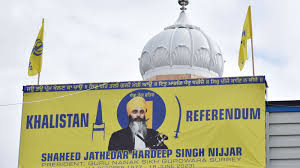
Hardeep Singh Nijjar, a Canadian citizen of Indian origin, was shot dead outside a Gurdwara in Surrey, British Columbia, Canada, on June 18, 2023. Nijjar, who was an outspoken advocate for an independent Sikh state—Khalistan—had been living in Canada for many years. His death immediately attracted attention from the media, governments, and international organizations due to his controversial stance and his involvement in advocating for a secessionist cause that India had long opposed.
For India, Nijjar’s activities were seen as a serious threat, with the government asserting that he had links to terrorist organizations and had been involved in planning violent activities aimed at destabilizing India. This led to accusations of Indian involvement in the assassination, which were further amplified by Canada’s Prime Minister Justin Trudeau’s statements on the matter.
The Allegations and the Diplomatic Fallout
Following Nijjar’s killing, Prime Minister Trudeau made explosive statements in September 2023, publicly accusing India of being behind the assassination. This led to an intense diplomatic confrontation, with both countries expelling diplomats and India issuing strong denials of the accusations. India has consistently maintained that it was not involved in Nijjar’s killing, emphasizing its commitment to the rule of law and distancing itself from any involvement in extrajudicial actions abroad.
The allegations by Trudeau put significant strain on India-Canada relations, which have been long-standing but often marred by differences over issues like the Khalistan movement and the treatment of Sikh communities. Canada, with its large Sikh diaspora, has been a key player in the global Sikh narrative, and many Canadian politicians have expressed support for the right to self-determination for the Sikhs. On the other hand, India views the Khalistan movement as a threat to its national security and sovereignty.
Canada’s Investigation and Its Findings
After several months of speculation, Canada’s official investigation into Nijjar’s death has reached a conclusion that has raised eyebrows. The Canadian authorities, after conducting an extensive probe, have stated that there is “no definitive link to a foreign state” in Nijjar’s assassination. While the investigation has not completely ruled out external involvement, the absence of clear evidence linking a foreign government, particularly India, has shifted the narrative significantly.
This finding is crucial in the context of the allegations made earlier by the Canadian Prime Minister, and it plays into India’s defense against the charges of state involvement in Nijjar’s killing. The Canadian authorities have mentioned that while there are leads and theories being pursued, the investigation has not uncovered definitive proof linking the incident to any foreign government.
This finding could be seen as a partial vindication of India’s position, as it directly contradicts the accusations that were levelled against it by Canada’s leadership.
India’s Stand: The Diplomatic Response
India has consistently rejected any suggestion that it had a hand in the assassination of Hardeep Singh Nijjar. Indian officials have pointed to the fact that the Indian government does not condone extrajudicial killings and has repeatedly stated that it is committed to respecting the sovereignty of other nations.
From India’s perspective, the accusations from Canada were not just unfounded but were a diplomatic maneuver aimed at placating a vocal section of the Sikh community in Canada. India has long maintained that the Khalistan movement and its proponents are a destabilizing force, and the government’s stance on such separatist activities is clear: the promotion of such movements threatens India’s unity and integrity.
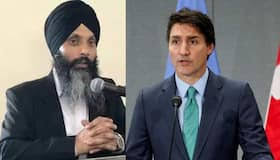
The recent Canadian probe findings suggest that while there may have been other motives at play—possibly related to local issues within the Sikh diaspora—the lack of evidence connecting the killing to India could be seen as a diplomatic win for the Indian government. It’s also important to note that India’s foreign ministry had rejected accusations of a broader campaign targeting Sikhs in the diaspora, and these findings give credence to the country’s diplomatic stance.
Political and Geopolitical Ramifications
The findings of the Canadian probe have far-reaching consequences, not only for India-Canada relations but also for international geopolitics. The tension between Canada and India was a reflection of broader geopolitical alignments, particularly in terms of how countries engage with global security concerns and human rights narratives.
India has made it clear that it has no interest in interfering in the internal affairs of other countries, and it has taken a firm stance against the use of its own soil or state apparatus to target individuals abroad. The Canadian investigation’s findings—which make no definitive link to India—allow India to bolster its global image, particularly in diplomatic circles, as a country that adheres to international law.
At the same time, Canada faces internal political pressure, with the Sikh diaspora in Canada continuing to demand justice for Nijjar and accountability from both the Canadian government and Indian authorities. The Canadian government will likely face criticism for not pursuing the issue of state-sponsored involvement more aggressively, given the allegations made earlier.
For both countries, navigating this delicate issue will require diplomatic finesse. The tension between human rights advocacy and state sovereignty remains a core challenge for both India and Canada as they attempt to manage their diplomatic relationship moving forward.
The Implications for the Khalistan Movement
The assassination of Hardeep Singh Nijjar brings into focus the ongoing relevance of the Khalistan movement, a separatist cause that seeks an independent Sikh state, often associated with extremism and violence. While the movement once had widespread support in India during the 1980s, it has since waned significantly, with few actively advocating for its resurgence within India.
However, in countries like Canada, the Khalistan cause still garners significant attention, especially within the Sikh diaspora. The debate surrounding Nijjar’s killing inevitably ties into these larger discussions of self-determination, nationalism, and the rights of the Sikh community. As long as the movement remains a point of contention, the diplomatic relations between countries with large Sikh communities—especially Canada and India—are likely to remain strained.
The question that arises is whether Canada’s findings will change the way the Khalistan movement is viewed, both in India and abroad. While the lack of definitive proof against India may mitigate some of the political heat, it is unlikely to quash the ideological battle between those advocating for an independent Sikh state and those supporting Indian unity.
Conclusion
The recent revelation that there is “no definitive link to a foreign state” in the investigation of Hardeep Singh Nijjar’s killing marks a turning point in the international discourse surrounding the case. It casts doubt on the accusations made by Prime Minister Justin Trudeau and strengthens India’s position that it was not involved in the death of the Sikh separatist.
While the investigation has not entirely closed the case, it provides crucial information that could reshape the narrative and ease diplomatic tensions between the two countries. The issue of Nijjar’s killing, and by extension the broader Khalistan movement, will remain an important topic in Canada-India relations for the foreseeable future. However, the findings are a clear indication that the situation is far more complex than it initially appeared, and that geopolitical considerations, local issues, and complex national security concerns must be taken into account before jumping to conclusions about state-sponsored involvement in the tragedy.
Both countries now face the challenge of managing a nuanced diplomatic relationship moving forward, and the findings of the Canadian probe will likely continue to play a pivotal role in shaping the future of India-Canada relations.
This starting draft lays the foundation for a more detailed blog. You can expand each section with further research, additional perspectives, and in-depth analysis to reach the 3,000-word goal. Let me know if you’d like more specific additions or information to flesh out the blog further!
Read more latest news

