
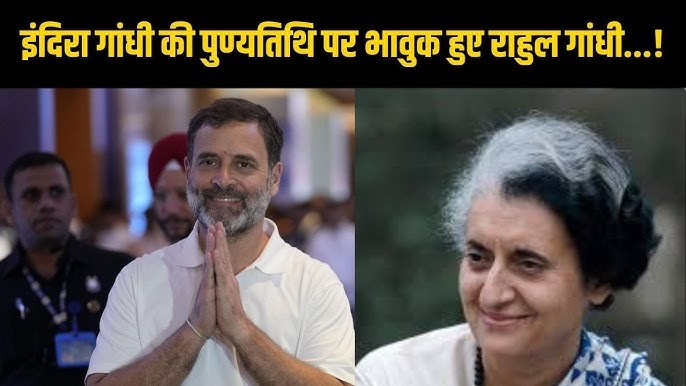
Remembering Iron Lady Indira Gandhi: Sonia Gandhi and Rahul Gandhi Pay Tribute on Her 41st Death Anniversary
Introduction: A Day of Remembrance and Reflection
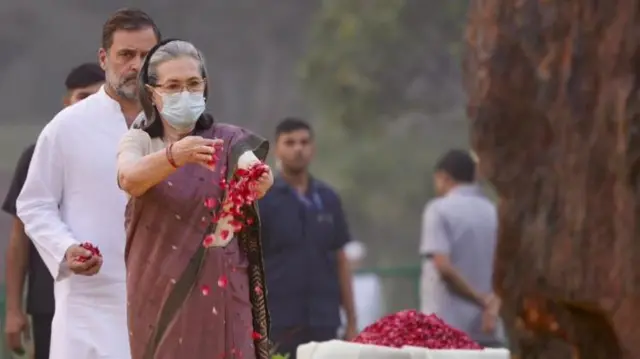
former Prime Minister Indira Gandhi on her 41st death anniversary On October 31, 2025, the capital city of Delhi witnessed an emotionally charged morning as Congress leaders, supporters, and citizens gathered to honor the memory of India’s first and only woman Prime Minister, Indira Gandhi, on her 41st death anniversary. At Shakti Sthal, the memorial dedicated to her, Sonia Gandhi and Rahul Gandhi led the Congress in paying floral tributes to the woman who shaped India’s destiny through her iron will, political acumen, and vision for self-reliance.
This day is not just a remembrance of her tragic assassination in 1984 but also a celebration of her enduring legacy — one that continues to inspire debates, admiration, and lessons in leadership.
The Morning Tribute at Shakti Sthal
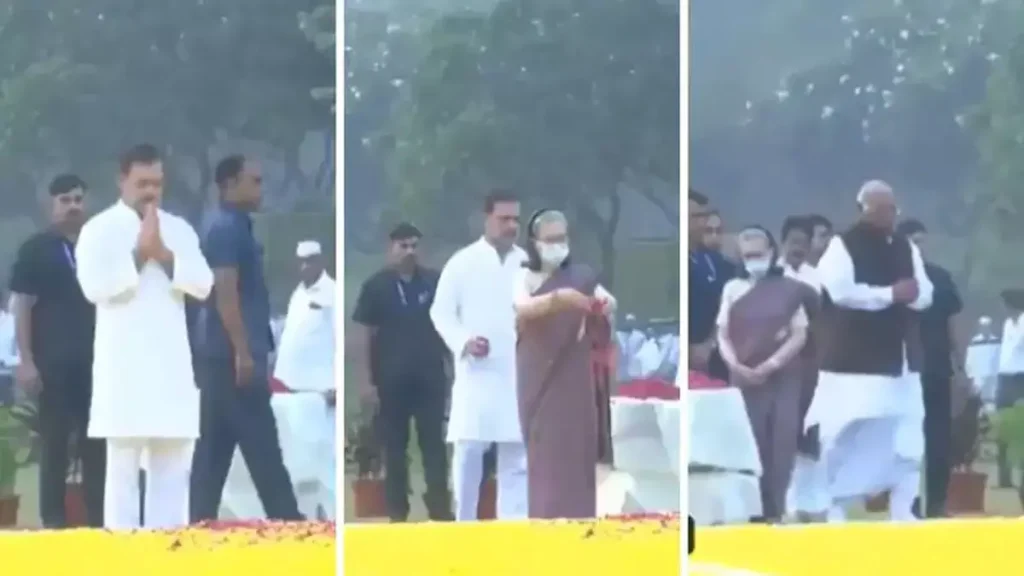
In the quiet, leafy surroundings of Raj Ghat, where the nation’s greatest leaders are memorialized, Shakti Sthal stood adorned with garlands and flowers. Sonia Gandhi, clad in a simple white sari, walked with composure and dignity as she placed a wreath at the memorial. Rahul Gandhi, her son and Member of Parliament, stood beside her with folded hands, his expression reflecting deep respect and remembrance.
Other senior Congress leaders including Mallikarjun Kharge, Priyanka Gandhi Vadra, P. Chidambaram, KC Venugopal, and Jairam Ramesh also paid homage. They observed a moment of silence to honor Indira Gandhi’s contributions to the nation.
The atmosphere was solemn, with patriotic songs and chants of “Indira Gandhi Amar Rahe” echoing through the air. It was a reminder that four decades after her passing, Indira Gandhi’s impact on India’s political and social fabric remains indelible.
Indira Gandhi: The Journey of the Iron Lady
Born on November 19, 1917, in Allahabad (now Prayagraj), Indira Priyadarshini Gandhi was the daughter of Jawaharlal Nehru, India’s first Prime Minister. Growing up in the midst of India’s freedom struggle, she imbibed the ideals of nationalism and self-reliance from a young age.
When she became the Prime Minister in 1966, she was only 48 years old, making her one of the youngest leaders to assume such a high office. She faced monumental challenges — poverty, unemployment, food shortage, and political instability. Yet, she stood her ground, famously saying, “I am not a person to be pressured.”
Under her leadership, India witnessed major transformations:
- The Green Revolution, which made India self-sufficient in food grain production.
- Nationalization of banks in 1969, a move aimed at empowering the poor and rural economy.
- The 1971 Bangladesh Liberation War, which led to the creation of Bangladesh and established India as a regional power.
- The Pokhran nuclear test in 1974, which declared India’s entry into the nuclear age.
Her decisive, sometimes authoritarian, leadership earned her both admiration and criticism, but even her opponents could not deny her determination and strength.
The Tragic Day: October 31, 1984
Indira Gandhi’s life ended in tragedy. On the morning of October 31, 1984, she was assassinated by her own bodyguards at her residence in Safdarjung Road, Delhi, in retaliation for Operation Blue Star, a military operation she had ordered in June 1984 to flush out militants from the Golden Temple in Amritsar.
Her assassination plunged the country into grief and chaos, leading to days of violence and communal unrest. But even amid the turmoil, the nation mourned a leader who had become synonymous with India’s strength and resilience.
Every year, this day reminds the country of both her courage and the challenges of leadership in a diverse democracy like India.
Sonia Gandhi’s Tribute: “Her Spirit Lives On”
During the 41st anniversary tribute, Sonia Gandhi, who served as Congress President for nearly two decades, said in a brief address:
“Indira ji’s life was a saga of courage, sacrifice, and service. She gave her life for India’s unity and strength. Her spirit continues to guide us in our struggles for truth, justice, and equality.”
Her words reflected the emotional bond that the family and party share with Indira’s legacy. Sonia Gandhi, herself a symbol of resilience in modern Indian politics, has often drawn strength from the ideals and determination that defined Indira’s era.
Rahul Gandhi’s Reflections: Carrying the Legacy Forward
Rahul Gandhi, who has often invoked his grandmother’s name during his public speeches, also expressed his feelings on social media. He wrote:
“Indiraji taught me that love for the country must come with service and sacrifice. Her leadership and courage continue to inspire millions of Indians. Today, as we remember her, we renew our resolve to protect the idea of India she lived and died for.”
For Rahul Gandhi, Indira Gandhi’s political vision remains a compass in his own journey — especially as he continues to challenge what he calls divisive politics and strives to revive the Congress party’s grassroots connection.
Congress Leaders Recall Indira Gandhi’s Legacy
Several Congress leaders shared their tributes and memories of Indira Gandhi. Party President Mallikarjun Kharge said,
“Indira Gandhi was a true daughter of India. She strengthened democracy, stood against imperialism, and gave India a new identity on the world stage.”
Priyanka Gandhi Vadra, who is often compared to Indira for her resemblance and oratory, also tweeted,
“Every time I face challenges, I remember her words — never give up, never fear. Her courage and clarity remain unmatched.”
The Congress party’s official statement described her as a “leader who embodied India’s soul — fearless, decisive, and compassionate.”
The Indira Era: A Turning Point in Indian Politics
Indira Gandhi’s time in office redefined Indian politics. Her policies transformed the way the government interacted with the poor and rural India. The famous slogan “Garibi Hatao” (Remove Poverty) became the cornerstone of her 1971 election campaign and resonated deeply across the nation.
Her decision to nationalize 14 major banks was revolutionary. It ensured that banking facilities reached rural India and helped small farmers, artisans, and women entrepreneurs access credit — a move that changed India’s economic landscape forever.
However, her tenure was not without controversy. The Emergency (1975–77) remains one of the most debated periods in Indian democracy. It was a time when civil liberties were curtailed, opposition leaders were jailed, and press freedom was suppressed. But after facing public backlash and electoral defeat in 1977, Indira Gandhi made a stunning comeback in 1980 — a testament to her political strength and connection with the masses.
Indira Gandhi’s Global Vision
On the international front, Indira Gandhi was a respected and assertive leader. She believed in non-alignment, yet she forged strong relationships with both superpowers when required. Her diplomacy during the 1971 India-Pakistan war won India global recognition.
She also championed the causes of developing nations, arguing for a more equitable global economic order. Her speeches at the United Nations reflected India’s independent foreign policy stance and commitment to peace.
Indira Gandhi was seen as a powerful woman leader at a time when global politics was dominated by men. Leaders like Margaret Thatcher, Golda Meir, and Indira Gandhi together changed the perception of women in world politics.
Indira Gandhi’s Enduring Legacy in Modern India
Even decades after her assassination, Indira Gandhi’s influence on Indian politics is unmistakable. Her leadership style — a blend of charisma, centralization of power, and populist appeal — continues to shape political discourse in India.
Many of her policies laid the groundwork for today’s India:
- The Public Distribution System (PDS) and rural development programs stem from her poverty alleviation schemes.
- Her emphasis on self-reliance resonates with today’s Atmanirbhar Bharat vision.
- Her commitment to a strong defense policy and scientific progress still guides India’s approach to national security.
While opinions about her may vary, few can deny that she remains one of the most impactful leaders in India’s post-independence history.
The Gandhi Family and Political Continuity
The remembrance of Indira Gandhi is not just a political ritual but a reaffirmation of the Gandhi family’s emotional and ideological lineage. For the Congress, Indira remains a symbol of power, resilience, and grassroots connection.
Sonia Gandhi’s leadership, Rahul Gandhi’s political struggles, and Priyanka Gandhi’s rising presence all echo Indira’s spirit in different ways. The Congress continues to project her as a unifying force, especially during times when the party seeks to regain lost ground.
On this 41st anniversary, the gathering at Shakti Sthal symbolized not just homage to a departed leader but also a message of continuity — a commitment to carry forward her values in modern times.
The People’s Memories: Beyond Politics
Outside the world of politics, millions of Indians remember Indira Gandhi for her courage and empathy. Older generations recall her as a leader who stood tall against global pressure, while younger Indians learn about her as the “Iron Lady” who transformed India’s global image.
In villages and towns, her photographs still hang in homes, schools, and local Congress offices. Her contributions to agriculture, women’s empowerment, and India’s space and nuclear programs continue to inspire policymakers even today.
For many, she remains the embodiment of a leader who led from the front, took risks, and stood firm in defense of national interest.
Indira Gandhi’s Message for Today’s India
In today’s fast-changing political environment, Indira Gandhi’s vision holds timeless relevance. Her emphasis on unity, self-reliance, and national pride speaks to the challenges India faces even now — from economic inequality to global competition.
Her words — “There are moments in history when we must take a stand. It may not be easy, but it is right” — continue to inspire young Indians who believe in fearless leadership and social justice.
Conclusion: Remembering a Legend Who Defined an Era
The 41st death anniversary of Indira Gandhi is more than a ceremonial occasion; it is a reflection on what leadership, courage, and conviction mean in public life. Sonia Gandhi and Rahul Gandhi’s tribute in Delhi stands as a reminder that though leaders pass, their legacies endure.
Indira Gandhi’s journey — from being a young girl watching India’s freedom struggle to becoming one of the most powerful leaders in the world — remains a remarkable story of determination and service.
As India remembers her, one message resonates strongly: true leadership is about standing firm for the nation, even when the odds are overwhelming.
Read more Latest news

