

Heated Clash in Rajasthan’s Sikar: Minister vs District Magistrate Sparks Bureaucratic Debate
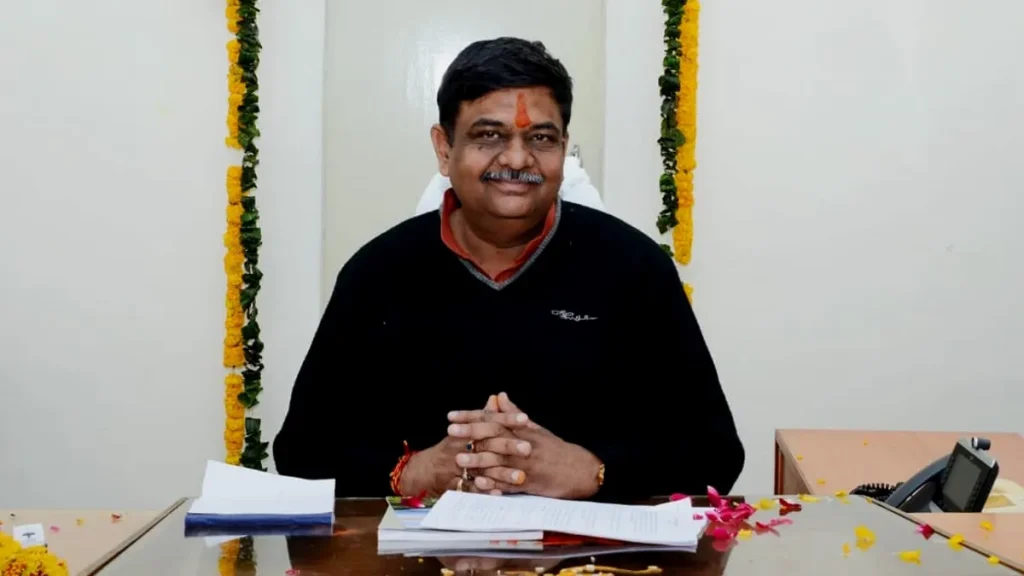
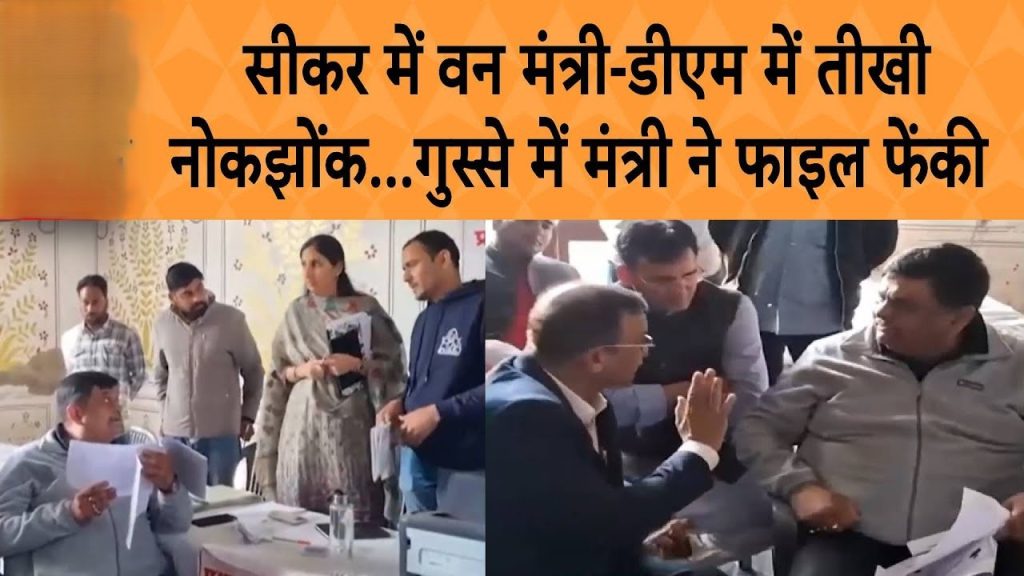
Sanjay Sharma Rajasthan’s political and administrative circles were rocked after a dramatic confrontation unfolded in Sikar district, where a heated argument broke out between a state minister and the District Magistrate. The incident occurred during a sudden inspection visit, when Minister Sanjay Sharma openly reprimanded the DM and questioned the working style of the district administration. What began as an inspection quickly escalated into a public confrontation, raising serious questions about governance, accountability, and the relationship between elected representatives and the bureaucracy.
The incident did not remain confined to official corridors. A video of the heated exchange soon went viral on social media, drawing sharp reactions from political leaders, civil servants, and the general public alike. The confrontation involving Sanjay Sharma has now become a focal point in the broader debate over administrative efficiency and political oversight in Rajasthan.
Sudden Inspection Turns into High Voltage Drama
According to sources, the controversy began when Sanjay Sharma arrived in Sikar for a surprise inspection of government offices and ongoing development works. Surprise visits by ministers are often meant to assess ground realities and ensure that government schemes are being implemented effectively. However, in this case, the visit exposed deep-seated tensions between the political leadership and the district administration.
Eyewitnesses claim that the minister was visibly dissatisfied with the pace of work and the response he received from officials. During a review meeting, sharp exchanges took place, and Sanjay Sharma reportedly questioned the efficiency, transparency, and responsiveness of the district machinery.
Reprimand of the District Magistrate
The situation intensified when the minister directly addressed the District Magistrate, expressing displeasure over administrative functioning. In the presence of other officials, Sanjay Sharma allegedly scolded the DM, asking tough questions about delays, public complaints, and the implementation of government directives.
Such public reprimands are rare and often controversial, as they blur the line between political supervision and bureaucratic autonomy. The manner in which Sanjay Sharma confronted the DM has now become a central issue in the unfolding controversy.

Video Goes Viral, Public Reaction Explodes
The turning point came when a video of the confrontation surfaced online. The footage, which quickly went viral, shows a tense exchange between the minister and the senior officer. Social media platforms were flooded with clips, comments, and reactions within hours.
While some users praised Sanjay Sharma for taking a tough stand against what they see as bureaucratic inertia, others criticized the incident as an example of political overreach and humiliation of a senior civil servant.
Questions Raised on Bureaucracy
After the argument, the focus shifted to the larger issue of bureaucratic accountability. Supporters of the minister argue that Sanjay Sharma merely voiced public frustration and demanded efficiency from officers entrusted with governance.
Critics, however, believe that such confrontations undermine the morale of civil servants and disrupt administrative decorum. The incident has reignited a long-standing debate: should ministers publicly reprimand officers, or should such matters be handled behind closed doors?
Political Reactions Across Parties
Political reactions poured in from across the spectrum. Leaders from the ruling party defended Sanjay Sharma, stating that ministers have every right to question officials if public welfare is being compromised. They emphasized that accountability is essential for effective governance.
Opposition parties, however, accused the government of intimidating bureaucracy and turning inspections into political spectacles. They argued that the behavior of Sanjay Sharma sets a dangerous precedent for administrative independence.
Administrative Circles Express Concern
Within bureaucratic circles, the incident has sparked concern and introspection. Many serving and retired officers have expressed unease over the public nature of the confrontation. They argue that while accountability is necessary, mutual respect between ministers and civil servants is equally important.
Some senior officials believe that the clash involving Sanjay Sharma reflects deeper systemic issues, including lack of coordination, communication gaps, and pressure to deliver results in politically sensitive environments.
The Balance Between Authority and Accountability
The controversy has highlighted the delicate balance between political authority and bureaucratic responsibility. Ministers like Sanjay Sharma are accountable to the public and expected to ensure effective governance. District Magistrates, on the other hand, are tasked with implementing policies while maintaining administrative neutrality.
When these roles clash publicly, it raises concerns about governance culture and institutional harmony.
Support from the Ground Level
Interestingly, some local residents and grassroots workers have come out in support of Sanjay Sharma, claiming that the minister’s intervention reflects the frustration of common citizens dealing with slow-moving administration. They argue that surprise inspections and tough questioning are sometimes necessary to break complacency.
For these supporters, the confrontation is seen not as a controversy but as a wake-up call for officials.
Media Spotlight and Narrative Battle
The media coverage of the incident has been intense. Television debates, opinion columns, and digital platforms have dissected every aspect of the confrontation. Headlines featuring Sanjay Sharma and the DM dominated news cycles for days.
Different narratives have emerged—some portraying the minister as a proactive leader, others depicting the incident as an erosion of administrative norms.
Government’s Official Response
In response to the growing controversy, government sources attempted to downplay the incident, stating that inspections and discussions are part of routine governance. They emphasized that Sanjay Sharma was only performing his duty by reviewing work and seeking explanations.
No immediate disciplinary action or clarification was issued regarding the DM, further fueling speculation and debate.
Impact on Governance in Sikar
Beyond the political noise, the incident has had a tangible impact on governance in Sikar. Officials reportedly became more cautious, ensuring quicker responses to public grievances and faster execution of pending tasks.
Whether this change is temporary or lasting remains to be seen, but the confrontation involving Sanjay Sharma has undoubtedly altered the administrative atmosphere in the district.
A Reflection of Broader Governance Challenges
The Sikar incident is not an isolated case. Across India, tensions between ministers and bureaucrats occasionally surface, reflecting broader challenges in governance. The clash involving Sanjay Sharma has become a case study in how power dynamics play out at the district level.
It underscores the need for clear protocols, mutual respect, and effective communication between political leaders and civil servants.
Lessons for the Future
Experts suggest that such incidents should prompt introspection rather than polarization. While ministers must demand accountability, methods matter. The episode involving Sanjay Sharma highlights the importance of institutional frameworks that allow grievances to be addressed constructively.
Training programs, coordination meetings, and clear guidelines could help prevent similar confrontations in the future.
Public Trust and Democratic Expectations
At its core, the controversy touches upon public trust. Citizens expect elected representatives like Sanjay Sharma to ensure efficient governance, but they also expect stability and professionalism within the administration.
How the government handles the aftermath of this incident will play a crucial role in shaping public perception.
Conclusion: A Moment That Sparked a Larger Debate
The heated argument in Sikar between a minister and the District Magistrate has evolved into a larger debate on bureaucracy, accountability, and political authority. The viral video involving Sanjay Sharma has ensured that the incident will not fade quickly from public memory.
Whether seen as a justified reprimand or an administrative misstep, the episode has exposed fault lines within the governance system. As Rajasthan moves forward, the challenge will be to transform this controversy into an opportunity for reform, ensuring that accountability and respect go hand in hand in the pursuit of good governance—an outcome that leaders like Sanjay Sharma and the bureaucracy alike must strive to achieve.
Read More latest news

