Foreign Minister S. Jaishankar’s Meeting with Russian President Vladimir Putin: Strategic Partnerships, Energy Cooperation, Defence Deals, Global Diplomacy, India’s Balanced Stand on Ukraine, BRICS Leadership Role, on 21 August.
Foreign Minister S. Jaishankar Meets President Vladimir Putin: What It Means for India–Russia Ties Now
India’s External Affairs Minister (EAM) Dr. Subrahmanyam Jaishankar’s call on Russian President Vladimir Putin in Moscow this week was more than a courtesy call. It capped three days of dense diplomacy—co-chairing the inter-governmental commission, sectoral meetings, and a carefully messaged press appearance with Sergey Lavrov—at a moment when India’s Russia equation is under sharper global scrutiny than at any point since 2022. The meeting also comes as New Delhi navigates a noisy tariff standoff with Washington and prepares the ground for a Modi–Putin annual summit in India later this year.
Below is a clear, reader-friendly explainer of what happened, why it matters, and what to watch next.
The headlines—what actually happened
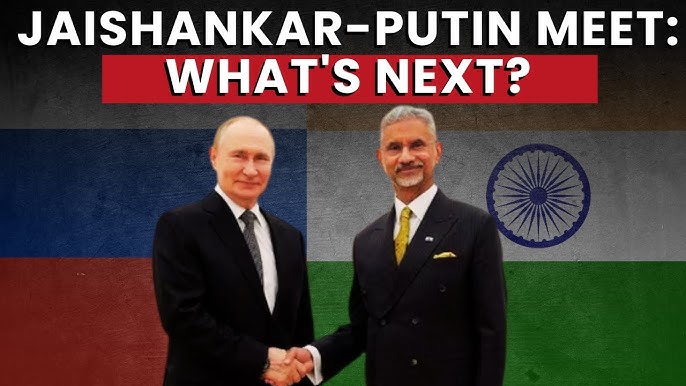
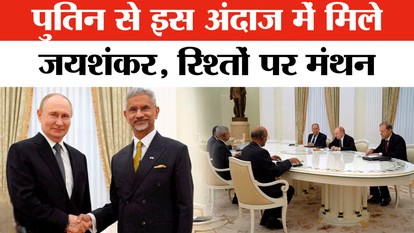
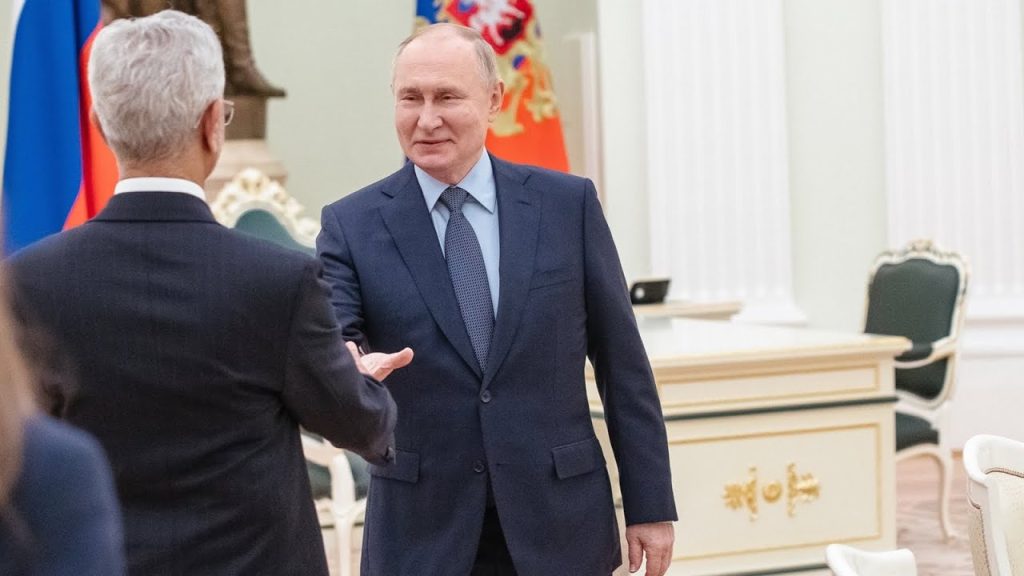
Jaishankar met President Putin at the Kremlin in Moscow on August 21, 2025, with senior Russian officials (including Foreign Minister Lavrov and First Deputy PM Denis Manturov) in attendance. Indian and Russian readouts framed the engagement as part of routine high-level consultations during EAM’s official visit.
The visit (Aug 19–21) included co-chairing the 26th India–Russia Inter-Governmental Commission (IRIGC-TEC) and outreach to the business community to push trade diversification and fix payment/logistics frictions.
Both sides signaled intent to expand trade and energy collaboration despite Western pressure and the U.S. tariff overhang, with emphasis on balancing India’s trade deficit by boosting exports of pharma, agri-products and textiles to Russia.
Jaishankar publicly defended India’s energy ties with Russia, calling U.S. criticism “perplexing” and reiterating that India’s purchases are about energy security and strategic autonomy.
The Putin visit to India later this year is being readied, with Indian officials indicating dates are being fine-tuned. The Jaishankar trip followed NSA Ajit Doval’s Moscow swing—classic “pave the summit runway” diplomacy.
Why this meeting matters right now Vladimir Putin
1) Energy security meets tariff politics
India’s post-2022 energy strategy—diversifying crude suppliers and buying opportunistically—lowered its import bill and cushioned inflation. That strategy, however, now collides with U.S. political optics, as Washington sharpens rhetoric and considers (or imposes) tariff measures framed as “sanctions by another name.” By meeting Putin while doubling down on the right to purchase energy where it suits Indian consumers, New Delhi is asserting policy sovereignty. Expect more workarounds on payments, shipping, and insurance—plus a bigger push to raise Indian exports to Russia (Vladimir Putin) so the trade doesn’t look one-way.
2) Balancing a widening trade deficit
India’s trade with Russia surged in value because of oil, but the basket is lopsided. Moscow wants India to keep buying energy and invest in Far East/Arctic projects; New Delhi wants market access for pharma, food, and light manufacturing. The IRIGC format is where this gets hammered out—think standards, certifications, shipping routes, and bank-to-bank rails. The Kremlin meeting gives top-cover to bureaucrats to clear bottlenecks (Vladimir Putin).
3) Strategic autonomy, not alignment
India’s message remains consistent: partnerships with the U.S., Europe, Russia, and key Asian players are not mutually exclusive. A high-visibility Kremlin call—amid U.S. tariff talk—signals that India won’t let a third party gatekeep its core ties. At the same time, New Delhi knows optics matter; hence the emphasis on trade balance, tech transfers, and long-term projects over performative politics.
4) Summit choreography
EAM visits at this level often precede leader-level summits. With Putin’s India visit “almost finalized,” Jaishankar’s sit-down serves to align agendas: deliverables on trade corridors, payments, civilian nuclear, and defense joint production; plus some headline projects in the Russian Far East and Arctic where Indian firms can realistically scale.
What was discussed (and what it signals)
Energy & commodities:
Russia signaled continuity of oil supplies to India; India reiterated it will buy where it gets value. Behind the scenes, officials are trying to stabilize freight/insurance channels and reduce transaction friction in non-USD trades.
Expect more long-term contracts and perhaps creative settlement mechanisms that lower risk premia for Indian refiners.
Trade balance & market access:
India aims to expand exports of pharmaceuticals, agro-products, textiles and machinery to Russia; Moscow wants Indian capital and participation in logistics, mining, and the Far East. The IRIGC outcomes will be the test: are customs clearances faster? Are certification bottlenecks eased?
Connectivity:
The International North–South Transport Corridor (INSTC) and Arctic/Far East routes remain on the table to de-risk sea lanes and shorten transit times. The optics from Moscow suggest both sides will keep nudging state-linked logistics players to make these corridors commercially predictable. (This is an inference consistent with the agenda items flagged around Far East and Arctic cooperation.)
Defense & tech co-production:
Jaishankar and Lavrov emphasized defence and military-technical cooperation, code for spares, lifecycle support, and joint production/assembly. This is less about big-ticket buys and more about keeping legacy inventory flight-worthy while new lines (including Indian) scale up.
Payments & finance:
The “how to pay” question has become as important as “what to buy.” Expect incremental moves—more Indian banks handling Russia trade, rupee-denominated invoicing where feasible, and efforts to reduce stranded balances. The leadership-level signaling helps regulators move faster. (Analytical inference based on trade-imbalance focus and regulatory-barrier mentions.)
Reading the room: the wider geopolitical canvas
U.S.–India turbulence is real but bounded. Tariffs and public rhetoric complicate the optics, but the structural logic of U.S.–India ties—from technology to the Indo-Pacific—remains strong. India’s stance in Moscow is not anti-U.S.; it is pro-India—prioritizing affordable energy and strategic room for maneuver.
Russia’s Asia pivot needs India. As Moscow deepens energy and military ties with China, it still prizes an Indian counter-weight for economic diversification and diplomatic balance. The Putin–Jaishankar photo-op telegraphs that New Delhi is not ceding that space.
The Ukraine factor is managed, not solved. India continues a calibrated line—humanitarian support to Kyiv, calls for dialogue, but no participation in sanctions and no lectures in public. The Moscow meetings preserved that equilibrium. (This is consistent with India’s established public posture since 2022; current remarks again emphasized autonomy.)
Key takeaways for policy and business readers
Short term: Expect smoother energy flows and targeted fixes to payments logistics. Watch for IRIGC follow-through on pharma/food certifications and shipping routes.
Medium term: Track Arctic and Russian Far East projects where Indian PSUs and private firms can invest with risk-sharing. Signals from Moscow hint at continued invitations for Indian participation.
Summit horizon: The Modi–Putin annual summit in India will seek tangible deliverables—perhaps a corridor-linked logistics MOU, a payment-mechanism tweak, and announcements on nuclear fuel supply or new units’ progress. The date choreography appears to be in its final mile.
How New Delhi framed the message
Jaishankar’s language in Moscow—“perplexed” at U.S. oil logic, reiterating that India is not the largest buyer, and placing energy purchases in the basket of national interest—served three goals: reassure domestic audiences on inflation and fuel security; tell partners that India is not choosing blocs; and keep Russia engaged on trade balance and standards rather than just oil.
This is classic strategic autonomy 2.0: not equidistance, but multi-alignment based on sectoral interests—tech with the U.S., energy with Russia, manufacturing with East Asia, markets with Europe, and development finance with the Gulf.
What to watch in the coming weeks
IRIGC readout and business forum outcomes: Look for concrete steps on pharma registrations, sanitary and phytosanitary alignment for agri-exports, and banking channels designated for bilateral trade.
Freight & insurance normalization: If Russian sellers and Indian refiners can lock in predictable FOB/CIF terms and reduce ad-hoc risk premia, you’ll see steadier volumes and thinner volatility bands on pump prices (subject to OPEC+ policy).
Summit deliverables pipeline: Signals around Putin’s India visit will firm up. Watch for agenda teasers: Far East investments, Arctic shipping trials, nuclear fuel supply assurances, and perhaps a framework on digital payments/fintech rails for sanctioned environments.
The bottom line
Jaishankar’s meeting with President Putin wasn’t about fireworks; it was about plumbing—the payment pipes, certification valves, and logistics joints that keep a complex relationship flowing under geopolitical pressure. By showing up in Moscow, defending India’s energy choices, and pushing trade diversification, New Delhi kept its strategic options wide and its economic interests front-and-center. As summit season approaches, the success of this trip will be judged not by communiqués, but by how quickly businesses see fewer frictions and more predictable rules of the game.