
Introduction: A Candid Voice in a Complex Time
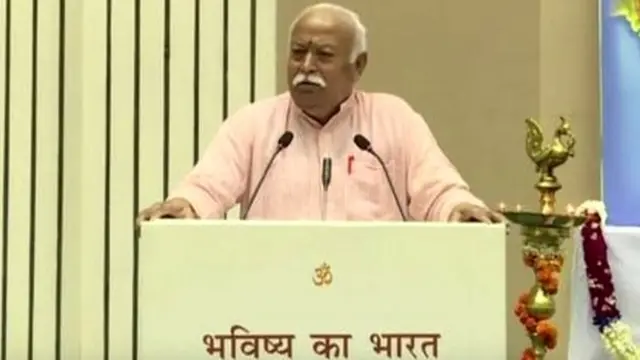
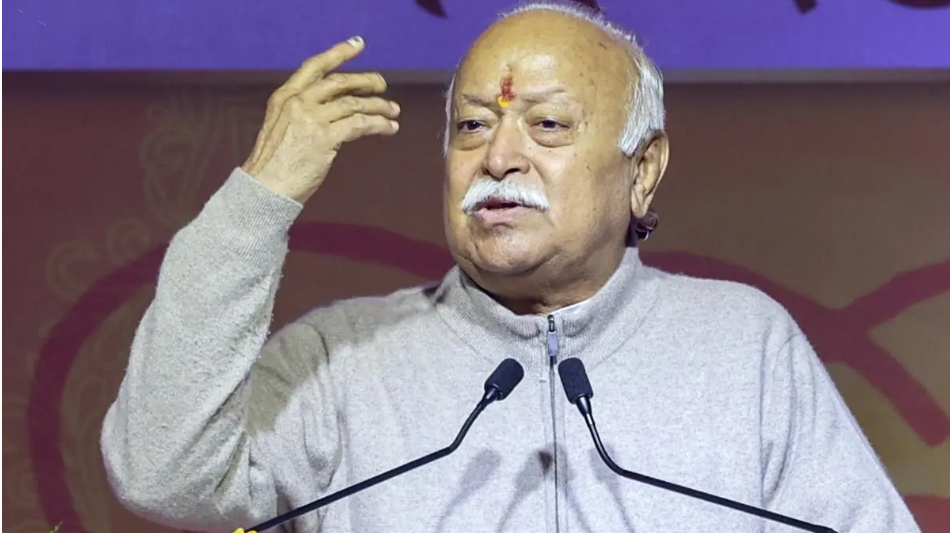
The recent public remarks by Rashtriya Swayamsevak Sangh chief Mohan Bhagwat have once again brought national attention to long-standing social and political questions in India. Speaking with unusual openness, he touched upon sensitive subjects such as the caste system, language disputes, religious conversion, and the challenge of illegal immigration. In an era where political discourse is often polarized, his statements stood out for their directness and philosophical framing. These views are not merely political opinions but reflections on society, culture, and national cohesion, encouraging Indians to introspect on how diversity and unity can coexist.
Mohan Bhagwat Leadership Style and Public Engagement
Under the leadership of Rashtriya Swayamsevak Sangh, Mohan Bhagwat has adopted a tone that blends ideological firmness with social dialogue. Unlike traditional closed-door discussions, his speeches increasingly address the public at large, signaling confidence in debate. His approach emphasizes listening, reform from within society, and gradual transformation rather than confrontation. This leadership style reflects a belief that lasting social change arises from awareness and consensus, not compulsion.
Addressing the Caste System Reform Through Social Harmony
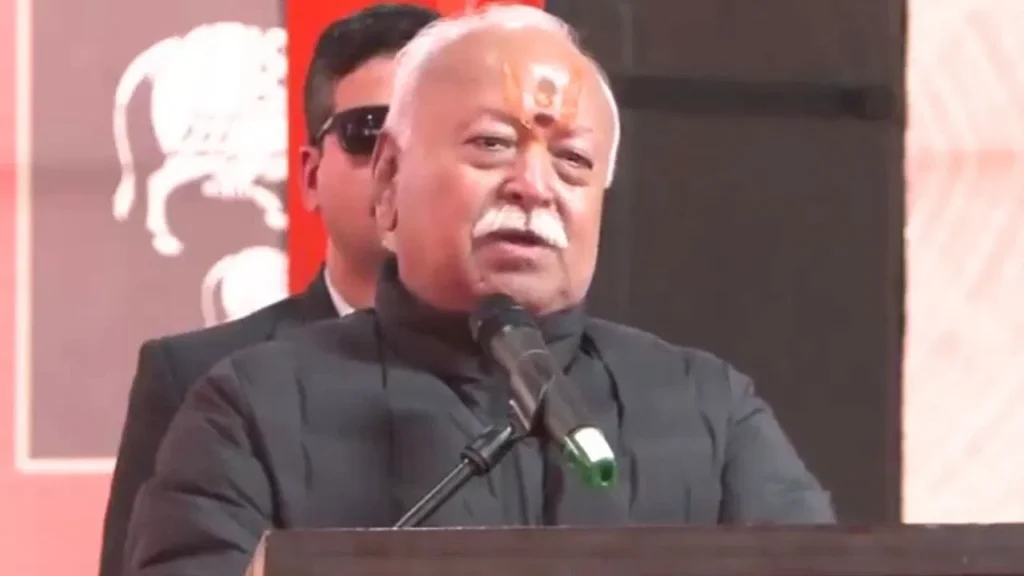
The caste system remains one of India’s most complex social realities, and Rashtriya Swayamsevak Sangh has often argued that caste discrimination contradicts the core idea of national unity. Mohan Bhagwat reiterated that caste divisions weaken society and distort India’s cultural foundations. He emphasized social equality, mutual respect, and the need to move beyond rigid hierarchies. According to him, reform must come from societal introspection rather than legal enforcement alone.
Historical Roots of Caste and Modern Challenges
In the view expressed by Rashtriya Swayamsevak Sangh, caste was historically linked to occupation rather than hierarchy, but over time it hardened into discrimination. Mohan Bhagwat highlighted that modern India cannot afford to remain trapped in outdated interpretations. Education, inter-community dialogue, and shared national goals are essential to overcoming social fragmentation and restoring dignity to all citizens.
Language Disputes and National Integration
Language has often been a sensitive issue in India, and Rashtriya Swayamsevak Sangh sees linguistic diversity as a strength rather than a fault line. Mohan Bhagwat stressed that no language should dominate or threaten another. Instead, languages must act as bridges of culture and communication. His remarks aimed to reduce fear and mistrust, especially in regions where language politics has caused tension.
Respecting Mother Tongues While Promoting Unity
According to Rashtriya Swayamsevak Sangh, every Indian language carries centuries of knowledge and cultural memory. Mohan Bhagwat argued that respecting regional languages while encouraging a shared means of communication is the path forward. National unity, he said, does not require uniformity but mutual respect and understanding.
Religious Conversion: A Sensitive Social Question
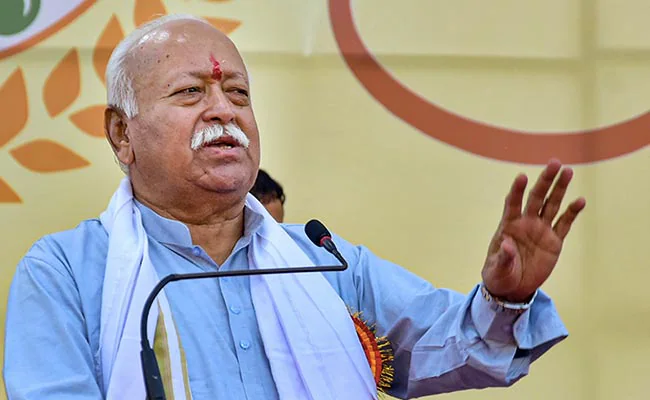
The topic of religious conversion has long been debated, and Rashtriya Swayamsevak Sangh maintains that faith should be a matter of free choice, not pressure or inducement. Mohan Bhagwat raised concerns about conversions driven by social or economic vulnerability. His remarks focused on protecting cultural identity while upholding constitutional freedoms.
Conversion and Social Responsibility
From the perspective of Rashtriya Swayamsevak Sangh, genuine faith emerges from conviction, not compulsion. Mohan Bhagwat emphasized that social upliftment should not become a tool for altering religious identity. He called for ethical responsibility among all religious groups and urged society to address poverty and inequality directly.
Illegal Immigration and National Security
Illegal immigration was another critical issue highlighted by Rashtriya Swayamsevak Sangh. Mohan Bhagwat framed it not as a matter of hostility toward individuals but as a concern for national security and demographic balance. He argued that unchecked migration can strain resources and create social friction if left unaddressed.
Humanitarian Concerns and Rule of Law
While discussing illegal immigration, Rashtriya Swayamsevak Sangh emphasized the need for a humane yet firm approach. Mohan Bhagwat suggested that compassion and law must work together. Protecting borders, he said, does not mean abandoning humanity, but ensuring fairness for citizens and migrants alike.
National Identity in a Globalized World
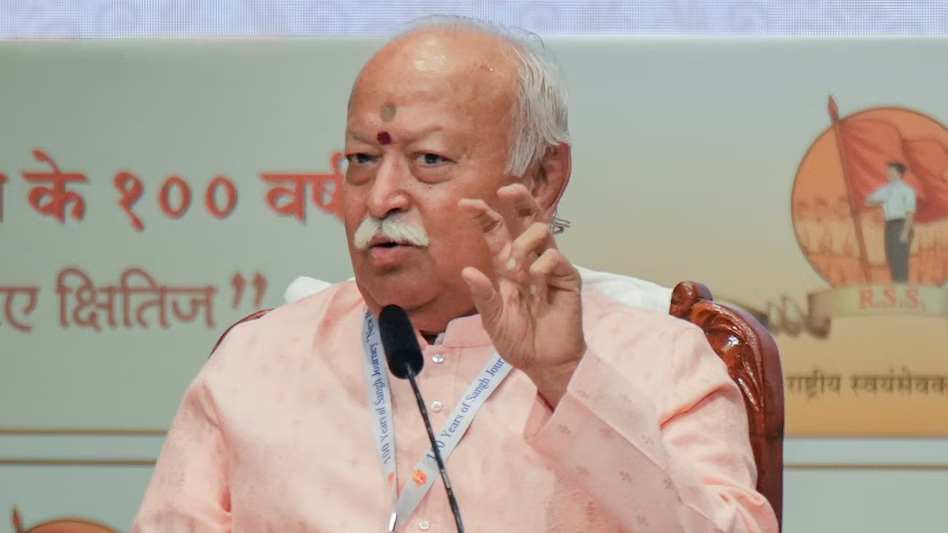
In a globalized era, Rashtriya Swayamsevak Sangh believes national identity must remain strong. Mohan Bhagwat spoke about cultural confidence as a shield against fragmentation. He stressed that globalization should not dilute India’s civilizational values but offer an opportunity to present them confidently on the world stage.
Unity Beyond Political Lines
According to Rashtriya Swayamsevak Sangh, national unity must transcend political ideologies. Mohan Bhagwat appealed to citizens to rise above partisan divisions and focus on shared responsibilities. His remarks underlined that social harmony is a collective duty, not the burden of one organization or government.
Youth, Education, and Social Awareness
The role of youth was strongly emphasized by Rashtriya Swayamsevak Sangh. Mohan Bhagwat urged young Indians to study history critically, engage in social service, and question divisive narratives. Education, he noted, should build character and civic sense alongside professional skills.
Media, Dialogue, and Democratic Debate
In the view of Rashtriya Swayamsevak Sangh, media plays a crucial role in shaping public discourse. Mohan Bhagwat encouraged responsible journalism that informs rather than inflames. Healthy debate, he said, strengthens democracy when rooted in facts and mutual respect.
Cultural Confidence and Social Reform
Cultural confidence, as articulated by Rashtriya Swayamsevak Sangh, is essential for meaningful reform. Mohan Bhagwat argued that societies unsure of their identity often become defensive or aggressive. A confident society, on the other hand, can reform itself calmly and inclusively.
Addressing Misconceptions and Criticism
Rashtriya Swayamsevak Sangh often faces criticism and misunderstanding. Mohan Bhagwat acknowledged differing opinions and welcomed constructive criticism. He stated that disagreement should lead to dialogue, not demonization, and that open discussion strengthens democratic traditions.
The Role of Civil Society
Civil society, according to Rashtriya Swayamsevak Sangh, is the backbone of democracy. Mohan Bhagwat highlighted the importance of voluntary organizations, community groups, and social workers in resolving grassroots issues. Government action alone, he said, cannot solve every problem.
Balancing Tradition and Modernity
One recurring theme in Rashtriya Swayamsevak Sangh thought is balance. Mohan Bhagwat spoke about harmonizing tradition with modern aspirations. Technology and progress should serve human values, not replace them, ensuring development remains inclusive and ethical.
India’s Path Forward
Looking ahead, Rashtriya Swayamsevak Sangh envisions an India rooted in cultural pride and social harmony. Mohan Bhagwat’s remarks suggest a roadmap based on dialogue, reform, and national responsibility. The focus remains on unity without uniformity.
Conclusion: A Call for Reflection
In conclusion, the views expressed by Rashtriya Swayamsevak Sangh chief Mohan Bhagwat invite deep reflection rather than instant judgment. By addressing caste, language, conversion, and immigration openly, he has sparked a conversation that extends beyond politics. His message ultimately centers on social cohesion, ethical responsibility, and a confident national identity suited for a diverse and democratic India.
Read More latest news

