
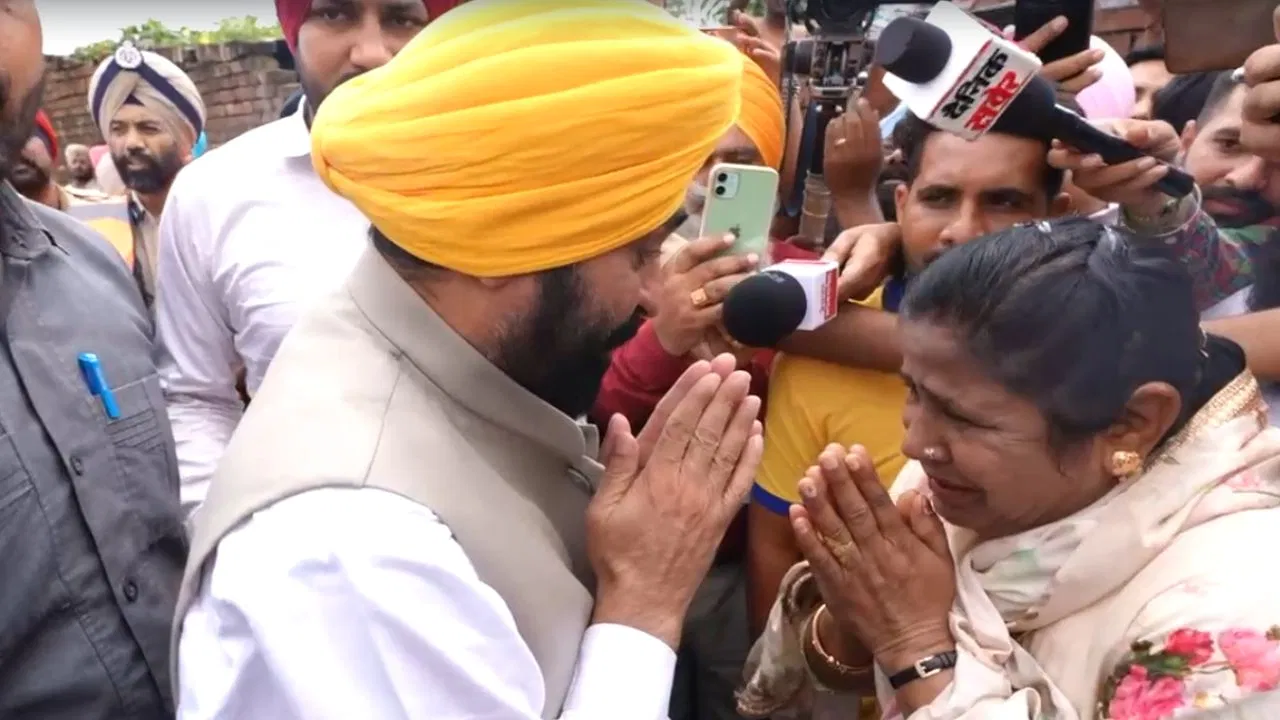
Punjab CM Bhagwant Mann Becomes Emotional During Visit to Ferozepur: Assures Flood-Affected Woman of All Possible Help
Introduction
Natural disasters do not discriminate—they affect rich and poor alike, but it is always the marginalized and vulnerable who suffer the most. Punjab, known as the food bowl of India, has faced the brunt of floods in recent years due to erratic monsoons, overflowing rivers, and inadequate infrastructure to handle the deluge. The recent floods in Ferozepur, one of Punjab’s most important border districts, left hundreds of families devastated.
During his visit to Ferozepur, Punjab Chief Minister Bhagwant Mann not only inspected the flood situation but also directly interacted with villagers. What stood out during his tour was an emotional exchange with a flood-affected woman, whose plight moved him deeply. CM Mann assured her of all possible help, emphasizing that his government stands firmly with the people in their time of distress.
This blog takes you through the incident, the flood’s impact on Ferozepur, the human suffering involved, government measures, and the broader implications for Punjab’s future disaster management.
CM Bhagwant Mann’s Visit to Ferozepur
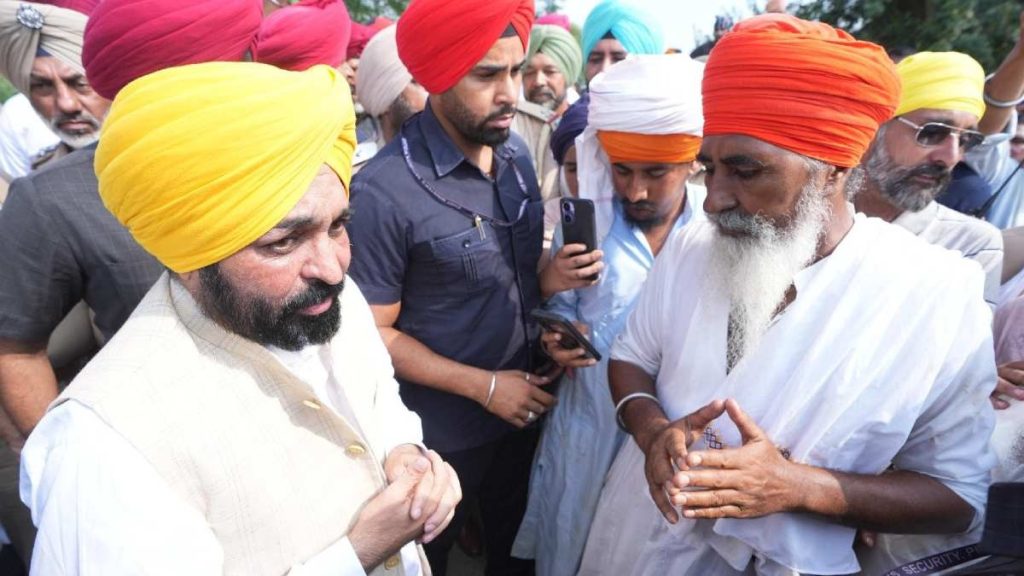
CM Bhagwant Mann’s visit to Ferozepur was not just a routine administrative inspection but a hands-on approach to governance. He visited relief camps, inspected embankments, and held meetings with district officials. Unlike traditional “VIP inspections,” Mann made an effort to walk into villages, listen to grievances, and personally meet affected families.
The defining moment of the visit came when he encountered a distressed woman, who narrated how her home, belongings, and livelihood had been washed away. Her emotional breakdown left a mark on the Chief Minister, who too became visibly moved. He held her hand, listened patiently, and reassured her of government support.
This gesture, though small in scale, became symbolic of empathy in leadership—something people in disaster-hit areas yearn for.
The Emotional Exchange: What Happened
The woman narrated her tragic experience:
- Her fields were submerged, destroying the season’s crop.
- Her cattle, the only source of daily sustenance, were swept away.
- Her house collapsed under floodwaters, leaving her family without shelter.
- She expressed fear about how her children would survive without food, clothing, and security.
Listening to her, CM Mann became emotional and assured her:
- The government would provide immediate relief, including ration kits, financial support, and shelter.
- Compensation for crop loss and cattle deaths would be processed swiftly.
- Housing assistance would be arranged so that no family remained roofless.
- Special focus would be given to ensuring education and food for children.
This conversation spread widely on social media, with many praising Mann for showing “humanity in politics.”
The Flood Situation in Ferozepur
Ferozepur, located on the banks of the Sutlej River, has historically been prone to flooding. This year, heavy rains in Punjab and Himachal Pradesh led to excessive water discharge from dams, resulting in the flooding of several villages in the district.
Impact at a glance:
- Over 100 villages affected.
- Thousands of acres of farmland submerged.
- Massive destruction of paddy crops.
- Livestock deaths in the hundreds.
- Hundreds of families displaced, living in relief camps or temporary shelters.
For a district that relies heavily on agriculture, the floods have been a double blow—loss of homes and loss of livelihoods.

Human Stories from the Ground
While CM Mann’s emotional moment with the woman became the highlight, several other heartbreaking stories emerged:
- Farmers lamented how their investments in seeds, fertilizers, and irrigation were washed away overnight.
- Children were seen attending makeshift schools in relief camps.
- Elderly villagers narrated how floods have become a recurring nightmare, yet preventive measures remain inadequate.
- Women struggled to ensure safety, hygiene, and food for their families in overcrowded shelters.
These stories paint a grim picture of how deeply floods impact daily life—far beyond statistics and financial losses.
Government’s Immediate Relief Measures
CM Mann’s government announced a series of measures to provide immediate relief to flood victims:
- Ex-Gratia Payments
- ₹4 lakh compensation for families of those who lost lives.
- Compensation for damaged houses and lost livestock.
- Crop Loss Compensation
- Special girdawari (crop assessment) to estimate damages.
- Compensation per acre for completely and partially damaged fields.
- Relief Camps
- Temporary shelters with food, water, and medical care.
- Mobile health units deployed in rural areas.
- Infrastructure Repair
- Quick restoration of breached embankments.
- Repair of damaged roads and bridges for connectivity.
- Special Committees
- Formation of district-level disaster management teams.
- Continuous monitoring of flood-affected zones.
Long-Term Challenges
While immediate relief is essential, Punjab faces long-term challenges in managing floods:
- Weak Embankments: Lack of maintenance makes river banks vulnerable.
- Encroachment on Riverbeds: Human settlement along rivers increases risk.
- Climate Change: Erratic rainfall patterns mean more unpredictable flooding.
- Dependency on Agriculture: When crops fail, the entire rural economy collapses.
CM Mann’s emotional promise of help reflects a recognition of these challenges, but sustainable solutions require policy shifts.
Political and Social Reactions
Praise for CM Mann
Many praised Bhagwant Mann for showing empathy and directly connecting with flood victims. Social media posts highlighted how unusual it is for politicians to shed tears with the public.
Opposition’s Criticism
Opposition parties, however, criticized the government, alleging:
- Poor preparedness before the floods.
- Slow distribution of compensation.
- Over-reliance on photo opportunities instead of robust planning.
Civil Society’s Response
NGOs, gurdwaras, and local volunteers stepped in with food, medicines, and clothing. Punjab’s tradition of “sewa” (selfless service) became a crucial lifeline.
Historical Context: Floods in Punjab
Punjab has faced recurring floods, especially in 1988, 2008, 2019, and 2023. Each time, losses run into thousands of crores, but structural solutions remain inadequate.
The Sutlej, Beas, and Ravi rivers—along with excess water from Bhakra Dam—are common culprits. Experts argue that Punjab needs a comprehensive flood management policy focusing on:
- River dredging.
- Stronger embankments.
- Smart irrigation systems.
- Rainwater harvesting.
Role of Central Government
The Punjab government has urged the Union Government to provide additional financial support under the National Disaster Response Fund (NDRF). CM Mann emphasized that Punjab alone cannot bear the massive financial burden and needs Delhi’s cooperation.
Farmers at the Center of the Crisis
Punjab’s farmers, already grappling with debt and rising input costs, are the worst-hit. The floods destroyed paddy crops at a time when procurement season was near.
Many fear being pushed deeper into debt cycles, highlighting the need for:
- Debt relief packages.
- Minimum Support Price (MSP) guarantees.
- Crop insurance reforms to cover flood damages adequately.
Media Coverage
The emotional moment between CM Mann and the flood-affected woman was widely covered:
- Regional Punjabi channels highlighted Mann’s “emotional connect.”
- National media debated whether it was genuine empathy or political optics.
- Social media posts with hashtags like #BhagwantMann #FerozepurFloods #PunjabFloods went viral.
What This Means for Punjab Politics
Empathy often translates into political goodwill. For CM Mann and the AAP government, this visit may:
- Strengthen their image as “people’s leaders.”
- Counter opposition claims of inaccessibility.
- Build emotional capital ahead of future elections.
However, voters will ultimately judge based on delivery of promises—whether compensation reaches victims, whether infrastructure improves, and whether lives are truly rebuilt.
Future Roadmap
To prevent recurrence and reduce suffering, Punjab needs a long-term strategy:
- Permanent Relief Funds: A dedicated disaster relief fund for quick deployment.
- Technology-Based Monitoring: Use of satellites and AI for flood predictions.
- Infrastructure Strengthening: Modern embankments and drainage systems.
- Community Preparedness: Training villagers for early evacuation and response.
- Crop Diversification: Reducing over-dependence on paddy cultivation, which suffers heavily in floods.
Conclusion
CM Bhagwant Mann’s emotional response to a flood-affected woman in Ferozepur is more than just a moment of compassion—it symbolizes the human face of governance. In disaster-hit regions, people often seek not just financial aid but emotional reassurance that they are not alone.
While Mann’s promise of “all possible help” has raised hopes, the real challenge lies in delivering sustained relief, ensuring timely compensation, and building long-term resilience against floods.
For the people of Ferozepur and Punjab, the road to recovery is long. But if words are matched with action, this moment may mark the beginning of a more responsive and empathetic governance model in Punjab.
Read more latest news

