
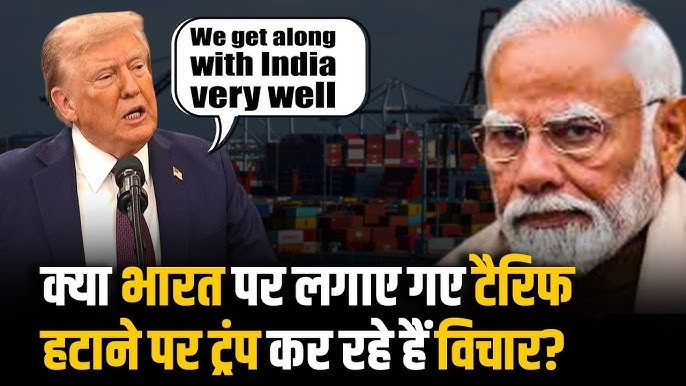
Is America Considering Removing the Tariffs Imposed on India? Listen to President Trump’s Answer
Introduction
America considering removing the tariffs Trade relations between India and the United States have always been complex, marked by negotiations, disputes, and moments of cooperation. In recent years, these ties came under heavy strain when former U.S. President Donald Trump imposed high tariffs on Indian goods, triggering a wave of retaliatory measures from India.
Now, with shifting global dynamics, the rise of protectionism, and changing priorities in both nations, the big question is: Is America considering removing these tariffs?
President Donald Trump, never known to mince words, recently addressed this issue in one of his characteristic press interactions. His response offers deep insight into how Washington currently views trade with India.
This blog explores Trump’s answer in detail, analyzing what it means for India-U.S. relations, businesses, farmers, consumers, and the larger geopolitical balance.
Background: Why Did Trump Impose Tariffs on India?
To understand the present, one must revisit the past. During his presidency (2017–2021), Donald Trump often described India as a “tariff king.” He repeatedly accused India of placing high import duties on American products such as Harley-Davidson motorcycles, agricultural goods, and medical devices.
Key triggers for tariffs:
- Trade Imbalance: The U.S. had a trade deficit with India, which Trump often criticized.
- Harley-Davidson Controversy: Trump objected strongly to India’s 100% tariff on Harley-Davidson motorcycles, despite India reducing it later to 50%.
- Withdrawal of GSP (Generalized System of Preferences): In June 2019, the U.S. removed India from the GSP list, ending duty-free access to billions of dollars’ worth of Indian exports.
- Agriculture and Dairy Market Access: The U.S. wanted wider access to India’s dairy and farm markets, which New Delhi resisted due to domestic sensitivities.
As a result, the Trump administration raised tariffs on multiple Indian products, including steel, aluminum, textiles, and certain agricultural exports.
Trump’s Current Statement: Is America Considering Removal?
When asked whether the U.S. might consider removing tariffs on India, Trump gave a typically blunt yet calculated answer:
- He acknowledged India as a strategic partner and recognized the country’s growing importance in global supply chains.
- However, he maintained that tariffs are a negotiating tool to ensure “fair and reciprocal trade.”
- Trump said America would not simply remove tariffs without getting something significant in return.
- He emphasized the need for India to provide greater market access to American companies, especially in tech, agriculture, and defense sectors.
- He added that tariffs were not permanent but tied to negotiations and India’s willingness to meet U.S. demands.
In short: Trump did not promise immediate removal of tariffs but kept the door open for renegotiation.
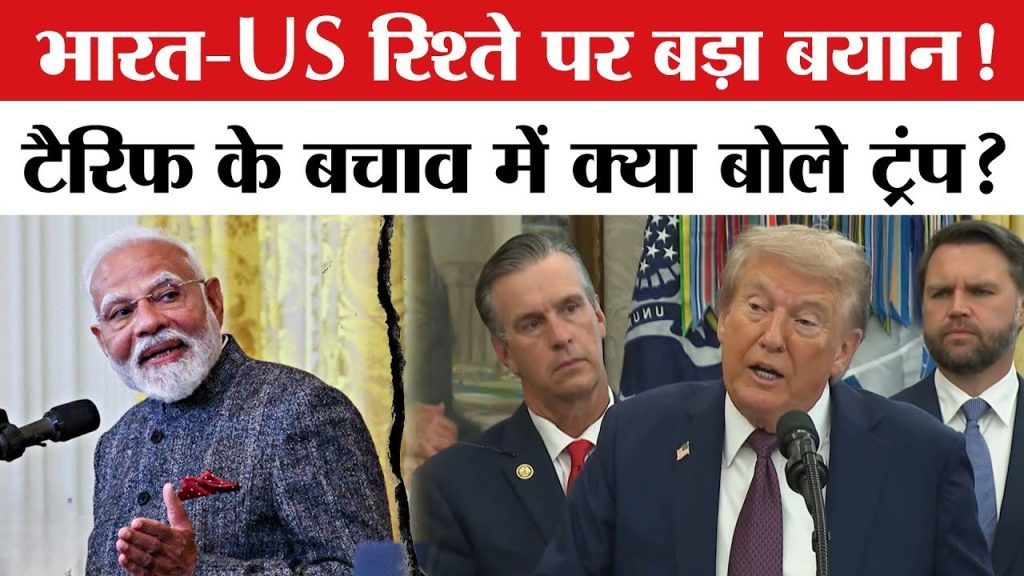
Why Trump is Hesitant to Remove Tariffs
- Domestic Politics
- Trump’s “America First” policy relies heavily on protecting U.S. workers and industries.
- Removing tariffs too soon could be framed by opponents as a weak stance in election season.
- Pressure from U.S. Farmers and Manufacturers
- American farmers want access to India’s massive food market.
- U.S. companies want fewer restrictions on digital trade and e-commerce.
- Negotiating Leverage
- Tariffs allow Washington to keep bargaining power.
- If India wants tariff relief, it may have to make concessions.
India’s Reaction
India has maintained that tariffs hurt both sides, and that trade disputes should be resolved through dialogue.
- Retaliatory Tariffs: India imposed counter-tariffs on U.S. almonds, apples, walnuts, and other goods.
- WTO Complaints: India challenged certain U.S. tariffs at the World Trade Organization.
- Diversification: India turned to other partners like Russia, ASEAN, and the EU to reduce dependency on U.S. markets.
Yet, New Delhi is pragmatic. Indian policymakers know the U.S. is India’s largest trading partner (over $200 billion bilateral trade). A resolution is in India’s interest, especially at a time when supply chains are shifting away from China.
The Larger Economic Impact
For India
- Exports Hit: Textile, leather, steel, and agricultural exports faced heavy losses due to U.S. tariffs.
- Small Businesses Suffered: Many small-scale industries dependent on U.S. demand saw reduced orders.
- Farmers Affected: U.S. tariffs on processed foods and India’s counter-tariffs on apples and almonds disrupted farm trade.
For America
- Price Rise: Tariffs increased prices of Indian goods in the U.S., affecting American consumers.
- Businesses Lost Supply Chains: Some U.S. companies that relied on cheap Indian goods had to find alternatives.
- Farmers Hurt: Indian tariffs on U.S. agricultural exports like almonds and walnuts affected American farmers, especially in California.
The Geopolitical Angle
Tariff negotiations are not just about economics. They are about geopolitical positioning.
- China Factor:
- The U.S. wants India to act as a counterweight to China in Asia.
- Tariff disputes complicate the building of a strong U.S.-India alliance.
- Defense Cooperation:
- The U.S. is one of India’s largest defense suppliers.
- Washington does not want trade disputes to affect military cooperation.
- Quad and Indo-Pacific Strategy:
- Both countries are part of the Quad grouping (with Japan and Australia).
- Smooth trade ties strengthen this alliance against China’s influence.
Trump’s Calculated Approach
Trump’s answer shows he is playing a long game.
- He wants to project toughness to American voters.
- He also wants to keep India close as a strategic ally.
- By keeping tariffs in place, he maintains pressure while leaving room for negotiation.
This “carrot and stick” approach is classic Trump: threaten with tariffs, then offer relief in exchange for concessions.
Possible Scenarios Ahead
- Partial Relief
- The U.S. may lift tariffs on specific Indian goods (like textiles or IT products) while keeping others.
- Comprehensive Trade Deal
- Both sides could negotiate a mini trade deal covering agriculture, digital trade, and pharmaceuticals.
- Status Quo
- If Trump insists on major concessions, India may resist, and tariffs could stay for years.
Domestic Reactions in India
- Business Community: Indian exporters are lobbying the government to push for tariff relief.
- Political Opposition: Critics accuse the Modi government of failing to protect Indian interests.
- Common Citizens: Consumers face higher prices for imported American goods, while farmers struggle with reduced export opportunities.
Expert Opinions
Economists and trade analysts are divided:
- Some argue India must compromise on agriculture and e-commerce to secure tariff relief.
- Others believe India should resist U.S. pressure and focus on strengthening domestic industries.
- Many emphasize the importance of a balanced deal that protects Indian farmers while boosting access to U.S. technology.
Global Context
The U.S.-India tariff dispute is part of a larger trend of trade wars worldwide.
- U.S.–China trade war set the template.
- U.S.–EU disputes over steel and aluminum tariffs created friction.
- India, as an emerging power, finds itself caught between global protectionism and free trade advocacy.
Conclusion
So, is America really considering removing tariffs on India?
From Trump’s answer, the reality is clear: Yes, but only on America’s terms.
The U.S. will not remove tariffs without extracting significant concessions. Trump’s strategy is to keep India under pressure while dangling the possibility of relief.
For India, the challenge is to strike a balance—protecting domestic industries while engaging the U.S. in constructive negotiations.
The next few months will be crucial. If India and the U.S. can move beyond tariff disputes, they may unlock the true potential of one of the world’s most important strategic partnerships.
read more latest news

