
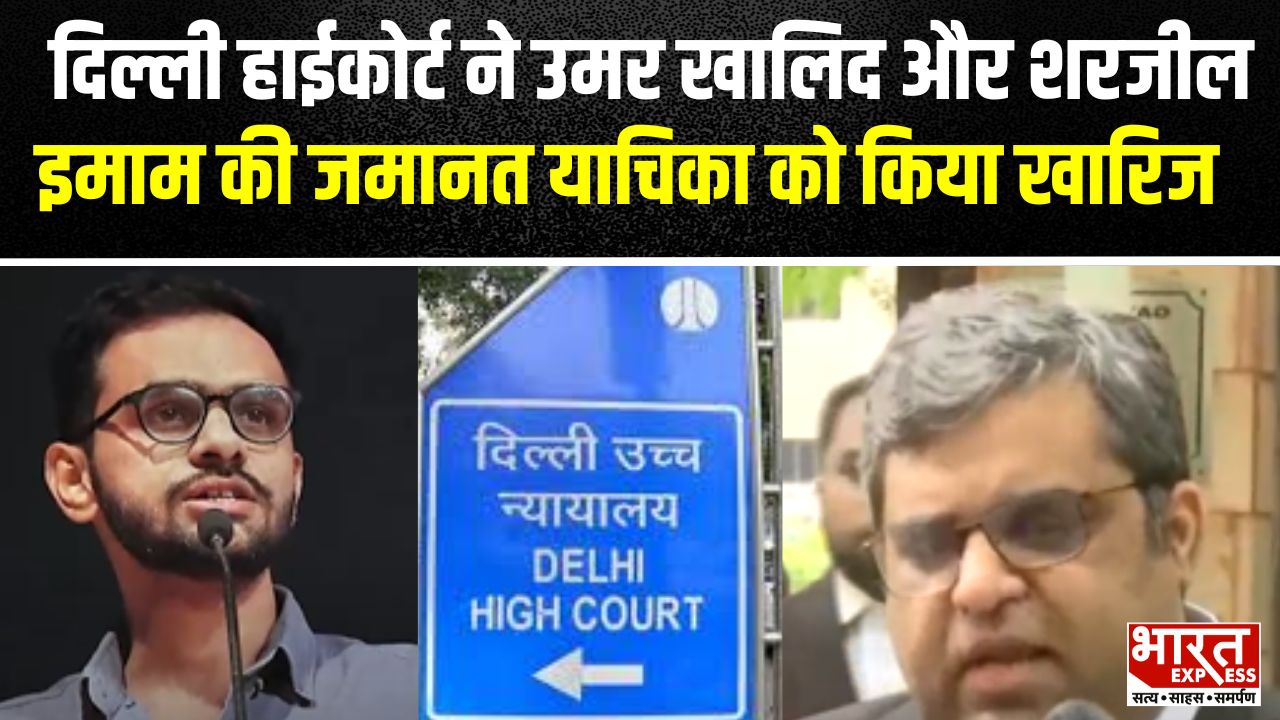
Delhi HC: Bail Plea of Sharjeel Imam and Umar Khalid Rejected
The Delhi High Court’s decision to reject the bail pleas of former JNU students Sharjeel Imam and Umar Khalid has once again brought the spotlight back on the legal, political, and social debates surrounding the 2020 Delhi riots conspiracy case. The verdict underscores how the judiciary views the seriousness of allegations tied to larger conspiracies, national security, and the Unlawful Activities (Prevention) Act (UAPA).
This blog will provide an in-depth analysis of the ruling, examine the background of the case, the charges, the defense arguments, the court’s reasoning, political and social implications, and what this means for the future of free speech, dissent, and the fight against terrorism in India.
Introduction
On September 2, 2025, the Delhi High Court pronounced its decision on the bail pleas filed by activist and former JNU scholars Sharjeel Imam and Umar Khalid. Both have been in custody for over three years under stringent provisions of the UAPA in connection with the alleged conspiracy that led to the communal riots in Northeast Delhi in February 2020.
The court’s rejection has sparked widespread reactions across the political spectrum. While supporters of the government hail the judgment as a strong message against divisive politics and conspiracies, opposition leaders, activists, and civil society members argue that prolonged incarceration without trial undermines constitutional rights.
To understand the importance of this verdict, one must go back to the origins of the case.
Background: The 2020 Delhi Riots
The riots in Northeast Delhi in February 2020 were among the most violent episodes in the capital in recent memory. Over 50 people lost their lives, hundreds were injured, and property worth crores was destroyed.
The violence broke out amidst nationwide protests against the Citizenship Amendment Act (CAA) and the proposed National Register of Citizens (NRC). The protests had been largely peaceful across India, but in Delhi, the situation escalated when clashes broke out between anti-CAA and pro-CAA groups.
The Delhi Police’s Special Cell alleged that the riots were not spontaneous but the result of a pre-planned conspiracy orchestrated by certain activists and student leaders. Among those accused were Sharjeel Imam, known for his fiery speeches at protest sites, and Umar Khalid, a political activist and former JNU student leader.
Who is Sharjeel Imam?
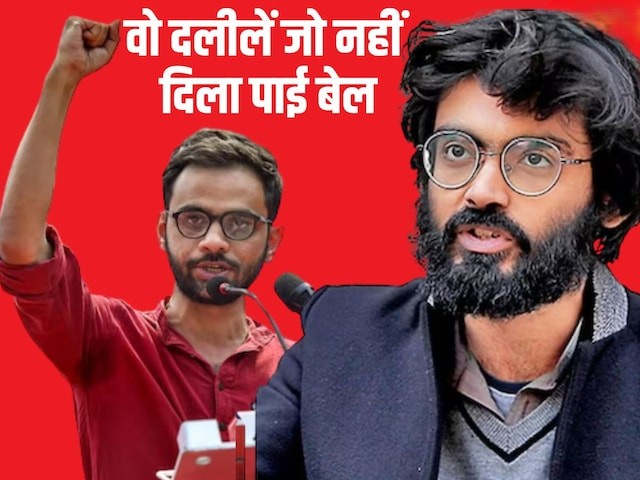
- Sharjeel Imam, a PhD student at JNU, emerged as one of the prominent voices during the anti-CAA protests.
- He gained attention for his speeches at Delhi’s Shaheen Bagh and other protest sites.
- In January 2020, a video clip of Imam’s speech went viral where he allegedly suggested that protesters could “cut off Assam from India” by blocking the Siliguri Corridor, popularly called the “chicken’s neck.”
- This statement was viewed by the police as seditious and part of a larger secessionist conspiracy.
Imam has been in custody since January 2020.
Who is Umar Khalid?
- Umar Khalid rose to national prominence during the 2016 JNU controversy, when slogans deemed “anti-national” were allegedly raised on campus.
- He has been a vocal critic of the government and has participated in several protests.
- In 2020, Khalid was accused by Delhi Police of being one of the “masterminds” of the Delhi riots conspiracy.
- The police claim he delivered provocative speeches in different parts of Delhi and was in touch with co-conspirators through WhatsApp groups.
Khalid was arrested in September 2020 under the UAPA.
The Charges Against Them
Both Imam and Khalid face charges under:
- Unlawful Activities (Prevention) Act (UAPA)
- Indian Penal Code (IPC) provisions for sedition, promoting enmity between groups, criminal conspiracy, rioting, and unlawful assembly.
The prosecution claims:
- The anti-CAA protests were used as a cover to incite violence.
- There was a larger conspiracy involving multiple activists to instigate communal riots.
- WhatsApp chats, call records, and witness statements point towards coordination among accused individuals.
- The riots were not a natural outburst but a deliberate attempt to defame the government internationally.
Defense Arguments
Lawyers representing Imam and Khalid have consistently argued that:
- The accused are being targeted for their dissenting views against the government.
- Their speeches and protests were part of democratic expression and not a call to violence.
- The evidence is circumstantial, weak, and based largely on witness statements recorded months after the riots.
- Prolonged incarceration without trial violates the fundamental right to liberty.
- The trial is moving at a snail’s pace, and denying bail effectively means punishment without conviction.
Delhi HC’s Reasoning for Denial of Bail
The Delhi High Court, while rejecting the bail pleas, highlighted the following points:
- Seriousness of Allegations: The court noted that the charges involve grave offenses under the UAPA, which are linked to national security and public order.
- Prima Facie Case Exists: Based on the material presented by the prosecution, the court felt that there is a prima facie case suggesting the involvement of Imam and Khalid in the conspiracy.
- Impact on Trial: Granting bail could influence witnesses or derail the ongoing trial.
- Speeches and Intent: The court observed that the speeches made by the accused were not mere criticism of the government but contained elements that could incite violence.
- Long-Term Security Concerns: The court emphasized that conspiracies of this nature have ripple effects on national unity, and hence bail cannot be granted casually.
Political Reactions
Government and BJP Leaders
- Ruling party leaders welcomed the verdict, claiming it as a victory of law and order.
- Some argued that the rejection proves that “urban Naxals” and “anti-national elements” cannot hide behind the garb of student activism.
Opposition Parties
- Congress, AAP, Left parties, and several regional leaders criticized the verdict.
- They alleged that dissenting voices are being criminalized under the UAPA.
- They pointed to the slow pace of the trial, arguing that bail should be a norm and jail an exception.
Civil Society and Activists
- Human rights groups like Amnesty and HRW condemned the decision, calling it a setback for free speech.
- Student organizations held small protests demanding justice for Imam and Khalid.

Legal and Constitutional Debate
The case has once again sparked a debate on UAPA and its implications:
- UAPA as a Tool: Critics argue that the UAPA is being used as a political weapon to silence dissent.
- Bail Jurisprudence: The Supreme Court has often emphasized that bail is the rule and jail the exception. However, under UAPA, getting bail is extremely difficult due to strict provisions.
- Speedy Trial Issue: The accused have been in jail for more than three years without trial concluding. This raises questions about the right to a speedy trial under Article 21 of the Constitution.
Broader Implications
- For Dissent and Democracy: The rejection of bail could discourage activists and student leaders from voicing dissent against government policies.
- For Judiciary: The judgment shows the judiciary’s cautious approach in cases involving national security.
- For Politics: The ruling will continue to be a talking point in political campaigns, with ruling and opposition parties interpreting it differently.
- For International Perception: Cases like this will be closely watched by global human rights bodies, affecting India’s democratic image abroad.
Timeline of Events
- Dec 2019: Anti-CAA protests begin across India.
- Jan 2020: Sharjeel Imam’s controversial speech goes viral.
- Feb 2020: Delhi riots break out; over 50 dead.
- Apr–Sept 2020: Delhi Police files multiple charge sheets, names Imam and Khalid as key accused.
- Sept 2020: Umar Khalid arrested under UAPA.
- 2020–2025: Bail applications filed and rejected at various stages.
- Sept 2025: Delhi HC rejects fresh bail pleas.
Public Sentiment
On social media platforms like Twitter, Instagram, and YouTube, the verdict has polarized opinion.
- Hashtags like #JusticeForUmarKhalid and #SharjeelImam trended among opposition supporters.
- Conversely, hashtags like #DelhiRiotsConspiracy and #NoBailForTerrorists trended among pro-government users.
This reflects how deeply political and emotional the issue has become.
The Road Ahead
- Supreme Court Appeal: Both Imam and Khalid’s legal teams are expected to challenge the HC verdict in the Supreme Court.
- Trial Continuation: The lower court will continue hearing the main conspiracy case.
- Public Debate: The larger questions of UAPA misuse, bail jurisprudence, and the balance between free speech and security will remain alive.
Conclusion
The Delhi High Court’s decision to reject the bail pleas of Sharjeel Imam and Umar Khalid is not just a legal milestone but also a reflection of the ongoing tension between civil liberties and state security in India.
While the government sees this as justice for riot victims and protection of national security, activists and opposition leaders see it as yet another blow to democratic dissent.
The real test, however, lies ahead. The Supreme Court’s eventual stance will not only determine the fate of Imam and Khalid but also set a precedent for how India balances freedom of expression with national security concerns in the years to come.
Read more latest news

