

Police Silence on the Burning of Pratham Alo and The Daily Star Offices in Dhaka: Questions, Justifications, and Democratic Concerns
Dhaka, the capital of Bangladesh, has once again found itself at the center of a disturbing debate about press freedom, law enforcement responsibility, and the shrinking space for dissent. The recent attack on two of the country’s most influential newspapers — Pratham Alo and The Daily Star — has raised serious questions, not only because of the violence itself, but also because of the response, or lack thereof, from the police. The burning of Pratham Alo’s office, alongside the vandalism of The Daily Star, has become a powerful symbol of the fragile state of media safety in the country.
A Disturbing Night in Dhaka
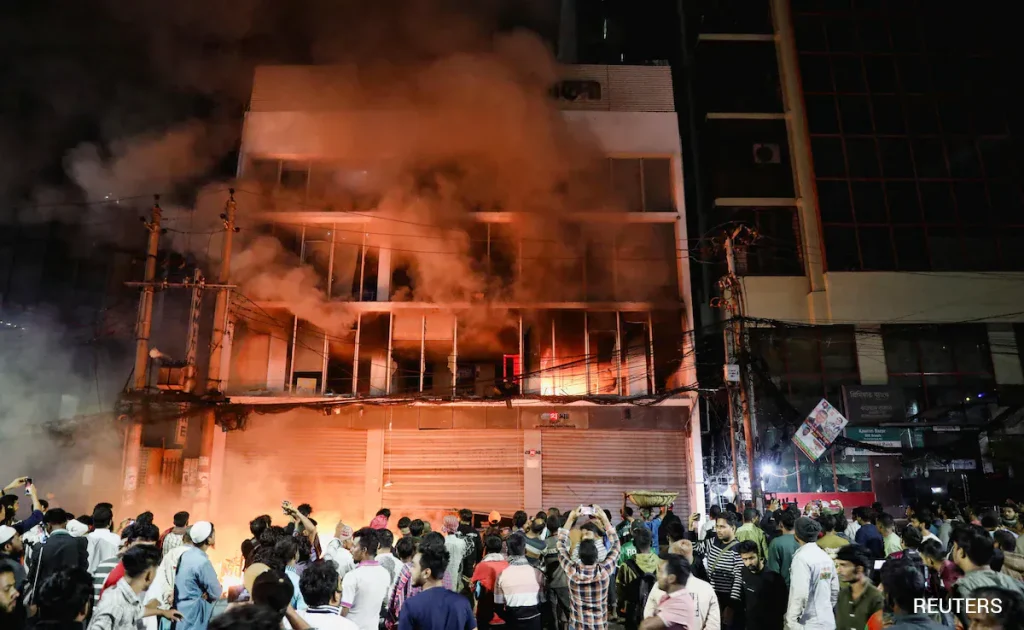
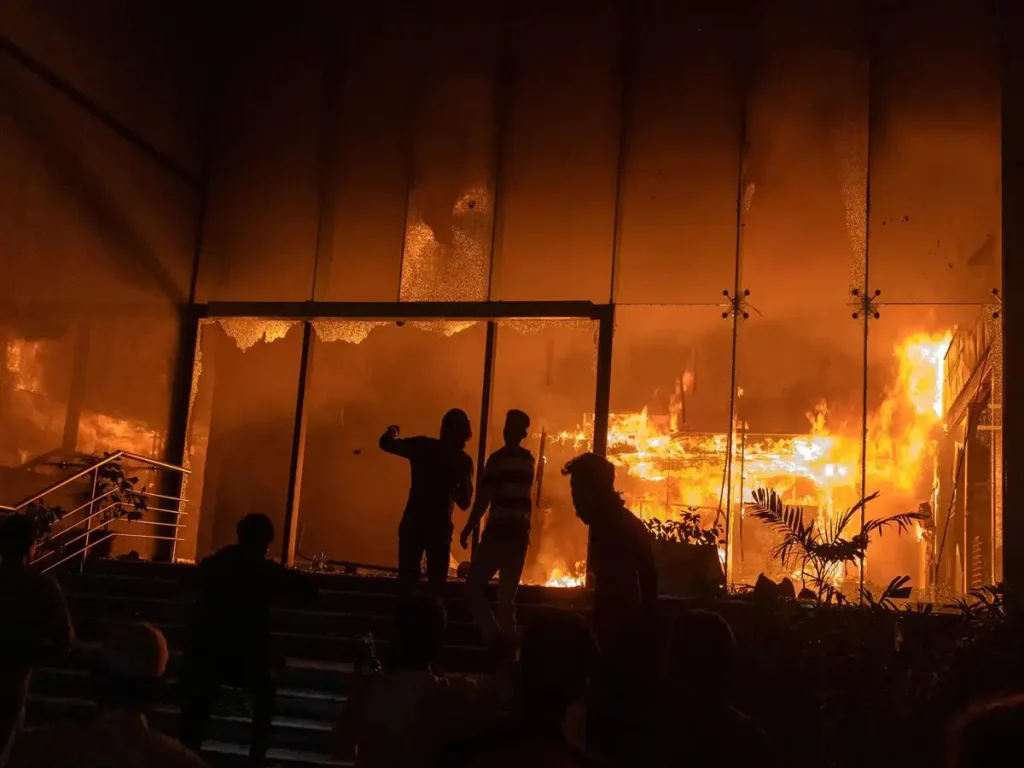
The incident unfolded amid heightened political tension in Dhaka. Protesters gathered near the newspaper offices, and what began as demonstrations soon spiraled into chaos. Flames engulfed parts of the building housing Pratham Alo, while The Daily Star’s premises were attacked and damaged. The burning of Pratham Alo was captured in videos that quickly spread across social media, shocking citizens and journalists alike.
For many observers, the most alarming aspect was not just the violence, but the apparent inaction of the police during critical moments. Questions immediately arose: Why did law enforcement not intervene sooner? Could the damage have been prevented? And what message does this send to journalists working under increasing pressure?
Police Explanation: Risk of Casualties
The Dhaka Metropolitan Police (DMP) later issued a statement defending their actions. According to the DMP, intervening during the height of the violence could have resulted in police casualties and forced officers to open fire. Officials argued that the crowd was large, aggressive, and unpredictable. In their assessment, any attempt to control the situation immediately might have escalated the violence further.
This justification, however, has not satisfied critics. The burning of Pratham Alo is being cited as evidence of a dangerous precedent: that violent mobs can attack media institutions without immediate consequence if the risk to police is deemed too high.
Media Freedom Under Threat
Bangladesh has long prided itself on having a vibrant media landscape, but recent years have seen growing concerns over press freedom. Journalists face legal pressure, online harassment, and now, increasingly, physical threats. The burning of Pratham Alo office is not an isolated incident; it fits into a broader pattern of intimidation against critical voices.
Both Pratham Alo and The Daily Star have a history of investigative reporting and editorial independence. This has earned them respect among readers, but also hostility from certain political and ideological groups. The attack, therefore, is widely viewed as an attempt to silence or intimidate independent journalism.
Public Reaction and Civil Society Response
Civil society organizations, journalist unions, and human rights groups reacted strongly. They condemned the violence and demanded accountability. Many questioned how such an attack could occur in a heavily policed area of the capital. The burning of Pratham Alo was described by activists as an attack on democratic values, not just on a building.
Social media platforms were flooded with messages of solidarity for journalists. Hashtags calling for the protection of press freedom trended nationwide. At the same time, anger was directed at the authorities for what many perceived as a failure of duty.
Was Non-Intervention the Right Call?
From a law enforcement perspective, crowd control in volatile situations is complex. Police must balance public safety, their own security, and the protection of property. The DMP’s argument — that intervention could have led to deaths — cannot be dismissed lightly. Yet, critics argue that allowing the burning of Pratham Alo to continue unchecked reflects deeper structural problems.
If police are unable or unwilling to protect key democratic institutions during unrest, it raises questions about preparedness, training, and political will. Many are asking whether alternative strategies could have been employed, such as earlier intervention, reinforcements, or non-lethal crowd control measures.
Impact on Journalists and Newsrooms
Beyond the physical damage, the psychological impact on journalists is profound. Newsrooms are meant to be safe spaces for reporting and debate. Seeing the burning of Pratham Alo sends a chilling message to reporters across the country: your workplace, and possibly your life, may not be protected.
Several journalists have spoken anonymously about fear and uncertainty. Some worry that future reporting on sensitive topics could provoke similar attacks. Others fear that self-censorship may increase as a survival strategy.
International Attention and Image of Bangladesh
The incident has also drawn international attention. Global press freedom organizations have expressed concern, warning that attacks like the burning of Pratham Alo damage Bangladesh’s reputation as a democratic nation. Diplomatic missions and international NGOs are closely watching how the government responds.
In an era where global perception matters for investment, diplomacy, and development partnerships, such incidents carry long-term consequences. Protecting media freedom is not just a domestic issue; it is a signal to the world about a country’s commitment to democratic norms.
Accountability and the Road Ahead
As investigations continue, there are growing demands for transparency. Who were the attackers? Were there intelligence warnings beforehand? Why were the police unable to prevent the burning of Pratham Alo? Without clear answers, public trust in institutions risks further erosion.
Experts argue that accountability must extend beyond identifying perpetrators. There must be an honest assessment of police strategy, resource allocation, and command decisions. Reforms may be necessary to ensure that media houses receive adequate protection during periods of unrest.
A Symbol Beyond the Flames
The burning of Pratham Alo has become more than a news event; it is a symbol of the ongoing struggle between free expression and forces that seek to suppress it. History shows that when the press is attacked, democracy itself is under threat.
Bangladesh stands at a crossroads. The response to this incident will signal whether the state prioritizes the safety of journalists and the sanctity of free speech, or whether silence and inaction will become the norm.
Conclusion
The police justification — that intervention risked casualties and firing — highlights the difficult realities of law enforcement in volatile situations. However, the burning of Pratham Alo and the attack on The Daily Star demand deeper reflection. Safety concerns are real, but so is the responsibility to protect democratic institutions.
As citizens, journalists, and authorities grapple with the aftermath, one thing is clear: ignoring such attacks or normalizing police silence sets a dangerous precedent. The future of press freedom in Bangladesh may well depend on how decisively and transparently this moment is addressed.
Read More Latest News

