

ISRO Successfully Launches LVM3 M6 Mission: A Major Leap in India–US Commercial Space Cooperation
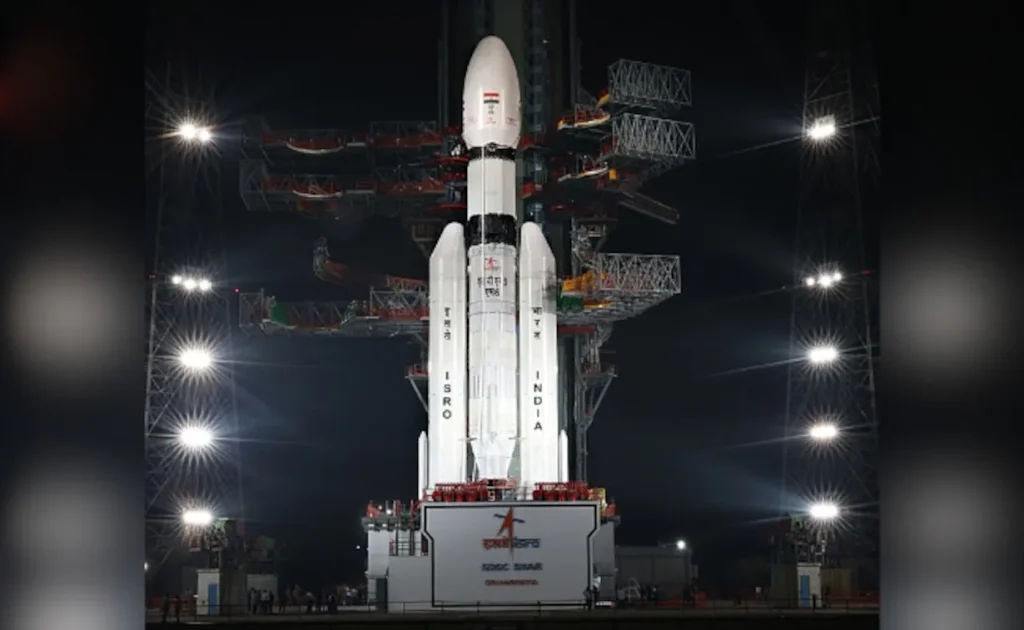
ISRO successfully Satellite launched, India once again etched its name in the global space history books as the Indian Space Research Organisation (ISRO) successfully executed the LVM3 M6 mission from the Satish Dhawan Space Centre, Sriharikota, Andhra Pradesh. The mission marked another milestone for India’s heavy-lift launch vehicle and strengthened India’s growing reputation as a reliable commercial launch partner for the world.
Under a commercial agreement with US-based company AST SpaceMobile, ISRO’s Launch Vehicle Mark-3 (LVM3) precisely deployed the BlueBird Block-2 satellite into its designated orbit. This next-generation communications satellite is designed to revolutionize space-based mobile connectivity, particularly in remote and underserved regions of the world.
The successful Satellite launched during the LVM3 M6 mission not only demonstrated ISRO’s technical excellence but also showcased India’s increasing role in the global space economy.
LVM3 M6 Mission: A Technological Triumph for ISRO
The LVM3, earlier known as Gaganyaan Launch Vehicle (GSLV Mk III), is India’s most powerful rocket. The LVM3 M6 mission was carefully planned, tested, and executed after months of rigorous simulations and safety evaluations.
With this mission, ISRO once again proved that its heavy-lift launch vehicle is capable of handling complex commercial payloads. The Satellite launched onboard the LVM3 was placed into orbit with exceptional precision, meeting all mission objectives.
This success is particularly significant as LVM3 is also India’s human-rated launch vehicle for the upcoming Gaganyaan human spaceflight mission. Each flawless commercial mission further validates the rocket’s reliability.
Commercial Agreement with AST SpaceMobile: A Strategic Partnership
The LVM3 M6 mission was conducted under a commercial contract between ISRO’s commercial arm, NewSpace India Limited (NSIL), and AST SpaceMobile, a US-based company working to build the world’s first space-based cellular broadband network.
The Satellite launched—BlueBird Block-2—is a crucial part of AST SpaceMobile’s ambitious plan to provide direct-to-mobile connectivity from space without the need for specialized ground hardware.
This collaboration reflects the growing trust international companies place in ISRO’s launch services, especially at a time when the global demand for reliable, cost-effective space launches is increasing rapidly.
What Is the BlueBird Block-2 Satellite?
The BlueBird Block-2 satellite is a next-generation communications satellite designed to connect standard mobile phones directly to satellites in low Earth orbit (LEO). Unlike traditional satellite communication systems, this technology aims to eliminate the dependency on terrestrial cell towers in remote areas.
The Satellite launched under the LVM3 M6 mission features:
- Large deployable antennas
- Advanced signal processing systems
- High-capacity bandwidth support
- Compatibility with existing mobile networks
Once fully operational, the constellation will support voice calls, text messages, data services, and emergency communications even in areas with no cellular infrastructure.
Why This Satellite Launch Matters Globally
The successful Satellite launched by ISRO has implications far beyond India or the United States. It represents a new chapter in global communications, where space-based systems complement terrestrial networks.
This mission is especially relevant for:
- Remote rural populations
- Disaster-prone regions
- Maritime and aviation sectors
- Defense and emergency response services
By enabling direct satellite-to-mobile communication, the technology can bridge the digital divide and enhance global connectivity.
Sriharikota: India’s Gateway to Space
The launch took place at Sriharikota, located on the eastern coast of Andhra Pradesh. Over the decades, Sriharikota has evolved into one of the world’s most reliable spaceports.
From PSLV missions to Gaganyaan preparations, Sriharikota has witnessed numerous historic moments. The Satellite launched during the LVM3 M6 mission added another feather to the spaceport’s illustrious cap.
The geographical advantage of Sriharikota—close to the equator and the Bay of Bengal—helps maximize payload efficiency and ensure safe launch trajectories.
India Growing Role in the Global Space Market
With every successful Satellite launched, India strengthens its position as a major player in the global space economy. ISRO’s cost-effective yet highly reliable launch services have made it a preferred choice for international customers.
Key factors behind India’s success include:
- Lower launch costs compared to Western competitors
- High mission success rate
- Skilled scientific workforce
- Government support for private-sector participation
The LVM3 M6 mission reinforces India’s ability to handle large, sophisticated commercial satellites, not just small payloads.
LVM3: Backbone of India’s Heavy-Lift Capabilities
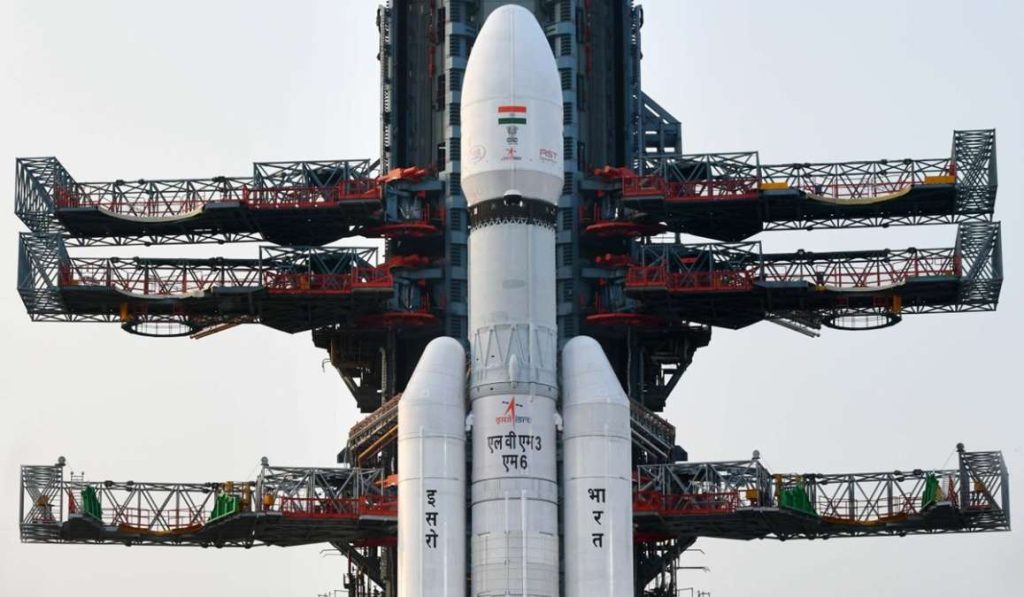
The LVM3 rocket stands approximately 43.5 meters tall and is capable of carrying payloads of over 4,000 kg to Geosynchronous Transfer Orbit (GTO).
For the M6 mission, the rocket performed flawlessly across all stages. The Satellite launched separated at the precise moment, validating the rocket’s advanced guidance and control systems.
This reliability is crucial, especially as ISRO prepares for human spaceflight and more commercial missions in the coming years.
Strategic Importance for India–US Relations
Beyond technology, the LVM3 M6 mission holds strategic importance for India–US relations. Space cooperation has emerged as a key pillar of bilateral ties.
The successful Satellite launched under a commercial agreement highlights:
- Trust in Indian space infrastructure
- Strengthening of technological partnerships
- Expansion of private-sector collaboration
Such missions also complement broader cooperation in defense, critical technologies, and innovation ecosystems.
Boost to India’s Commercial Space Ecosystem
The mission also benefits India’s domestic space startups and private players. With NSIL acting as the commercial interface, ISRO is enabling a more market-driven approach to space activities.
Every Satellite launched commercially helps:
- Generate revenue for India’s space sector
- Attract global customers
- Encourage private investment
- Create high-skilled jobs
This aligns with India’s vision of becoming a global space hub.
Challenges Overcome During the Mission
Launching a next-generation communications satellite is no simple task. Engineers had to address challenges related to:
- Payload integration
- Thermal management
- Orbital accuracy
- Communication synchronization
Despite these complexities, the Satellite launched met all mission parameters, underlining ISRO’s meticulous planning and execution.
Impact on Future Satellite Communications
The success of the BlueBird Block-2 deployment could accelerate the adoption of space-based cellular services worldwide. As more satellites are deployed, seamless global connectivity could become a reality.
The Satellite launched by ISRO is expected to play a key role in testing and validating these technologies before full-scale deployment.
A Confidence Booster Ahead of Gaganyaan
Every flawless LVM3 mission strengthens confidence in India’s upcoming Gaganyaan human spaceflight program. The performance of the rocket during the M6 mission demonstrates its readiness for carrying astronauts safely into space.
The Satellite launched successfully reinforces ISRO’s claim that LVM3 is a reliable, human-rated launch vehicle.
Public and Expert Reactions
Following the launch, space experts, scientists, and policymakers praised ISRO’s achievement. Many highlighted how the Satellite launched represents India’s transition from a government-led space program to a globally competitive commercial space powerhouse.
Social media platforms were flooded with congratulatory messages, reflecting public pride in India’s space achievements.
Looking Ahead: What’s Next for ISRO?
ISRO’s upcoming roadmap includes:
- Gaganyaan crewed missions
- Lunar exploration under Chandrayaan
- Interplanetary missions
- More commercial launches
Each future Satellite launched will further cement India’s reputation as a dependable spacefaring nation.
Conclusion: A Mission That Redefines India’s Space Ambitions
The successful launch of the LVM3 M6 mission marks a defining moment in India’s space journey. By placing the BlueBird Block-2 satellite into orbit under a commercial agreement with AST SpaceMobile, ISRO has demonstrated technological excellence, commercial maturity, and strategic vision.
The Satellite launched during this mission is not just a piece of hardware in orbit—it symbolizes India’s growing influence in shaping the future of global connectivity and space commerce.
As India continues to push the boundaries of space exploration and commercialization, missions like LVM3 M6 will be remembered as milestones that transformed ambition into achievement.
Read More latest news

