

PM Fulfilled His Word
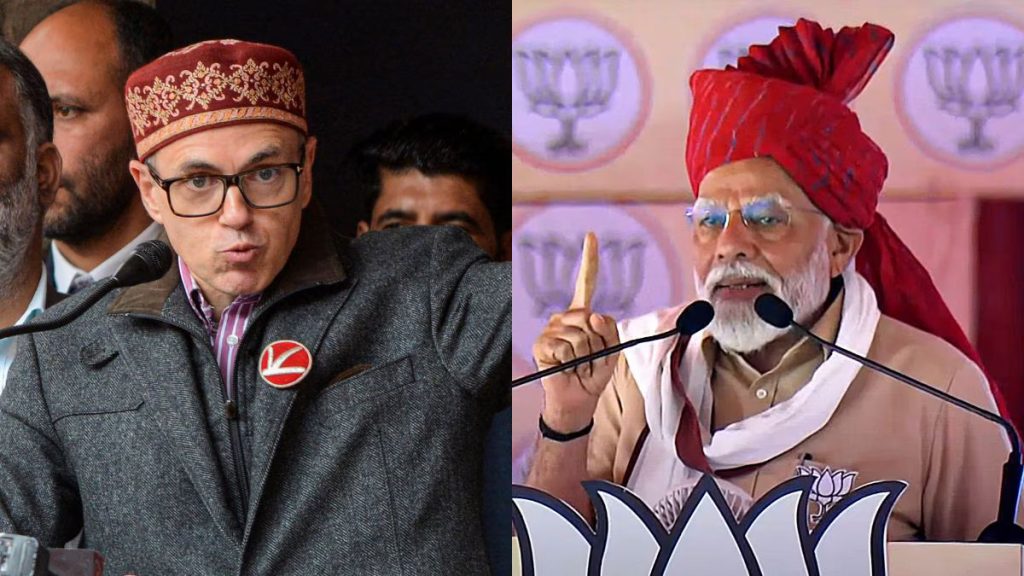
PM Fulfilled His Word The political discourse surrounding Jammu and Kashmir (J&K) witnessed an intriguing twist recently, with a public display of warmth between Prime Minister Narendra Modi and National Conference (NC) leader Omar Abdullah. This rare bonhomie has sparked speculation about the possibility of J&K regaining statehood in the near future. The issue, which has been a contentious point since the abrogation of Article 370 in August 2019, holds significant implications for the region’s political future and its relationship with the Indian Union.
In this article, we decode the context, the evolving dynamics, and what this development could mean for PM Fulfilled His Word J&K statehood aspirations.
PM Fulfilled His Word Context: The Abrogation of Article 370 and Loss of Statehood
In August 2019, the Indian government revoked the special status of J&K under Article 370 of the Indian Constitution. The region was bifurcated into two Union Territories (J&K and Ladakh), a move that was both celebrated and criticized across political and public spheres.
The decision was justified by the government as a step toward integrating J&K more closely with the rest of India, promoting development, and curbing terrorism. However, it also led to widespread political discontent in the region, with local parties like the NC and Peoples Democratic Party (PDP) vehemently opposing the move.
Since then, the restoration of statehood has been a pressing demand of political parties in J&K. The government has repeatedly assured that statehood will be restored at an appropriate time, but the timeline has remained ambiguous.
PM Fulfilled His Word The Modi-Omar Meeting: A Turning Point?
The recent meeting between PM Modi and Omar Abdullah during a high-profile event in New Delhi has set political circles abuzz. Omar’s remarks praising the Prime Minister for “fulfilling his word” have added fuel to the speculation about a possible roadmap for J&K’s statehood.
PM Fulfilled His Word What Did Omar Abdullah Say?
Speaking to the media, Omar Abdullah acknowledged the Prime Minister’s commitment to certain promises made to the people of J&K. He stated, “The Prime Minister has fulfilled his word on several occasions, and we hope that the promise of restoring statehood to J&K will also be honored soon.”
PM Fulfilled His Word A Rare Moment of Convergence
Such a statement from a leader of the NC, a party that has often criticized the BJP-led government, is seen as a significant departure from the usual political rhetoric. Analysts believe it indicates a thaw in the strained relations between the Centre and regional parties in J&K.
PM Fulfilled His Word Why Is Statehood Significant for J&K?
Restoring statehood to J&K is more than just a political or administrative change; it holds deep symbolic and practical significance for the region.
1. Political Autonomy
Statehood would restore a degree of political autonomy, allowing J&K to have a fully empowered legislative assembly and a Chief Minister with executive powers.
2. Addressing Local Sentiments
Many residents of J&K view the loss of statehood as a blow to their identity and political aspirations. Restoring statehood could help in bridging the trust deficit between the Centre and the region’s populace.
3. Boosting Democratic Processes
With statehood, local political parties would have a greater role in governance, thereby strengthening democratic institutions in the region.
4. Economic Development
A state government with legislative and executive powers could potentially focus more effectively on region-specific developmental needs.
PM Fulfilled His Word Signals from the Central Government
While there has been no official announcement, recent statements and actions from the central government indicate a possible shift in its approach to J&K:
1. Assurances on Statehood
Home Minister Amit Shah, in multiple public forums, has reiterated the Centre’s commitment to restoring statehood once the security situation in J&K improves.
2. Focus on Development
The government has been pushing significant developmental projects in J&K, from infrastructure to tourism, as part of its broader strategy to integrate the region.
3. Delimitation and Elections
The completion of the delimitation exercise and the announcement of assembly elections are seen as precursors to the restoration of statehood. The elections are expected to provide a mandate that could facilitate the transition.
PM Fulfilled His Word Omar Abdullah’s Calculated Optimism
Omar Abdullah’s remarks should be seen in the context of evolving political strategies:
1. Recalibrating Relations with the Centre
By acknowledging PM Modi’s role, Omar is signaling a willingness to engage with the Centre, a move that could benefit his party in the upcoming elections.
2. Positioning as a Regional Voice
The NC has always championed the cause of J&K’s autonomy. Omar’s comments might reflect an attempt to balance this stance with pragmatic politics, positioning the party as a constructive stakeholder in the region’s future.
3. Pressure on the Government
By publicly referencing the Prime Minister’s commitments, Omar is putting subtle pressure on the government to act on the statehood promise.
PM Fulfilled His Word Challenges to Restoring Statehood
Despite the optimism, several challenges remain:
1. Security Concerns
The government has consistently linked statehood restoration to improvements in the security situation. While the region has seen some stabilization, sporadic incidents of violence persist.
2. Geopolitical Dynamics
J&K’s unique geopolitical context, particularly its proximity to Pakistan and China, complicates decisions related to administrative changes.
3. Political Polarization
Restoring statehood could face resistance from political groups within and outside J&K, with differing views on the region’s governance.
PM Fulfilled His Word Implications for Regional Politics
Restoring statehood could have far-reaching implications for J&K’s political landscape:
1. Revival of Local Parties
Regional parties like the NC and PDP would likely gain a stronger foothold, reasserting their relevance in J&K politics.
2. Increased Voter Participation
State elections under a restored government could see higher voter turnout, reflecting renewed faith in democratic processes.
3. Centre-State Relations
Statehood could pave the way for a more balanced relationship between J&K and the Centre, addressing long-standing grievances.
PM Fulfilled His Word Broader National and International Implications
The restoration of statehood would also resonate beyond J&K:
1. Strengthening India’s Democratic Image
Restoring statehood would send a positive message about India’s commitment to democratic principles and regional empowerment.
2. International Perception
Given the international scrutiny of India’s policies in J&K, statehood restoration could improve global perceptions of the region’s governance.
3. Strategic Stability
A politically stable J&K is crucial for India’s strategic interests, particularly in managing cross-border challenges.
Conclusion: A Ray of Hope?
The Modi-Omar bonhomie, while unexpected, offers a glimmer of hope for the restoration of statehood in J&K. The Prime Minister’s assurances, coupled with the NC’s pragmatic approach, could mark the beginning of a new chapter in the region’s political journey.
However, the path ahead is fraught with challenges, and much will depend on the Centre’s ability to balance security concerns with political aspirations. For the people of J&K, the restoration of statehood is not just a matter of governance but a reaffirmation of their place within the Indian Union—a promise that, if fulfilled, could usher in a new era of peace, development, and trust.
Read more Latest News

