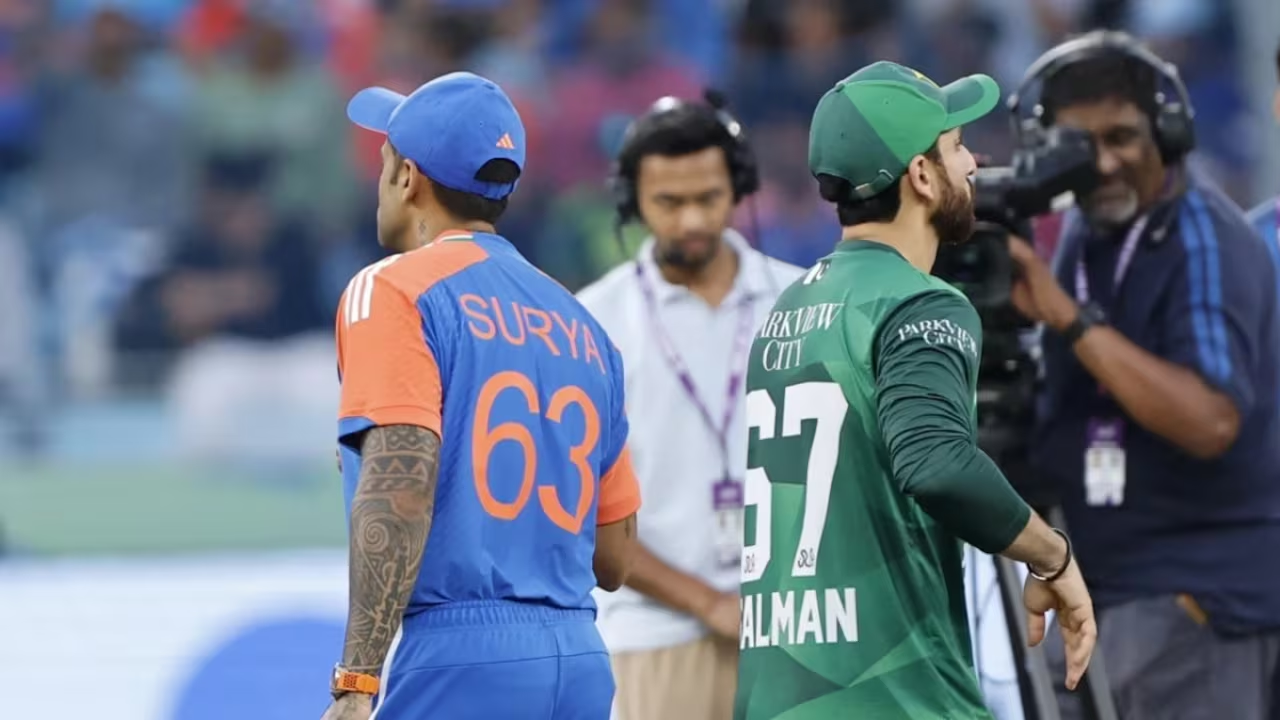
Pakistan’s Desperate Move: PCB Files Complaint with ICC Over Fakhar Zaman’s Catch – A Case of Excuses Over Accountability
Introduction
In the high-stakes world of cricket, especially in contests involving India and Pakistan, every ball, every shot, and every dismissal is analyzed under a microscope. The rivalry transcends sport and transforms into a battle of pride, emotion, and nationalism. But what happens when a team consistently fails to deliver on the big stage? Often, the focus shifts from self-reflection to external blame.
Pakistan’s cricket fraternity finds itself in such a position once again. After a humiliating defeat in the Asia Cup 2025 Super Four clash against India, the Pakistan Cricket Board (PCB) has filed an official complaint with the International Cricket Council (ICC). The subject of their grievance? Fakhar Zaman’s controversial dismissal.
Instead of introspection on the team’s lack of consistency, questionable team selections, and poor execution under pressure, Pakistan has chosen to raise a complaint over a single catch. This move has triggered debate across the cricketing world — is the PCB genuinely standing up for its player, or is it yet another desperate attempt to mask deeper failures?
This blog explores the incident in detail, the context behind Pakistan’s complaint, reactions from stakeholders, and why this reflects a larger pattern of excuses from Pakistan cricket.
The Controversial Fakhar Zaman Catch
What Happened on the Field?
During the crucial match between India and Pakistan in the Asia Cup 2025 Super Four stage, Pakistan opener Fakhar Zaman looked in decent touch while chasing a stiff target set by India. Just as Pakistan needed a partnership to steady the innings, Fakhar attempted an aggressive stroke that led to his dismissal.
The catch, taken by an Indian fielder at the boundary, instantly sparked controversy. Pakistani players raised questions about whether the fielder’s foot had touched the boundary rope while completing the catch. The third umpire was called into action, reviewing multiple angles before declaring Fakhar Zaman out.
While the decision seemed conclusive to the officials, Pakistani players and the team management expressed visible dissatisfaction. The PCB later escalated the matter, filing an official complaint with the ICC, arguing that “sufficient evidence” was not available to confirm the dismissal and that the benefit of doubt should have gone to the batsman.
Pakistan’s Complaint to the ICC
The PCB’s Official Stand
According to reports, the Pakistan Cricket Board lodged a formal protest citing two main reasons:
- Insufficient Camera Angles – The PCB argued that the available footage did not conclusively show whether the fielder’s foot touched the boundary rope.
- Unfair Treatment – The PCB hinted at bias, claiming that in similar situations, the benefit of doubt is often given to the batsman.
The complaint has been positioned as a matter of fairness and transparency, but critics argue it is more about optics than justice.
ICC’s Likely Response
Historically, the ICC rarely overturns on-field umpiring or third-umpire decisions unless there is a clear error or procedural violation. In Fakhar Zaman’s case, the third umpire followed due process. Even if the footage was inconclusive, the final decision was made based on the best evidence available.
Thus, while Pakistan’s complaint may earn some headlines, it is unlikely to change the result of the match or Fakhar’s dismissal.
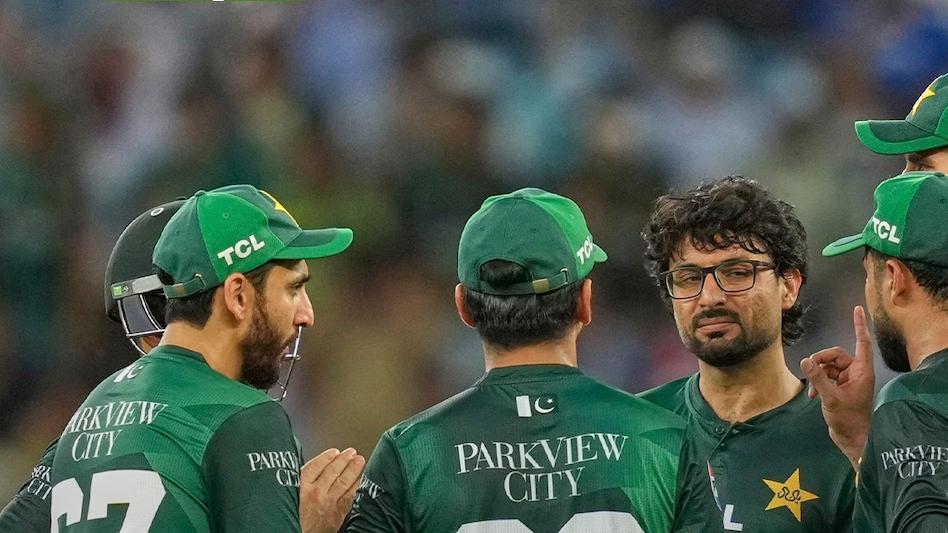
Pakistan’s Habit of Excuses
This incident is not an isolated one. Pakistan cricket has developed a reputation for blaming external factors instead of addressing internal weaknesses.
Previous Episodes of Blame Game
- World Cup 2019: After their poor performance, Pakistani media and fans blamed “bad schedules” and “unfair pitches” rather than acknowledging inconsistent batting.
- Asia Cup 2022: Following a defeat against Sri Lanka, Pakistan officials blamed poor umpiring and scheduling.
- World Cup 2023: PCB accused the ICC and BCCI of mismanaging venues when Pakistan lost to India in Ahmedabad.
Every time Pakistan suffers a high-profile defeat, instead of self-reflection, the narrative shifts to conspiracies, bias, and external blame.
The Real Reasons Behind Pakistan’s Struggles
1. Inconsistent Batting Line-Up
Fakhar Zaman, Babar Azam, and Mohammad Rizwan have carried the burden of Pakistan’s batting for years. But when one or two of them fail, the middle order collapses. Lack of depth and finishing power has haunted Pakistan repeatedly.
2. Team Selection Politics
Domestic performances are often ignored in favor of favoritism and internal politics. Promising players fail to get consistent chances, while seniors are persisted with despite poor form.
3. Over-Reliance on Bowling
Pakistan has always prided itself on its fast-bowling legacy. But modern cricket requires balance. With inconsistent spinners and injury-prone pacers, Pakistan cannot rely on bowling alone to win matches.
4. Poor Mental Strength in Big Games
India vs Pakistan matches are about handling pressure. While India thrives under the spotlight, Pakistan’s players often succumb to nerves. Fakhar Zaman’s dismissal is just one example of how pressure affects decision-making and execution.
Reactions to Pakistan’s Complaint
From Cricket Experts
Many experts have criticized Pakistan’s decision to escalate the issue. Former cricketers have pointed out that filing complaints after every loss diminishes Pakistan’s credibility.
An Indian commentator remarked:
“When you lose, you analyze, correct mistakes, and move forward. Complaining about catches won’t win you trophies.”
Even some Pakistani analysts believe the PCB should focus on team-building rather than chasing controversies.

Social Media Buzz
Fans across social media platforms mocked Pakistan’s move, with memes flooding Twitter and Instagram. Phrases like “Excuseistan” and “Complaint Board of Pakistan” started trending.
Some fans, however, backed the PCB, arguing that fair play and transparency are crucial, and every team has the right to demand justice.
The India Factor
Why India-Pakistan Matches Are Different
The intensity of India-Pakistan matches means that every incident, whether small or big, becomes magnified. A dropped catch, a misfield, or a controversial umpiring call can spark national debates.
For Pakistan, losing to India carries extra baggage. With political tensions and decades of rivalry, every defeat is seen as a blow to national pride. This makes the urge to find excuses even stronger.
India’s Calm Response
Interestingly, the Indian camp has not overreacted to Pakistan’s complaint. Indian players and management have treated Fakhar’s dismissal as part of the game, maintaining their focus on performance rather than controversy.
Why Pakistan Needs Introspection, Not Excuses
Pakistan cricket finds itself at a crossroads. Instead of lodging complaints and shifting blame, the team and the board need serious introspection.
- Strengthen Domestic Cricket – Without a robust domestic structure, Pakistan cannot consistently produce world-class players.
- Invest in Mental Conditioning – Handling pressure in big games requires sports psychologists and better preparation.
- Transparent Selection – Only merit-based selections can create a strong and united team.
- Accountability of Management – Coaches and PCB officials should be held accountable for repeated failures.
Until these steps are taken, complaints like the one over Fakhar Zaman’s catch will only serve as temporary distractions.
Broader Lessons for World Cricket
The controversy highlights important lessons for world cricket:
- Technology’s Role – Cricket must continue to invest in better camera angles, higher frame-rate replays, and more reliable decision-making systems.
- Spirit of the Game – Players and boards must remember that cricket is not just about rules, but also about sportsmanship.
- Avoiding Excuse Culture – For cricket to thrive, boards must promote accountability rather than blame-shifting.
Conclusion
Pakistan’s official complaint to the ICC over Fakhar Zaman’s catch has once again brought to light the country’s tendency to seek excuses after every major defeat. While the PCB claims it is fighting for fairness, the move appears more like an attempt to deflect attention from the team’s poor performance.
Cricket is a game of uncertainties, and controversial decisions are part of its fabric. What truly defines great teams is how they respond to setbacks. India, despite facing several contentious moments in history, has built a culture of resilience. Pakistan, on the other hand, continues to lean on complaints and conspiracy theories.
If Pakistan genuinely wishes to reclaim its glory days, it must stop running to the ICC after every loss and instead look within. Until then, the world will continue to see such complaints as mere excuses — a desperate attempt to hide failure rather than confront it.
Read More latest sport news