

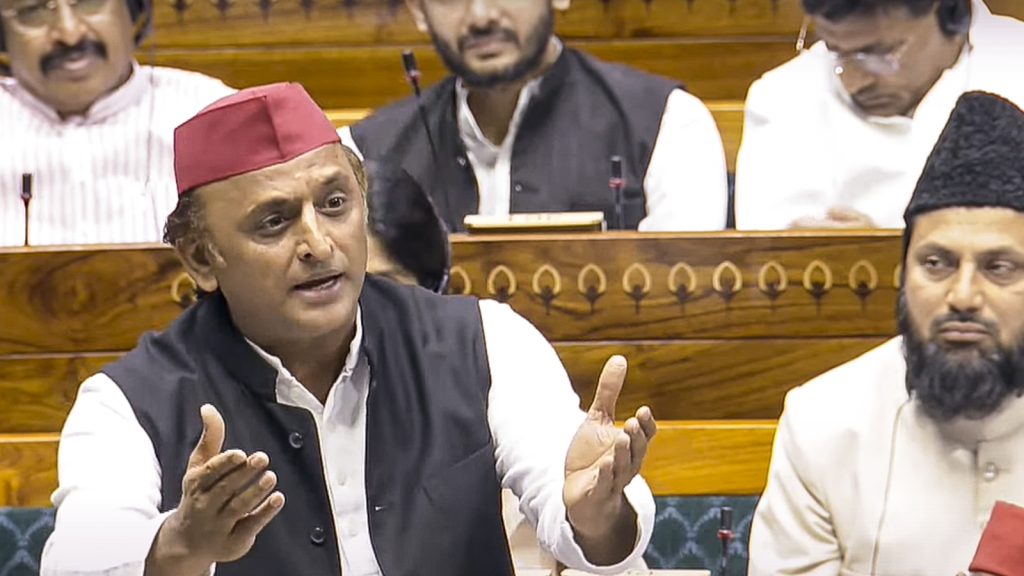
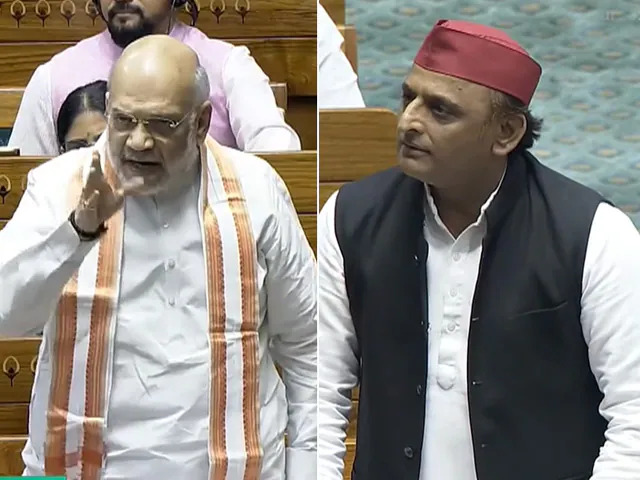
Akhilesh Yadav The Indian Parliament has often witnessed fiery debates, moments of wit, and thought-provoking discussions between leaders representing different political ideologies. One such intriguing exchange took place in the Lok Sabha during the discussion on the Waqf Amendment Bill. The bill, which proposed significant changes to the management and governance of Waqf properties in India, became the focal point of a debate between Samajwadi Party (SP) President Akhilesh Yadav and Union Home Minister Amit Shah.
The discussion was not just a political argument but also a fascinating blend of historical references, legal interpretations, and ideological clashes. Here’s a detailed account of the engaging conversation between two of India’s most prominent leaders.
Setting the Stage: The Lok Sabha Debate Begins
As the bill was introduced, Amit Shah took the floor to present the government’s perspective on the necessity of the amendments. He outlined the inefficiencies in the current Waqf property management system, citing cases of corruption, illegal encroachments, and mismanagement. He emphasized that the new amendments would ensure transparency and better governance.
However, as soon as he concluded his initial remarks, Akhilesh Yadav sought permission from the Speaker to respond. Known for his sharp wit and strong oratory skills, he began his argument in his characteristic style.
Akhilesh Yadav’s Opening Remarks: A Question of Intent
Akhilesh Yadav: “Honorable Home Minister, you have spoken about efficiency and transparency, but isn’t it true that the Waqf properties have been targeted time and again under various pretexts? The Waqf Board is an institution that safeguards the heritage of a particular community, and any attempt to control it centrally raises concerns of interference and ulterior motives. My question to you is simple—why does this government, which claims to promote ‘Sabka Saath, Sabka Vikas,’ repeatedly focus on policies that create apprehension among minorities?”
Amit Shah (smiling): “Akhilesh ji, I appreciate your concern, but let me clarify. This amendment is not about targeting any community; it is about protecting Waqf properties from being misused. The cases of encroachments, illegal transactions, and internal corruption within Waqf boards are well documented. If we aim for true development, we must first ensure that these properties serve their intended purpose.”
Akhilesh Yadav: “Then why not extend similar scrutiny to temple and trust properties as well? If transparency is the goal, shouldn’t it be uniform?”
Amit Shah: “Religious properties function under different legal frameworks, and Waqf properties have specific provisions under Islamic law. This bill is about streamlining governance, not about targeting anyone.”
The Battle Over Historical Context
As the debate progressed, Akhilesh Yadav brought in historical references to argue against what he perceived as a biased approach.
Akhilesh Yadav: “Home Minister ji, history tells us that Waqf properties have been instrumental in establishing schools, hospitals, and charitable institutions. During colonial rule, the British too tried to interfere with Waqf properties but faced resistance. Are we now following in their footsteps?”
Amit Shah: “Akhilesh ji, I appreciate your knowledge of history, but let’s focus on the present. Many Waqf properties today are embroiled in disputes, and instead of serving the community, they are controlled by a few individuals who misuse them. This bill aims to bring order.”
Akhilesh Yadav: “Then why is it that local communities, which have been the custodians of these properties for generations, are now being sidelined in decision-making? The bill grants the government excessive powers in appointing members to the Waqf Board. Shouldn’t the community have a greater say?”
Amit Shah: “Transparency requires regulatory oversight. We cannot allow Waqf properties to function as private assets of a select few. This is about accountability.”
A Clash of Ideologies: Development vs. Control
The discussion soon shifted to the broader ideological divide between the two leaders. Akhilesh Yadav framed the bill as an attempt to centralize power, whereas Amit Shah maintained that it was about curbing corruption.
Akhilesh Yadav: “If accountability is your concern, why do we see increasing centralization in governance? Be it electoral bonds, fund allocations, or now Waqf properties, there seems to be a pattern of control rather than reform.”
Amit Shah: “Akhilesh ji, governance must evolve with time. When we found inefficiencies in Article 370, we removed it for the benefit of the people. Similarly, if Waqf properties are mismanaged, it is the duty of a responsible government to intervene.”
Akhilesh Yadav: “But Article 370 had political implications, whereas Waqf properties directly affect the socio-economic rights of a particular community. Can we not find a more democratic way of achieving reform without causing fear and resentment?”
Amit Shah: “Every reform meets resistance in the beginning. But over time, people will see the benefits. Just like the Triple Talaq ban, which many opposed initially but has now empowered countless women.”
A Moment of Humor and Wit
At one point, the debate took a lighter turn when Akhilesh Yadav tried to inject humor into the discussion.
Akhilesh Yadav (smiling): “Home Minister ji, looking at how frequently you are bringing these amendments, it seems like your government is preparing for elections through legislative campaigns.”
Amit Shah (chuckling): “Akhilesh ji, governance does not stop because of elections. If good policy also helps in elections, that’s just a bonus.”
The exchange drew laughter from members of the Lok Sabha, breaking the intensity of the discussion momentarily.
The Conclusion: A Call for Dialogue
As the debate neared its conclusion, both leaders made their final remarks.
Akhilesh Yadav: “Reforms should be inclusive, not imposed. If this bill is truly for the benefit of Waqf properties, then consult more stakeholders, take feedback from the community, and ensure that no one feels alienated.”
Amit Shah: “That is precisely why we are debating this bill in Parliament. Every voice, including yours, will be considered. But let us not mistake necessary reforms for persecution.”
The discussion ended on a note of political disagreement but also with a mutual acknowledgment of each other’s perspectives. While the government proceeded with the bill, the debate highlighted crucial concerns regarding minority rights, governance, and legislative intent.
Final Thoughts: The Significance of This Debate
The conversation between Akhilesh Yadav and Amit Shah during the Waqf Amendment Bill discussion reflects the broader democratic ethos of India. It was not just a policy debate but a reflection of the ideological battle between centralization and community autonomy, governance and political narratives, reform and resistance.
Such debates are vital for a healthy democracy. While the government may push for reforms, the opposition plays a crucial role in ensuring that these changes are implemented with fairness, transparency, and inclusivity. The discussion on the Waqf Amendment Bill is a testament to the strength of India’s parliamentary system, where differing viewpoints can coexist, clash, and ultimately contribute to the larger democratic process.
read more latest news

