

Mamata Banerjee, the Chief Minister of West Bengal, has long been a force to reckon with in Indian politics. Known for her fiery speeches, unrelenting stance on state autonomy, and outspoken criticism of the central government, Banerjee’s persona is that of a political figure who doesn’t shy away from controversy. Her recent visit to Oxford University, where she delivered a lecture on the political landscape of India and the significance of federalism, however, turned into an unexpected spectacle as a section of the audience disrupted her speech, challenging her political stances and demanding sharp answers.
The incident has sparked a debate not only on Banerjee’s leadership and political approach but also on the broader issue of free speech, accountability, and the role of universities as platforms for critical inquiry. In this blog, we will unpack the events surrounding the uproar during Mamata Banerjee’s speech, analyze the reasons behind the disruption, and explore the implications for both Indian and global political discourse.
The Context of the Visit
Mamata Banerjee’s visit to Oxford University was a high-profile one, drawing attention from both Indian and international media. As Chief Minister of West Bengal, Banerjee has frequently positioned herself as a champion of state rights in the face of an overpowering central government under Prime Minister Narendra Modi. In her speech at Oxford, titled “The Role of Federalism in Strengthening Democracy,” Banerjee was expected to delve into the dynamics between state and central governance in India, the challenges to federalism under the Modi administration, and her vision for a more decentralized India.
Banerjee’s political journey has been marked by her rise from being a grassroots leader to a prominent figure on the national stage. As the leader of the All India Trinamool Congress (TMC), Banerjee has often positioned herself against what she sees as the authoritarian tendencies of the Bharatiya Janata Party (BJP). Her strong advocacy for regional autonomy, her defiance in the face of the central government’s policies, and her controversial decisions in West Bengal have earned her both admiration and criticism in equal measure.
At Oxford, Banerjee was expected to discuss the complexities of Indian federalism, addressing the relationship between the central government and the states. However, the discourse took a dramatic turn when the event was interrupted by members of the audience who vocally challenged her on various aspects of her political career, her governance in West Bengal, and her stance on critical national issues.
The Disruption: What Happened?
The event was meant to be an academic lecture, but what unfolded was a clash between Banerjee and several members of the audience, who were not content with merely listening to her views. As Banerjee was making her opening remarks, a series of interruptions began, mostly coming from students and attendees who were not in agreement with her political viewpoints.
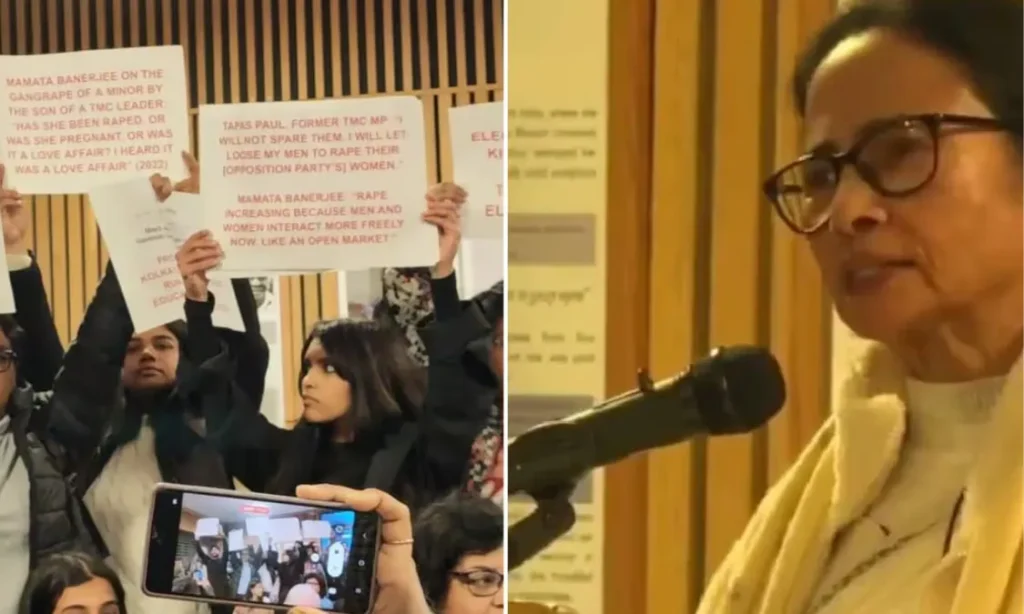
One of the first interruptions came when a member of the audience questioned Banerjee’s handling of democracy in West Bengal, particularly regarding her government’s response to protests and political violence. The question focused on accusations of political repression and the suppression of dissent, which Banerjee’s government has faced criticism for in recent years. The questioner demanded clarification on the state’s stance toward political freedoms and the alleged use of force against opposition parties.
Banerjee, known for her combative and assertive style, responded with characteristic defiance. She dismissed the claims as politically motivated and accused the opposition of attempting to malign her government’s reputation. However, the interruptions did not stop there. Several more voices from the crowd took issue with her administration’s handling of education, healthcare, and law enforcement in West Bengal.
One attendee raised concerns about the increasing incidents of corruption within her party and the alleged involvement of her close associates in various scandals. Another questioned Banerjee’s decision to block the implementation of the National Register of Citizens (NRC) in West Bengal, a policy pushed by the central government, which Banerjee had strongly opposed. The questioners demanded Banerjee’s stance on the matter and her explanation for why she believed the NRC was discriminatory.
At this point, the tension in the room was palpable. Some in the audience applauded the sharp questions, while others tried to silence the detractors. The room was divided, with Banerjee’s supporters attempting to rally behind her, while critics continued to press for answers. The situation grew more intense as Banerjee, visibly agitated, responded to the crowd’s criticism by accusing the media and opposition of distorting facts and misleading the public.
The Political Implications
The disruption at Oxford raised several important questions about Mamata Banerjee’s leadership, her political legacy, and the broader state of democracy in India. Banerjee has always been an outspoken critic of centralization, often accusing the Bharatiya Janata Party (BJP) of undermining the federal structure of the Indian government. However, the interruptions during her speech brought into focus the criticisms of her governance style and her leadership within her own state.
1. Authoritarian Tendencies in State Governance
One of the key criticisms leveled against Banerjee during the disruption was the alleged authoritarian nature of her rule in West Bengal. Banerjee has often been accused of suppressing dissenting voices, particularly those critical of her government. Allegations of violence against opposition party workers, media suppression, and the silencing of protests have been persistent in West Bengal since Banerjee assumed power in 2011.
The disruptions at Oxford raised the issue of whether Banerjee’s stance on federalism was genuinely about empowering states or whether it was a means of consolidating her own power at the state level. While Banerjee has long advocated for the decentralization of power, her critics argue that her government’s heavy-handed approach to dealing with opposition parties and critics might be undermining the very principles of democracy that she claims to uphold.
2. Corruption Allegations
Another sharp question raised during the disruption focused on corruption allegations within Banerjee’s party, the Trinamool Congress (TMC). Several of her party’s leaders and close associates have faced charges of corruption, and the party has been embroiled in various scandals over the years. While Banerjee has consistently denied any personal involvement in these matters, her critics have pointed out that her government has been slow to address allegations of corruption within her ranks.
The interruptions at Oxford served as a reminder that while Banerjee has positioned herself as a fighter for the common people, her administration’s handling of corruption and governance in West Bengal remains a contentious issue. The fact that these questions were raised by the Oxford audience suggests that Banerjee’s leadership style is under scrutiny not just in India but also on the global stage.
3. National Politics and Opposition to the Modi Government
Mamata Banerjee’s opposition to the policies of Prime Minister Narendra Modi and the BJP has been one of the defining features of her political career. She has been an outspoken critic of the Modi government’s stance on issues such as the National Register of Citizens (NRC), the Citizenship Amendment Act (CAA), and its handling of the economy and unemployment.
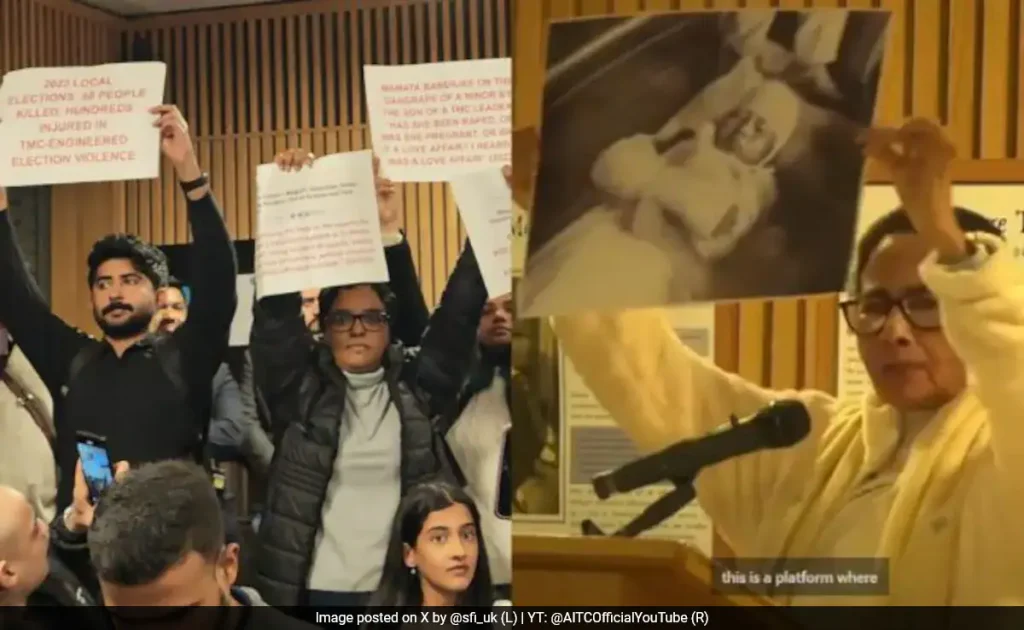
At Oxford, Banerjee’s speech was expected to reflect her opposition to these national policies, but the interruptions suggested that her opposition to the central government’s agenda was not without its own set of questions. While Banerjee’s anti-Modi rhetoric resonates with many who are disillusioned with the BJP’s governance, the questions raised about her governance in West Bengal suggest that she, too, is not immune from scrutiny when it comes to the issues of democracy, human rights, and corruption.
The Role of Universities in Political Discourse
The incident at Oxford also highlights the role that universities play in fostering critical discourse and holding political figures accountable. Oxford University, with its long history of academic rigor and political engagement, has always been a platform where ideas are debated and challenged. The fact that Mamata Banerjee’s speech was interrupted by members of the audience reflects the growing trend of universities becoming spaces where political leaders are not just lauded but also questioned about their policies and actions.
In an era where political discourse is increasingly polarized, the role of academic institutions in fostering healthy debates and challenging political leaders has never been more important. The disruptions at Oxford serve as a reminder that public figures, regardless of their stature, must be willing to engage in meaningful dialogue and answer tough questions from the public.
Conclusion
The uproar during Mamata Banerjee’s speech at Oxford University was a moment of high drama that not only shed light on her leadership and political views but also highlighted the complexities of political discourse in India. The interruptions by the audience were not just about challenging Banerjee on her policies but about demanding accountability from political leaders, whether they are in power at the state or national level.
While Banerjee’s supporters may argue that the disruptions were politically motivated, the fact remains that the questions raised were significant and reflected concerns that are being debated within India’s political landscape. For Banerjee, the incident at Oxford will likely serve as a reminder that political leaders, especially those who champion regional autonomy and federalism, must also be open to scrutiny and criticism.
As Indian democracy continues to evolve, the role of universities like Oxford in fostering free and open debates remains crucial. The events at Oxford underline the importance of holding political leaders accountable, whether in India or abroad, and ensuring that the principles of democracy are upheld at all levels of governance.
read more latest news

