

The Tragic Death of a Dalit Girl in Pratapgarh, Uttar Pradesh: A Community in Crisis
On the evening of a fateful day in Pratapgarh, Uttar Pradesh, a tragedy unfolded that would spark a violent confrontation between the local community, police, and authorities, resulting in injuries to many, including a Circle Officer (CO). The death of a Dalit girl, whose family’s grief was compounded by suspicion, set off a sequence of events that not only shed light on the deep-seated social issues within the region but also escalated into a full-blown ruckus. The violence culminated in stone-pelting, with many people injured, including law enforcement officials, drawing attention to the already fragile social fabric of the area.
The Pratapgarh incident has once again brought the issue of caste-based violence, social injustice, and police response to the forefront. This blog aims to provide a detailed examination of the events surrounding the death of the Dalit girl, the subsequent public outcry, the violent protests, and the ongoing debates about justice, accountability, and caste-related issues in India.
The Incident: Death of the Dalit Girl
The initial catalyst for the unrest in Pratapgarh was the tragic death of a Dalit girl, whose identity has been widely reported as Shalini (a pseudonym used for anonymity). On the evening of March 25, 2025, Shalini was found unconscious and severely injured in a local area of Pratapgarh. Her family, especially her parents, were left in shock and anguish when they discovered that their daughter was dead.
While the initial reports suggested that the cause of her injuries was unknown, the family members raised immediate concerns. They suspected foul play, claiming that Shalini had been physically assaulted, possibly by individuals from a higher caste, given the history of caste-based discrimination in the region. Although local authorities were quick to dispatch the body for a post-mortem examination, the situation rapidly escalated as her family and a section of the Dalit community began to voice their outrage.
The Growing Unrest
The Dalit community in Pratapgarh has historically faced systemic discrimination and marginalization. In rural areas such as Pratapgarh, the caste divide remains a significant source of tension, with Dalit communities often subjected to social exclusion, violence, and abuse. When news of Shalini’s death broke, her family and other Dalit families suspected that her death was a result of caste-based violence, or at the very least, a crime rooted in caste prejudice.
Protests quickly began to unfold in various parts of the town. Initially, the protests were peaceful, with Dalit community members demanding justice for Shalini and calling for a thorough investigation into her death. They also voiced concerns about the local police’s bias in handling cases involving Dalit victims, citing instances in the past where justice had not been served.
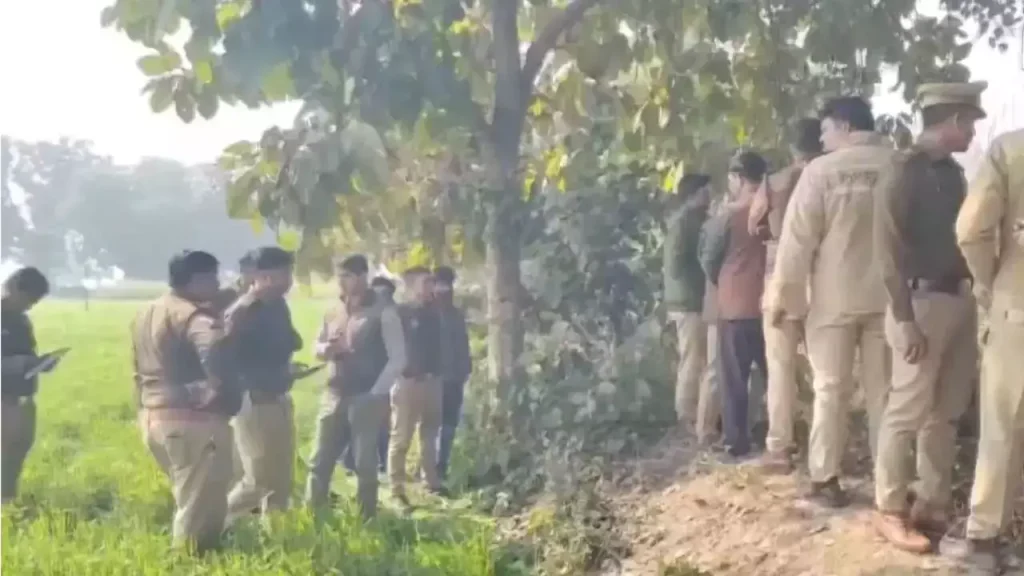
However, as the situation escalated, the protests turned violent. On March 26, 2025, a large group of protesters gathered outside the local police station, demanding answers and accountability. Tensions reached a boiling point when a section of the protesters, frustrated by what they saw as an inadequate police response, began pelting stones at the police. What followed was a chaotic scene: police officers scrambled to protect themselves, and skirmishes broke out in the streets. Law enforcement, overwhelmed by the intensity of the protests, began using force to disperse the crowds, leading to further injuries.
The Role of the Police
As the protests escalated, law enforcement was put on high alert, with the local police force deploying additional officers to contain the violence. Circle Officer (CO) Raghav Singh, a senior officer in the area, was among those on the frontlines trying to manage the situation. However, the protests had quickly spiraled out of control, and stone-pelting became a major threat. During the course of the skirmishes, CO Raghav Singh was injured by a stone, further intensifying the conflict. His injury fueled the outrage of the police and the general public, who viewed the attack on an officer as a direct challenge to the law and order in the region.
While the police were engaged in their efforts to quell the protests, there were serious concerns about their approach. Many protesters claimed that the police were not taking the case seriously enough, and that their response to the initial complaint about Shalini’s death had been sluggish. They alleged that law enforcement had not acted swiftly to investigate the matter thoroughly or ensure that Shalini’s family was treated with the respect and dignity they deserved during this difficult time.
Further compounding the situation was the perception of bias in how the police handled caste-related crimes. In a region like Pratapgarh, where caste divides are entrenched and often violent, the Dalit community’s distrust of law enforcement has only deepened over the years. The community felt that their complaints were routinely ignored or dismissed by police officials, particularly when it came to cases involving higher-caste perpetrators. This widespread sense of injustice led to a breakdown of communication between the police and the Dalit community, making it difficult to restore calm.
The Aftermath: Investigations and Reactions
In the wake of the violence, the Uttar Pradesh police began an investigation into Shalini’s death, and a team of forensic experts was dispatched to conduct a post-mortem examination. Early reports revealed that Shalini had been assaulted, and the nature of her injuries indicated foul play. However, the specific details of her death were still unclear, and authorities called for a more thorough investigation to determine whether caste-based violence had played a role in the crime.
The local administration also promised to increase security in the area and prevent further violence, calling in additional forces from neighboring regions. However, despite these measures, the protests continued, with the Dalit community organizing rallies and public demonstrations across Pratapgarh and other parts of Uttar Pradesh. The anger and frustration were palpable, as the family of Shalini and others in the community felt that the justice system had failed them yet again.
In response to the unrest, political leaders from various parties began to weigh in on the situation. Opposition leaders, especially those from Dalit-centric parties, condemned the police’s handling of the case and called for a swift, transparent investigation. They accused the government of ignoring the plight of Dalit communities and failing to protect them from violence. The ruling party, on the other hand, faced growing pressure to restore peace and ensure that those responsible for Shalini’s death were brought to justice.
A Caste-Related Tragedy?
While the exact circumstances surrounding Shalini’s death remain under investigation, the tragic incident has raised serious questions about caste-based violence in Uttar Pradesh. The state, like much of northern India, has a long history of caste-related tensions, particularly between Dalits and upper-caste communities. Caste-based discrimination remains rampant in rural areas, where traditional power structures often protect those in higher castes while marginalizing Dalits and other lower-caste communities.
The Dalit community, which comprises a significant portion of Uttar Pradesh’s population, has been subjected to violence, humiliation, and social exclusion for centuries. The struggle for dignity, equality, and justice for Dalits remains a pressing issue across the state, and incidents like the death of Shalini only serve to highlight the systemic issues within Indian society.
The protests and the ensuing violence also serve as a reminder of the anger and frustration that can build up when communities feel unheard and oppressed. The Dalit community, in this case, felt that their grievances were being ignored and that the authorities were failing to act on their behalf. This sense of betrayal can lead to extreme measures, as evidenced by the violence that erupted in the wake of Shalini’s death.
The Role of the Media and Public Perception
The role of the media in shaping public perception of the Pratapgarh incident cannot be understated. News outlets quickly picked up on the details of the case, and coverage of the protests added fuel to the fire. Television reports and social media posts brought the issue of caste-based violence to national attention, with many commentators calling for a more just and equitable society.
The media’s portrayal of the incident helped to amplify the voices of the Dalit community, who have long been marginalized in mainstream discourse. However, some sections of the media also sensationalized the violence, focusing heavily on the stone-pelting and the injuries sustained by the CO, which detracted from the underlying issues of caste discrimination and the need for justice for Shalini.
Public perception of the events in Pratapgarh also varied, with many sympathetic to the Dalit community’s plight, while others criticized the violent methods used in the protests. The incident once again highlighted the deep divides in Indian society, with caste-based tensions manifesting not only in the actions of individuals but also in how people perceive and react to incidents of violence.
Moving Forward: The Road to Justice
The death of Shalini and the subsequent violence in Pratapgarh have underscored the need for significant reforms in how caste-related crimes are handled in Uttar Pradesh and beyond. While the investigation into her death continues, the tragedy has sparked a broader conversation about the need for more effective measures to combat caste-based violence and discrimination.
The Dalit community’s call for justice has brought attention to the systemic issues that continue to affect their lives. However, true justice will only be achieved when authorities acknowledge the depth of the problem and take decisive action to ensure accountability. This means not only addressing individual cases of violence but also working to dismantle the structures of caste-based oppression that persist in many parts of India.
As the investigation into Shalini’s death progresses, the people of Pratapgarh and Uttar Pradesh are left grappling with the aftermath of a tragedy that exposed the deep-rooted social issues within their communities. The road to healing, both for Shalini’s family and the broader Dalit community, will be long, and the wounds inflicted by the incident may take years to heal. However, the hope for justice remains, and it is only through continued advocacy and reform that the cycle of violence and discrimination may be broken.
Conclusion: A Wake-Up Call for Society
The tragic death of Shalini in Pratapgarh, Uttar Pradesh, and the subsequent protests have revealed the deep scars left by caste-based violence and social injustice. The violence that erupted in the wake of her death reflects the frustration and anger of a community that has long been marginalized and oppressed. In the coming months and years, the case will likely continue to unfold, with more revelations, political interventions, and calls for justice.
For the family of Shalini, justice is the only way to honor her memory. For the community, it is a call to action—one that demands that caste-based violence be recognized and addressed with the seriousness it deserves. Only then will the wounds of the past begin to heal, and true equality begin to take root in Indian society.
read more latest news

