

CM Omar Refuses to Cut Tricolor Ribbon: Viral Video Triggers Nationwide Debate on Symbolism Protocol and Politics.
The phrase Omar Refuses to Cut Tricolor Ribbon has since dominated headlines, trending across social media and igniting discussions about patriotism, protocol, and the symbolism associated with the Indian national flag.
In a moment that has quickly escalated into a nationwide political and social debate, Omar Abdullah found himself at the center of controversy after a video surfaced showing that Omar Refuses to Cut Tricolor Ribbon during a public event in Jammu and Kashmir. The incident, which might have otherwise gone unnoticed, has now sparked intense reactions across political circles, media platforms, and among citizens.
The Incident That Sparked the Debate
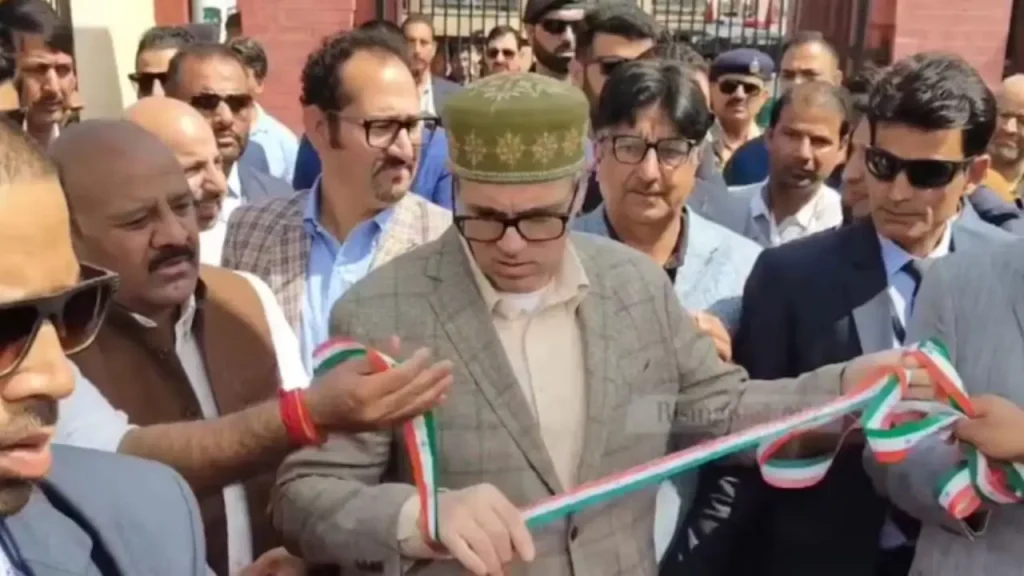
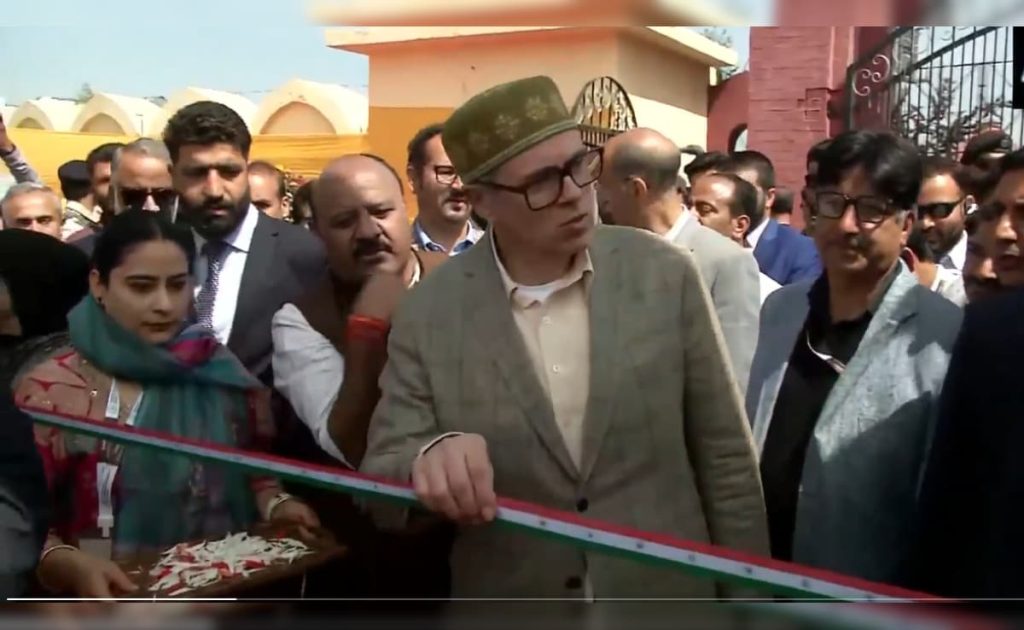
The controversy began when a video clip from an official event went viral, showing the Chief Minister hesitating and ultimately declining to cut a ribbon styled in the colors of the Indian tricolor. The act—simple yet symbolic—has been interpreted in multiple ways.
In the video, Omar Refuses to Cut Tricolor Ribbon, reportedly citing concerns about the appropriateness of cutting something that represents the national flag. While some observers saw this as a respectful gesture toward the dignity of the tricolor, others perceived it as unnecessary or even politically motivated.
The moment when Omar Refuses to Cut Tricolor Ribbon quickly became a flashpoint, dividing opinion across ideological lines.
Symbolism of the Tricolor Why It Matters
The Indian tricolor is not just a flag—it is a symbol of national pride, sacrifice, and unity. Any action involving its representation is often viewed through a sensitive lens.
Supporters of the Chief Minister argue that when Omar Refuses to Cut Tricolor Ribbon, he is upholding the sanctity of the national symbol. They claim that cutting a ribbon designed like the tricolor could be seen as disrespectful, even if unintentionally.
On the other hand, critics question whether the ribbon was truly intended to represent the national flag or simply used its colors for decorative purposes. They argue that Omar Refuses to Cut Tricolor Ribbon has been blown out of proportion or possibly used to create a political narrative.
Political Reactions Pour In
As the video spread, political leaders from various parties began weighing in. Some praised the Chief Minister’s sensitivity, while others criticized what they described as unnecessary theatrics.
Opposition voices have pointed out that Omar Refuses to Cut Tricolor Ribbon could reflect inconsistency in political messaging, while supporters insist that the action demonstrates respect for national values.
The phrase Omar Refuses to Cut Tricolor Ribbon has now become a talking point in debates, press conferences, and political rallies.
Social Media Storm
Social media platforms have played a significant role in amplifying the controversy. Within hours of the video going viral, hashtags related to the incident began trending.
Clips showing how Omar Refuses to Cut Tricolor Ribbon have been shared widely, often accompanied by contrasting interpretations. Some users applauded the gesture, calling it patriotic, while others criticized it as unnecessary drama.
Memes, opinion threads, and analysis videos have flooded platforms, turning the incident into a full-blown digital discourse.
Protocol vs Perception
A key question arising from this incident is whether there is any official protocol regarding the use of tricolor-themed decorations. While there are strict rules governing the use of the national flag itself, interpretations vary when it comes to symbolic representations.
When Omar Refuses to Cut Tricolor Ribbon, it raises an important issue: should public officials avoid actions that might be perceived as disrespectful, even if they are not technically violations?
This gray area between protocol and perception has fueled the ongoing debate.
Public Opinion Divided Yet Engaged
Public reactions to the incident have been deeply divided. For some, the moment when Omar Refuses to Cut Tricolor Ribbon reflects a commendable sense of respect. For others, it appears as an overreaction or even a calculated political move.
The diversity of opinions highlights the complex relationship people have with national symbols and political actions.
Interestingly, many citizens who watched the video expressed curiosity rather than outrage, seeking to understand the reasoning behind why Omar Refuses to Cut Tricolor Ribbon.
Historical and Cultural Context
India’s relationship with its national symbols is deeply rooted in history. The tricolor represents the sacrifices made during the freedom struggle and continues to evoke strong emotions.
In this context, when Omar Refuses to Cut Tricolor Ribbon, it taps into a larger cultural narrative about respect and reverence. Even seemingly minor actions can carry significant symbolic weight.
This is why the incident has resonated so widely across the country.
Media Coverage and Narratives
News channels and digital platforms have extensively covered the story, often framing it in different ways depending on their editorial stance.
Some headlines highlight the controversy, emphasizing that Omar Refuses to Cut Tricolor Ribbon and questioning the intent behind it. Others present it as a thoughtful decision rooted in respect for national symbols.
The variation in coverage has further contributed to the polarization of opinions.
Leadership and Decision-Making
For a public figure like Omar Abdullah, every action is scrutinized. The decision that Omar Refuses to Cut Tricolor Ribbon demonstrates how even small moments can have significant political implications.
Leadership often involves making quick decisions in public settings, and those decisions can be interpreted in multiple ways. In this case, the Chief Minister’s choice has sparked a conversation that extends far beyond the event itself.
The Broader Political Impact
The controversy surrounding the moment when Omar Refuses to Cut Tricolor Ribbon could have lasting political implications. It has already become a point of discussion in political debates and may influence public perception.
For supporters, it reinforces an image of principled leadership. For critics, it raises questions about priorities and intent.
Either way, the incident has ensured that Omar Refuses to Cut Tricolor Ribbon remains a significant topic in current political discourse.

Lessons from the Controversy
Several key lessons emerge from this incident:
- The power of symbolism in politics
- The role of social media in shaping narratives
- The importance of clear communication in public actions
- The sensitivity surrounding national symbols
When Omar Refuses to Cut Tricolor Ribbon, it serves as a reminder that even simple gestures can carry complex meanings.
Conclusion
The viral moment where Omar Refuses to Cut Tricolor Ribbon has evolved into a nationwide debate, touching on issues of patriotism, protocol, and political perception. What began as a brief incident at a public event has now become a symbol of larger discussions about respect, symbolism, and leadership.
As India continues to engage with this topic, one thing is clear: the phrase Omar Refuses to Cut Tricolor Ribbon will remain etched in public memory as an example of how a single moment can spark widespread conversation and reflection.
In the end, whether one views the act as respectful or controversial, it undeniably highlights the deep emotional and cultural significance of national symbols—and the powerful role they play in shaping public discourse.
Read More latest news

