

72nd National Film Awards Ceremony Held in Gujarat: President Droupadi Murmu Presents Prestigious Honours
The National Film Awards ceremony held on Tuesday, September 22, 2026, marked a historic moment for Indian cinema. The 72nd National Film Awards were presented at Ekta Nagar in Kevadia, Gujarat, with President Droupadi Murmu conferring the honours on filmmakers, actors, technicians and other artists. The event was significant not only because it celebrated outstanding work in Indian cinema but also because the prestigious awards were presented outside New Delhi for the first time.
National Film Awards Ceremony Moves Beyond New Delhi
The National Film Awards ceremony brought together leading names from across the Indian film industry and recognised achievements in cinema for the year 2024. The Ministry of Information and Broadcasting had earlier announced that the awards would move beyond the national capital, with future editions also expected to be held in different states and cities. This approach is intended to take the celebration of Indian cinema closer to audiences across the country and highlight India’s linguistic, regional and cultural diversity.
The National Film Awards ceremony at Ekta Nagar also carried symbolic importance because of the location. Kevadia, now known as Ekta Nagar, is associated with the Statue of Unity and has emerged as an important destination for national events and tourism. Holding the awards there connected the celebration of cinema with a location that represents national unity and India’s diverse cultural identity. President Murmu also appreciated Ekta Nagar as the venue, describing its selection as reflecting India’s cultural and national unity.
The National Film Awards ceremony was presided over by President Droupadi Murmu, who congratulated the award winners for their talent, dedication and hard work. In her address, she highlighted the collaborative nature of filmmaking and acknowledged that successful films are created through the contributions of many people working behind and in front of the camera.
Anant Nag Receives Dadasaheb Phalke Award
The National Film Awards ceremony also saw veteran Kannada actor Anant Nag receive the Dadasaheb Phalke Award for 2024. The honour recognises his outstanding contribution to Indian cinema over a career spanning more than five decades. The President congratulated Anant Nag for his distinguished contribution to theatre and cinema. His recognition added a major highlight to an evening dedicated to celebrating the depth and diversity of Indian filmmaking.


Anant Nag began his acting journey in Kannada cinema and went on to work across several Indian languages. According to the Press Information Bureau, he has appeared in more than 300 films across six Indian languages and has also been associated with the popular television series Malgudi Days. He was awarded the Padma Bhushan in 2025.
The National Film Awards ceremony recognised achievements across several categories, reflecting the wide range of work produced by India’s film industry. The awards cover feature films, non-feature films and writing on cinema, allowing filmmakers and creative professionals from different linguistic and regional backgrounds to receive national recognition. According to the Ministry of Information and Broadcasting, the awards have been recognising creative and technical achievements since their institution in 1954.
Major Film Industry Names Honoured
The National Film Awards ceremony also featured recognition for films and artists who made a mark during the year under consideration. Among the prominent names associated with the 72nd awards were Yami Gautam, Kartik Aaryan, Mammootty and Dhanush, while several films received honours across different categories. Article 370 was among the films receiving major recognition, while performances and technical achievements across Indian languages were also celebrated.
The National Film Awards ceremony represented more than an awards presentation. It provided an opportunity to showcase the breadth of Indian cinema, which includes films made in numerous languages and shaped by different regional traditions. President Murmu said Indian cinema reflects the country’s languages, traditions, aspirations and struggles, underlining the cultural role that filmmaking plays in representing Indian society.
The National Film Awards ceremony also included an emphasis on the responsibilities of the film fraternity. President Murmu urged successful artists to promote healthy and disciplined lifestyles and avoid endorsing substances that could be harmful to young people. She also highlighted the importance of dignity and social security for people working in the creative economy, including assistants, small artists and others who contribute to film production.
A New Chapter for National Film Awards

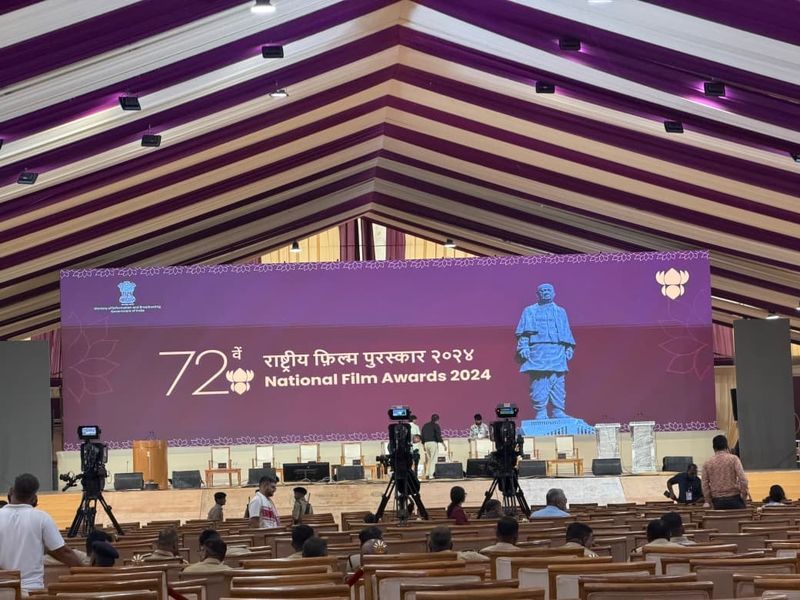
The National Film Awards ceremony marked a new direction in the way one of India’s most prestigious cinema honours is presented. For decades, the event had been associated with New Delhi. The decision to move the 72nd edition to Gujarat therefore created a different setting while retaining the national character of the awards. The Ministry has said future editions will be taken to different parts of the country, bringing the celebration closer to various regions.
The National Film Awards ceremony in Gujarat also gave the state an opportunity to host members of India’s film fraternity. Filmmakers, actors, technicians and other artists gathered at Ekta Nagar for the event, creating a meeting point for different sections of the country’s entertainment industry. Gujarat officials welcomed the decision and described the hosting of the ceremony as a matter of pride for the state.
The National Film Awards ceremony further highlighted the role of cinema in bringing India’s different communities and traditions together. Indian films often cross linguistic and geographical boundaries, allowing stories from one region to reach audiences in another. A national awards platform provides recognition to this diversity while celebrating excellence across multiple forms of filmmaking.
The National Film Awards ceremony is therefore significant both as an annual recognition of cinematic achievement and as a sign of changing approaches to national cultural events. Moving the event outside Delhi opens the possibility of showcasing India’s cinema traditions in different parts of the country. It also allows audiences and local communities to experience a major national cultural occasion in their own region.
The National Film Awards ceremony on September 22 will remain notable for bringing together artistic recognition, national cultural representation and a new venue for the prestigious awards. With President Droupadi Murmu presenting the honours at Ekta Nagar, the 72nd edition created a new chapter in the history of India’s National Film Awards.
The National Film Awards ceremony ultimately celebrated the people behind Indian cinema—the actors who bring characters to life, directors who shape stories, writers who create narratives, technicians who build the visual and technical foundations of films, and countless other professionals whose work contributes to every production. The move from New Delhi to Ekta Nagar added another dimension to the event, signalling an effort to make the national celebration of cinema more geographically inclusive.
Read more latest news

