
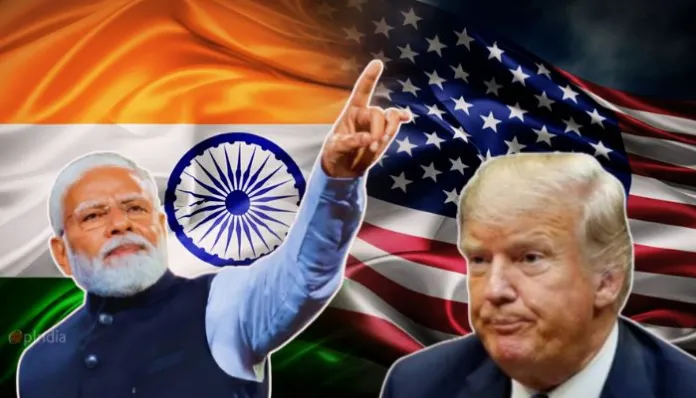
PM Modi’s Strong Reply to Trump’s Tariffs: ‘India Will Never Compromise on Farmers, Livestock Rearers, and Fishermen’.
Introduction: Global Trade War Intensifies
In the latest escalation of economic tensions between two of the world’s largest democracies, former U.S. President Donald Trump has announced a steep tariff hike on Indian imports, raising the rate from 25% to 50%. The move, which Trump claims is aimed at “protecting American workers”, has received strong criticism from Indian leadership. In a bold and decisive statement, Prime Minister Narendra Modi responded publicly, saying:
“India will never compromise on the interests of its farmers, livestock rearers, and fishermen.”
With this, PM Modi has made it clear that India’s response to the tariff hike will be measured, patriotic, and rooted in protecting the livelihoods of its most vulnerable and vital communities.
Context: The Trump Tariff Bomb
Donald Trump’s re-election campaign has reignited his “America First” trade policy, promising to protect American industries by penalizing foreign imports. On August 5, 2025, Trump dropped a bombshell by announcing a 50% tariff on a wide range of Indian products — including textiles, dairy, seafood, and agricultural commodities.
This move is seen by many experts as an attempt to win domestic votes by appearing tough on trade, but it has triggered fears of a full-blown trade war with India — one of America’s key strategic and economic partners.
PM Modi’s Response: Strong, Clear, and Nationalistic
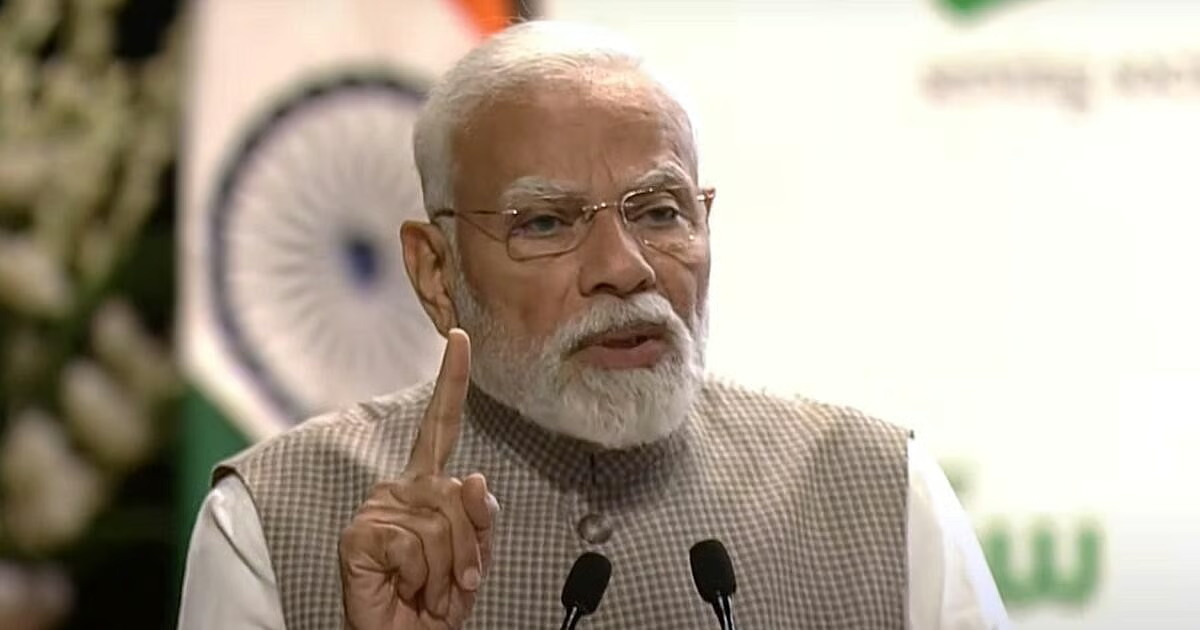
PM Narendra Modi’s response was swift, calm, and unmistakably firm. Addressing a press briefing in New Delhi, Modi outlined his government’s position:
“We respect every country’s right to protect their interests, but India’s farmers, livestock herders, and fishermen are the backbone of our economy and culture. No international pressure will ever force us to compromise on their well-being.”
Modi’s statement reflects not only economic considerations but also the cultural and emotional significance of India’s rural sectors.
Why Modi Focused on Farmers, Livestock Rearers, and Fishermen
This focus is not coincidental — it’s strategic and symbolic.
- Farmers:
Nearly 60% of India’s population depends on agriculture. Many of the products hit by Trump’s tariffs — like rice, cotton, and pulses — are key Indian exports. PM Modi’s statement signals that the Indian government will not allow foreign powers to undermine its agrarian economy. - Livestock Rearers:
Dairy is India’s second-largest agricultural sector. Tariffs on dairy products directly affect millions of rural households. By naming livestock farmers specifically, Modi highlighted a critical economic pillar. - Fishermen:
India’s fisheries sector contributes massively to exports and employment in coastal regions. U.S. tariffs on seafood would impact entire coastal economies. By defending fishermen, Modi defended both economy and ecology.
India’s Likely Strategy: Balancing Firmness with Diplomacy
India is unlikely to retaliate with equal tariff measures immediately. Instead, PM Modi hinted at a three-pronged strategy:
- Diplomatic Dialogue:
India will engage with the U.S. through diplomatic channels, presenting data and negotiating fair trade conditions. - WTO Challenge:
India could challenge Trump’s tariffs at the World Trade Organization as being in violation of trade rules — especially if the tariffs are selective and punitive. - Self-Reliance Push:
Modi reiterated his government’s commitment to ‘Atmanirbhar Bharat’, suggesting that this challenge is also an opportunity to strengthen domestic markets.
Opposition Reaction: Mixed Responses
While PM Modi’s statement received wide support from his party and allies, opposition leaders offered mixed reactions:
- Congress Party leader Mallikarjun Kharge accused the government of “failing to anticipate the tariff shock” and demanded a white paper on trade policy with the U.S.
- TMC and AAP leaders supported Modi’s stand on protecting farmers but criticized the government for “diplomatic mismanagement” that led to the crisis.
- Left parties demanded immediate retaliatory tariffs to show strength.
Still, PM Modi’s nationalistic messaging resonated with the masses, especially in rural India, which sees this as a leader standing up to a global bully.
What Do the Tariffs Cover?
The 50% tariffs announced by Trump cover a broad range of Indian goods, including:
- Basmati rice
- Cotton and jute products
- Garments and handicrafts
- Dairy and paneer products
- Shrimp, prawns, and other seafood
- Processed food items
These goods represent a significant chunk of India’s labor-intensive, rural export sector — the very communities Modi referenced in his statement.
Impact on Indian Economy
If left unchecked, Trump’s tariff hikes could:
- Shrink India’s exports to the U.S. by over $10 billion
- Create job losses in rural manufacturing and agriculture
- Push up inflation in sectors like dairy and seafood
- Affect MSMEs that depend on exports
However, PM Modi’s confidence reflects India’s readiness to absorb such shocks. The government may increase subsidies or relief packages for affected sectors to maintain rural incomes.
Farmers’ Unions React: Standing with the PM
India’s largest farmer unions like the Bharatiya Kisan Union (BKU) and All India Fishermen Association released joint statements supporting PM Modi’s stand.
“We thank the Prime Minister for putting our interest above global pressure. The country stands united against this economic aggression,” read one BKU statement.
This has bolstered PM Modi’s image as a leader who not only speaks for farmers but takes firm positions in international forums when required.

America’s Motivation: Why Did Trump Target India?
Analysts believe Trump’s move is partly political:
- India has a significant trade surplus with the U.S. — something Trump has always disapproved of.
- The move could win votes in swing states with industries that compete with Indian imports.
- Trump wants to pressure India on issues like defense alignment, 5G technology, and market access.
But targeting India’s rural economy — widely viewed as its soul — may backfire diplomatically.
Global Reactions: Trade Allies Watch Closely
Other countries have also responded:
- European Union officials condemned Trump’s “unilateral” tariff decisions.
- China mocked Trump’s policy, calling it “a rerun of failed trade populism.”
- Australia and Japan expressed concern, especially as they rely on India in the Indo-Pacific strategic framework.
India is being seen as a symbol of resistance — defending sovereignty in global economic forums.
Atmanirbhar Bharat: Modi’s Long-Term Answer
PM Modi used the opportunity to push his Atmanirbhar Bharat (Self-Reliant India) vision:
“No one can stop India if it stands on its own feet. We will protect our producers, build our own supply chains, and serve the world on our terms.”
The message: tariffs won’t cripple India — they will inspire a stronger domestic economic model.
How India Might Retaliate (If Needed)
India has several options for countermeasures:
- Impose tariffs on American almonds, apples, and Harley-Davidson bikes
- Restrict defense and tech contracts with U.S. firms
- Push WTO cases against Trump’s tariff spree
- Shift trade focus toward Europe, Africa, and ASEAN nations
However, PM Modi has indicated that retaliation will not be emotional or impulsive — it will be strategic.
People’s Sentiment: Support for Modi’s Stance
Social media and rural constituencies have largely praised PM Modi:
- Hashtags like #IndiaFirstPMModi and #TrumpTariffBacklash are trending
- Opinion polls show rising support in rural regions for Modi’s “protector of the people” image
- Farmer and trade bodies are organizing rallies of solidarity with the government
Modi has successfully framed the issue not just as trade — but as national dignity.
Conclusion: A Defining Moment in Modi’s Leadership
In a time of economic uncertainty and geopolitical turbulence, PM Modi has once again displayed his signature leadership style — firm, composed, and unapologetically nationalistic.
His statement — “India will never compromise on the interests of its farmers, livestock farmers, and fishermen” — is more than just a reaction to tariffs. It is a message to the world that India, under his leadership, will not bow to pressure — whether economic or political.
As the trade standoff continues to evolve, the world will be watching not just how India reacts, but how India rises.
read more latest news

