
Mamata Banerjee’s Constitution March: A Street Fight for Democracy in Bengal
Introduction: Mamata Banerjee Takes to the Streets with the Constitution in Hand
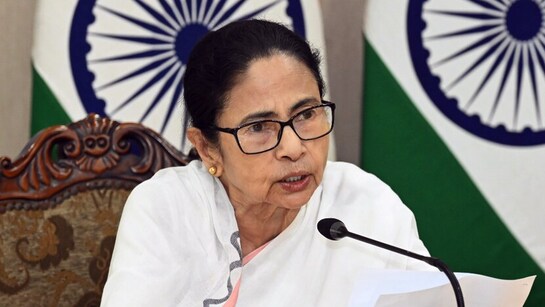
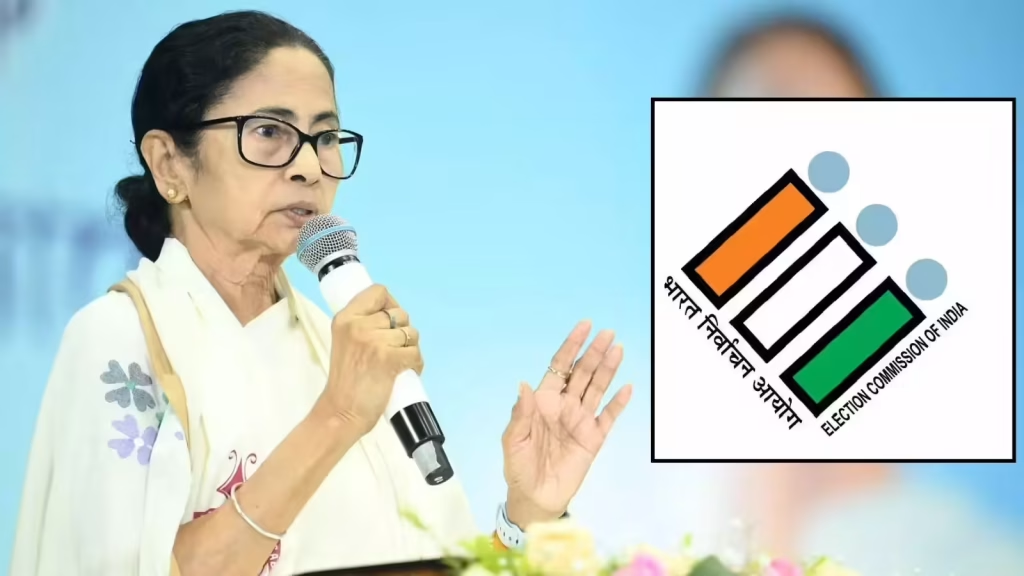
In a dramatic and symbolic gesture that captured the attention of the nation, West Bengal Chief Minister Mamata Banerjee on Tuesday marched through the streets of Kolkata, holding a copy of the Constitution of India in her hand. The fiery Trinamool Congress (TMC) supremo was leading a massive rally to protest against what she called a “politically motivated” Special Voter List Revision (SIR) initiated by the Election Commission of India (ECI).
Thousands of supporters, party workers, and members of civil society joined Banerjee’s protest — which she described as “a battle to save democracy, the Constitution, and the people’s right to vote.”
Standing atop a vehicle decorated with the national flag and banners quoting constitutional principles, Mamata thundered before the crowd:
“This is not just about Bengal. This is about saving India’s democracy. The Constitution gives every citizen the right to vote — no one can snatch that away!”
Her rally marks one of the most defiant confrontations between a state government and the Election Commission in recent years, signaling that the battle for control over voter identity and democratic rights is set to become a central political issue ahead of the upcoming 2026 West Bengal Assembly Elections and 2029 Lok Sabha polls.
Background: What is the Election Commission’s Special Voter List Revision (SIR)?
The Special Voter List Revision (SIR) is a new initiative by the Election Commission aimed at verifying and updating voter rolls with the help of advanced digital tools, linking voter ID data with Aadhaar and other national databases.
According to the ECI, the move is intended to “eliminate fake voters, reduce duplication, and ensure transparency.”
However, the West Bengal government and several opposition parties have raised concerns, alleging that the process is being used selectively in opposition-ruled states to manipulate voter demographics.
The SIR reportedly involves door-to-door verification, Aadhaar linkage cross-checks, and automatic deactivation of entries flagged as duplicates or “inactive.”
In West Bengal, the Trinamool Congress alleges that lakhs of genuine voters — particularly from minority and marginalized communities — have been marked for review without proper verification.
Mamata Banerjee has accused the ECI of acting “at the behest of the BJP,” saying:
“The Election Commission is no longer independent. It is being remote-controlled from Delhi. They want to delete the votes of minorities, tribals, and the poor to help the BJP.”
The Rally: Kolkata Turns into a Sea of Protest
On Tuesday morning, Kolkata’s Esplanade, Park Street, and College Square were transformed into a sea of saffron-green flags as Trinamool supporters gathered in massive numbers for the march.
The rally began from Ambedkar Statue on Red Road and culminated near the Raj Bhavan, the symbolic seat of constitutional power in the state.
Mamata Banerjee, walking slowly but determinedly due to her leg injury, was seen holding a copy of the Indian Constitution aloft — a powerful image that instantly went viral on social media.
She was accompanied by senior TMC leaders, including Abhishek Banerjee, Firhad Hakim, Shashi Panja, and several cabinet ministers.
Throughout the march, slogans like
“Save Democracy, Save India!”, “Hands Off Our Votes!”, and “ECI Go Back!”
echoed across the city.
The Chief Minister, surrounded by security personnel and supporters, addressed the gathering midway:
“This Constitution is our Bible, our Gita, our Quran. The Election Commission has no right to tamper with the people’s mandate. I am ready to go to jail, but I will not let them take away our right to vote.”
The Symbolism: Constitution in Hand, Democracy in Focus
Mamata Banerjee’s choice to hold the Constitution during her rally was not accidental.
In recent years, India has witnessed a surge in constitutional symbolism — from anti-CAA protests quoting the Preamble, to opposition leaders citing Articles 19 and 21 to defend civil liberties.
By carrying the Constitution herself, Banerjee sought to visually claim the moral high ground — presenting her fight as not just a political battle against the BJP or ECI, but a civilizational struggle for India’s democratic soul.
Observers compared the visual to B.R. Ambedkar’s legacy, symbolically connecting the fight for Dalit, tribal, and minority rights to the larger issue of electoral disenfranchisement.
In her speech, she invoked Ambedkar’s warning:
“Dr. Ambedkar said: if we lose our constitutional rights, we lose everything. Today, that danger is real. That’s why I’m on the streets — with the Constitution in my hand.”
Political Message: Taking the Battle Beyond Bengal
Mamata Banerjee’s protest was not just an act of state-level defiance — it was also a national political message aimed at positioning herself as one of the strongest voices of opposition unity.
The TMC has been an active member of the INDIA alliance, and this protest aligns with the larger opposition narrative that central institutions are being misused for political gain.
Senior TMC leader Abhishek Banerjee said during the rally:
“The ECI should be neutral. But now it is behaving like the BJP’s election cell. This is not a voter list revision — this is voter deletion.”
Mamata’s message was clear: if the Election Commission loses credibility, then the very foundation of Indian democracy crumbles.
She warned that Bengal’s fight could soon become India’s fight, urging citizens across states to “stand up for their right to vote.”

The BJP’s Counterattack: “Drama to Hide Corruption”
Predictably, the Bharatiya Janata Party (BJP) responded sharply to Mamata’s rally, dismissing it as “a political drama to divert attention from corruption.”
BJP state president Sukanta Majumdar said:
“Mamata Banerjee has lost people’s trust. This rally is just a drama. The Election Commission is doing its job to ensure clean and fair elections, but Mamata fears that her fake voter base will be exposed.”
He accused the TMC of harboring fake voters and using administrative machinery to influence polls in the past:
“In previous elections, there were reports of bogus voting and booth capturing. Now, when the Election Commission is cleaning the system, Mamata is protesting — what does that tell you?”
Other BJP leaders also alleged that TMC’s resistance to voter verification shows its fear of losing the Muslim vote bank, which constitutes around 28% of West Bengal’s population.
The Election Commission’s Response: “No Political Motive”
The Election Commission, in an official statement, clarified that the SIR process is purely administrative, aimed at ensuring accuracy and transparency in voter records.
It dismissed allegations of political bias, stating that the process is being implemented uniformly across states, not just in West Bengal.
The ECI emphasized that:
“The Special Voter List Revision is being conducted to eliminate duplication and to ensure that no voter is left behind. All objections or deletions are subject to public scrutiny and can be challenged.”
However, despite these assurances, public suspicion remains high, especially given the timing — just months ahead of major elections — and the perceived centralization of voter data through Aadhaar linkage.
Public Sentiment: From Support to Skepticism
The images of Mamata Banerjee walking with the Constitution resonated deeply with many in Bengal.
For her supporters, it reaffirmed her image as “Didi” — the defender of Bengal and protector of the poor.
Social media was flooded with posts praising her “fearless stand” against what they described as “the systematic dismantling of democratic institutions.”
Several artists, students, and activists joined the rally, carrying placards that read:
“Our Votes Are Our Voices”
“Save Constitution, Save India”
“Bengal Will Not Bow”
However, among neutral observers, there was also skepticism. Some political analysts suggested that the rally was as much about political optics as it was about principle.
They pointed out that Mamata, facing mounting challenges from both BJP and a resurgent Left-Congress alliance, was looking to regain moral leadership and re-energize her base through street politics — her strongest suit.
A History of Street Politics: Mamata’s Political DNA
Mamata Banerjee’s return to the streets should not surprise anyone.
Her entire political career — from her rallies against the Left Front in the 1990s, to the Singur-Nandigram movements, and her hunger strike for farmers — has been built on street-level mobilization.
For Mamata, the street is both a battlefield and a stage.
While many leaders retreat into administrative offices after gaining power, she continues to walk among her supporters, transforming governance into a participatory spectacle.
This protest fits perfectly into that tradition.
It shows that even as Chief Minister, she sees direct action as a legitimate political weapon — one that connects her emotionally with the masses.
Political commentator Rajat Roy observed:
“Mamata’s genius lies in turning bureaucratic issues into emotional movements. She understands symbolism — Constitution in hand, rallying through Kolkata — it’s pure political theatre, but with a democratic purpose.”
Constitutional Angle: Right to Vote and Federalism
At the heart of Mamata Banerjee’s protest lies a constitutional question — who controls the voter list, and can the Election Commission’s central authority override the state’s autonomy in the process?
Under Article 324 of the Indian Constitution, the Election Commission is vested with the power of superintendence, direction, and control of elections.
However, the process of voter registration and verification often involves state election offices under the supervision of state chief electoral officers, who are part of the state administrative machinery.
Mamata’s protest implies that the balance of federal power is being distorted — that central agencies are bypassing or overriding the state government’s role, thereby weakening India’s cooperative federalism.
Legal experts suggest that while the ECI has broad powers, it must also ensure transparency and inclusivity.
If deletions are carried out arbitrarily or without public verification, constitutional violations of Article 326 (universal adult suffrage) could occur.
The Broader Opposition Narrative: A Battle for Institutions
Mamata’s protest also aligns with a larger opposition narrative across India — that independent institutions like the Election Commission, CBI, ED, and even media outlets are being pressured by the central government.
Within the INDIA alliance, leaders like Rahul Gandhi, Arvind Kejriwal, and Uddhav Thackeray have all echoed similar concerns about institutional capture.
By taking the fight to the streets, Mamata has visibly embodied that resistance — positioning herself as “the street face of constitutional defense.”
Her protest may also serve as a template for the INDIA alliance — to combine institutional critique with emotional mass mobilization, something Mamata excels at better than most.
Impact on Bengal Politics
Within West Bengal, the protest is expected to reinvigorate the Trinamool cadre, which had been somewhat demoralized by corruption allegations and administrative fatigue.
The visuals of Mamata Banerjee holding the Constitution and walking through the city streets will likely reconnect her with grassroots voters, especially women, minorities, and rural poor, who view her as a protector figure.
Moreover, it puts the BJP on the defensive, forcing it to explain its alignment with the ECI’s decisions — which could be framed as “outsider interference” in Bengal’s affairs, a narrative that historically works in Mamata’s favor.
Possible Outcomes: From Protest to Policy
Mamata Banerjee has announced that if the ECI does not reconsider or review its voter list revision process, she will take the matter to the Supreme Court.
Her government has already formed a legal committee to study the constitutional validity of the SIR process and its potential implications for voters’ rights.
She has also hinted at launching a nationwide campaign on the issue, saying:
“If they try to silence Bengal, I will go to Delhi, Maharashtra, Tamil Nadu — and we will raise this issue across India. This fight is for every Indian voter.”
If that happens, the protest could evolve into a national movement for electoral integrity, reshaping the discourse on voter rights, institutional neutrality, and constitutional democracy.
Conclusion: A Rally Beyond Politics
Mamata Banerjee’s rally against the Election Commission’s Special Voter List Revision was more than just another protest.
It was a political performance layered with constitutional symbolism, emotional resonance, and strategic foresight.
By holding the Constitution aloft, she transformed a bureaucratic issue into a national conversation about democracy and citizenship.
Her message was simple but profound — that democracy belongs to the people, not to bureaucrats or political parties.
Whether this movement grows into a larger national campaign or remains a Bengal-centric battle, it has already reignited a crucial debate about the sanctity of elections, the autonomy of institutions, and the role of the citizen in India’s democracy.
In the end, Mamata Banerjee once again proved that she is not just a Chief Minister but a streetfighter of democracy — armed not with slogans alone, but with the Constitution itself.
Read More latest news

