
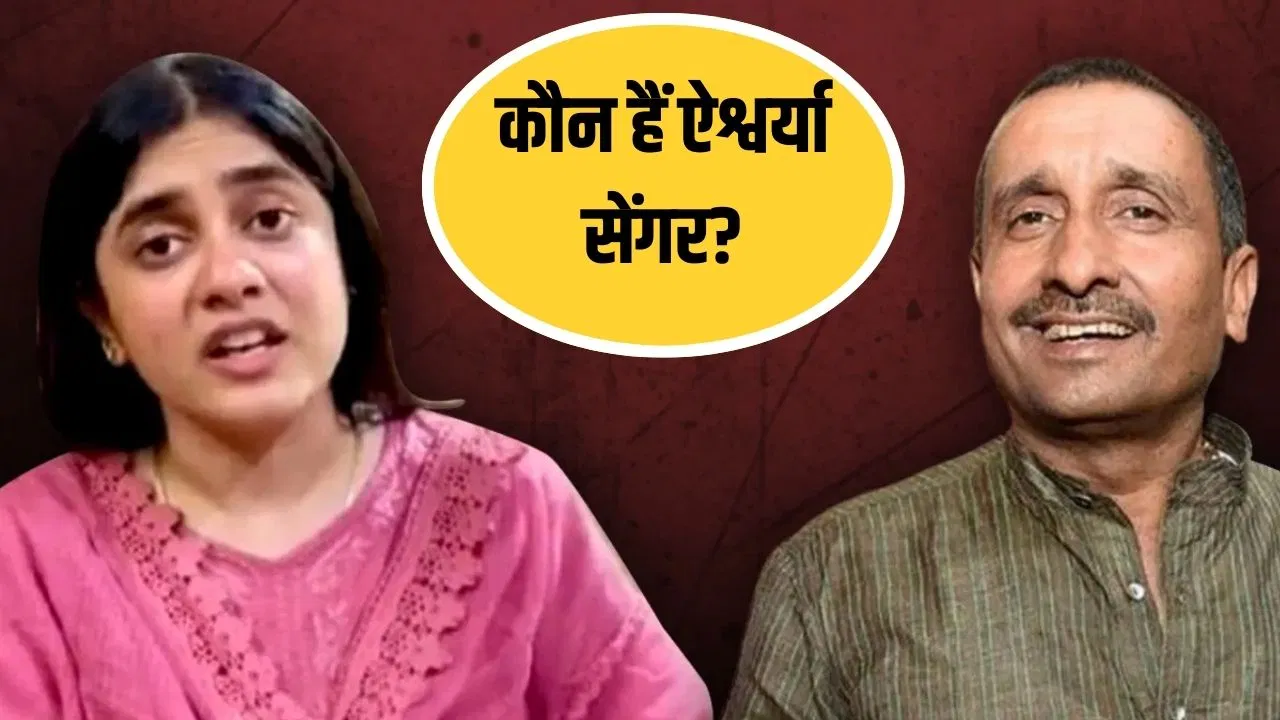
Aishwarya Sengar Defends Her Father: Kuldeep Singh Sengar Case Returns to Public Discourse
Introduction: A Statement That Reignited an Old Case
The case involving BJP’s former MLA Kuldeep Singh Sengar has once again returned to the center of national discussion, not because of a new court order or legal development, but due to a powerful and emotionally charged statement made by his daughter, Aishwarya Sengar. In a rare public intervention, she defended her father and made a remark that stunned many. She said that if Kuldeep Singh Sengar had even looked at the victim with wrong intent, he deserved the death penalty.
Her statement has reopened debates around justice, due process, public perception, and the emotional toll such cases take on families of the accused. It also raises questions about how truth is established in cases that deeply divide society.
Background: Who Is Kuldeep Singh Sengar?
Kuldeep Singh Sengar is a former BJP MLA from Uttar Pradesh who became one of the most controversial political figures in recent years due to serious criminal allegations against him. Once considered a powerful regional leader, Kuldeep Singh political career collapsed after the case against him gained national attention.
The allegations against Kuldeep Singh were not just a legal matter but a political storm that shook the state and the country. The case became symbolic of debates around power, misuse of authority, and justice for victims.
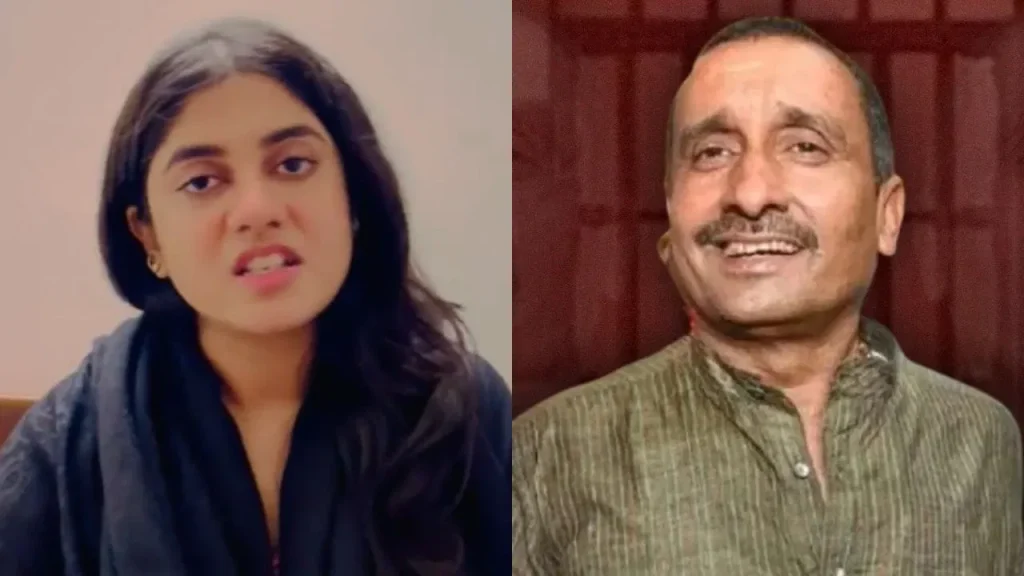
Aishwarya Sengar Speaks Out: An Unusual Defense
Children of accused politicians often remain silent, choosing privacy over public debate. However, Aishwarya Sengar took a different path. In her statement, she strongly defended Kuldeep Singh Sengar, while simultaneously making it clear that she does not support any crime.
Her assertion—that if Kuldeep Singh had even looked at the victim with wrong intent, he should be hanged—was seen by many as both a moral stand and a desperate plea for truth to emerge.
“Let the Truth Come Out”: Demand for Transparency
Aishwarya Sengar emphasized that all facts related to the case of Kuldeep Singh should be placed before the public. According to her, selective narratives and partial information have damaged not just her father’s image but also the family’s dignity.
She argued that only when the complete truth about Kuldeep Singh Sengar’s case is revealed can people make a fair judgment, free from emotional manipulation or political bias.
Emotional Cost on Families of the Accused
While the focus of such cases rightly remains on the victim, the families of the accused also face immense social and psychological pressure. Being the daughter of Kuldeep Singh meant living under constant scrutiny, judgment, and stigma.
Aishwarya’s statement reflects years of emotional burden. She spoke not just as a daughter but as someone who has watched her family endure isolation, criticism, and fear due to the case involving Kuldeep Singh Sengar.

Public Reaction: Mixed and Polarized
The response to Aishwarya Sengar’s defense of Kuldeep Singh has been sharply divided. Some people praised her courage for speaking openly, while others criticized her for defending a man convicted by the courts.
Social media platforms were flooded with debates, with hashtags related to Kuldeep Singh Sengar trending once again. This polarization highlights how deeply the case has embedded itself into India’s collective conscience.
Legal Perspective: Verdict vs Public Opinion
From a legal standpoint, the case of Kuldeep Singh has gone through the judicial process, including investigation, trial, and judgment. Courts decide on evidence, not emotions.
However, Aishwarya Sengar’s remarks bring attention to a broader issue—how public opinion often forms independently of legal facts. The name Kuldeep Singh has, for many, already become synonymous with guilt, regardless of ongoing legal discourse.
Politics and Power: The Larger Context
The case against Kuldeep Singh was also a turning point in Indian politics, particularly in Uttar Pradesh. It raised uncomfortable questions about political protection, influence, and accountability.
Opposition parties used the case to attack the ruling establishment, while the BJP distanced itself from Kuldeep Singh Sengar, expelling him and emphasizing that the law would take its course.
Media’s Role in Shaping the Narrative
Media coverage played a major role in shaping public perception of Kuldeep Singh Sengar. Continuous debates, panel discussions, and breaking news updates kept the case alive in public memory.
Aishwarya Sengar’s demand that “all facts be placed before the public” indirectly questions whether media coverage of Kuldeep Singh was always balanced or sometimes driven by sensationalism.
Morality, Justice, and the Death Penalty Remark
The most striking part of Aishwarya’s statement was her reference to the death penalty. By saying that Kuldeep Singh Sengar should be hanged if guilty even in intent, she placed morality above blood relations.
This remark complicates the narrative. It suggests that her defense of Kuldeep Singh Sengar is not blind loyalty but rooted in her belief that he is innocent.
Women’s Safety and Social Responsibility
The case involving Kuldeep Singh remains central to discussions on women’s safety in India. Activists argue that focusing on the accused’s family should not distract from the broader issue of protecting victims.
At the same time, Aishwarya’s statement opens a new dimension—how society should balance empathy for victims with fairness in judgment.
Impact on Political Discourse
Years after the incident, Kuldeep Singh continues to be cited in political speeches as an example of criminalization of politics. His name is often invoked to criticize political parties and governance failures.
Aishwarya Sengar’s defense has revived political interest in the case, forcing leaders to once again clarify their stance on Kuldeep Singh Sengar.
Social Media Trials and Permanent Judgments
In the digital age, cases like that of Kuldeep Singh never truly end. Social media ensures permanent visibility, making redemption or neutrality almost impossible.
Aishwarya’s appeal for the truth to come out reflects frustration with online trials where Kuldeep Singh Sengar is judged repeatedly without new evidence.
Humanizing the Narrative Without Undermining Justice
Defending Kuldeep Singh does not automatically mean dismissing the victim’s suffering. Aishwarya Sengar’s statement challenges society to consider whether it is possible to humanize the accused’s family without undermining justice.
This delicate balance is rarely achieved, especially in high-profile cases like that of Kuldeep Singh Sengar.
What the Case Represents Today
Today, Kuldeep Singh represents more than an individual. He symbolizes debates around power, accountability, justice, and media responsibility.
Aishwarya’s words remind the public that behind every headline involving Kuldeep Singh Sengar, there is a family living with lifelong consequences.
The Call for Truth and Closure
A recurring theme in Aishwarya Sengar’s statement is closure. She wants the complete truth about Kuldeep Singh case to be known so that society can move forward.
Without transparency, she believes, the case will continue to haunt not just her family but the justice system itself.
Conclusion: A Daughter’s Voice Amid a Nation’s Judgment
The defense of Kuldeep Singh by his daughter Aishwarya Sengar has added a deeply human layer to a case long dominated by legal and political narratives.
Her statement does not change the verdict, but it forces society to reflect on how truth, justice, and empathy coexist. Whether one agrees with her or not, her voice has reopened a conversation that many thought was closed.
As the name Kuldeep Singh once again echoes across newsrooms and social platforms, one thing is clear—the case continues to shape India’s understanding of power, accountability, and the cost of public judgment.
read more latest news

