
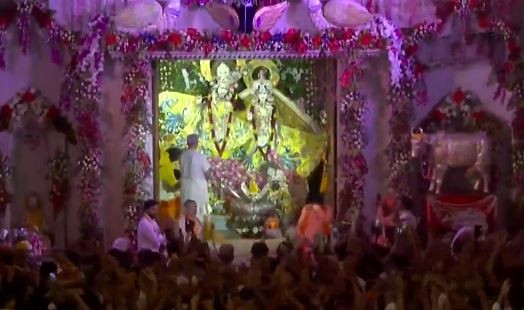
Krishna Janmashtami 2025: Witnessing the Mangala Aarti at Shri Krishna Janmabhoomi Temple, Mathura
Krishna Janmashtami Mathura, the sacred land of Shri Krishna’s birth, once again turned into a divine epicenter of faith, devotion, and festivity on the occasion of Krishna Janmashtami 2025. Millions of devotees thronged the holy city to celebrate the birth of Lord Krishna, the eighth avatar of Lord Vishnu, who took human form to restore dharma and annihilate evil.
The heart of these celebrations is the Shri Krishna Janmabhoomi Temple, revered as the exact spot where Devaki gave birth to Krishna inside Kansa’s prison. This year, the Mangala Aarti at midnight was the highlight of the celebrations, drawing devotees from across the world. The atmosphere was not just of celebration but of transcendence—an experience that bound every soul with the divine.
The Spiritual Significance of Krishna Janmashtami
Krishna Janmashtami is celebrated on the eighth day (Ashtami) of the Krishna Paksha in the month of Bhadrapada according to the Hindu calendar. This festival commemorates the divine birth of Shri Krishna, whose life and teachings continue to influence philosophy, spirituality, and culture across the world.
- It symbolizes the victory of dharma over adharma.
- It celebrates love, devotion, and the eternal playfulness of Krishna.
- It reminds devotees of Krishna’s role as a guide in the Bhagavad Gita, where he revealed the highest truths of life and duty.
In Mathura, the celebrations take on unparalleled grandeur because it is not just a symbolic celebration—it is the very land where Krishna was born.
The Build-Up to Janmashtami in Mathura
The holy city of Mathura begins preparing weeks in advance. Streets are decorated with flowers, lights, and rangolis. Shops sell idols of Bal Gopal, flutes, butter pots, and peacock feather crowns. The ghats of the Yamuna are lit with diyas, creating a magical reflection on the river.

Pilgrims arrive days before the festival, filling the city with chants of “Hathi Ghoda Palki, Jai Kanhaiya Lal Ki!” The energy is so powerful that every corner of Mathura feels alive with devotion.
The markets near Dwarkadhish Temple, Vishram Ghat, and Janmabhoomi Road remain crowded with devotees buying puja essentials. Local sweet shops sell makhan-mishri, pedas, and laddus, the favorite delicacies of Krishna.
Shri Krishna Janmabhoomi Temple: The Center of Devotion
The Shri Krishna Janmabhoomi Temple is the most revered shrine in Mathura. According to legend, it stands on the very prison cell where Krishna was born. The temple complex includes:
- Garbha Griha (sanctum sanctorum) believed to be the prison chamber.
- Keshav Dev Temple, dedicated to Shri Krishna.
- Several smaller shrines for Radha, Balram, and other deities.
On Janmashtami, this temple becomes the epicenter of celebrations. Lakhs of devotees gather, and yet, an uncanny silence of faith fills the atmosphere as midnight approaches.
Witnessing the Mangala Aarti – A Divine Experience
The Mangala Aarti at midnight is the most awaited ritual of Krishna Janmashtami in Mathura. Here is how the divine experience unfolded this year:
1. Preparations Before Midnight
As the clock neared 11:30 PM, the temple premises were packed with devotees. Priests decorated the sanctum with fragrant flowers, garlands, and sandalwood paste designs. A cradle was placed in the center, symbolizing the birth of baby Krishna. The air was filled with devotional songs, bhajans, and conch shells blowing at intervals.
2. The Birth Moment – 12 Midnight
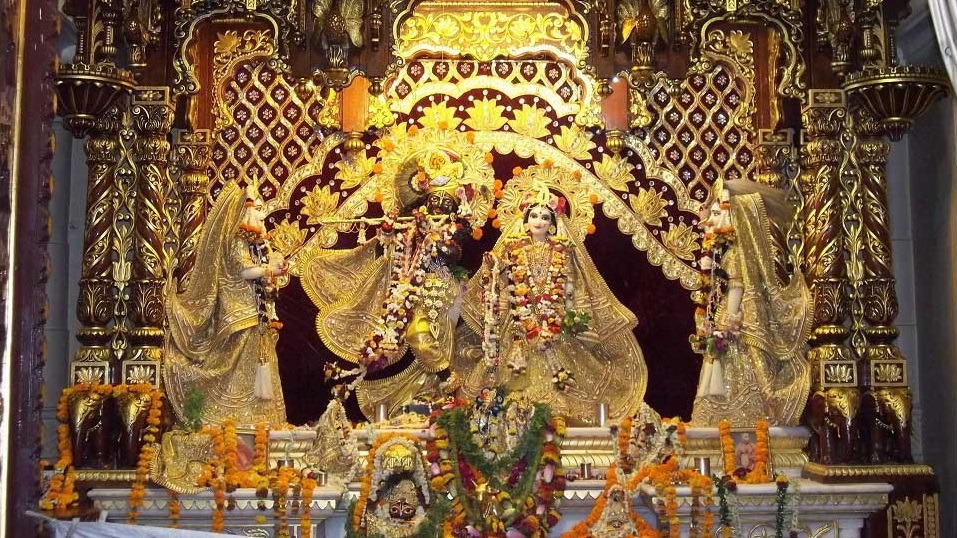
At exactly 12 o’clock, the sound of temple bells, conch shells, and nagadas filled the air. Priests chanted mantras describing Krishna’s divine birth. At this sacred moment, the deity of Bal Gopal was unveiled, adorned with jewels, yellow silk clothes, and a peacock feather crown.
The idol was placed in the cradle, and the entire temple erupted with chants of:
“Nand Ke Anand Bhayo, Jai Kanhaiya Lal Ki!”
Devotees broke into dance, tears, and laughter—experiencing the joy of Krishna’s arrival.
3. Mangala Aarti Begins
Soon after the birth rituals, the Mangala Aarti began. Priests waved large brass lamps lit with ghee, offering light to the divine child. The Aarti was accompanied by traditional instruments like mridang, dhol, jhanjh, and bansuri. The rhythmic clapping of thousands of devotees created an energy that felt celestial.
The fragrance of incense mixed with the sweetness of flowers filled the air, creating an otherworldly atmosphere. For many devotees, this was not just a ritual—it was a moment of union with the divine.
4. Distribution of Prasad
After the aarti, prasad of makhan-mishri, peda, and panjiri was distributed among devotees. This symbolized Krishna’s childhood love for butter and sweets.
The Bhakti Atmosphere in Mathura
The Janmashtami celebrations in Mathura are not limited to the temple alone. The entire city becomes a living stage for Krishna Leela.
- Jhankis (tableaux) depicting scenes from Krishna’s life—his birth, childhood pranks, and Rasleela with Radha—are displayed across the city.
- Rasleela performances by local artists retell stories of Krishna in song and dance.
- Devotees perform bhajans and kirtans throughout the night, keeping the divine energy alive.
On the ghats of the Yamuna, thousands gather for deep daan (lamp offering), making the river glow like a sheet of stars.
Unique Rituals of Janmashtami in Mathura
While Janmashtami is celebrated across India, Mathura has some unique traditions:
- Jhulan Utsav (Swing Festival): Bal Gopal’s idol is placed on decorated swings, and devotees take turns to gently sway him.
- Abhishek Ceremony: The idol of Krishna is bathed in milk, honey, curd, and ghee, symbolizing purification.
- Matki Phod: Inspired by Krishna’s love for butter, young men form human pyramids to break pots filled with curd and sweets hung high above the streets.
- 24-Hour Fasting: Many devotees observe strict fasts, breaking it only after midnight with prasad.
The Global Connection
In recent years, Krishna Janmashtami in Mathura has also drawn international devotees, especially from ISKCON followers. Many foreigners, dressed in traditional Indian attire, joined the Mangala Aarti, chanting the Hare Krishna mantra in unison with locals.
The presence of global devotees highlights Krishna’s universal appeal as a symbol of love, joy, and wisdom.
Security and Arrangements
Given the massive footfall, the Uttar Pradesh government and temple management made elaborate arrangements:
- Tight security with CCTV monitoring and police deployment.
- Special trains and buses to facilitate travel.
- Medical camps and water distribution centers for devotees.
- Digital screens installed outside the temple for live telecast of the Mangala Aarti.
Despite the huge crowds, the arrangements ensured a smooth and safe celebration.
Krishna Janmashtami Beyond Mathura
Though Mathura holds the prime importance, the festival was also celebrated grandly in:
- Vrindavan: Famous for Rasleela and Banke Bihari Temple celebrations.
- Dwarka (Gujarat): Dwarkadhish Temple witnessed lakhs of devotees.
- Mumbai & Pune: Known for Dahi Handi competitions.
- Delhi & ISKCON Temples worldwide: Organized midnight bhajans and global livestreams.
This shows how Krishna’s presence transcends geography, uniting devotees everywhere.
The Cultural & Spiritual Lessons of Janmashtami
Krishna’s life is not just mythology—it is a philosophy. The celebration of Janmashtami teaches us:
- Faith in divine protection: Just as Krishna was born to destroy Kansa, divine power will always rise against evil.
- Joy in simplicity: Krishna’s childhood pranks remind us to live with innocence and joy.
- Bhakti and Love: His bond with Radha symbolizes the highest form of devotion—selfless love.
- Dharma and Duty: Through the Bhagavad Gita, Krishna teaches us to perform our duties without attachment to results.
Conclusion: An Eternal Experience
Witnessing the Mangala Aarti at Shri Krishna Janmabhoomi Temple on Janmashtami is not just a festival experience—it is a spiritual journey. As the lamps glowed, chants filled the air, and the cradle of Bal Gopal swayed, one could feel the presence of Krishna not just in the temple, but in the heart of every devotee.
Mathura on Janmashtami becomes a bridge between the divine and the earthly, where every soul gets a glimpse of eternity. For those who were present at the temple this year, it was not just about celebration—it was about surrender, devotion, and the eternal joy of chanting “Jai Shri Krishna!”
Read more latest news

