
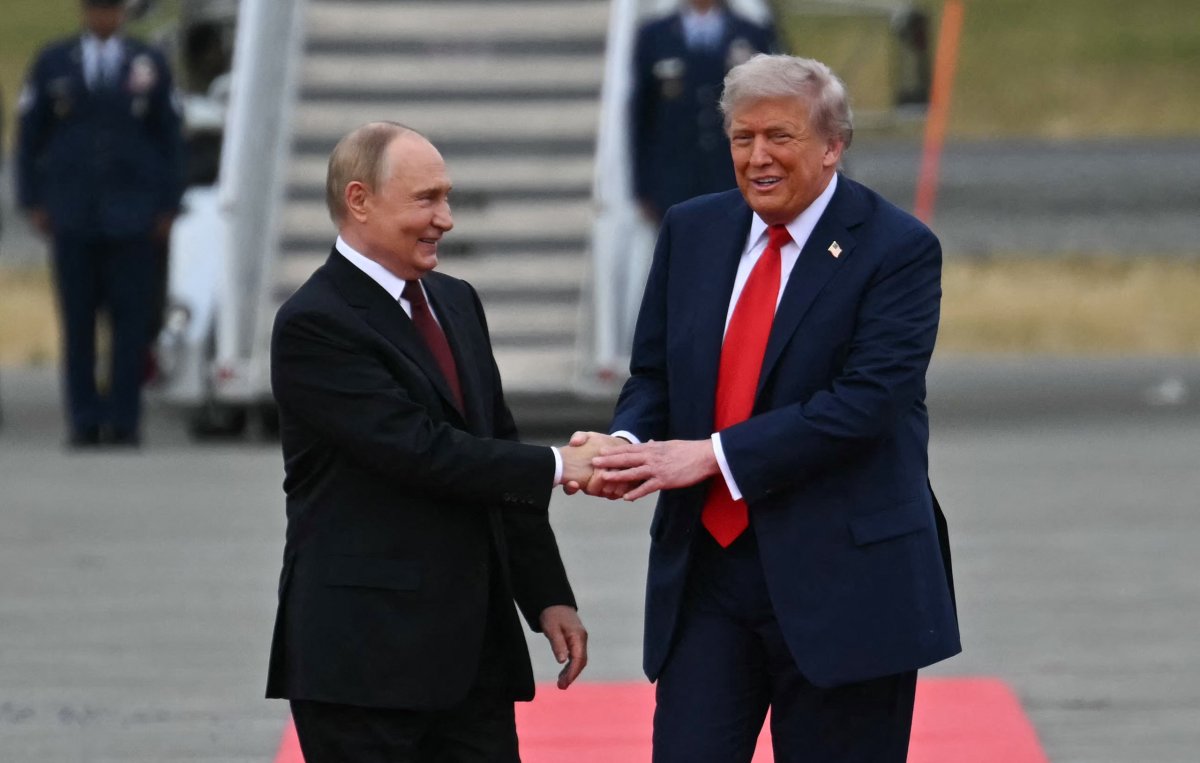
B-2 Bomber and Fighter Jets Fly in Alaskan Skies During Putin-Trump Summit
B-2 bomber and fighter jets fly On a brisk morning over Anchorage, Alaska, the skies roared with an unusual display of American military power. A B-2 Spirit stealth bomber, escorted by a formation of advanced fighter jets, flew in full view during the much-anticipated summit between Russian President Vladimir Putin and U.S. President Donald Trump. While the summit itself drew intense global media attention for its diplomatic stakes, the aerial spectacle quickly became a symbolic highlight, sparking discussions worldwide about its message, timing, and implications.
The sight of the B-2 bomber, one of the most advanced aircraft in the U.S. arsenal, soaring over Alaskan skies with its fighter escorts was not just a routine flight. It was a calculated display—one that combined military deterrence, geopolitical signaling, and national pride.
The B-2 Spirit: America’s Crown Jewel of Stealth
Before diving into the significance of the Alaskan flight, it’s important to understand what makes the B-2 Spirit bomber such a formidable weapon in the U.S. military inventory.
- Stealth Technology: The B-2 is designed to penetrate even the most sophisticated air defense systems. Its unique “flying wing” design minimizes radar cross-section, making it nearly invisible to enemy detection.
- Range & Power: It can fly over 6,000 miles without refueling and carry both conventional and nuclear weapons, giving it unmatched global strike capability.
- Symbol of Power: With only 21 B-2s ever built, each costing over $2 billion, the bomber is not just a war machine—it’s a symbol of American technological and strategic superiority.
When the B-2 takes to the skies, it sends a signal. Over Alaska, during a high-profile summit involving Russia, the message was unmistakable.
Alaska: America’s Strategic Gateway
The choice of Alaska as the site for this aerial display is no coincidence. Alaska holds unique importance for U.S. defense and geopolitics:
- Proximity to Russia: Alaska sits just 55 miles across the Bering Strait from Russia. Its geography makes it a frontline for U.S. surveillance and deterrence.
- Arctic Security: With climate change opening Arctic sea routes, Alaska’s location gives the U.S. a critical edge in the new “Arctic Great Game” involving Russia, China, and NATO allies.
- Military Installations: Bases like Joint Base Elmendorf-Richardson (JBER) and Eielson Air Force Base host advanced fighter squadrons and act as staging grounds for Arctic and Pacific missions.
- Symbolic Neutrality: As a U.S. state closest to Russia, Alaska offers a stage where military symbolism intersects with diplomatic theater.
Thus, when the B-2 bomber flew over Anchorage, it was more than a demonstration—it was a reminder of America’s strategic depth and vigilance.
The Summit Backdrop: Putin and Trump
The Putin-Trump summit in Alaska was already a geopolitical spectacle. Analysts worldwide speculated about what the two leaders would discuss—arms control treaties, NATO’s role, Arctic disputes, Ukraine, energy supplies, and sanctions.
While the official agenda focused on security cooperation and reducing tensions, the military display during the summit served as a shadow narrative. It reminded both domestic and international audiences that dialogue between superpowers happens under the watchful wings of military strength.
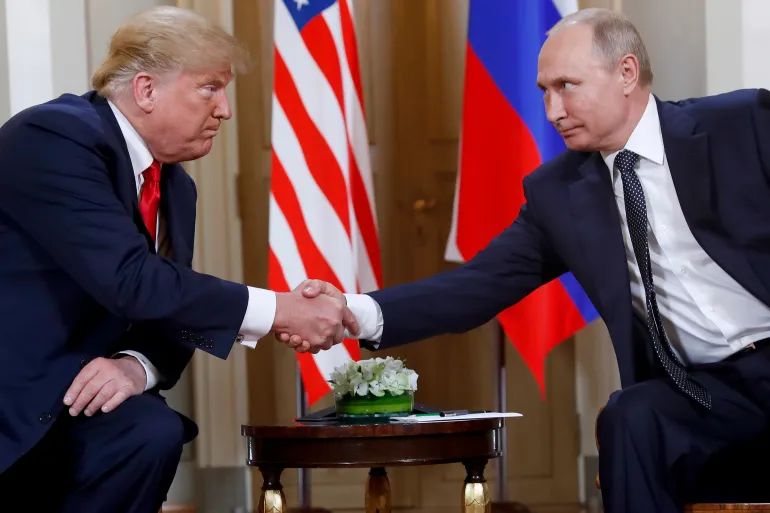
- For Trump, showcasing the B-2 highlighted his “America First” approach, reinforcing U.S. military might to his base.
- For Putin, it was a subtle provocation—America reminding Russia of its technological edge even while engaging in diplomacy.
- For the world, it was a striking visual: diplomacy on the ground, deterrence in the skies.
Fighter Jet Escorts: A Dance of Speed and Power
Alongside the B-2 bomber were fighter jets from U.S. Air Force squadrons based in Alaska. Most likely, these included the F-22 Raptor, another symbol of U.S. air superiority.
- The F-22 Raptor is the world’s first 5th-generation stealth fighter, capable of air dominance and precision strikes. Stationed at JBER, it is specifically tasked with defending America’s northern approaches.
- Coordination with B-2: The fighter jets ensured operational security for the bomber while symbolizing the layered strength of U.S. airpower—stealth bombers for long-range strikes, fighters for defense and deterrence.
The coordinated flight resembled a carefully choreographed military ballet, designed to impress and intimidate at the same time.
Public Reaction: Awe and Questions
Residents of Anchorage and visiting media were treated to a once-in-a-lifetime sight. Social media buzzed with videos of the B-2’s bat-like silhouette cutting through the skies. Some reactions included:
- Awe: Locals described it as both “terrifying and beautiful.”
- Curiosity: Questions arose—why during the summit? Was it planned or coincidental?
- Criticism: Peace groups argued it was a show of force that undermined the spirit of diplomacy.
For many Americans, however, the sight reinforced pride in U.S. technological achievements and defense readiness.
The Political Message Behind the Flight
Military analysts were quick to decode the symbolism:
- Deterrence to Russia: With Putin present, the B-2 flight was a subtle reminder of America’s unmatched stealth capability.
- Reassurance to Allies: NATO and Asian partners watching the summit saw proof of U.S. readiness to counter adversaries.
- Domestic Optics: Trump used the display to reinforce his narrative of “peace through strength.”
- Signal to China: Beyond Russia, the flight also served as a warning to China amid growing tensions in the Pacific and Arctic.
The B-2 flight was less about military necessity and more about psychological theater.
History of Aerial Symbolism in Diplomacy
This was not the first time airpower intersected with politics. History is filled with examples of military flyovers during diplomatic events:
- Cold War Parades: The Soviet Union often showcased missiles and bombers during summits to assert strength.
- U.S. Air Displays: From flyovers at presidential inaugurations to NATO exercises near Russia, the U.S. has often used aircraft as symbols of deterrence.
- Arctic Patrols: Both U.S. and Russian bombers have patrolled the Arctic skies, signaling readiness and reach.
The Alaska B-2 flight fits into this tradition—where military hardware speaks a language louder than diplomatic communiqués.
The Arctic Dimension
The timing of this display also connects with the rising importance of the Arctic region. Melting ice has opened sea lanes, and both Russia and the U.S. see the Arctic as a new frontier for trade, energy, and security.
- Russia has militarized its Arctic zone with bases and icebreakers.
- The U.S., through Alaska, aims to ensure freedom of navigation and counterbalance Russian advances.
- The B-2 flight over Alaska thus underscored American presence in this evolving strategic theater.


Military Readiness: A Show Beyond Symbolism
While largely symbolic, such flights also serve practical military purposes:
- Training Missions: B-2 bombers frequently train with fighter escorts to maintain operational readiness.
- Message to Adversaries: It reassures that the U.S. can deploy global strike forces at will.
- Testing Reactions: Monitoring how Russia and China respond to such flights offers intelligence insights.
Thus, the Alaskan skies became not just a stage for symbolism but also for real-time readiness drills.
Media Narratives: U.S., Russia, and the World
Different media outlets painted the event differently:
- American Media: Celebrated the technological might and connected it with Trump’s leadership.
- Russian Media: Criticized the move as a provocation aimed at humiliating Putin.
- European Media: Saw it as proof of the fragile balance between diplomacy and deterrence.
- Asian Media: Focused on implications for China, linking the display with U.S. Pacific strategy.
Thus, the same flight carried multiple meanings depending on the observer’s lens.
What This Means for U.S.-Russia Relations
While the summit attempted to address arms control and cooperation, the B-2 flight underlined the deep mistrust that continues to define U.S.-Russia ties.
- Russia views such demonstrations as provocative.
- The U.S. insists they are routine, but timing often tells another story.
- The future of treaties like New START and nuclear disarmament remains uncertain under such atmospherics.
In essence, diplomacy proceeds, but deterrence remains the backdrop.
Conclusion: The Sky as a Stage for Power
The sight of the B-2 stealth bomber and fighter jets flying over Anchorage during the Putin-Trump summit was more than a spectacle. It was a masterstroke of aerial diplomacy, where the roar of engines spoke louder than speeches behind closed doors.
For the U.S., it was about projecting confidence and readiness. For Russia, it was a reminder of the challenges it faces in matching U.S. stealth capabilities. For the world, it was a vivid reminder that in global politics, the sky itself can become a theater of power and persuasion.
As the summit concluded, the images of that flight lingered, symbolizing the thin line between diplomacy and deterrence—a line often drawn not on paper, but across the skies.
Read More latest news

