
JMM’s Strategic Move: Joining Hands with INDIA Bloc in Bihar Elections
Introduction
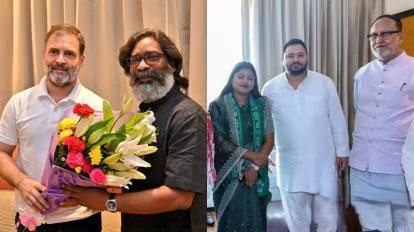
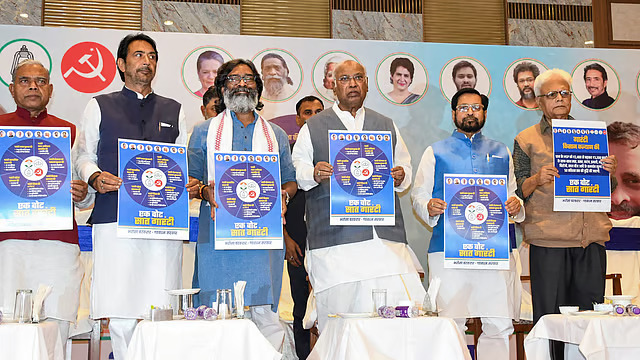
Jharkhand Mukti Morcha Indian politics is witnessing a fresh wave of coalition dynamics as regional parties gear up for the high-stakes 2025 Bihar Assembly Elections. A significant development has emerged from neighboring Jharkhand, where the Jharkhand Mukti Morcha (JMM) has announced its intention to contest the elections in Bihar as part of the INDIA bloc (Indian National Developmental Inclusive Alliance). This announcement, confirmed by JMM General Secretary Vinod Pandey, also hints at ongoing coordination and seat-sharing talks between Hemant Soren, the leader of JMM and former Chief Minister of Jharkhand, and Tejashwi Yadav, the leader of the Rashtriya Janata Dal (RJD) and key INDIA bloc figure in Bihar.
This move marks a strategic expansion of JMM’s influence beyond Jharkhand and aligns with the broader opposition unity campaign aiming to challenge the BJP-led NDA (National Democratic Alliance) at the state and national levels. In this comprehensive blog, we will delve into:
- The history and ideology of JMM
- The composition and vision of the INDIA bloc
- What this alliance means for Bihar politics
- The chemistry between Hemant Soren and Tejashwi Yadav
- Electoral implications and possible seat-sharing outcomes
- Challenges and roadblocks ahead
- Reactions from political stakeholders and the public
- Conclusion: The larger narrative of opposition unity in India
Part 1: Understanding the Jharkhand Mukti Morcha (JMM)
Founded in the early 1970s, the Jharkhand Mukti Morcha (JMM) emerged from the tribal movements demanding autonomy and identity in the Chotanagpur-Santhal region. It played a pivotal role in the long struggle for the creation of Jharkhand, which finally became a state in 2000. The party has consistently represented tribal interests, local governance, and regional empowerment.
Led by Shibu Soren and now by his son Hemant Soren, the JMM has been one of the most influential regional parties in Jharkhand. It has a strong base in tribal districts and has formed governments in alliance with Congress and RJD in the past.
Traditionally, the JMM has focused its electoral energies within Jharkhand, contesting Lok Sabha and Assembly elections primarily from this region. However, the new political climate under the INDIA bloc umbrella has opened up opportunities for the party to expand its reach into bordering regions, especially those with significant tribal and backward caste populations.
Part 2: What Is the INDIA Bloc?
The INDIA bloc (Indian National Developmental Inclusive Alliance) is a coalition of over two dozen opposition parties that have united to challenge the BJP’s dominance in national and state politics. Formed in 2023 ahead of the 2024 Lok Sabha elections, the alliance aims to:
- Protect constitutional values
- Strengthen federalism
- Represent diverse communities
- Fight for social justice and secularism
- Counter the centralized power structure of the BJP
Key parties in the INDIA bloc include the Congress, RJD, DMK, Trinamool Congress, Shiv Sena (UBT), Samajwadi Party, CPI(M), and now increasingly, the JMM.
Part 3: JMM in Bihar — A Strategic Expansion
The announcement of JMM’s intention to contest elections in Bihar under the INDIA bloc banner is a calculated political move. JMM has a cultural, linguistic, and geographical proximity to several districts in Bihar, especially those bordering Jharkhand, such as:
- Jamui
- Banka
- Gaya
- Nawada
- Katihar
- Purnea
These areas have sizable tribal and marginalized populations who resonate with JMM’s ideological framework.
JMM sees Bihar as a natural area of influence, especially after having matured electorally in Jharkhand. By contesting elections in Bihar, JMM can:
- Expand its support base
- Strengthen INDIA bloc’s numbers
- Showcase regional solidarity
- Act as a tribal voice in Bihar
Part 4: Tejashwi Yadav and Hemant Soren — The Emerging Duo
A lot hinges on the personal and political rapport between Tejashwi Yadav and Hemant Soren, both young leaders representing backward castes and tribal communities respectively. Their collaboration can become a model for opposition unity, especially in eastern India.
- Tejashwi Yadav is seen as the rising face of socialist politics in Bihar.
- Hemant Soren, despite recent legal challenges, remains a popular leader among Adivasis.
- Both leaders have worked together in the past under the Mahagathbandhan framework.
According to Vinod Pandey, talks between the two leaders are “positive and ongoing”, with both camps exploring seat-sharing formulas, joint campaign strategies, and region-specific manifestos.
This partnership can potentially offer a new narrative in Bihar — one that champions tribal rights, social justice, federalism, and economic equality.
Part 5: The Electoral Math in Bihar
Bihar is a politically charged state with 243 Assembly seats and a long history of caste-based politics. The upcoming election will largely be a battle between the INDIA bloc and the NDA, with BJP and JD(U) (if still allied) on one side, and RJD-Congress-JMM-Left on the other.
How JMM Fits In:
JMM may contest 10–15 seats, especially in tribal-dominated or border areas. These are seats where RJD or Congress may have a weaker presence, and JMM can offer a stronger local appeal. Some possible constituencies could be:
- Katoria
- Belhar
- Dhamdaha
- Gopalpur
- Simri Bakhtiarpur
A successful outing for JMM in Bihar could also impact Lok Sabha 2029 calculations, as the party will gain experience, data, and electoral infrastructure in a new state.
Part 6: Seat-Sharing — The Key Challenge
While the alliance looks promising, seat-sharing is always a complex process, often marred by ego clashes and strategic disagreements.
Challenges include:
- Balancing JMM’s ambitions with RJD’s traditional dominance
- Convincing Congress and Left partners to adjust to the new entrant
- Managing voter expectations and avoiding candidate clashes
- Coordinating election messaging across multiple parties
The success of this alliance may depend on how flexible RJD is with accommodating JMM’s demands and how effectively the INDIA bloc leadership mediates intra-alliance negotiations.
Part 7: BJP and NDA’s Likely Reaction
The ruling BJP will undoubtedly use this alliance as ammunition to label the INDIA bloc as “opportunistic” and lacking a clear agenda. They may also attempt to:
- Portray JMM as a “Jharkhand party” with no stakes in Bihar
- Highlight corruption cases against Hemant Soren
- Emphasize “jungle raj” narratives around RJD
- Appeal to upper caste and urban voters through targeted messaging
However, if the INDIA bloc communicates a unified, inclusive, and development-focused vision, the JMM entry may enhance rather than hinder the alliance’s appeal.
Part 8: Public and Expert Reactions
Public reaction to this announcement has been mixed but largely curious and cautiously optimistic. Political analysts believe that this could:
- Mobilize tribal voters in Bihar
- Create a formidable rural alliance
- Set the tone for other regional party expansions
Expert Quote:
“JMM’s decision to enter Bihar elections under INDIA bloc reflects a bold step in opposition consolidation. This is not just an electoral move, but a statement of solidarity across state lines.” — Professor R.K. Singh, Political Science, Patna University.
Part 9: Potential Campaign Themes
To make a successful debut in Bihar, JMM may focus on campaign issues such as:
- Tribal welfare and land rights
- Implementation of PESA and Forest Rights Act
- Rural employment and MGNREGA
- Protection of backward class reservations
- Language and cultural identity
- Decentralization and local governance
Joint campaigns featuring Hemant Soren, Tejashwi Yadav, and other INDIA bloc leaders will add firepower to the alliance narrative.
Conclusion: The Larger Picture
JMM’s entry into Bihar elections under the INDIA bloc umbrella is symbolically and strategically significant. It reflects the maturing of a broader political consensus among opposition parties that unity is the only way forward to counter the BJP’s electoral machinery.
This alliance also has implications beyond Bihar. It demonstrates a blueprint for regional parties to coordinate across state boundaries, pool resources, and present a united front rooted in diversity, inclusion, and social justice.
read more latest news


Share our offers and watch your wallet grow—become an affiliate! https://shorturl.fm/mzI4E