

Pakistan Furious After Handshake Controversy, Threatens to Boycott Asia Cup.
Introduction
Pakistan In South Asia, cricket is more than just a sport—it is an emotion, a cultural phenomenon, and often a substitute for diplomacy. When two of the fiercest rivals, India and Pakis-tan, come face-to-face on the cricket field, the match is never just about bat and ball. It is about history, politics, and national pride.
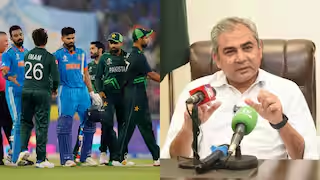
Recently, a new controversy has erupted that once again reflects the fragile nature of cricketing ties between the two nations. Reports suggest that a handshake controversy during an international cricket event has left Pakistan fuming, with its cricket board even threatening to boycott the upcoming Asia Cup.
This development has triggered heated debates across sports circles, media houses, and diplomatic platforms. Was the controversy just a misunderstanding blown out of proportion, or does it signify deeper political tensions spilling onto the cricket field? And most importantly, what does it mean for the future of cricket tournaments in Asia?
In this blog, we will break down the controversy, analyze Pakis-tan’s angry reaction, the role of the Asian Cricket Council (ACC), India’s stance, and how this may impact the Asia Cup and cricket diplomacy as a whole.
What Exactly Happened? The Handshake Controversy Explained
According to reports from the cricketing arena, the controversy began during a post-match formal exchange of greetings between players. In cricket, it is customary for both teams to line up and shake hands after a match, symbolizing sportsmanship and mutual respect.
However, during a recent India-Pakis-tan clash, a notable gesture—or the lack of it—sparked outrage:
- A senior Indian cricketer allegedly avoided or delayed shaking hands with a Pakis-tani counterpart.
- The moment, caught on camera, went viral within minutes.
- Social media erupted, with hashtags like #HandshakeGate and #SportsmanshipMatters trending in both countries.
While some argued that it might have been an innocent oversight or a split-second lapse, Pakis-tani fans and officials interpreted it as a deliberate insult. The Pakistani cricket establishment quickly escalated the matter, demanding an explanation.
Pakistan’s Furious Reaction
The Pakistan Cricket Board (PCB) expressed strong displeasure over the incident, labeling it as a violation of sporting spirit. Several officials hinted that such behavior was “unacceptable” and “insulting to Pakistan as a cricketing nation.”
In fact, some PCB insiders went a step further, threatening that Pakis-tan could boycott the upcoming Asia Cup if the issue was not addressed appropriately.
Statements from PCB
- PCB officials reportedly said: “Respect is non-negotiable. If our players are disrespected on the field, how can we continue to participate in tournaments where such treatment is normalized?”
- Former Pakistani cricketers joined the chorus, accusing Indian players of letting political tensions overshadow the game.
Social Media Uproar in Pakistan
- Pakistani fans flooded social media, accusing India of arrogance.
- Hashtags like #BoycottAsiaCup and #RespectPakistanCricket began trending.
- Some even demanded that the Pakis-tan team should withdraw from multilateral tournaments if “dignity is at stake.”
India’s Response: Silence and Subtle Dismissal
Interestingly, the Board of Control for Cricket in India (BCCI) and Indian officials chose not to give much attention to the controversy. While some former Indian cricketers called it an overreaction, official voices largely dismissed it as “a non-issue being blown out of proportion.”
The BCCI has often maintained that cricketing ties with Pakis-tan cannot be divorced from the larger political context. Given that bilateral cricket series between the two nations have already been suspended for over a decade, India is unlikely to issue any formal apology over something as minor as a handshake incident.
The Asia Cup in Jeopardy
The Asia Cup is one of the most prestigious tournaments in the region, bringing together India, Pakistan, Sri Lanka, Bangladesh, and other Asian cricketing nations. Pakistan’s threat to boycott the Asia Cup has raised major concerns:
- Tournament Credibility – Without Pakis-tan, the Asia Cup loses one of its biggest crowd-pullers. The India-Pakistan clash is often the highlight of the tournament.
- ACC Pressure – The Asian Cricket Council, headed by BCCI Secretary Jay Shah, will be under pressure to ensure Pakistan does not follow through on its threat.
- Broadcasters’ Worries – India-Pakistan matches generate the highest TRPs and sponsorship revenues. A boycott could cause financial setbacks to broadcasters and organizers.
- Impact on World Cricket – If Pakistan skips the Asia Cup, it may also affect scheduling for the upcoming ICC events, where India and Pakis-tan are likely to face each other.
Cricket and Politics: The Never-Ending Link
This incident is just the latest example of how India-Pakistan relations spill over into cricket:
- 2008 Mumbai Attacks – Bilateral cricket ties were suspended after the terror attacks.
- World Cup & Asia Cup Encounters – Since then, India and Pakis-tan have only met in ICC or ACC tournaments.
- 2023 World Cup in India – Pakistan had earlier threatened to boycott the 2023 ODI World Cup over security concerns, but eventually participated after ICC guarantees.
- Venue Disputes – Hosting rights for Asia Cup tournaments have repeatedly been disputed, with Pakistan demanding home advantage and India refusing to travel.
The handshake controversy, though minor in comparison, has reignited the narrative that cricket cannot be separated from politics in South Asia.

Pakistani Media vs. Indian Media
The incident also highlighted the contrast in media coverage:
- Pakistani Media – Played up the controversy, calling it an insult to national pride. Prime-time debates painted India as arrogant and disrespectful.
- Indian Media – Treated it as a trivial issue. Most Indian analysts argued that Pakis-tan was overreacting to gain political mileage.
This sharp divide shows how sports controversies are often used as propaganda tools by both nations to strengthen nationalist sentiments.
Fans’ Perspectives
Beyond official statements, the fans’ reactions reveal the emotional intensity of India-Pakis-tan cricket:
- Indian Fans – Many defended their players, saying it was unfair to politicize every gesture. Some even accused Pakistan of using the incident to deflect from its own cricketing struggles.
- Pakistani Fans – Viewed the handshake incident as symbolic of India’s lack of respect. For them, this was not about a single player but about national dignity.
The clash of perceptions shows that in India-Pakistan cricket, even the smallest gestures become magnified symbols of national honor.
The Role of ACC and ICC
With Pakistan threatening to boycott the Asia Cup, the role of the Asian Cricket Council (ACC) and the International Cricket Council (ICC) becomes crucial.
- The ACC may need to intervene, issue clarifications, or mediate between BCCI and PCB to prevent the boycott.
- The ICC is unlikely to step in unless the controversy escalates further, since it falls under the ACC’s jurisdiction.
- However, if Pakistan withdraws, the ICC might be forced to adjust its scheduling of World Cup and Champions Trophy matches involving the two sides.
Possible Scenarios
- Boycott Confirmed – If Pakistan withdraws, the Asia Cup will go ahead without them. This will damage the tournament’s viewership and competitive balance.
- Face-Saving Compromise – ACC mediates, and India makes a diplomatic gesture (though not an apology), allowing Pakistan to save face and participate.
- Temporary Suspension of Tensions – Both sides agree to “move on” until the next flashpoint inevitably emerges.
Given past history, the second scenario is most likely, since both boards know that the financial stakes are too high to risk a boycott.
Cricket as a Reflection of National Politics
The handshake controversy also reflects the fragile state of India-Pakistan diplomacy. With political relations at a low, cricket becomes the stage where every gesture is politicized.
- For Pakistan, cricketing issues are often framed as matters of national honor.
- For India, cricket diplomacy is often seen through the lens of security and sovereignty.
Until broader political relations improve, cricket will continue to serve as both a bridge and a battlefield between the two nations.
Conclusion
The handshake controversy between Indian and Pakistani players may seem minor to neutral observers, but in the charged atmosphere of South Asian cricket, it has snowballed into a full-blown political issue. Pakistan’s threat to boycott the Asia Cup has sent shockwaves through the cricketing world, raising questions about the future of the tournament and India-Pakistan cricketing ties.
Whether this crisis ends in an actual boycott or a compromise, one thing is clear: cricket in South Asia is never just about the game. It is about pride, politics, and perception. Until India and Pakistan find a way to normalize relations beyond the cricket field, even a handshake—or the absence of it—will continue to stir controversies that threaten the very fabric of the sport.
The world waits to see whether the Asia Cup goes ahead with all its rivalries intact, or whether yet another chapter of political-cricketing drama will dominate headlines in the months ahead.
Read more latest sport news

