
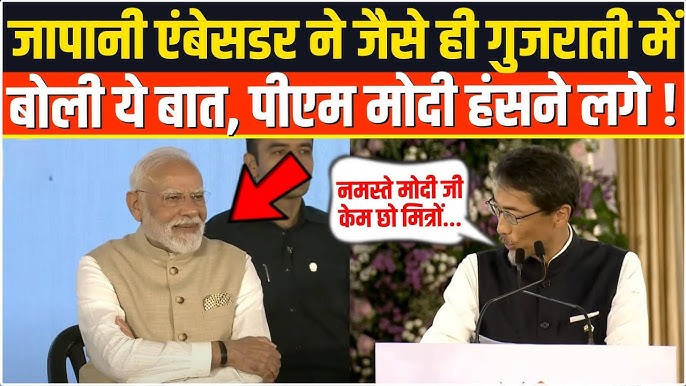
Japanese Ambassador in Ahmedabad Spoke Gujarati, PM Modi Smiled! A Historic Moment of Cultural Diplomacy and India-Japan Friendship
Introduction
Japanese, Diplomacy is not always about long speeches, complex agreements, or policy negotiations. Sometimes, it is about gestures — small but powerful acts that win hearts, bridge cultures, and send a strong message of friendship. One such moment recently came alive in Ahmedabad, Gujarat, where the Japanese Ambassador to India surprised everyone by speaking in Gujarati during his address. What made the occasion even more memorable was Prime Minister Narendra Modi’s warm smile, a gesture that reflected his pride not only as India’s leader but also as a son of Gujarat.
This moment was not just a diplomatic courtesy; it was a display of cultural connection, respect, and the deep bond between India and Japan. In this blog, we will take you through the entire episode, analyze its significance, trace the history of India-Japan relations, and reflect on how such gestures play a transformative role in global diplomacy.
The Event: When Japanese Ambassador Charmed Ahmedabad
The scene was set in Ahmedabad, the heart of Gujarat and the home state of Prime Minister Modi. The Japanese Ambassador, who had come to attend an important program in the city, took to the stage with confidence. Instead of beginning his speech in English or Japanese, he surprised the gathering by greeting the audience in Gujarati.
Words like “Kem cho?” (How are you?) and other Gujarati phrases instantly created a wave of cheer among the audience. The crowd erupted in applause, and all eyes turned toward PM Modi, who responded with a warm and genuine smile. It was a proud moment not only for Gujaratis but also for every Indian watching.
This gesture was a symbol of cultural respect. Diplomats are trained in protocol and negotiation, but when one goes the extra mile to learn and speak the local language, it shows a personal investment in building bridges.
PM Modi’s Smile: More Than Just a Reaction
Prime Minister Narendra Modi is known for his emotional connection with Gujarat. Every time someone acknowledges his home state, it touches him personally. The Ambassador’s attempt at Gujarati was not just about words; it was about honoring Gujarat’s identity and culture.
Modi’s smile, captured by cameras, quickly went viral on social media. It symbolized:
- Pride as a Gujarati – Hearing his mother tongue spoken by a foreign diplomat.
- Pride as Prime Minister – Seeing international leaders embrace Indian culture.
- Pride as a Global Statesman – Witnessing how India’s soft power is being respected across the world.
For Modi, who often emphasizes the power of language and culture in diplomacy, this moment was the perfect blend of tradition and international friendship.
Why Language Matters in Diplomacy
Language is more than just a means of communication; it is an identity. When diplomats speak in the native tongue of the host country, it instantly:
- Breaks barriers – People feel connected at an emotional level.
- Shows respect – Acknowledging the culture and language of the people.
- Creates trust – Diplomacy is built on trust, and gestures like these accelerate it.
- Boosts public perception – Citizens see foreign nations as partners, not strangers.
The Japanese Ambassador’s act falls in the same category as leaders like Barack Obama quoting Mahatma Gandhi in speeches, or Vladimir Putin speaking in Hindi during a visit. Such symbolic moments go down in history as “diplomatic masterstrokes.”
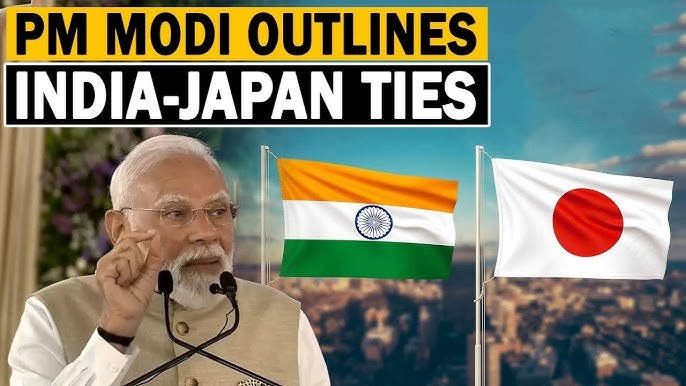
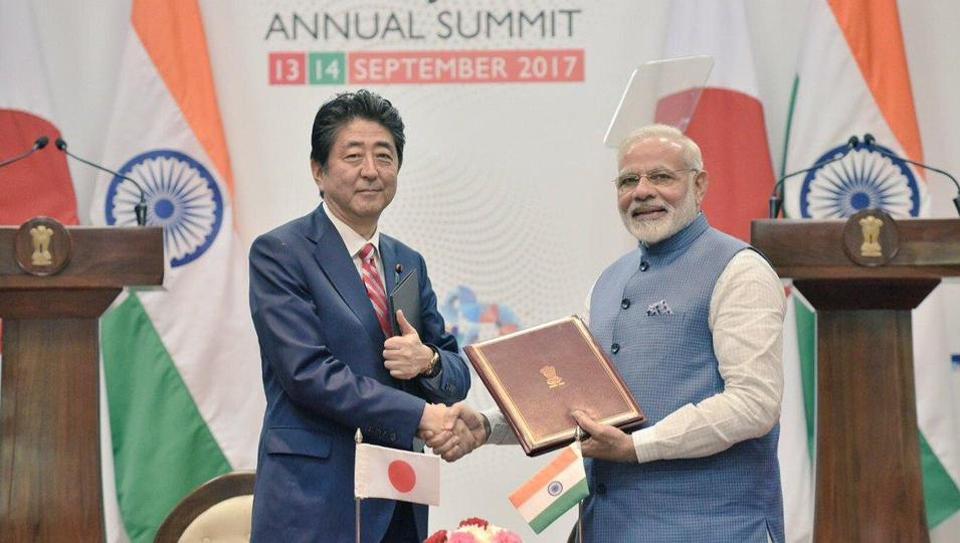
India-Japan Relations: A Historical Overview
To truly understand the depth of this gesture, one must explore the longstanding ties between India and Japan.
Ancient Connections
- Buddhism traveled from India to Japan around the 6th century, laying the foundation of cultural exchange.
- Indian monks, scholars, and texts influenced Japanese spiritual and cultural life.
Modern Era
- During India’s freedom struggle, Japan provided moral support to leaders like Subhas Chandra Bose.
- Post-independence, India and Japan quickly built friendly relations based on mutual respect.
Strategic Partnership
- In the 21st century, India and Japan have become natural partners in Asia.
- Economic, defense, and technological cooperation have strengthened.
- Japan is one of the biggest investors in India, especially in infrastructure projects like the Mumbai-Ahmedabad Bullet Train.
Thus, when a Japanese ambassador speaks Gujarati in Ahmedabad, it is more than just a sweet gesture — it is a nod to this shared history and future partnership.
Gujarat: The Cultural Bridge Between India and Japan
It is no coincidence that this moment happened in Gujarat. The state has been at the center of India-Japan relations for years.
- Bullet Train Project: The Mumbai-Ahmedabad High-Speed Rail project, supported by Japan, is one of the largest collaborative infrastructure projects between the two nations.
- Vibrant Gujarat Summit: Japanese investors and diplomats regularly participate in this global business summit launched by Modi when he was CM of Gujarat.
- Japanese Companies in Gujarat: Many Japanese firms have set up industries in Gujarat, from automobiles to chemicals.
For the Japanese Ambassador to speak Gujarati in Ahmedabad was therefore not only symbolic but also deeply relevant.
Social Media Reactions: A Viral Moment
Within minutes of the speech, clips of the Ambassador speaking Gujarati and PM Modi smiling went viral. Netizens reacted with enthusiasm:
- Gujarati pride: People from Gujarat shared the video widely, calling it a proud moment.
- Cultural diplomacy: Commentators praised the ambassador for his sensitivity and effort.
- Political discussions: Supporters of PM Modi highlighted his role in strengthening ties that make such gestures possible.
On Twitter, hashtags like #IndiaJapanFriendship, #GujaratiPride, and #ModiSmile started trending.
The Larger Message: Strengthening India-Japan Bonds
This incident may appear small, but in diplomacy, gestures carry weight. The Ambassador’s Gujarati words sent a message that Japan does not just see India as a market, but as a friend.
For India, it reinforced the idea that Japan is one of its closest allies in Asia. For Japan, it strengthened its image as a respectful partner willing to embrace local culture.
Modi’s Emphasis on Soft Power
PM Modi has always highlighted India’s cultural soft power. From Yoga Day at the United Nations to gifting copies of the Bhagavad Gita to world leaders, he believes in connecting through tradition and culture.
When a foreign diplomat reciprocates this approach by respecting Indian culture and language, it validates Modi’s vision of cultural diplomacy.
Lessons from the Moment
- Small Gestures, Big Impact: A few Gujarati words created headlines across India.
- Culture as a Diplomatic Tool: Beyond defense and trade, culture cements long-lasting relationships.
- India’s Growing Soft Power: The world is not only engaging with India’s economy but also its traditions.
- Leadership and Pride: PM Modi’s smile reflected the success of his approach in making India’s identity central to diplomacy.
Conclusion: More Than Just Words
When the Japanese Ambassador spoke in Gujarati and PM Modi smiled, it was a snapshot of a friendship that goes beyond treaties and trade. It was about two ancient civilizations finding common ground in respect, culture, and human connection.
For Gujaratis, it was a proud moment. For Indians, it was a reminder of their country’s rising stature. For the world, it was an example of how diplomacy is not only conducted in meeting rooms but also in the hearts of people.
The incident will be remembered as one of those rare moments where diplomacy touched the soul — and perhaps, that is the true essence of building a global family.
Read more latest news

