

Congress Moves To Initiate Privilege Proceedings Against.
Introduction: A Political Storm Brews in Parliament
Congress Moves To Initiate Privilege Proceedings Against Indian politics is no stranger to controversy, particularly within the vibrant and often turbulent halls of Parliament. Political leaders often exchange sharp words and allegations, but there are times when those exchanges cross a threshold, resulting in serious consequences. One such moment unfolded when Congress initiated a motion to initiate privilege proceedings against Union Minister Kiren Rijiju over his controversial remarks about Karnataka Congress leader D.K. Shivakumar.
The issue, which gained significant attention across national media, has sparked heated debates about freedom of speech, parliamentary privilege, and the delicate nature of political discourse in India. To fully understand the gravity of the situation and its implications, it is essential to delve into the context behind this development, the accusations leveled against Rijiju, and the broader political backdrop in which these events are taking place.
This blog aims to explore the unfolding story of the privilege motion against Kiren Rijiju, the circumstances surrounding his remarks about D.K. Shivakumar, and the potential consequences of this controversy. Additionally, we will look at how this episode reflects the broader dynamics of Indian politics and the intricate relationship between the executive and the legislative branches of government.
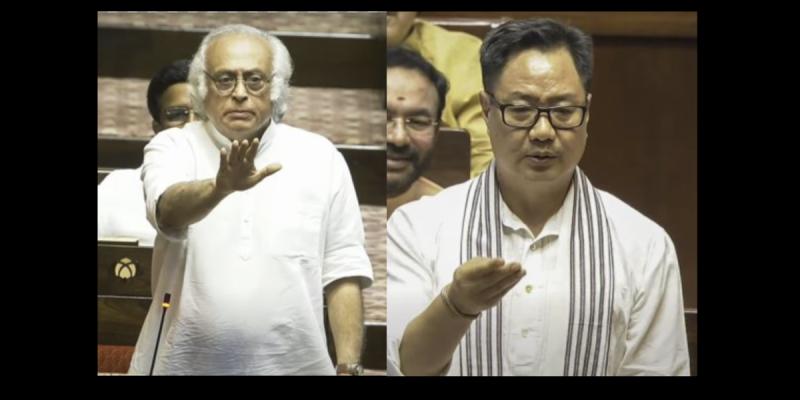
The Accusations: What Did Kiren Rijiju Say About Shivakumar?
At the heart of the controversy is Kiren Rijiju, the Union Minister for Law and Justice, and his comments about D.K. Shivakumar, the influential Congress leader from Karnataka. The remarks that sparked the current political storm were made during a discussion about Karnataka’s political landscape and the Congress party’s activities in the state.
While speaking at an event, Rijiju made comments that some Congress leaders, especially Shivakumar, found deeply offensive. The Union Minister allegedly referred to Shivakumar in a manner that Congress party leaders interpreted as both derogatory and inflammatory. His statement was seen as a personal attack on Shivakumar, questioning his credibility and political standing.
D.K. Shivakumar, a prominent figure in Karnataka politics, has been at the center of several controversies over the years. Known for his political acumen and his role in securing the Congress party’s position in Karnataka, Shivakumar has often been a target for political rivals. However, the remarks made by Rijiju were perceived as crossing the line into personal defamation, and Congress decided to respond strongly.
The specific nature of the comment, which is central to the controversy, revolves around Rijiju’s suggestion that Shivakumar’s political influence was overstated and that his actions in Karnataka had been more self-serving than beneficial to the people of the state. These remarks, which were seen as politically charged and disrespectful, set the stage for the Congress party’s decision to seek privilege proceedings.
What Are Privilege Proceedings in Parliament?
Before understanding the significance of Congress’s move, it is essential to grasp what privilege proceedings are in the context of Indian parliamentary law. Privilege proceedings are part of a parliamentary process that can be initiated when a Member of Parliament (MP) or a public figure is accused of committing an act that violates the rights, privileges, or dignity of the legislative body.
In India, the concept of parliamentary privilege is enshrined in the Constitution, specifically in Article 105, which provides MPs with certain privileges and protections while carrying out their legislative duties. These privileges protect MPs from legal action for statements made within Parliament or in its committees, allowing them to speak freely without fear of repercussions.
However, this privilege is not absolute. Any actions that breach the dignity of Parliament, undermine the rights of fellow members, or cause damage to the reputation of the legislative body can lead to privilege proceedings. These proceedings can result in disciplinary action ranging from censure to suspension or even expulsion from Parliament.
In this case, Congress’s move to initiate privilege proceedings against Kiren Rijiju stems from the belief that his remarks about D.K. Shivakumar went beyond political debate and entered the realm of personal insult and defamation. By accusing Rijiju of violating the dignity of an MP, Congress has invoked the parliamentary privilege process in an attempt to hold him accountable for what it perceives as an attack on Shivakumar’s personal and professional reputation.
The Political Context: Congress’s Reaction to Rijiju’s Remarks
The Congress party’s decision to initiate privilege proceedings against Kiren Rijiju cannot be understood in isolation. It is essential to consider the broader political context in which this controversy is unfolding. Over the past several years, Karnataka has been a focal point of intense political battles between the Congress, the Bharatiya Janata Party (BJP), and regional forces. Karnataka’s political landscape has been characterized by fluctuating alliances, defections, and strategic moves by both major parties.
D.K. Shivakumar, who has long been considered the Congress party’s strongest leader in Karnataka, has played a central role in maintaining the party’s relevance in the state. As a key figure in Karnataka politics, Shivakumar has managed to navigate through turbulent political waters, including attempts to undermine his influence by political opponents. His ability to retain control over key constituencies in Karnataka has earned him respect among his supporters and made him a target for rival parties, especially the BJP.
Kiren Rijiju, on the other hand, is a prominent leader from the BJP and holds the crucial portfolio of Law and Justice in the Modi Cabinet. As a senior minister, Rijiju is known for his sharp rhetoric and unrelenting attacks on political opponents, particularly those from the opposition parties. His controversial remarks about Shivakumar, therefore, did not come as a surprise to many observers, given his combative style of politics.

Congress’s response to Rijiju’s comments is a clear indication of the tense political environment in Karnataka, where the Congress and BJP are locked in a fierce battle for political dominance. The incident reflects the larger power struggle in the state, with Shivakumar being a key player in Congress’s efforts to maintain its position against the BJP’s growing influence. In this highly charged atmosphere, any remark by a senior BJP leader like Rijiju can be viewed as a deliberate attempt to undermine Congress’s standing in Karnataka.
The Implications of Privilege Proceedings Against Rijiju
The decision to move for privilege proceedings against Kiren Rijiju carries significant implications for the relationship between the BJP and Congress. It represents an escalation in the ongoing war of words between the two parties, which often see-saws between fierce rhetoric and tactical maneuvers. However, it also highlights the complex and sometimes contentious nature of political discourse in India.
- Parliamentary Precedents and Accountability: One of the key outcomes of this controversy is the question of accountability within Parliament. The initiation of privilege proceedings against a Union Minister sets a significant precedent for the future. If the proceedings move forward, it will underscore the importance of maintaining the dignity of Parliament and the need to exercise caution when making remarks about fellow MPs. The outcome of such proceedings could also shape how political leaders behave in future parliamentary debates, potentially leading to a more restrained and responsible discourse.
- BJP’s Response and Political Calculations: For the BJP, this controversy could prove to be a double-edged sword. On the one hand, Kiren Rijiju’s bold and combative approach is seen by many within the BJP as a reflection of the party’s assertive stance against political opponents. However, facing privilege proceedings could also tarnish Rijiju’s public image, particularly if the proceedings result in sanctions or censure. The BJP will need to carefully manage this situation to ensure that it does not escalate into a broader political crisis, especially as the party gears up for upcoming elections in various states.
- Shivakumar’s Role and Congress’s Strategy: For D.K. Shivakumar, this controversy provides an opportunity to cement his position as a leader who is not afraid to stand up against political attacks. By backing the privilege motion, Shivakumar and the Congress party are asserting that personal attacks on political figures should not be tolerated in the public sphere, especially when they are intended to discredit or malign. This could also be seen as a strategic move to galvanize Congress’s base in Karnataka and rally support among voters who see the BJP as an outsider seeking to destabilize local politics.
- Media and Public Perception: Media coverage of the privilege proceedings will play a crucial role in shaping public opinion. The way in which the media portrays the comments made by Rijiju and the subsequent parliamentary proceedings will influence how the public views the conflict. If the media frames the privilege motion as a necessary step to protect the integrity of parliamentary discourse, Congress may gain political capital. Conversely, if the narrative is framed as an overreaction to routine political sparring, it could diminish the impact of the proceedings.
The Broader Debate: Political Speech vs. Parliamentary Privilege
The privilege proceedings against Kiren Rijiju raise important questions about the boundaries of political speech and the limits of parliamentary privilege. While the right to free speech is enshrined in the Indian Constitution, there are restrictions on speech that can be seen as defamatory, offensive, or damaging to the reputation of individuals.
In the case of Rijiju’s remarks about Shivakumar, the question is whether his comments crossed the line into personal insult and whether such remarks should be protected under the banner of political discourse. The incident also raises questions about the role of parliamentary privilege in protecting the dignity of MPs and whether it should be invoked to address remarks made outside the Parliament or in public speeches.
This debate is not just about the specific comments made by Rijiju, but about the broader principles that govern the conduct of politicians and the limits of free speech. As India’s democracy matures, the tension between freedom of expression and the need for decorum in public discourse will continue to be a defining issue.
Conclusion: A Controversy With Lasting Consequences
The Congress’s move to initiate privilege proceedings against Kiren Rijiju over his remarks about D.K. Shivakumar is a political development that carries significant consequences for the relationship between the ruling party and the opposition. It is a reflection of the charged political atmosphere in Karnataka and the ongoing rivalry between Congress and BJP.
This episode serves as a reminder that political discourse, particularly in a vibrant democracy like India, is fraught with complexities. The initiation of privilege proceedings is a powerful tool to hold elected officials accountable for their actions, but it also raises important questions about the limits of free speech and the nature of political communication.
As the situation unfolds, the outcome of the privilege proceedings will likely shape the future dynamics of political discourse in India, impacting not only the careers of Kiren Rijiju and D.K. Shivakumar but also the broader fabric of India’s parliamentary system. In the end, this controversy may serve as a defining moment in how political leaders engage with each other and the media, navigating the fine line between vigorous debate and personal defamation.
read more latest news

