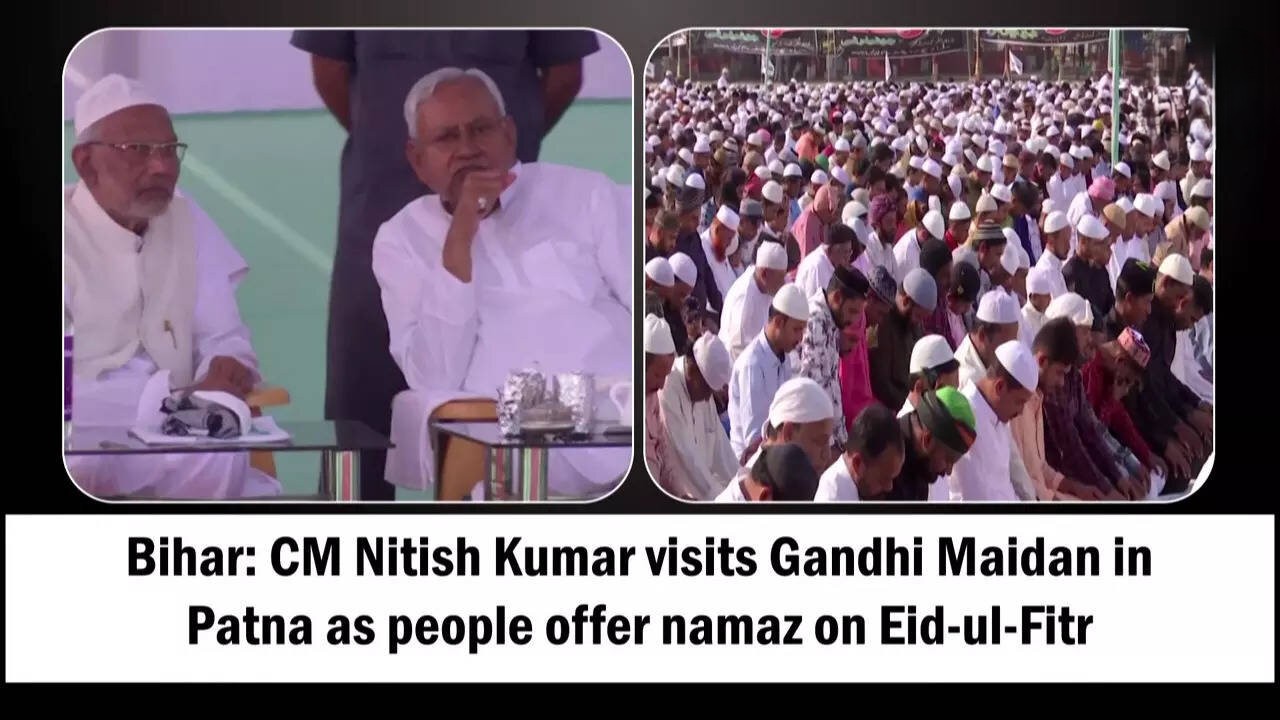
CM Nitish Kumar Reaches Gandhi Maidan on the Occasion of Eid, Seen on Stage During Namaz
Gandhi Maidan Patna, the capital city of Bihar, has long been known for its rich history, cultural diversity, and religious harmony. Every year, the city witnesses vibrant celebrations during major festivals, and one such occasion that brings the people of all faiths together is Eid-ul-Fitr. This year, the celebrations were marked by an important event as Bihar’s Chief Minister, Nitish Kumar, reached the iconic Gandhi Maidan in Patna to participate in the festivities.
On the morning of Eid, a sea of people gathered at the historically significant Gandhi Maidan to offer prayers during the Eid Namaz. The atmosphere was filled with joy, unity, and the spirit of togetherness that is so characteristic of the festival. Chief Minister Nitish Kumar, known for his efforts towards promoting secularism and harmony in the state, made a special appearance on this occasion, marking a memorable moment for the people of Patna Gandhi Maidan.
In this blog, we will take a closer look at the significance of this gesture by the Chief Minister, the cultural and religious importance of Eid in Patna, and how this event highlights the city’s shared values of brotherhood, tolerance, and mutual respect Gandhi Maidan.
The Significance of Eid in Patna
Eid-ul-Fitr, the festival that marks the end of Ramadan, is one of the most important events for Muslims around the world. In Patna, it holds special significance as the city is home to a large Muslim population. The festival is celebrated with grandeur, as families come together to mark the end of a month-long period of fasting, prayer, and reflection.
Eid in Patna is not just a religious event but also a cultural celebration. The city’s markets are filled with people buying new clothes, sweets, and other festive items. The streets are adorned with colorful decorations, and the atmosphere is filled with the sounds of joy and celebration. For Patna’s Muslim community, Eid is a day to come together in prayer, express gratitude to Allah, and celebrate the bonds of community.
The Eid Namaz, offered in open spaces like Gandhi Maidan, is an important tradition. Thousands of people gather in unison to offer prayers, and the gathering itself is a symbol of unity and collective spirituality. The presence of the Chief Minister during such an event adds to the importance of the occasion, reinforcing the message of unity and inclusiveness.

Nitish Kumar’s Appearance at Gandhi Maidan
This year, Chief Minister Nitish Kumar made an appearance at Gandhi Maidan on the occasion of Eid. It was not only a rare but a highly significant gesture, as it reflected the state government’s commitment to religious inclusivity and social harmony.
Nitish Kumar, who has been in power in Bihar for several terms, is widely known for his policies that promote secularism and development for all communities. His administration has been focused on maintaining law and order, enhancing education, and working for the upliftment of marginalized sections of society, irrespective of their religious affiliations.
By attending the Eid Namaz at Gandhi Maidan, Nitish Kumar sent out a strong message of solidarity with the Muslim community. It was also a reflection of his belief in promoting peace, harmony, and mutual respect among people of different faiths. This act was not only symbolic but also reinforced the idea that the state government stands with all communities in celebrating their religious and cultural festivals.
The Eid Namaz at Gandhi Maidan
The Eid Namaz at Gandhi Maidan is one of the largest gatherings in Patna on this special occasion. The sprawling grounds of Gandhi Maidan, which have witnessed many historical events in the past, serve as a venue for the congregational prayers. It is an iconic space that holds great significance for the people of Patna, and every year, thousands of devotees gather here to offer their prayers for peace, prosperity, and well-being.
This year, the Namaz was attended by thousands of people, all dressed in their finest clothes, as they stood together in prayer. The air was filled with the sweet fragrance of flowers, and the voices of the faithful reverberated as they raised their hands in supplication. The atmosphere was one of deep devotion and spiritual unity.
For many, the presence of Chief Minister Nitish Kumar on the stage during the Namaz was a heartening moment. It is a rare sight for a political leader to participate in such a religious occasion, especially by being physically present during the prayers. Nitish Kumar’s gesture was widely appreciated by the people of Patna and beyond, as it reaffirmed the state’s commitment to secular values and interfaith solidarity.
Nitish Kumar and Secularism in Bihar
Nitish Kumar’s government has always been known for its strong stance on secularism. Over the years, the Chief Minister has worked towards maintaining a delicate balance between religious communities and ensuring that all people, regardless of their religion, have equal opportunities in the state. This commitment to secularism is reflected not just in his policies but also in his personal actions.
During his tenure, Nitish Kumar has made efforts to bridge the gap between different communities and foster a sense of inclusiveness. His administration has been proactive in organizing events that promote communal harmony, and his presence at major religious events like Eid Namaz, Diwali, and other festivals demonstrates his commitment to celebrating the diversity that defines Bihar.
By attending the Eid Namaz, Nitish Kumar reinforced his government’s message of unity and tolerance. His appearance on the stage alongside religious leaders from the Muslim community underscored the fact that the state’s government respects and values the religious sentiments of all its citizens. This kind of leadership is what has endeared him to people across communities and has contributed to his reputation as a leader who strives for peaceful coexistence.
The Role of Gandhi Maidan in Patna’s Cultural Landscape
Gandhi Maidan, or the “Ground of Mahatma Gandhi,” is one of Patna’s most iconic landmarks. It has been a center of political activity, social movements, and cultural events for decades. The Maidan holds a special place in the hearts of the people of Patna, and it is a symbol of the city’s history and heritage.
The venue is historically significant, having hosted numerous national events, including rallies, protests, and commemorations. It is also the site of various religious and cultural gatherings, making it a space for communal harmony. Over the years, it has witnessed the coming together of people from all walks of life to celebrate, protest, or simply express solidarity with a cause.
The Eid Namaz at Gandhi Maidan has become an annual tradition, and every year, the space is transformed into a sea of people offering prayers together. The gathering is a testament to the unity and brotherhood that exists among Patna’s diverse population. The presence of political leaders, religious leaders, and the general public together in one space sends a powerful message of unity.
Nitish Kumar’s Leadership and Its Impact on Bihar’s Social Fabric
Nitish Kumar’s leadership has had a significant impact on Bihar’s social fabric. His tenure has been marked by efforts to ensure that all communities, regardless of their religion or background, are treated with dignity and respect. This has been especially important in a state like Bihar, which is home to a diverse population, including various religious communities, castes, and ethnic groups.

Under his leadership, Bihar has made progress in several key areas, including education, healthcare, and infrastructure. His government has been committed to ensuring that development is inclusive and benefits all sections of society. Moreover, Nitish Kumar has been a strong advocate of women’s empowerment and social justice, implementing programs that have had a positive impact on the lives of many people in Bihar.
One of the most notable aspects of his leadership is his ability to maintain communal harmony. Bihar has historically been a state where communal tensions have occasionally surfaced, but Nitish Kumar’s leadership has focused on keeping these tensions at bay by promoting dialogue, understanding, and collaboration between communities. His decision to attend the Eid Namaz in Patna only reinforces his image as a leader who prioritizes peace, unity, and inclusiveness.
The Role of Leaders in Promoting Interfaith Harmony
The role of political leaders in promoting interfaith harmony cannot be overstated. Leaders like Nitish Kumar, who actively engage with people from different religious communities, help in building bridges and fostering a sense of solidarity. In a diverse country like India, it is essential for leaders to demonstrate tolerance, respect, and understanding for all religions. By doing so, they not only strengthen the social fabric but also set an example for their followers and the nation at large.
Nitish Kumar’s presence at the Eid Namaz is a reminder of the importance of religious tolerance and the need to embrace diversity. His actions encourage people to rise above religious differences and work towards the common good. The Chief Minister’s participation in the festival also serves as a call for greater understanding and mutual respect among all communities in Bihar.
Conclusion
The Eid celebrations in Patna this year were marked by a significant event—the presence of Chief Minister Nitish Kumar at Gandhi Maidan during the Eid Namaz. This gesture of solidarity with the Muslim community was a powerful symbol of Bihar’s commitment to secularism, inclusivity, and social harmony. By participating in this religious occasion, Nitish Kumar reinforced the values of unity, respect, and mutual understanding that are essential for the well-being of any society.
The event at Gandhi Maidan was not just a religious gathering but a celebration of the shared values that bind people together, regardless of their faith. As Bihar continues to grow and develop, it is leaders like Nitish Kumar who will play a crucial role in shaping the state’s future—a future that is built on the pillars of secularism, harmony, and respect for diversity.
read more latest news