

India Will Give a Strong Reply to Donald Trump! India Is Preparing to Deal with 40 Countries Except America
Introduction
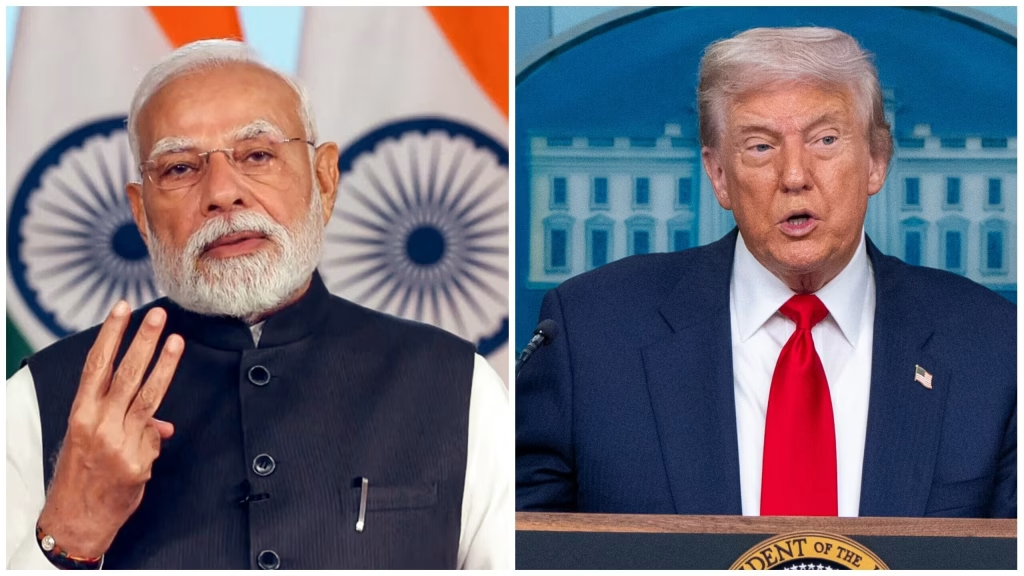
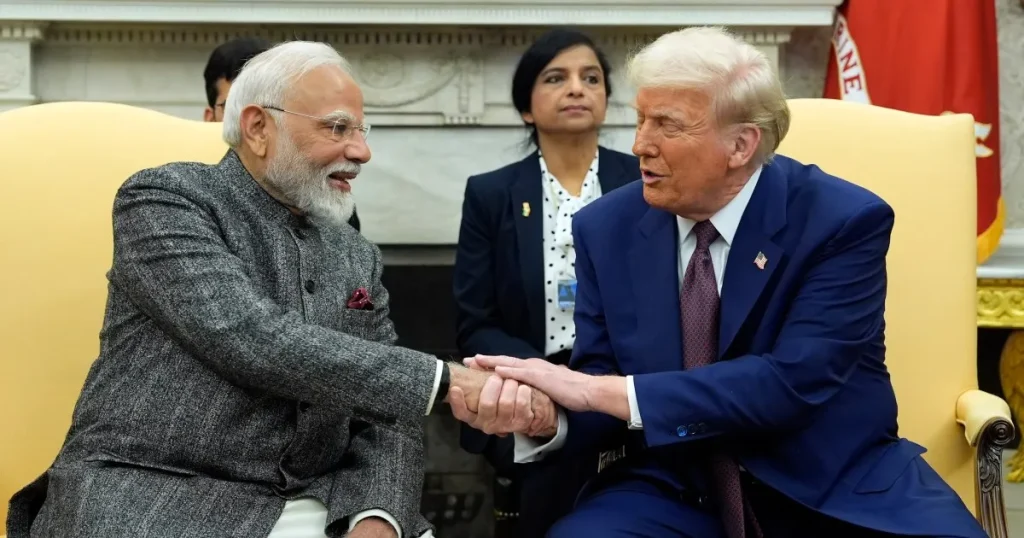
Trump The recent economic and political developments between India and the United States have opened up a new chapter in global diplomacy. With former US President Donald Trump once again making bold announcements about trade tariffs and economic policies that target India, New Delhi has made it clear that it will not bow down under pressure. India has conveyed that it is prepared to give a “strong reply” to Trump’s policies and, if necessary, diversify its global partnerships by strengthening ties with 40 other countries apart from America.
This move is not just a diplomatic counter to Trump’s protectionist stance but also a demonstration of India’s rising confidence as a global power. From trade partnerships to defense cooperation, energy security to technological innovation, India is making rapid strides to ensure that its economy and national interests are safeguarded, irrespective of external pressure.
In this blog, we will deeply analyze:
- Why Donald Trump’s policies are seen as a challenge to India.
- How India is preparing to give a strong reply.
- The significance of India’s plan to strengthen relations with 40 countries other than America.
- Sectors where India can benefit from these alternative partnerships.
- The political, economic, and strategic implications of this move.
Trump’s Tariff War and Its Impact on India
Donald Trump has always been known for his “America First” policy. Even during his first term as President, he introduced high tariffs on several Indian products, including steel, aluminum, and textiles. His reasoning was simple: he believed India had unfair trade advantages and that American manufacturers were losing out.
In his second political innings, Trump has once again announced tariff hikes on multiple countries, with India being one of the main targets. Reports suggest tariffs could range from 25% to 50%, especially on sectors like:
- Pharmaceuticals
- Information Technology (IT services)
- Agricultural products
- Steel and aluminum exports
Such tariffs can hit India’s export-dependent sectors hard. India is one of the top exporters of IT services to the US, and any restriction in this sector could affect millions of jobs and billions in foreign exchange earnings.
But India today is not the India of the early 2000s. With a strong economy, global recognition, and the ability to diversify, India has begun exploring alternative markets and strategic partnerships.
India’s Strong Reply – Standing Firm on National Interests
Prime Minister Narendra Modi and the Indian government have repeatedly emphasized that India will never compromise on its national interests. Whether it is about farmers, fishermen, small industries, or technology startups, India has made it clear that external pressures cannot dictate its domestic policy.
Some of India’s key strong replies to Trump’s approach include:
- Trade Diversification Strategy – India is actively working to reduce over-dependence on the US market. Instead, it is focusing on Europe, ASEAN, the Middle East, and Africa.
- Strengthening Regional Alliances – Platforms like BRICS, SCO, and G20 are becoming strong vehicles for India to voice its concerns and collaborate with like-minded nations.
- Energy Partnerships – The US has previously tried to pressure India on Russian oil imports, but India stood firm. Today, India is actively signing long-term energy agreements with countries like Russia, Saudi Arabia, UAE, and Iran.
- Defense and Technology Self-Reliance – Under the Atmanirbhar Bharat campaign, India is focusing on indigenous defense production and digital technology, reducing dependence on the West.
By adopting this multi-pronged strategy, India is signaling to Trump and the US that it has enough alternatives to safeguard its interests.
Why 40 Countries? The Logic Behind Diversification
India’s plan to strengthen ties with 40 countries apart from the US is not a sudden decision but part of a well-thought-out global strategy. These countries are carefully chosen to provide India with:
- Alternative export markets (Europe, ASEAN, Africa)
- Stable energy sources (Middle East, Russia, Latin America)
- Technology cooperation (Japan, South Korea, Israel, France, Germany)
- Defense partnerships (France, Russia, Israel, Australia)
- Agricultural collaboration (Brazil, Argentina, Vietnam)
Let us break down the major regions and countries India is looking at:
1. Europe
India is working to finalize Free Trade Agreements (FTAs) with the European Union and the UK. Germany, France, and Italy are also important for technology and defense cooperation.
2. Middle East
Saudi Arabia, UAE, and Qatar are crucial for energy security. With the I2U2 initiative (India-Israel-UAE-USA, though possibly shifting without US focus), India is finding new models of cooperation.
3. Russia and Central Asia
Russia remains a key defense and energy partner. Kazakhstan, Uzbekistan, and other Central Asian countries provide opportunities for connectivity projects like INSTC (International North-South Transport Corridor).
4. Asia-Pacific
Japan, South Korea, Vietnam, and Australia are vital for technology, trade, and Indo-Pacific security architecture.
5. Africa
Kenya, South Africa, Nigeria, and Egypt are part of India’s Africa outreach. These countries offer both markets and strategic natural resources.
6. Latin America
Brazil, Argentina, and Mexico are being considered for agriculture, pharmaceuticals, and IT cooperation.
In total, India is developing multi-sector partnerships with 40 countries, creating a strong shield against US trade pressures.
Strategic Advantages of This Policy
India’s move to deal with 40 countries other than America brings several strategic advantages:
- Reduced Dependence on the US – Currently, India exports nearly 18% of its goods and services to the US. Diversifying will reduce vulnerability.
- Global Leadership Role – By aligning with multiple countries, India positions itself as a mediator and leader in the Global South.
- Stronger Bargaining Power with the US – If India has solid alternatives, Trump will have to rethink before putting too much pressure.
- Boost to Domestic Industry – More trade agreements and partnerships mean more opportunities for Indian companies to scale globally.
- Geopolitical Balance – By not being overly dependent on any one bloc, India can maintain strategic autonomy.
Economic Impact – A New Trade Era
If India successfully implements this diversification, the economic impact will be massive. Let’s look at some possibilities:
- IT Sector: Expanding into Europe, Japan, and Africa can reduce over-reliance on US clients.
- Pharmaceuticals: India can become the “pharmacy of the world” by exporting generics to Africa, Latin America, and Asia.
- Agriculture: Wheat, rice, and spices have huge demand in the Middle East and Africa.
- Defense Exports: With indigenous production rising, India can become a major arms exporter.
- Energy Imports: Diversifying sources ensures stability in oil and gas supplies.
The creation of such a multi-directional trade network could actually strengthen the Indian rupee, generate employment, and stabilize long-term growth.
Political Message to Trump
India’s stand also carries a strong political message to Donald Trump. It is a reminder that:
- India is not a dependent partner but an equal power.
- Tariff wars and protectionist policies may harm US businesses too, since American companies heavily rely on India for IT services, pharmaceuticals, and supply chains.
- A growing India has multiple friends in the global arena.
By saying “We are prepared to deal with 40 other countries”, India is effectively telling Trump:
“You need us as much as we need you.”
Challenges in Implementing the Strategy
Of course, this strategy is not without challenges. Some hurdles include:
- Negotiating trade agreements takes time and political will.
- Some countries may not offer markets as large as the US.
- Logistics and connectivity with Africa and Latin America remain weak.
- Trump’s unpredictability could lead to sudden policy shifts, requiring India to stay alert.
Despite these challenges, the overall direction is positive and feasible given India’s current diplomatic momentum.
The Bigger Picture – India’s Rise as a Global Power
This entire episode is not just about Trump’s tariffs but about a larger narrative: India’s rise as a global power.
- India has the world’s fastest-growing major economy.
- It has one of the largest armies and defense modernization programs.
- It is a key player in climate negotiations, space exploration, and digital economy.
- Culturally and politically, India is increasingly seen as a representative of the Global South.
By preparing to deal with 40 countries, India is strengthening its strategic autonomy, which has always been the cornerstone of its foreign policy.
Conclusion
Donald Trump’s aggressive tariff policies have once again stirred the global trade waters. But unlike in the past, India today is well-prepared to respond strongly. With a clear strategy to diversify partnerships and strengthen cooperation with 40 other countries apart from America, India is signaling its resilience, confidence, and determination.
This is not just about trade. It is about asserting India’s economic independence, strategic autonomy, and global leadership.
Trump may think tariffs will bring India to the negotiating table under pressure, but the reality is different. India has many doors open, many friends to count on, and the political will to protect its national interests.
The message is clear: India will give a strong reply. India is ready.
read more latest news

