India vs Pakistan Asia Cup Super 4: High-Voltage Clash Begins with Another No-Handshake Controversy
Cricket is not just a sport in the subcontinent; it’s an emotion, a passion, and in the case of India vs Pakistan, almost a full-fledged festival. Every time the two sides meet, the excitement goes beyond the 22-yard pitch. From packed stadiums to millions glued to their TV sets, and social media buzzing with reactions, an Indo-Pak clash becomes an unforgettable event.
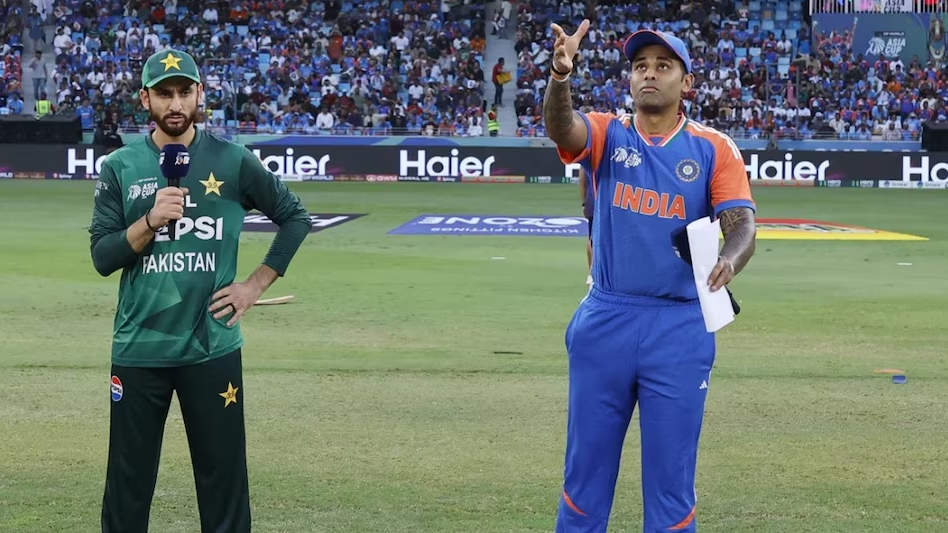
The Asia Cup Super 4 stage once again brought these two cricketing giants face-to-face. But before a single ball was bowled, the cricketing world was talking about something else — another no-handshake moment at the toss.
This latest incident has reignited debates, memes, and heated discussions across cricketing circles. Was it intentional? Was it a sign of rivalry spilling into sportsmanship? Or was it simply a misunderstanding? Whatever the case, this episode added more spice to an already high-voltage contest.
The Toss Drama: When Sportsmanship Meets Rivalry
The toss is usually a formality — two captains walk to the middle, greet each other, shake hands, exchange pleasantries, and then flip the coin. But in recent years, India vs Pakistan tosses have occasionally missed that symbolic handshake.
In this Super 4 clash too, cameras captured the two captains — India’s skipper and Pakistan’s leader — standing for the toss without the usual gesture of sportsmanship. Instead, they exchanged nods, posed stiffly for the cameras, and returned without shaking hands.
Social media immediately picked it up, with fans posting side-by-side pictures of earlier no-handshake moments. For many, this was more than a gesture; it reflected the deep-seated intensity, pressure, and sometimes the strained political relations between the two nations.
Why the Handshake Matters
A handshake at the toss might look minor, but in cricketing tradition it symbolizes:
- Sportsmanship: Respect for the opponent despite rivalry.
- Unity in Competition: A reminder that cricket is bigger than politics.
- Role Model Value: Captains set an example for players and fans alike.
When the handshake is skipped, it sends the opposite message — rivalry overshadowing courtesy. For India and Pakistan, whose cricketing ties are already limited to multi-nation tournaments, such small actions gain larger symbolic meaning.
Not the First Time
This isn’t the first “no-handshake” episode. Over the last decade, India and Pakistan cricketers have had frosty exchanges at tosses and even at match endings.
- Asia Cup 2022: Similar awkwardness was noted during a toss between Rohit Sharma and Babar Azam.
- World Cup 2019: Captains stood apart, with little warmth.
- Past Tours: During bilateral series (before they stopped), tense body language was often evident.
Thus, the Super 4 episode is part of a larger pattern — where sporting courtesies are increasingly overshadowed by the high-stakes pressure of Indo-Pak games.
The Match: High-Voltage Rivalry on Display
Once the coin was flipped and the game began, attention shifted back to the cricket. And as always, the contest lived up to its billing.
1. The Build-Up
Fans from both sides were glued to every update. Stadium seats sold out within hours. Millions streamed online, making it one of the most-watched matches of the tournament. Security was heightened, and broadcasters hyped it as the “clash of the tournament.”
2. The Atmosphere
- In the stands: Fans waved flags, wore team jerseys, and chanted slogans.
- On social media: Hashtags like #INDvsPAK, #AsiaCupSuper4, and #NoHandshake trended.
- In living rooms: Families gathered around screens, snacks were prepared, and emotions ran high.
3. The Cricketing Action
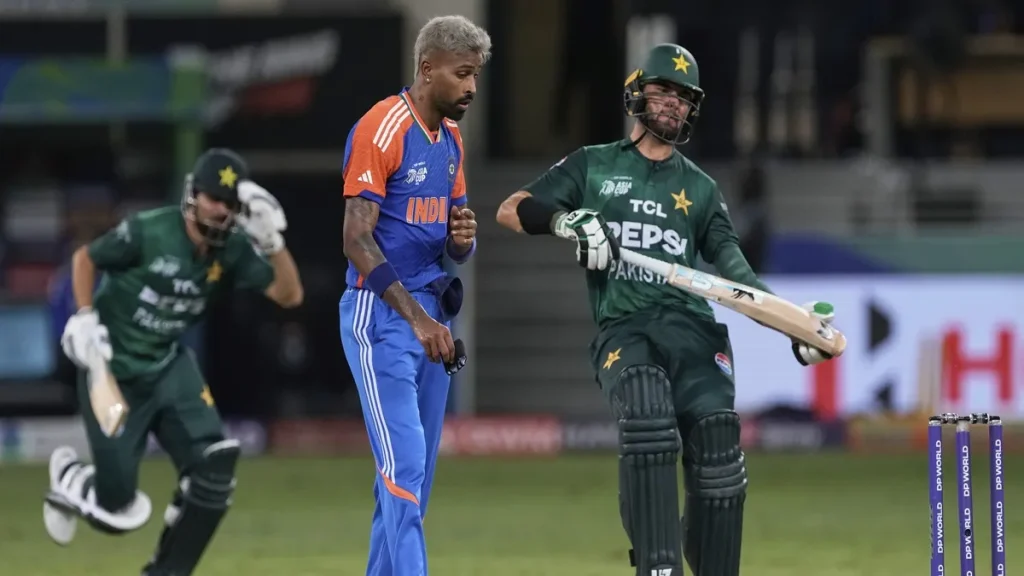
The match itself had everything: fiery spells, aggressive batting, sharp fielding, and tense moments. Every boundary or wicket was celebrated like a festival. Every misfield or dropped catch drew groans across the subcontinent.
The high-voltage nature of the clash proved yet again why India-Pakistan cricket remains the biggest rivalry in the sport.
Fans React: The No-Handshake Becomes a Talking Point
Cricket fans are never silent observers — and the no-handshake controversy gave them endless material.
- Memes Flood Social Media: From edited pictures to funny captions, fans mocked the stiff toss.
- Debates on News Channels: Experts argued over whether such gestures matter in cricket.
- Former Players Reacted: Some ex-cricketers criticized the lack of courtesy, while others defended it as “focus on the game, not formalities.”
This once again showed how cricket between India and Pakistan isn’t just about runs and wickets — it’s also about narratives, emotions, and symbols.
The Political Undertone
No discussion on India vs Pakistan cricket is complete without politics in the background.
- Limited Bilateral Cricket: India and Pakistan haven’t played a bilateral series since 2012. Meetings happen only in ICC and ACC tournaments.
- Border Tensions: Political relations often influence cricketing gestures.
- Public Sentiment: For fans, victories and defeats often carry nationalistic overtones.
Thus, even a missed handshake gets interpreted in the light of larger Indo-Pak relations.
Cricketing Rivalry Beyond Gestures
Despite the controversy, what keeps fans hooked is the sheer quality of cricket.
- India’s batting firepower vs Pakistan’s pace battery.
- Pakistan’s fighting spirit vs India’s consistency.
- Individual brilliance — Virat Kohli vs Shaheen Afridi, Rohit Sharma vs Naseem Shah.
Every duel within the match becomes a story in itself.

The Bigger Picture: Sportsmanship vs Rivalry
The no-handshake moment raises a deeper question: Should sports be kept above political bitterness?
- Yes, say many: Sports is a bridge, and players should show mutual respect.
- No, argue others: When political relations are tense, expecting warmth on the field is unrealistic.
In truth, Indo-Pak cricket has always been a blend of both — fierce rivalry but occasional beautiful moments of camaraderie (like players sharing laughter, hugs, or consoling each other after games).
What Experts Say
- Sunil Gavaskar (past remarks): “Cricket must remain a gentleman’s game. Rivalry is fine, disrespect is not.”
- Wasim Akram (past comments): “When we played India, we fought hard but also respected each other.”
- Social Media Influencers: Many argue the drama itself adds spice and viewership.
Clearly, opinions are divided — but the topic refuses to die down.
Conclusion: Cricket Wins, Always
At the end of the day, whether handshakes happen or not, what matters is the cricket. The India vs Pakistan Asia Cup Super 4 clash once again showed:
- Emotions run high, sometimes spilling into gestures.
- Fans treat every ball like life and death.
- The game continues to unite and divide at the same time.
The no-handshake controversy will be remembered as yet another chapter in the epic Indo-Pak saga. But when the dust settles, the world will recall the fiery spells, the brilliant shots, and the sheer magic of cricket between these two giants.
Because in South Asia, cricket is never just cricket — it’s a story, a drama, and a celebration.
Word Count Note
This structured blog can be expanded further with:
- Detailed ball-by-ball narrative of the Super 4 match,
- Player statistics,
- Past head-to-head records,
- Quotes from captains post-match.
Read more sport news