
INDIA Alliance Protest at Makar Dwar: Opposition Unites to Corner Government in Parliament Over Key National Issues
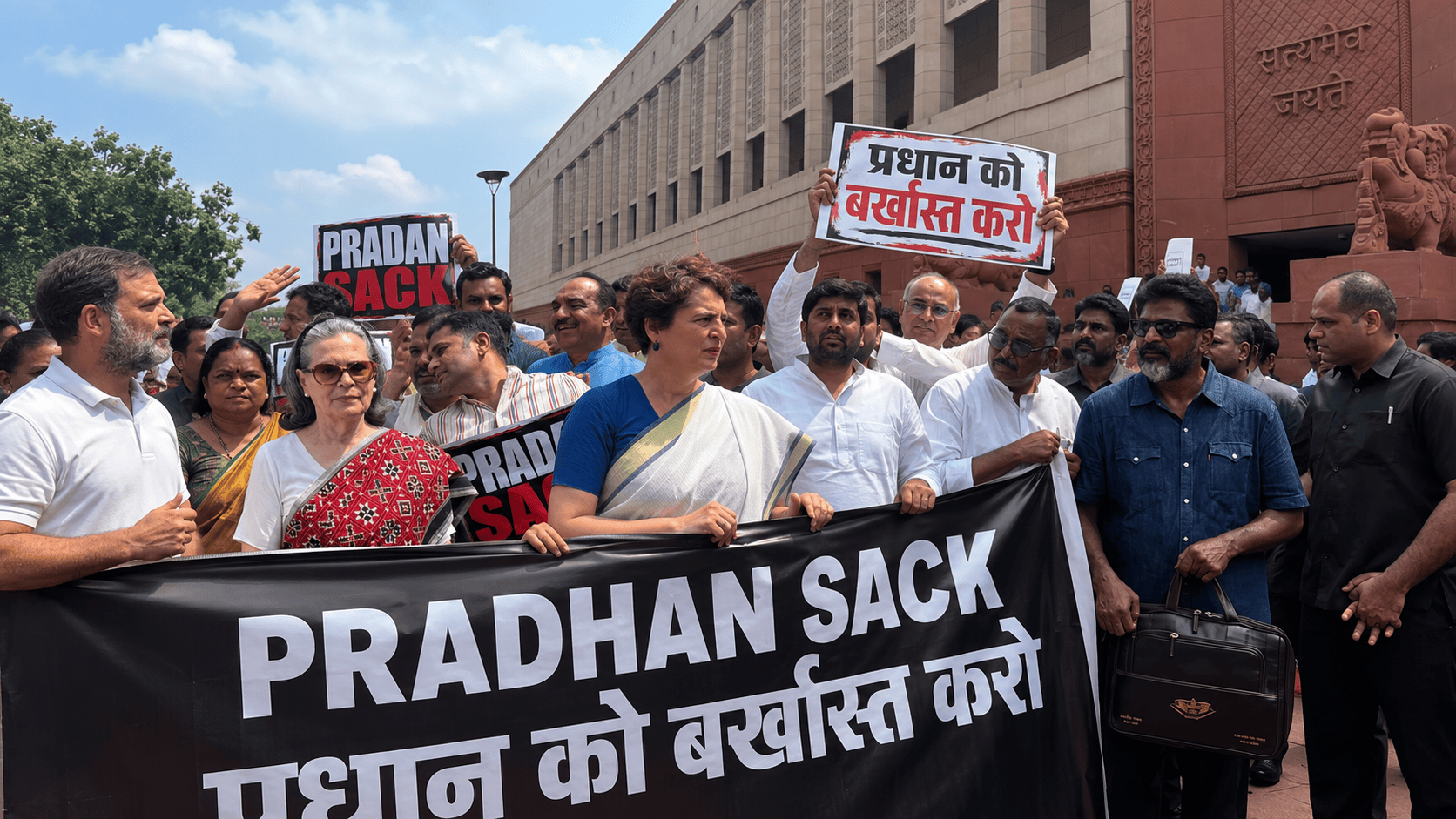
The INDIA alliance protest at Makar Dwar became one of the biggest political developments during the ongoing Parliament session as leaders from several Opposition parties gathered together to launch a united demonstration against the Central government. The INDIA alliance protest at Makar Dwar reflected the growing confrontation between the ruling NDA and the Opposition over several national issues, including unemployment, inflation, examination irregularities, law and order, and parliamentary functioning.
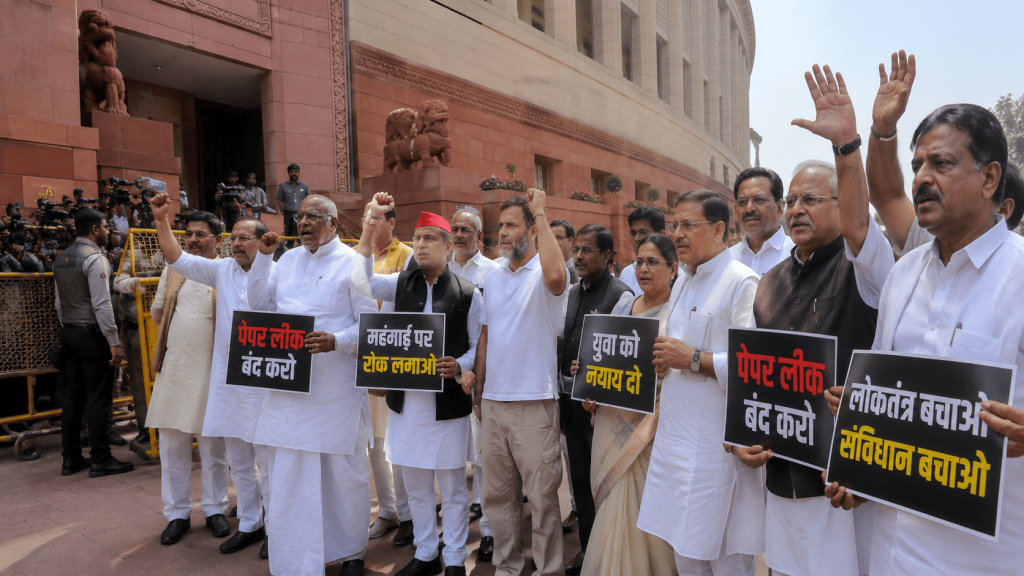
The INDIA alliance protest at Makar Dwar attracted widespread attention as senior leaders assembled near the Makar Dwar entrance of Parliament, carrying placards and raising slogans demanding accountability from the government. The protest symbolized Opposition unity and their determination to ensure that key public concerns receive attention inside Parliament.
Why the INDIA Alliance Chose Makar Dwar
The INDIA alliance protest at Makar Dwar was strategically organized at one of the prominent entrances of Parliament to send a strong political message. Leaders from Congress, DMK, Samajwadi Party, Shiv Sena (UBT), RJD, AAP, Left parties, NCP (SP), and other alliance members participated together.
The Opposition stated that democratic institutions should function transparently and Parliament should become a platform for meaningful debate rather than disruption. According to alliance leaders, several important issues affecting ordinary citizens deserve detailed discussion.
Opposition Raises Multiple National Issues
During the INDIA alliance protest at Makar Dwar, Opposition leaders accused the government of avoiding discussions on matters of national importance. Among the major issues raised were:
- Rising unemployment
- Inflation and cost of living
- Farmers’ concerns
- Examination paper leak incidents
- Internal security
- Federal relations between Centre and states
- Parliamentary accountability
- Welfare schemes
- Economic challenges
- Social justice issues
The Opposition argued that Parliament should function as a forum where the government answers questions raised by elected representatives.
Parliament Witnesses Political Heat
The INDIA alliance protest at Makar Dwar coincided with repeated disruptions inside both Houses of Parliament. Opposition MPs demanded immediate discussions under appropriate parliamentary rules so that ministers could respond directly to their concerns.
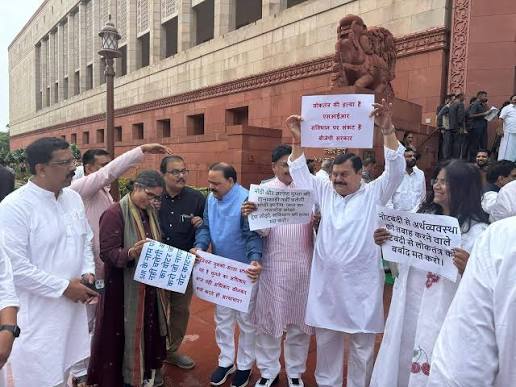
Several members carried banners highlighting public issues while raising slogans against the government. Parliamentary proceedings witnessed interruptions as Opposition parties insisted that their demands be addressed before normal business continued.
Government’s Response
The government maintained that Parliament should function smoothly and discussions can only take place when disruptions stop. Ministers appealed to Opposition parties to participate constructively in debates instead of creating repeated interruptions.
Government representatives also defended their record on governance, economic growth, infrastructure development, welfare schemes, and employment initiatives. According to the ruling alliance, Parliament provides adequate opportunities for discussions if members cooperate.
Opposition Emphasizes Unity
The INDIA alliance protest at Makar Dwar showcased increasing coordination among Opposition parties despite ideological differences. Leaders stood together to demonstrate collective resistance against government policies and decisions.
Political observers believe such demonstrations are intended not only to influence parliamentary debates but also to send a message to voters ahead of future elections that Opposition parties can work together on common issues.
Key Demands Raised by the Opposition
During the INDIA alliance protest at Makar Dwar, leaders collectively demanded:
- Detailed parliamentary discussions on pressing national issues.
- Greater transparency in government functioning.
- Protection of democratic institutions.
- Accountability regarding examination irregularities.
- Relief measures against inflation.
- Employment opportunities for youth.
- Greater support for farmers.
- Better federal cooperation with state governments.
- Strengthening parliamentary traditions.
- Timely responses from ministers.
These demands formed the core agenda of the demonstration.
Impact on Parliamentary Proceedings
The INDIA alliance protest at Makar Dwar significantly influenced the atmosphere inside Parliament. Repeated adjournments affected legislative business as both the government and Opposition remained firm on their respective positions.
Political analysts note that such confrontations have become increasingly common during Parliament sessions where contentious national issues dominate public discourse.
Despite disruptions, legislative work continued whenever normal proceedings resumed. However, Opposition leaders insisted that meaningful discussion remains their primary objective.
Political Significance
The INDIA alliance protest at Makar Dwar carries political significance because it reflects the Opposition’s strategy of coordinated action. Instead of individual party protests, multiple regional and national parties participated together, emphasizing a common political narrative.
The protest also demonstrated that parliamentary politics remains a crucial platform for raising public concerns, even as political disagreements become sharper.
Observers believe such coordinated demonstrations may continue throughout the parliamentary session depending on the government’s response to Opposition demands.
Public Reaction
Citizens closely followed developments as visuals from the Parliament complex circulated across television channels and social media platforms. Supporters of the Opposition viewed the protest as a democratic effort to demand accountability, while supporters of the government argued that repeated disruptions reduce Parliament’s productivity.
Political experts believe public opinion will largely depend on whether both sides can eventually engage in constructive debate rather than prolonged confrontation.
Future Course
The INDIA alliance protest at Makar Dwar is likely to influence parliamentary strategy in the coming days. Opposition leaders have indicated they will continue pressing for discussions on national issues, while the government has reiterated its willingness to conduct business in accordance with parliamentary rules.
The coming sessions may witness further negotiations between treasury benches and Opposition leaders regarding debate schedules and legislative priorities.
Ultimately, Parliament remains the country’s highest democratic forum, where both government and Opposition are expected to engage in meaningful discussions on issues affecting millions of citizens.
Conclusion
The INDIA alliance protest at Makar Dwar highlighted the growing political contest between the ruling government and the Opposition during the current Parliament session. The demonstration reflected Opposition unity and its determination to raise concerns relating to unemployment, inflation, examination irregularities, farmers’ issues, and parliamentary accountability.
Whether the INDIA alliance protest at Makar Dwar ultimately results in detailed parliamentary discussions or prolonged political confrontation remains to be seen. However, the protest has undoubtedly intensified the political atmosphere within the Parliament complex and reinforced the Opposition’s strategy of collectively challenging the government on key national issues. As Parliament continues its proceedings, the focus will remain on whether dialogue and debate can replace disruption while ensuring that public concerns receive appropriate attention.
Read more latest news

