

Imran Pratapgarhi Gets Relief from Supreme Court: A Victory for Free Speech and Legal Justice
Imran Pratapgarhi, an emerging force in Indian politics, poet, and member of the Indian National Congress (INC), has recently garnered widespread attention for his legal battle and subsequent relief from the Supreme Court of India. This landmark moment has captured the imagination of political observers, supporters, and critics alike, bringing issues of free speech, political activism, and legal justice to the forefront of public discussion.
Pratapgarhi, a well-known poet and political figure, rose to prominence through his activism and public engagement in various social and political causes. His poetry, which often tackles themes such as social justice, nationalism, and the plight of marginalized communities, has resonated with millions across the country. However, his outspoken views and strong political stances have often put him at odds with certain factions of society, especially those in positions of power. Despite facing political and legal challenges, Pratapgarhi has stood firm in his beliefs, demonstrating resilience and determination.
This blog will explore the legal case against Imran Pratapgarhi, the relief he received from the Supreme Court, and the broader implications of this case on free speech, political discourse, and the role of the judiciary in upholding democratic values in India. We will analyze the events leading up to this moment, the significance of the Supreme Court’s intervention, and the importance of maintaining a balance between free expression and legal accountability in a vibrant democracy.
Who is Imran Pratapgarhi?
Imran Pratapgarhi is a prominent Indian poet, lyricist, and politician associated with the Indian National Congress (INC). Born in the town of Pratapgarh in Uttar Pradesh, Imran has made a name for himself not only as a poet but also as a strong voice for social justice, secularism, and progressive values. His poetry is known for its powerful social commentary and deep-rooted patriotism, which has made him a beloved figure in Indian political and cultural circles.
Pratapgarhi’s poetry often critiques the status quo and addresses pressing societal issues such as caste discrimination, religious intolerance, and the marginalization of minorities. His lyrical works have inspired countless individuals, particularly the youth, to become more engaged with social causes and to fight for the rights of the underprivileged.
In 2019, Imran Pratapgarhi entered the political arena by contesting the Indian general elections as a member of the Indian National Congress from the Uttar Pradesh constituency of Pratapgarh. Although he did not win the seat, his candidacy drew significant attention to issues of social justice, minority rights, and secularism. His involvement in politics has only amplified his voice, leading him to become a key figure in the INC, especially in matters related to youth empowerment and the fight against divisive politics.
Pratapgarhi is also an outspoken critic of the ruling Bharatiya Janata Party (BJP) and its policies, particularly those concerning religious and social matters. This has earned him both admiration and hostility, with many praising his courage to speak truth to power while others accuse him of undermining national unity and promoting divisiveness.
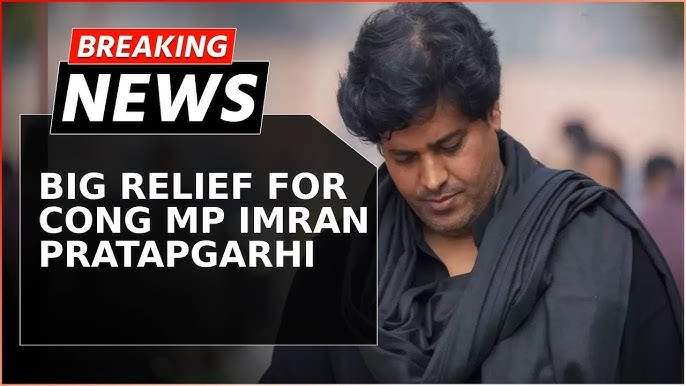
The Legal Case Against Imran Pratapgarhi
Imran Pratapgarhi’s legal troubles began after his outspoken remarks and criticism of various political figures and policies. As a public figure with a large social media following, his statements have often attracted attention from both his supporters and detractors. The legal case against Pratapgarhi stemmed from comments he made during a public event and through his online platforms, which were perceived as inflammatory by certain sections of the public.
The controversy erupted when Pratapgarhi delivered a speech that was deemed by some to be derogatory towards certain leaders and institutions. The remarks made during the speech were allegedly offensive, leading to the filing of multiple complaints against him. The complainants, mostly from political organizations that support the ruling government, claimed that Pratapgarhi’s words amounted to defamation and incitement of violence.
Several cases were filed against Pratapgarhi in various states, accusing him of causing communal disharmony and disrespecting national symbols and leaders. While these legal actions were seen by many as politically motivated, they also raised important questions about the limits of free speech and the ability of public figures to express dissent in a democracy.
In response to these legal challenges, Pratapgarhi filed a petition in the Supreme Court of India, seeking relief from the criminal cases filed against him. His petition argued that the cases were based on frivolous grounds and were aimed at suppressing his freedom of expression. Pratapgarhi’s legal team contended that the accusations against him violated his fundamental rights, particularly the right to free speech guaranteed under Article 19 of the Indian Constitution.
The Supreme Court’s Intervention: A Landmark Decision
The Supreme Court of India’s intervention in the case against Imran Pratapgarhi was a significant moment in the ongoing battle to preserve free speech and political activism in the country. In a ruling that many observers hailed as a victory for individual rights, the Supreme Court granted Pratapgarhi relief from the criminal cases filed against him.
The relief came in the form of an order quashing the various criminal charges, allowing Pratapgarhi to continue his political and social activism without the looming threat of legal consequences. The Court’s decision was based on the principle that political speech, even if it is critical of the government or specific leaders, should not be unduly suppressed unless it directly incites violence or hatred.
The Supreme Court’s order emphasized the importance of protecting the freedom of expression, especially for public figures like Pratapgarhi, who use their platforms to voice their opinions and contribute to public discourse. The Court also highlighted that legal action should not be taken as a means of silencing dissent or stifling political engagement, as this would be a violation of democratic values.
This intervention by the Supreme Court is seen as a reaffirmation of the judiciary’s role in protecting citizens’ rights against politically motivated attacks and excessive use of legal machinery to suppress dissent. The decision also serves as a reminder that the Constitution guarantees the right to free speech and that this right must be defended against arbitrary restrictions.
The Significance of the Supreme Court’s Ruling
The Supreme Court’s ruling in favor of Imran Pratapgarhi holds several important implications for Indian democracy, particularly in the context of free speech, political discourse, and the legal system.
1. Strengthening Free Speech in India
India’s democracy has long been founded on the principle of free speech, with citizens having the right to express their opinions and engage in public debates without fear of retribution. However, in recent years, there has been growing concern over the erosion of free speech, particularly when it comes to political dissent. Pratapgarhi’s case is one of several instances where individuals have faced legal action for their views on political issues.

The Supreme Court’s ruling sends a strong message that political speech, even if it is critical of government policies or leaders, cannot be criminalized simply because it challenges the status quo. The decision underscores the importance of maintaining a space for open discourse, where citizens can freely express their opinions and engage with the political system without fear of persecution.
2. Preventing Political Abuse of Legal Mechanisms
Pratapgarhi’s legal battle raised concerns about the misuse of legal processes to target political opponents or suppress critical voices. In many cases, legal action has been used as a tool to silence dissent and intimidate those who challenge the ruling government. The Supreme Court’s intervention in this case demonstrates its willingness to stand up against political abuse of the legal system and ensure that individuals are not unjustly harassed or penalized for expressing their views.
By quashing the criminal charges against Pratapgarhi, the Court has set a precedent for future cases where individuals face legal action for their political views. It serves as a reminder that the legal system must operate independently of political influence and that citizens should not be subject to harassment simply because they challenge those in power.
3. Reaffirming the Role of the Judiciary in Protecting Democracy
The Supreme Court’s decision in this case is also a reflection of the judiciary’s vital role in protecting democratic values. In recent years, there have been growing concerns about the independence of the judiciary, with some critics alleging that it has been subject to political pressures. However, the Court’s timely and decisive intervention in Pratapgarhi’s case highlights the judiciary’s commitment to upholding the Constitution and defending the rights of citizens.
In a country as diverse and politically charged as India, the judiciary remains one of the few institutions that can act as a safeguard against the potential misuse of power. The Pratapgarhi case is a reminder of the judiciary’s responsibility to protect the rights of individuals, especially those who speak out against government actions or political leaders.
4. Impact on Political Activism and Expression
Imran Pratapgarhi’s case also has broader implications for political activism and expression in India. It highlights the challenges faced by individuals who engage in political activism and critique the government. Political figures, especially those in the opposition, often face legal and social persecution for their views, with some having their voices silenced through threats, intimidation, and legal action.
Pratapgarhi’s victory serves as a boost to the morale of political activists and dissenting voices in India. It reassures them that the legal system can be a tool for justice and that their right to speak freely will be protected. The case reinforces the idea that political expression is an essential aspect of democratic engagement and should be safeguarded by the law.
Conclusion
Imran Pratapgarhi’s relief from the Supreme Court marks a significant victory for free speech, political engagement, and legal justice in India. The Supreme Court’s decision to quash the criminal charges against Pratapgarhi sends a powerful message about the importance of defending the right to dissent and engage in political discourse without fear of legal persecution.
The case serves as a reminder that democracy thrives on open dialogue, where citizens can express their views and challenge authority without being silenced. It also highlights the role of the judiciary in ensuring that fundamental rights are upheld and that legal processes are not used to target individuals for their political beliefs.
As India continues to navigate the complexities of political expression, it is vital that citizens, lawmakers, and the judiciary work together to protect the core principles of democracy, including the freedom of speech. Imran Pratapgarhi’s case is a testament to the resilience of individuals who refuse to be silenced, even in the face of legal and political challenges.
read more latest news

