

Himanta Biswa Sarma’s Sharp Attack on Rahul Gandhi: A Political Storm in Bihar
Introduction
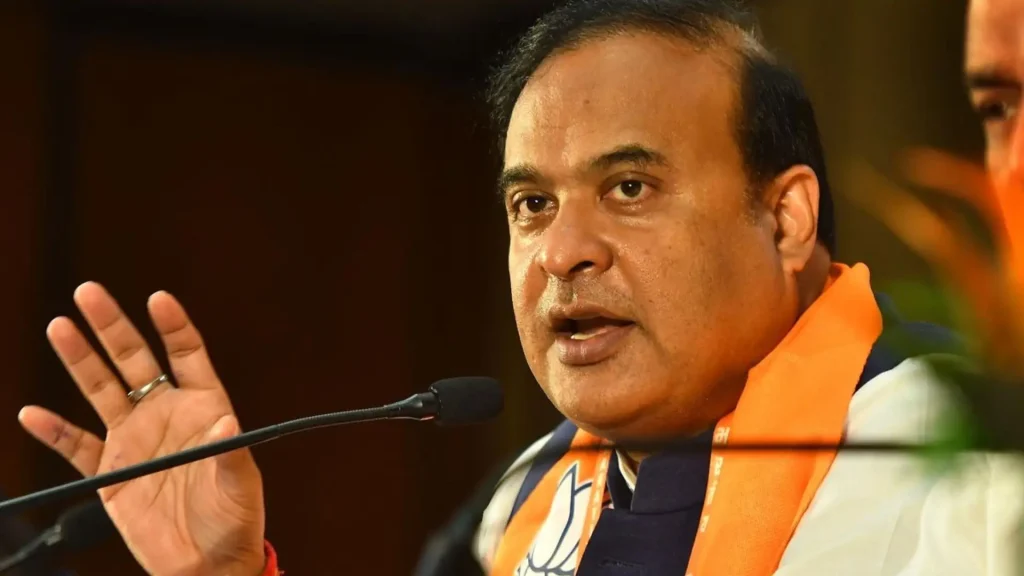
Himanta Biswa Sarma says The political climate in India never lacks intensity, but sometimes a single statement can shake the entire discourse. On November 6, 2025, Assam Chief Minister Himanta Biswa Sarma stirred controversy during his campaign for the Bihar Assembly elections. Known for his fiery speeches and unapologetic style, Sarma once again hit the headlines — not for his campaign promises, but for a provocative remark aimed directly at Congress leader Rahul Gandhi.
While addressing an election rally in Bihar, Sarma made a comment that has since become the center of heated debate across political circles, media discussions, and social media platforms. His criticism of Rahul Gandhi was not just political — it was personal and intense. What began as a campaign speech quickly turned into a national talking point.
In this blog, we’ll unpack everything: the background of the Bihar elections, the details of Sarma’s statement, why it’s controversial, how political parties reacted, and what it all means for India’s political discourse.
The Political Context: Bihar’s High-Stakes Election
The 2025 Bihar Assembly elections are crucial for multiple reasons. Bihar, with its 243 assembly seats, remains one of the most politically sensitive states in India. Historically, it has been the stage for coalition battles, caste-driven politics, and the constant tug-of-war between regional and national parties.
The ruling coalition, composed of the Bharatiya Janata Party (BJP) and the Janata Dal (United), faces a stiff challenge from the opposition bloc led by Rashtriya Janata Dal (RJD) and Congress. With unemployment, education, caste equations, and law and order on voters’ minds, the contest is fierce.
Amid this, BJP’s strategy has been to deploy its star campaigners across states — leaders who can connect emotionally with voters while delivering strong ideological messaging. Himanta Biswa Sarma, with his reputation for sharp oratory and combative politics, was one such choice.
Himanta Biswa Sarma’s Role in Bihar’s Campaign
Although Sarma is the Chief Minister of Assam, he has emerged as one of the BJP’s most aggressive national campaigners. His political journey itself is fascinating — once a member of Congress and close associate of the Gandhis, Sarma later switched sides to the BJP in 2015, citing frustration with the Congress leadership. Since then, he has transformed into one of the most vocal critics of Rahul Gandhi.
In recent years, Sarma has been instrumental in consolidating the BJP’s strength across the Northeast, often portraying himself as a symbol of efficient governance and decisive leadership. But beyond his administrative image, he is known for using sharp and often controversial political language — something that was once again visible in Bihar.
Rahul Gandhi’s “10%” Remark: The Trigger
Before Sarma’s outburst, Rahul Gandhi had made a comment that created its own political tremors. Speaking at a rally in Bihar, Gandhi claimed that “only 10% of the country’s population controls the Indian Army, judiciary, and bureaucracy.” He argued that the remaining 90% — Dalits, Adivasis, and backward classes — were excluded from key positions of power.
While his intention appeared to be to highlight social inequality and representation gaps, the mention of the Indian Army in such a context was viewed as insensitive and divisive by his opponents. Many interpreted it as an attempt to question the integrity of national institutions, including the armed forces, which are traditionally seen as beyond caste and politics.
This statement became the perfect ammunition for BJP leaders. And Himanta Biswa Sarma didn’t hold back.

Sarma’s Speech: The Controversial Statement
At a public rally in Bihar, Sarma launched a scathing verbal assault on Rahul Gandhi. He accused Gandhi of disrespecting India’s armed forces and spreading divisive rhetoric. But it was one particular part of his speech that grabbed national headlines.
Sarma called Rahul Gandhi “mad” and claimed that “his screw is loose.” He went even further to say that Rahul Gandhi should be “officially declared insane” by the government. According to Sarma, Gandhi’s recent statements were proof that he had “lost touch with reality” and was “dangerous for the nation.”
He said,
“Rahul Gandhi has gone mad. His statements are proof that he is not mentally stable. The government should get him medically checked and declare him insane officially.”
The Assam Chief Minister also accused Gandhi of being “an enemy of the country”, arguing that his “10% comment” was not just foolish but “an insult to every soldier who defends the nation.”
Why the Statement Created a Political Storm
Sarma’s remarks sparked outrage, debate, and disbelief across the political spectrum. Several reasons contributed to why this statement became instantly controversial:
1. Personal Attacks in Politics
Indian politics has always been full of fiery exchanges, but Sarma’s statement crossed into personal and mental-health territory. Calling a political opponent “mad” or “insane” goes beyond ideological disagreement — it becomes a direct attack on an individual’s mental capacity.
Such language risks trivializing mental-health issues, something that modern societies are increasingly sensitive about. Critics argue that political leaders should refrain from using psychiatric terminology as insults.
2. Nationalism and the Army
By connecting Rahul Gandhi’s remarks to anti-national behavior, Sarma injected nationalism into the conversation — a theme that strongly resonates with BJP supporters. However, critics believe that such framing attempts to shut down legitimate debate by labeling dissent as anti-national.
3. Decorum and Democratic Discourse
The statement also raises questions about the quality of political discourse. Should elected leaders be using personal ridicule as a political weapon? Many believe that while robust debate is essential in democracy, resorting to name-calling erodes the dignity of public discourse.
4. Potential for Legal and Ethical Debate
In theory, such comments could invite defamation or ethics violations, though Indian political culture often tolerates high-pitched rhetoric during elections. Still, the boundaries between freedom of speech and responsible speech remain under scrutiny.
Reactions Across the Political Spectrum
Congress’s Response
The Congress party immediately hit back, calling Sarma’s remarks “disgusting, insensitive, and unbecoming of a Chief Minister.” Congress spokespersons accused the BJP of resorting to character assassination because it had “no answers to real issues like unemployment, price rise, and governance.”
Several Congress leaders said that Sarma’s frustration reflected the BJP’s nervousness about losing ground in Bihar.
BJP’s Stand
The BJP largely backed Sarma, arguing that he merely expressed what “millions of Indians feel” after Rahul Gandhi’s statement on the army. Party leaders claimed that Gandhi had insulted the armed forces and that Sarma’s outrage was justified.
However, not all within the BJP camp openly endorsed the use of words like “mad” or “insane,” suggesting that the choice of words could have been “avoided” even if the sentiment was correct.
Public and Media Reactions
Media channels picked up Sarma’s remarks immediately, sparking hours of televised debate. Hashtags trended across social media — both defending and condemning him. Some users supported his bluntness, saying Rahul Gandhi’s comments deserved a harsh rebuttal, while others criticized the Chief Minister for lowering the level of political debate.
Historical Pattern: Himanta Biswa Sarma Aggressive Campaigning Style
This isn’t the first time Himanta Biswa Sarma has made bold statements. Over the years, he has developed a reputation for being one of BJP’s most aggressive campaigners. His speeches often blend religious symbolism, nationalism, and mockery of the opposition.
In previous elections too, he has drawn attention for controversial remarks — whether about historical figures, rival leaders, or sensitive social issues. His style appeals strongly to certain sections of voters who see it as assertive and unapologetic leadership, while critics view it as divisive populism.
In Bihar, Sarma’s speeches have included references to Lord Ram, Hindu pride, and patriotism — all themes that the BJP uses effectively to rally its core base.
The Psychology of Political Rhetoric Himanta Biswa Sarma
Himanta Biswa Sarma’s comments can be analyzed beyond their literal meaning. Politically, such rhetoric serves several strategic purposes:
- Mobilizing the Core Base:
By attacking Rahul Gandhi in extreme terms, Sarma energizes BJP supporters, positioning their leader as the “protector of the nation” against a “dangerous opposition.” - Deflecting from Local Issues:
High-decibel statements often divert attention from local governance challenges or policy questions. When the media focuses on personality clashes, discussions about unemployment or inflation take a back seat. - Reinforcing an Ideological Divide:
In modern Indian politics, polarization is often seen as beneficial for mass mobilization. Statements like these reinforce the “nationalist vs anti-national” narrative, clearly dividing voters. - Media Amplification:
Sarma, an experienced politician, understands that controversial statements get disproportionate media coverage. In a crowded campaign environment, visibility is political currency.
Broader Implications for Indian Democracy
The incident raises deeper questions about the state of public discourse in Indian democracy.
1. Decline of Civility in Politics
There was a time when Indian politics, though deeply adversarial, maintained a certain decorum. Leaders like Atal Bihari Vajpayee or Manmohan Singh disagreed fiercely but rarely resorted to personal insults. In contrast, the modern political landscape thrives on confrontation and shock value.
2. Mental Health Stigma
Using mental illness as a political insult risks normalizing stigma. Millions of Indians struggle with mental-health challenges, and public figures have a responsibility to use their platform sensitively. Sarma’s words, therefore, drew criticism not just politically but also from mental-health advocates.
3. The ‘Anti-National’ Label
In the last few years, the phrase “anti-national” has become a powerful political tool. However, its overuse can weaken democratic debate by equating dissent with disloyalty. When leaders frame opposition voices as enemies of the nation, it narrows the space for legitimate disagreement — a cornerstone of democracy.
4. Role of the Media Himanta Biswa Sarma
The media’s obsession with sensationalism often amplifies such remarks. Instead of focusing on policy debates or economic plans, the national conversation drifts toward provocative soundbites. In doing so, voters may be deprived of meaningful political analysis.
How It Affects Bihar’s Election Narrative
The immediate effect of Sarma’s statement is the polarization of the campaign narrative. Instead of a debate over development or governance, Bihar’s political conversation shifted toward identity, loyalty, and nationalism Himanta Biswa Sarma.
For BJP and JD(U), this may work as a mobilization strategy, rallying their traditional base. However, for opposition parties, it presents an opportunity to project themselves as victims of personal vendetta and to call for “dignified politics.”
Whether this controversy ultimately helps or hurts the BJP remains to be seen. Historically, Bihar’s electorate is politically aware and often reacts strongly to perceived arrogance or disrespectful rhetoric. Hence, the impact could vary regionally.
Rahul Gandhi’s Position and Counterattack Himanta Biswa Sarma
Rahul Gandhi, for his part, responded indirectly to the controversy by saying that BJP leaders are “afraid of truth.” He reiterated his stance on representation, claiming that he was merely pointing out structural inequalities and that his comments were twisted out of context.
Within the Congress, Gandhi’s team used Sarma’s remarks to portray the BJP as intolerant and abusive. They argued that such personal attacks show that the ruling party lacks policy achievements to highlight.
Some opposition commentators also pointed out the irony that Sarma — once a member of the Congress and a loyal Gandhi aide — has now become one of their fiercest critics.
The Symbolism of This Clash Himanta Biswa Sarma
The confrontation between Himanta Biswa Sarma and Rahul Gandhi is more than a personal feud — it symbolizes the ideological clash between two distinct visions of India.
- On one side stands Sarma’s brand of assertive nationalism, rooted in cultural pride, religious identity, and loyalty to the state.
- On the other side stands Rahul Gandhi’s politics of social equality, centered on inclusion, representation, and critique of power concentration.
The battlefield, in this case, is not just Bihar but the larger narrative about what India stands for — nationalism or representation, uniformity or diversity.
Public Sentiment: Divided Reactions
Among the public, reactions to Sarma’s statement were predictably mixed.
- Supporters of the BJP applauded him for “speaking the truth” and defending the army’s honor. They viewed Rahul Gandhi’s remarks as disrespectful and saw Sarma’s bluntness as refreshing.
- Opposition sympathizers condemned the statement, calling it “dangerous, demeaning, and unworthy of a public servant.”
- Neutral observers expressed concern that such remarks, even if politically motivated, contribute to the coarsening of democratic culture.
Social media became a battlefield, with hashtags trending on both sides. Memes, clips, and counter-videos spread rapidly, turning a policy discussion into a cultural flashpoint.
The Larger Picture: Erosion or Evolution?
Some political analysts view Sarma’s comments as a symptom of a larger transformation in Indian politics. Campaigns today are not just about policies — they’re about emotion, identity, and outrage.
Sarma’s remarks, controversial as they are, reflect the emotive nature of contemporary politics, where leaders are rewarded for being provocative rather than polite. In this new political grammar, outrage equals visibility, and visibility equals influence.
However, others warn that this path could lead to an erosion of institutional respect. When leaders normalize extreme rhetoric, it can create a cycle of retaliation, where civility is lost, and politics becomes a shouting match.
Possible Outcomes and Future Implications
- Short-Term Electoral Impact:
The controversy may help BJP consolidate its nationalist vote base in Bihar, particularly among voters sensitive to the issue of the army and patriotism. - Long-Term Political Cost:
Over time, however, consistent use of personal attacks could damage credibility among educated and moderate voters who expect dignity in public life. - Media Polarization:
Expect further division in media narratives — with some channels defending Sarma’s patriotism and others condemning his insensitivity. - Institutional Awareness:
The backlash may force political leaders to reflect on mental-health language in politics, encouraging future restraint.
Conclusion: A Reflection on Political Culture Himanta Biswa Sarma
Himanta Biswa Sarma’s statement against Rahul Gandhi on November 6, 2025, is not just an isolated event — it’s a mirror reflecting the tone of modern Indian politics. The Bihar campaign, instead of being a contest of ideas, has become a battleground of words.
Sarma’s comment — calling Rahul Gandhi “mad” and demanding he be “declared insane” — symbolizes the hyper-polarized nature of current political discourse. It exposes how easily conversations about governance, development, and welfare can be overshadowed by personal animosity and emotional rhetoric.
In a democracy as vast as India’s, leaders carry the responsibility to uphold dignity in dialogue. Political disagreements are healthy, but they must not slip into character assassination. The strength of democracy lies in the ability to argue fiercely — yet respectfully Himanta Biswa Sarma.
As Bihar moves closer to polling day, one question lingers:
Will voters reward fiery nationalism and outrage politics, or will they demand a return to civility and issue-based debate?
Only time — and the ballot box — will tell.
Read More latest news

