

Greater Noida: After the Encounter of the Husband Accused in Nikki’s Murder Case, a Video Has Surfaced in Which He Claims Innocence
Introduction
The city of Greater Noida has once again been shaken by a chilling murder case that has captured national attention. The tragic death of Nikki, a young woman allegedly killed by her husband Vipin for dowry, has not only highlighted the persistent curse of dowry in Indian society but also raised fresh questions about justice, law enforcement, and truth.
The case took a dramatic turn when Vipin, the main accused in Nikki’s murder, had an encounter with the Greater Noida police. In this encounter, Vipin was shot in the leg. However, soon after, a video surfaced in which Vipin can be heard denying all allegations, claiming that Nikki’s death was not his doing. According to him, Nikki died on her own, and he has been falsely implicated.
This unexpected video has sparked heated debates in legal, political, and social circles. While some see it as a desperate attempt by an accused to escape punishment, others are questioning whether the real truth of Nikki’s death has been buried under the weight of assumptions and sensationalism.
In this detailed blog, we will look into:
- The background of Nikki’s murder case
- The dowry angle and social implications
- The police investigation and encounter of Vipin
- The emergence of the video where Vipin claims innocence
- Legal experts’ and public opinions on the matter
- Political reactions and media narratives
- Broader questions of justice, law enforcement, and women’s safety in India
Background of Nikki’s Murder Case
Nikki’s story, like many tragic cases of domestic violence, began with hope. She was married to Vipin, a resident of Greater Noida, in what initially appeared to be a normal marriage. However, soon after, reports began to surface that Nikki was being mentally and physically harassed for dowry.
Family members alleged that Nikki was subjected to constant pressure and humiliation because her parents could not fulfill the financial and material demands made by her in-laws. According to the complaint, Vipin and his family demanded cash and luxury items, which created unbearable stress in Nikki’s life.
The tension culminated in the horrific incident that led to Nikki’s death. The family alleged that Vipin burnt his wife alive, a claim that shook the conscience of the nation and reminded people of the unabated menace of dowry deaths in India.
The Police Investigation and Encounter
Following Nikki’s death, the case quickly escalated into a high-profile investigation. Greater Noida police registered a case of murder, dowry harassment, and domestic violence against Vipin.
In the early stages of the investigation, Vipin reportedly tried to flee from the authorities. Acting on a tip-off, the police tracked him down, leading to a dramatic confrontation. According to the official police account, Vipin opened fire on the police party, forcing them to retaliate. In the exchange, Vipin was shot in the leg and subsequently arrested.
This encounter created strong reactions. Some applauded the police for their swift and firm action, while others raised concerns about the rising trend of “encounter justice” in Uttar Pradesh and whether it bypasses due legal processes.
The Viral Video of Vipin
Just when the case seemed straightforward, a new twist emerged. A video surfaced online in which Vipin can be heard saying:
- He did not kill Nikki.
- Nikki died on her own, and he has been falsely accused.
- The narrative of dowry harassment and murder is being exaggerated.
This video spread rapidly across social media, sparking conversations about whether there could be more to the story than initially reported.
Was this a genuine statement of innocence or a calculated move to influence public opinion? Was Vipin trying to shift the narrative in his favor by planting doubts about the circumstances of Nikki’s death?
Public Reactions
The video led to divided public opinion.
- Some people believed Vipin: They argued that in today’s age of false cases, it is not impossible that Vipin is being used as a scapegoat. They highlighted that without concrete forensic evidence, it is premature to declare him guilty.
- Most people stood with Nikki’s family: They dismissed Vipin’s video as a self-serving lie. They argued that the history of dowry deaths and Nikki’s complaints prior to her death make it clear that she was a victim of domestic violence and harassment.
On social media platforms like Twitter, Facebook, and Instagram, hashtags like #JusticeForNikki, #DowryDeath, and #StopDowryKillings began trending.

Legal View: Can the Video Change the Case?
Legal experts were quick to weigh in. They pointed out:
- The video cannot override forensic and material evidence. Courts rely on facts, not just words spoken on camera.
- If Vipin wants to prove his innocence, he must do so during the trial by presenting evidence, not by making statements in viral videos.
- If the video was recorded under duress or manipulation, it may not hold much weight in court.
Ultimately, the judiciary will decide based on the investigation, postmortem reports, witness statements, and forensic analysis.
Political and Media Narratives
The case also entered the political arena. Opposition leaders targeted the BJP government in Uttar Pradesh, alleging:
- Failure to prevent crimes against women.
- Encouragement of “encounter culture” rather than strengthening the legal system.
- Insensitivity toward dowry-related crimes.
The ruling BJP defended the police action, saying it was necessary to prevent the accused from escaping and that law and order were being upheld firmly.
Media outlets amplified the case with dramatic headlines. Some channels focused on the tragic story of Nikki’s death, while others highlighted the sensational video of Vipin, thereby creating a clash of narratives.
Broader Issues Raised by Nikki’s Case
This case is not just about one woman’s tragic death; it highlights broader systemic issues:
- The Persistence of Dowry Deaths
Despite laws like the Dowry Prohibition Act, India continues to record thousands of dowry deaths every year. Nikki’s case is a grim reminder that the practice is alive and well. - The Role of Police and Encounters
The increasing reliance on encounters raises concerns about human rights and due process. Should the police act as executioners, or should justice be left to courts? - The Power of Social Media in Justice Movements
From #JusticeForNirbhaya to #JusticeForNikki, social media has become a platform for amplifying victims’ voices. But it can also be used by accused individuals to push counter-narratives. - The Question of Fair Trials
When public opinion is swayed by emotional narratives, can an accused expect a fair and unbiased trial?
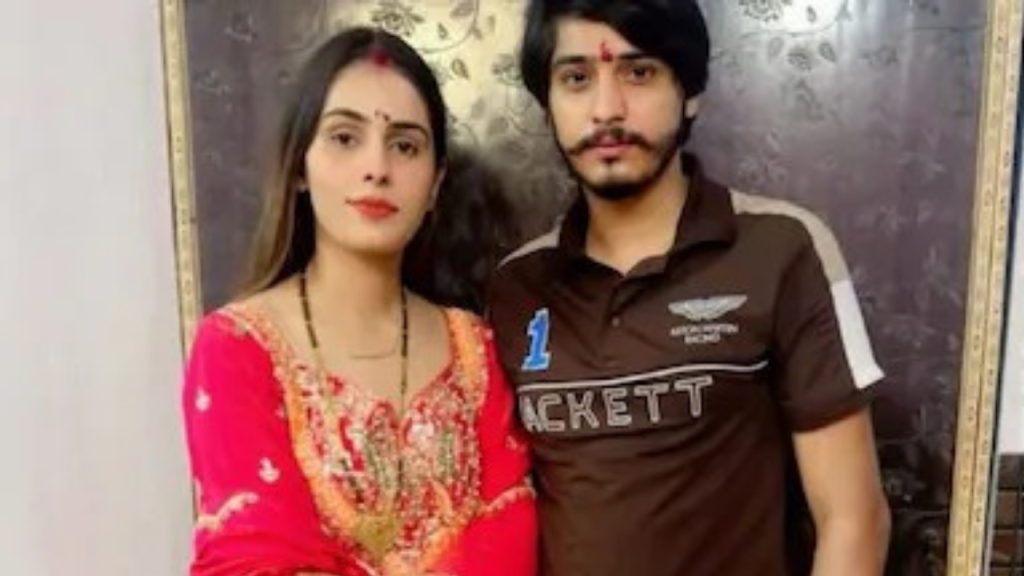
Nikki’s Family’s Struggle
For Nikki’s family, the battle is not only legal but also emotional. They continue to fight for justice, insisting that Vipin and his family must be punished for their role in Nikki’s death.
They reject Vipin’s video as propaganda and call upon the authorities to ensure that justice is delivered swiftly and fairly.
Conclusion
The Nikki murder case in Greater Noida is a tragic tale of love turned into horror, of societal evils like dowry destroying lives, and of legal and political complexities that often surround high-profile cases.
Vipin’s encounter and the subsequent video have only deepened the mystery. While the video has created doubts for some, the majority see it as an attempt to evade responsibility. The truth will ultimately come out only in the courtroom, where evidence—not words—will decide the fate of the accused.
But beyond the legalities, Nikki’s story is a wake-up call for society. Unless India uproots the dowry system and ensures better protection for women, tragedies like this will continue to unfold.
Justice for Nikki must not only be about punishing the guilty but also about ensuring that no other woman becomes a victim of dowry and domestic violence in the future.
Read more latest news

