
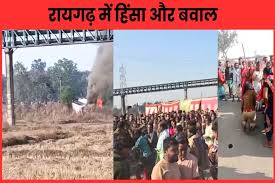
Mob Violence Crosses All Limits: Female Police Officer Assaulted During Protest in Chhattisgarh’s Raigarh
Introduction
Police Officer India has witnessed countless protests over land, resources, environment, and development. Many of these movements have been peaceful, democratic, and rooted in genuine concerns. However, when protests spiral into mob violence, they undermine not only the cause they claim to represent but also the very foundations of law, order, and humanity. A shocking incident from Chhattisgarh’s Raigarh district has once again exposed this dark reality.
A female police officer was brutally assaulted and molested by a violent mob during a protest against mining activities. The incident, captured on camera, later went viral on social media, triggering nationwide outrage. The visuals showed a woman in uniform being surrounded, dragged, manhandled, and sexually assaulted in broad daylight. The scene was not just disturbing—it was a stain on collective conscience.
This blog explores the incident in detail, the broader implications for women in uniform, the erosion of protest ethics, the response of authorities, and the uncomfortable questions society must now confront.
What Exactly Happened in Raigarh?
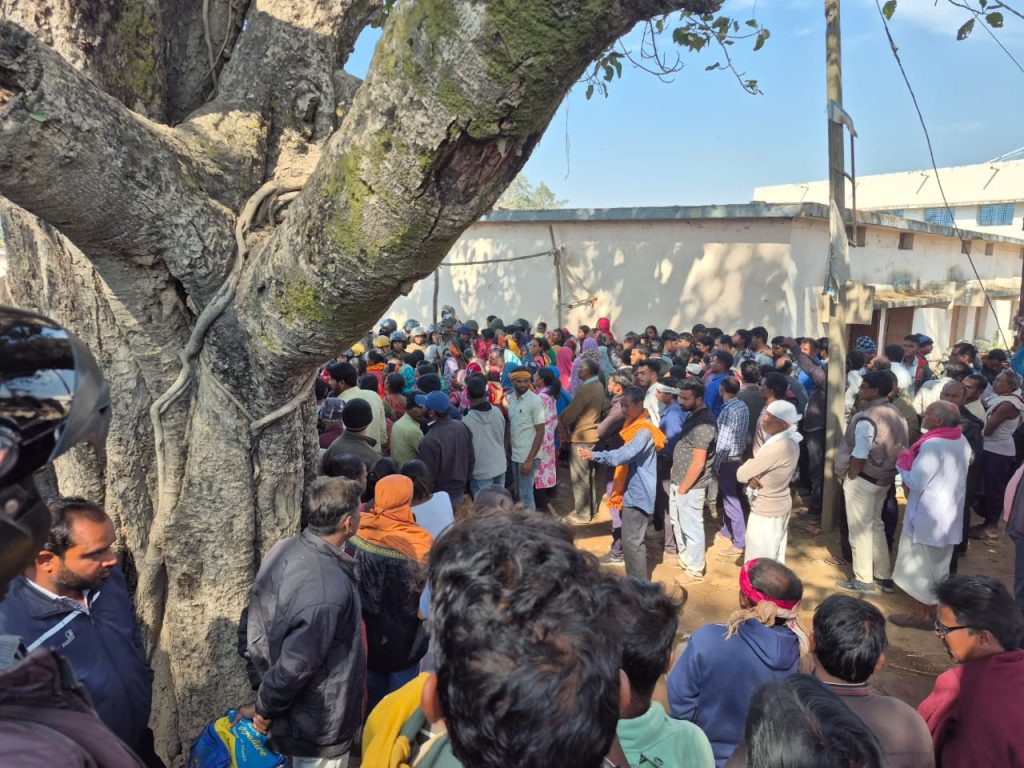
Raigarh district has long been a sensitive zone due to industrial expansion and mining-related projects. Local communities, environmental groups, and activists have often raised concerns over deforestation, displacement of tribal populations, and environmental degradation. Against this backdrop, a large crowd gathered to oppose mining activities.
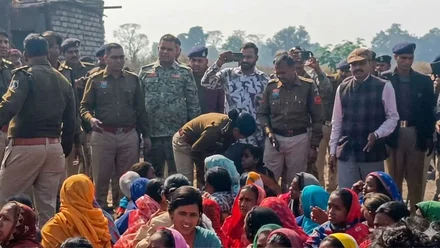
Police forces, including women officers, were deployed to maintain law and order and ensure that the demonstration remained peaceful. However, the situation soon escalated beyond control. A section of the crowd turned aggressive, attacking Police Officer personnel with sticks and stones.
Amid the chaos, a female police officer was isolated from her team. She was surrounded by several men who began pushing, grabbing, and molesting her. Video footage shows her struggling to escape while the mob continues the assault. Despite being in uniform, she was treated with extreme cruelty and humiliation.
Eventually, other officers intervened and rescued her, but by then, the damage—physical and psychological—had already been done.
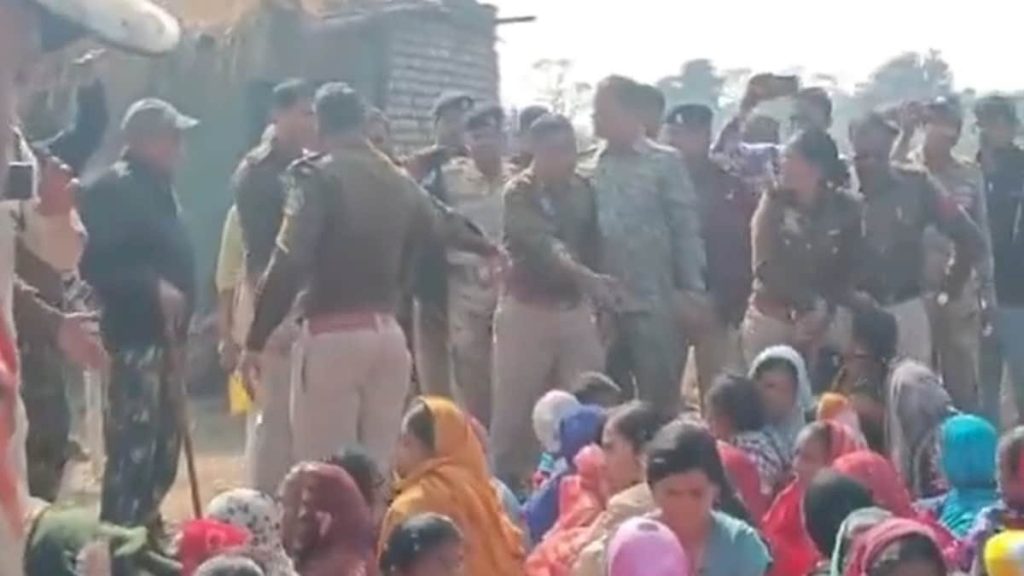
The Viral Video That Shocked the Nation
The incident may have remained confined to local news had it not been for the video that surfaced on social media. The clip spread rapidly across platforms like X (formerly Twitter), Facebook, and WhatsApp.
The video showed clear evidence of molestation, mob aggression, and complete breakdown of law and order. Viewers were horrified to see a woman police officer being attacked so brazenly in public view. Many questioned how such an act could occur despite the presence of law enforcement.
Public reaction was swift and intense. Citizens from across political, ideological, and social backgrounds condemned the assault. Women’s rights activists described it as a reminder that even authority and uniform cannot shield women from gender-based violence in India.
Violence Against Police A Dangerous Trend
Attacks on police personnel during protests have been increasing in various parts of the country. Stones, sticks, arson, and physical assaults have become disturbingly common. However, when violence takes a sexual form—especially against female officers—it crosses a line that cannot be ignored.
A police uniform represents the state’s authority. An attack on a police officer is an attack on the rule of law itself. When mobs feel empowered to sexually assault a woman officer, it signals a complete erosion of fear, accountability, and moral restraint.
Such incidents demoralize the Police Officer and make crowd-control operations even more challenging. They also deter women from joining or continuing careers in policing.
Women in Uniform Authority Without Safety?
Over the years, India has made efforts to increase women’s representation in the Police Officer. Female officers now serve in patrol units, riot control, investigation teams, and leadership roles. Yet incidents like the Raigarh assault reveal a harsh truth: gender-based violence does not spare women, even when they wear a uniform.
Female police officers face multiple layers of risk—violent mobs, hostile environments, and sexual aggression. Unlike their male counterparts, they often become targets not just of physical violence but of sexual humiliation.
This raises urgent questions about training, deployment strategies, and protective mechanisms for women officers during volatile situations.
Government and Police Response
Following the outrage, Chhattisgarh Police Officer registered FIRs against several individuals involved in the assault. Charges included rioting, assault on a public servant, and serious sexual offenses under the Indian Penal Code.
Senior police officials stated that video footage was being used to identify perpetrators. Several arrests were reportedly made, and more were expected. The state government assured that strict action would be taken and that no accused would be spared.
The injured officer was given medical treatment and psychological support. Police associations across India expressed solidarity with her and demanded exemplary punishment for the culprits.
Protest or Criminality?
India’s Constitution guarantees the right to protest peacefully. However, the right to protest does not include the right to assault, molest, or terrorize. Once violence erupts, a protest loses its moral legitimacy.
Sexual assault cannot be justified under any political, environmental, or social cause. When mobs resort to such acts, they harm not only the victim but also the credibility of the movement they claim to represent.
This incident serves as a reminder that genuine causes are often hijacked by elements who thrive on chaos and violence.
Role of Social Media: Exposure and Accountability
Social media played a dual role in this case. While it amplified public outrage and ensured accountability, it also exposed the victim’s trauma to millions.
The viral video forced authorities to act swiftly, proving once again that digital evidence has become a powerful tool against injustice. At the same time, it raises ethical concerns about repeatedly circulating footage of sexual violence.
Conclusion
The assault on a female police officer in Raigarh is not just a crime—it is a warning. A warning about how quickly anger can turn into brutality, how fragile law and order can become, and how vulnerable women still are, even in positions of authority.
Justice in this case must be swift, visible, and uncompromising. Anything less would send a dangerous message—that mobs can act with impunity.
A democracy is judged not by how loudly people protest, but by how responsibly dissent is exercised and how firmly the law protects the vulnerable. On that test, this incident has left the nation with uncomfortable questions—and a moral obligation to do better.
Read more news

