
Fake Cop at Garba! Police Arrest Yuvraj Naru Rathod for Impersonating a Sub-Inspector During Navratri
Introduction
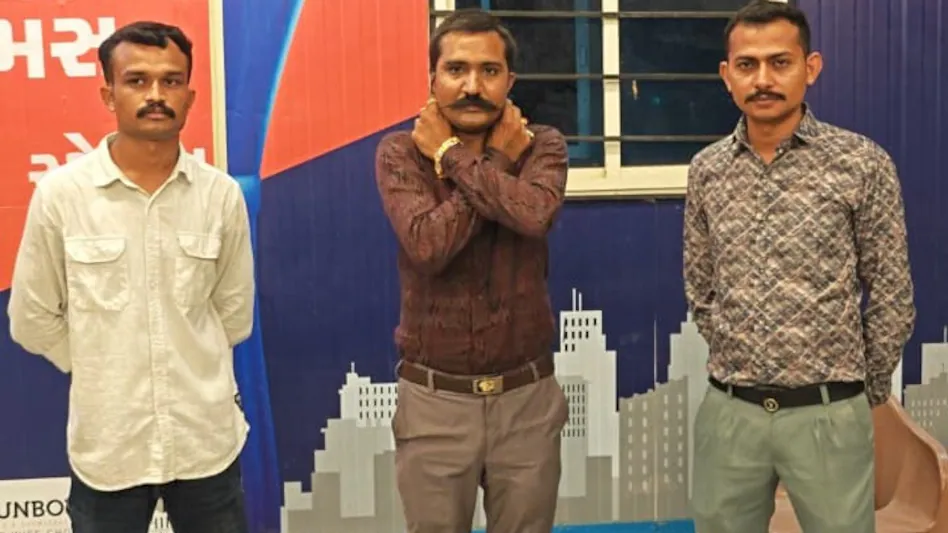
Fake Police at Garba The vibrant festival of Navratri, celebrated with grand Garba and Dandiya programs, is meant to be an occasion of devotion, music, dance, and community celebration. However, this year, one Garba event took a dramatic turn when police arrested a fake sub-inspector who had managed to enter the VIP gate of the pandal.
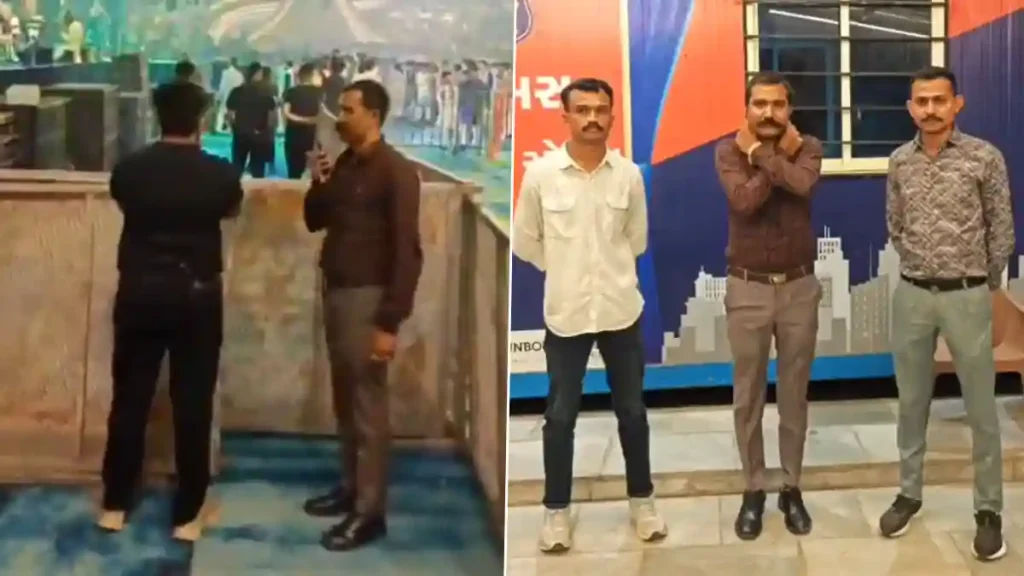
The accused, identified as Yuvraj Naru Rathod, was caught red-handed impersonating a police officer. A video of the incident quickly went viral on social media, showing him in civilian clothes with a puffed chest and walkie-talkie in hand, walking confidently through the restricted entrance.
What seemed like an ordinary night of festivity turned into a moment of shock, exposing the lengths to which some individuals go for false prestige, free access, and attention.
The Viral Video: A Scene Straight Out of a Movie
The incident gained attention after a video emerged showing:
- Yuvraj Rathod entering the VIP gate of the Garba pandal with a sense of authority.
- He was dressed in casual civilian clothes, but carried himself with the swagger of a police officer.
- He held a walkie-talkie in his hand, imitating the mannerisms of law enforcement officials.
- His chest puffed out and stern body language created the illusion of authority.
However, suspicions were raised by on-duty officers when they noticed inconsistencies in his behavior and lack of official identification.
How He Was Caught
The arrest was a result of sharp observation by real police officers deployed for crowd management at the event.
- Officers noticed that Rathod entered through the VIP gate without standard verification.
- Unlike other plainclothes officers, he had no badge or official entry clearance.
- His walkie-talkie was not tuned to the official police frequency.
- When questioned, Rathod gave contradictory answers about his posting and designation.
Upon further interrogation, it was revealed that he was not a police officer at all, but a civilian posing as one.
Who is Yuvraj Naru Rathod?
The accused, Yuvraj Naru Rathod, is now at the center of media scrutiny.
- Preliminary investigation suggests he has no connection with the police department.
- Locals describe him as someone who often sought attention and tried to project himself as “influential.”
- His motivation appears to have been securing VIP access and gaining recognition by pretending to be a police officer.
Police are currently probing whether Rathod has attempted similar stunts in the past.
Why Pretend to Be a Cop?
Impersonating a police officer is not new in India. People do it for various reasons:
- Access to VIP Areas: Events like Garba during Navratri attract huge crowds, and VIP zones are strictly restricted. A fake police identity can bypass these restrictions.
- False Prestige: Wearing the aura of a cop brings social recognition, power, and respect — even if undeserved.
- Free Entry and Perks: Some impersonators use fake uniforms to enjoy free entry, meals, or services.
- Personal Thrill: For some, the act of pretending to be a figure of authority gives psychological satisfaction.
In Rathod’s case, it seems to be a mix of prestige and free access to the Garba pandal’s VIP area.
Police Statement on the Arrest
Senior officers released an official statement soon after the arrest:
- The accused was identified as Yuvraj Naru Rathod.
- He was found carrying a walkie-talkie, though not police-issued.
- No official uniform or badge was recovered, but his behavior was intended to mislead the public.
- A case of impersonation and cheating has been filed against him.
Authorities assured the public that strict action will be taken, as impersonation undermines public trust in law enforcement.
Legal Consequences: Impersonation Under Indian Law
Impersonating a police officer is a serious crime in India. The charges may include:
- Section 170 of IPC: Impersonating a public servant, punishable with imprisonment up to 2 years.
- Section 171 of IPC: Wearing garb or carrying tokens to make people believe one is a public servant.
- Section 420 of IPC: Cheating and dishonestly inducing delivery of property, if financial benefit is involved.
If convicted, Rathod could face jail time along with fines.
The Significance of Navratri and Garba
To understand the backdrop, one must also appreciate the cultural significance of the event.
- Navratri is one of India’s biggest festivals, celebrated with devotion to Goddess Durga over nine nights.
- Garba and Dandiya are not just dances but expressions of faith, energy, and cultural pride.
- In Gujarat and other states, Garba nights are massive events attracting celebrities, politicians, and huge crowds.
- Security is usually very tight, with police managing VIP zones, entry points, and public safety.
This explains why Rathod may have seen impersonation as a way to gain entry into an otherwise inaccessible area.
Public Reaction: From Shock to Humor
The arrest triggered a wave of public reactions:
- Shock: Many were surprised at the audacity of Rathod, who walked so confidently among actual police officers.
- Concern: Some questioned how he managed to enter the VIP gate without being caught earlier.
- Humor: Social media quickly turned the incident into meme material, with jokes like “Garba ka asli hero — fake SI Rathod!”
The mix of amusement and concern reflects how society perceives such impersonation cases.
Fake Cops: A Growing Trend
This case is not isolated. Across India, fake police officers have been caught in various situations:
- Some stop vehicles and extort money.
- Others use fake uniforms to impress people or gain illegal benefits.
- A few even run fake recruitment scams, duping aspirants with promises of police jobs.
The Rathod case highlights the wider challenge of identity fraud in India.
Security Concerns at Festivals
Large festivals like Navratri already pose major security challenges:
- Huge crowds, often in the tens of thousands.
- High-profile attendees, including celebrities and politicians.
- Risks of stampedes, theft, or even terror threats.
A fake police officer infiltrating such a sensitive environment could have led to serious security lapses. Authorities are now reviewing protocols to ensure stricter verification at future events.
Psychological Aspect: The “Prestige Addiction”
Psychologists often explain impersonation through the concept of prestige addiction:
- Individuals feel powerless in their real lives.
- They seek validation by imitating authority figures.
- The respect, fear, or attention they receive becomes addictive.
For Rathod, walking with a puffed chest, holding a walkie-talkie, and entering the VIP gate might have given him a temporary rush of power.
Lessons for Event Organizers and Police
The Sasaram case provides important lessons:
- Better Verification: Every person entering VIP areas must be cross-checked with official ID.
- Walkie-Talkie Control: Civilian use of such devices should be monitored.
- Awareness Campaigns: Public must be made aware of how to identify real police personnel.
- Quick Action: The swift arrest in Rathod’s case is commendable, but preventive measures are more crucial.
Media Coverage: From Local News to National Attention
The incident first made headlines in local Gujarati media, but soon spread nationally. TV anchors debated:
- How did a fake SI manage to reach the VIP gate?
- What does this say about security at mass gatherings?
- Should laws against impersonation be made stricter?
The viral video also ensured that Rathod’s act became a topic of household conversations.
Could Rathod Have Had Bigger Motives?
While so far it appears Rathod only sought VIP access and attention, police are also exploring whether:
- He intended to commit theft or fraud.
- He had links to any organized gang.
- He has a history of impersonation in other events.
Investigators are scanning his background to rule out larger threats.
The Social Media Storm
On X (Twitter), Instagram reels, and WhatsApp forwards, the story spread rapidly:
- Memes showed Rathod as a “Garba Hero” with walkie-talkies edited into dance scenes.
- Others mocked the system with captions like: “Real police waiting outside, fake police dancing inside.”
- Some posts highlighted the serious security loopholes such acts expose.
The case became a reminder of how every local incident now becomes a national talking point through social media.
Broader Reflection: Trust in Uniforms
Incidents like this also raise philosophical questions:
- In a society where people blindly trust uniforms, what happens when impersonators exploit that trust?
- How do we balance respect for authority with healthy skepticism to avoid being fooled?
- Should there be stricter regulations on items like police uniforms, badges, and communication devices?
The Rathod case pushes us to re-examine the relationship between citizens and symbols of authority.
Conclusion
The arrest of Yuvraj Naru Rathod, a fake sub-inspector caught at a Garba program during Navratri, is more than just a quirky news story. It is a reminder of:
- The dangers of impersonation and identity fraud.
- The need for stricter security checks at festivals.
- The psychological urge some individuals feel to chase prestige through false authority.
Navratri is a celebration of the triumph of good over evil. In a strange way, the quick arrest of Rathod reflects the same principle — exposing deception in the midst of festivity.
As police tighten security and the public becomes more aware, hopefully such incidents will serve as lessons for both society and law enforcement.
Read more latest news

