


Introduction
Exit Poll The political battleground in Delhi is heating up as exit poll results for the latest assembly elections have been announced. While the Bharatiya Janata Party (BJP) remains confident of securing a victory, asserting that the “lotus will bloom once again,” the Aam Aadmi Party (AAP) has strongly rejected the projections, calling them inaccurate and misleading. As the capital braces for the final vote count, the major players—BJP, AAP, and the Indian National Congress (INC)—are making their last-minute strategies and statements.
Exit Polls: The Numbers and Projections
Exit polls, conducted by various agencies, have painted a mixed picture of the Delhi Assembly elections. While some predict a strong showing for the BJP, others indicate a close contest between AAP and the saffron party. However, past elections have shown that exit polls are not always reliable, and final results often deviate from these early projections.
Key Highlights of the Exit Polls:
- BJP: Exit polls predict a significant rise in seats, potentially crossing the halfway mark.
- AAP: Some surveys indicate a tight race, while others suggest a reduced majority for the ruling party.
- Congress: Struggling to make an impact, but hopeful of playing the kingmaker in case of a hung assembly.
BJP’s Confidence: “The Lotus Will Bloom Again”
The BJP leadership has exuded confidence, with top leaders asserting that the party will form the government in Delhi. BJP President J.P. Nadda and Home Minister Amit Shah have both reiterated that the voters have rejected AAP’s governance model and have chosen the BJP for a better future.
BJP’s Key Claims:
- Anti-Incumbency Factor: The party believes that discontent with AAP’s governance will push voters towards the BJP.
- Nationalism and Hindutva: BJP leaders have campaigned on issues of national security, governance, and cultural identity.
- Modi’s Popularity: The Prime Minister’s influence and central government initiatives are expected to sway votes in BJP’s favor.
- Development Plans: BJP promises an improved infrastructure, better law enforcement, and economic growth for Delhi.
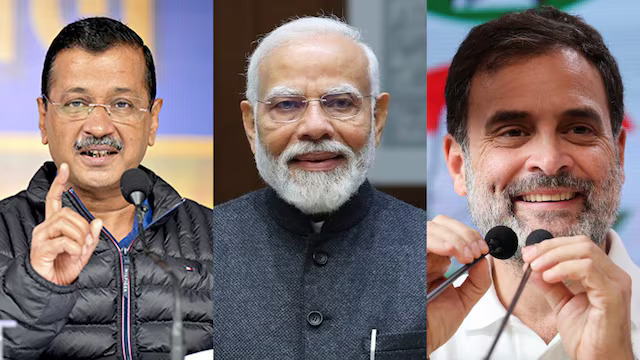
AAP’s Rejection of Exit Polls: “The People Will Prove Them Wrong”
AAP has categorically dismissed the exit polls, calling them a tool of misinformation and media manipulation. Delhi Chief Minister Arvind Kejriwal has urged people not to believe the numbers, claiming that AAP has the people’s mandate and will return to power.
AAP’s Counterarguments:
- Exit Polls Are Often Wrong: The party cites previous elections where predictions failed to match results.
- Strong Ground Support: AAP claims that its education, healthcare, and free services initiatives have cemented voter trust.
- BJP’s Campaign Tactics: Kejriwal and other leaders allege that BJP used divisive politics instead of real issues.
- Confidence in Voter Turnout: High turnout in working-class areas is seen as a positive sign for AAP.
Congress: Can It Play the Kingmaker?
Though the Congress party has remained a distant third in Delhi for the past two elections, there is speculation that if no party gets a clear majority, Congress could play the kingmaker role. The party has dismissed exit poll results that give it a negligible presence and remains hopeful that it will surprise everyone.
Congress’ Potential Scenarios:
- If the BJP falls short, Congress could provide outside support to AAP to keep the BJP out.
- If AAP struggles, Congress could demand key positions in exchange for support.
- If results are highly fragmented, Congress might negotiate for a power-sharing agreement.
Voter Sentiment and Key Issues
The Delhi elections have been fought on multiple fronts, with parties emphasizing different issues to appeal to voters.
Major Issues That Influenced Voting:
- Education and Healthcare: AAP’s achievements in government schools and Mohalla Clinics remain a strong talking point.
- Unemployment and Inflation: Economic concerns have been a major issue, with opposition parties blaming BJP’s national policies.
- Law and Order: The recent crimes and safety concerns, particularly for women, have been debated fiercely.
- Religious and Caste Politics: Polarization, particularly Hindu-Muslim narratives, played a role in campaign strategies.
- Freebies vs. Fiscal Responsibility: AAP’s free services model vs. BJP’s argument about long-term economic sustainability.

Historical Perspective: Are Exit Polls Reliable?
While exit polls attempt to predict electoral outcomes, their accuracy has been questionable in the past. Instances of massive deviation from the final results have been recorded in multiple elections across India.
Past Exit Poll Failures in Delhi:
- 2015: Exit polls predicted a close fight, but AAP won 67 out of 70 seats.
- 2020: Projections varied widely, yet AAP secured another massive victory.
- 2019 Lok Sabha Elections: Some pollsters underestimated BJP’s dominance in Delhi.
Given these inconsistencies, political parties take exit polls with a grain of salt and prefer to wait for the actual results before making strategic decisions.
What Happens Next?
As Delhi awaits the final vote count, here’s what to expect in the coming days:
- Counting Day Drama: Political headquarters will be buzzing with excitement and anxiety.
- Potential Alliances: If no clear winner emerges, behind-the-scenes negotiations will begin.
- Leadership Statements: Expect fiery speeches from key party leaders, accepting or rejecting the verdict.
- Protests and Celebrations: Supporters from all camps will take to the streets to voice their reactions.
- Governor’s Role: If results are inconclusive, the Lieutenant Governor might play a crucial role in government formation.
Conclusion: A High-Stakes Battle
The Delhi elections have once again proven to be a crucial battle for political dominance. While BJP remains optimistic about a victory, AAP dismisses exit polls with confidence, and Congress keeps its hopes alive. The final verdict will determine the political future of the capital and set the stage for national elections in the near future.
As voters eagerly await the official results, one thing is certain: Delhi’s political landscape is at a pivotal moment, and the final outcome will shape the next five years of governance in the capital.
Read more Latest news

