

“This Time Delhi’s Pollution Was Not at That Atmospheric Level”: Manoj Tiwari Hits Back at AAP Over AQI Allegations
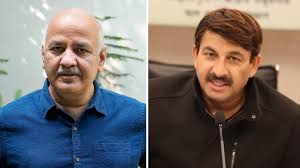
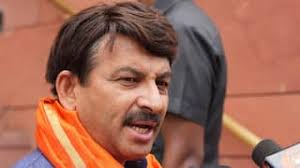
This time Delhi pollution was not at that atmospheric level, The debate over air quality in the national capital has once again intensified, with political parties trading sharp accusations and counterclaims. This time, BJP MP Manoj Tiwari has taken the lead in responding to allegations made by the Aam Aadmi Party regarding rising AQI levels. Rejecting the opposition’s narrative, Tiwari asserted that “this time Delhi’s pollution was not at that atmospheric level”, calling the claims exaggerated and politically motivated. His remarks have reopened a familiar but unresolved question—how much of Delhi pollution is governance failure, and how much is seasonal, regional, and environmental reality?
Political Sparring Over Air Quality
Air pollution has become one of the most politically charged governance issues in the capital. Every winter, as smog blankets the city, parties rush to blame each other. AAP has consistently accused the Centre and neighboring BJP-ruled states of ignoring the seriousness of Delhi pollution, while the BJP argues that the Delhi government uses air quality as an excuse to hide administrative lapses.
Manoj Tiwari’s latest statement came in response to AAP leaders claiming that AQI levels were dangerously high and that the Centre had failed to intervene. Tiwari countered these claims by citing official data and trends, saying the pollution levels this year were significantly lower than in previous severe episodes of Delhi pollution.
“Atmospheric Conditions Were Different”
According to Manoj Tiwari, comparing pollution levels without factoring in meteorological conditions is misleading. He emphasized that wind speed, humidity, temperature inversion, and stubble-burning patterns play a crucial role. This year, he argued, the atmospheric conditions did not trap pollutants the way they had during past crises of Delhi pollution.
Experts often support this view, noting that air quality cannot be judged in isolation from weather dynamics. Strong winds and intermittent rainfall helped disperse pollutants, preventing the formation of dense smog layers that usually worsen Delhi pollution in late autumn.
AAP Allegations and BJP Rebuttal
AAP leaders accused the Centre of downplaying the seriousness of the situation and failing to activate emergency measures under GRAP. They claimed that public health was being compromised and that residents were still suffering due to Delhi pollution.
In response, BJP leaders, including Tiwari, accused AAP of fear-mongering. He stated that the Delhi government prefers political drama over constructive solutions, adding that exaggerated claims about Delhi pollution only create panic among citizens.
Data vs Narrative
One of the key points raised by Manoj Tiwari was the selective use of data. He argued that while certain monitoring stations showed moderate spikes, the overall city-wide average AQI remained lower compared to previous years of severe Delhi pollution.
Independent analysts note that while pollution has not disappeared, the intensity and duration of hazardous air days have reduced. This raises an important question: should every spike be labeled a crisis, or should policy responses be proportionate to the actual scale of Delhi pollution?
Role of Neighboring States
Another recurring dimension in the debate is the role of stubble burning in Punjab and Haryana. AAP often shifts blame to neighboring states, while BJP counters that Delhi’s internal factors—construction dust, traffic congestion, and waste burning—significantly contribute to Delhi pollution.
Manoj Tiwari stressed that coordinated regional action is necessary, not blame games. He argued that unless all stakeholders work together, political accusations will do little to solve Delhi pollution permanently.
Health Concerns and Public Anxiety
Despite political disagreements, there is no denying that air pollution affects public health. Respiratory illnesses, eye irritation, and cardiovascular problems rise during high AQI periods. Even if levels are lower than previous years, prolonged exposure still makes Delhi pollution a serious concern.
Doctors have cautioned against complacency, advising citizens to take precautions. Tiwari acknowledged these concerns but reiterated that exaggeration undermines public trust and diverts attention from evidence-based approaches to tackling Delhi pollution.
Governance and Accountability
The debate has also highlighted questions of governance. AAP claims it has introduced measures like odd-even schemes, green war rooms, and electric buses to combat Delhi pollution. BJP leaders counter that many of these initiatives are symbolic and poorly implemented.
Manoj Tiwari argued that the Delhi government should focus more on long-term infrastructure—such as expanding metro connectivity, improving road conditions, and regulating construction—rather than blaming the Centre whenever Delhi pollution becomes a headline issue.
Media’s Role in Shaping Perception
Media coverage plays a significant role in amplifying the pollution debate. Dramatic visuals of smog-covered landmarks often dominate news cycles. While such reporting raises awareness, it can also create a perception that Delhi pollution is uniformly catastrophic at all times.
Tiwari criticized what he called “selective outrage,” suggesting that some media narratives echo political talking points instead of presenting balanced data on Delhi pollution levels.
Environmental Experts Weigh In
Environmental scientists argue that both sides have valid points. While pollution levels may not have reached extreme thresholds, structural issues remain unresolved. Vehicular emissions, urban sprawl, and industrial activity continue to fuel Delhi pollution, regardless of seasonal variations.
Experts emphasize the need for sustained policy implementation rather than reactive measures triggered only when AQI worsens.

Citizens Caught in the Middle
For ordinary residents, political debates offer little relief. Commuters still face congestion, children still breathe polluted air, and senior citizens remain vulnerable. Whether or not the situation qualifies as a “severe episode,” Delhi pollution continues to impact daily life.
Many citizens express fatigue over recurring political arguments, calling for bipartisan cooperation instead of annual blame games over Delhi pollution.
The Larger Political Context
The timing of the controversy is also politically significant. With elections approaching, air pollution becomes a convenient issue to mobilize voters. Manoj Tiwari’s assertive response signals BJP’s intent to counter AAP’s governance narrative aggressively, especially on emotionally charged issues like Delhi pollution.
AAP, on the other hand, sees environmental governance as one of its core strengths and is unlikely to back down from highlighting air quality concerns.
Is the Situation Improving?
Statistically, some indicators suggest marginal improvement compared to previous years. Expanded green cover, cleaner fuel standards, and improved monitoring have contributed to better management of Delhi pollution.
However, critics argue that these improvements are fragile and could easily reverse without sustained effort and accountability.
Need for Long-Term Solutions
Both political parties agree on one thing—temporary fixes are not enough. Whether it is BJP’s push for regional coordination or AAP’s emphasis on urban reforms, long-term strategies are essential to reduce Delhi pollution permanently.
Manoj Tiwari reiterated that blaming one government or exaggerating conditions will not clean the air. What is needed is policy continuity, technological innovation, and public participation.
Conclusion: Beyond Political Statements
Manoj Tiwari’s statement that “this time Delhi’s pollution was not at that atmospheric level” reflects a broader political attempt to reshape the narrative around air quality. While his argument is supported by certain data points, it does not negate the ongoing challenge of Delhi pollution.
Ultimately, the issue goes beyond political sparring. Citizens deserve clean air, transparent data, and cooperative governance. Until political parties move past point-scoring and work collectively, Delhi pollution will remain both an environmental crisis and a political battleground.
read more latest news

