
Rekha Gupta Immersed in Devotion: Delhi CM Performs Puja and Abhishek on Last Monday of Sawan
Introduction: Politics Meets Faith in the Holy Month of Sawan
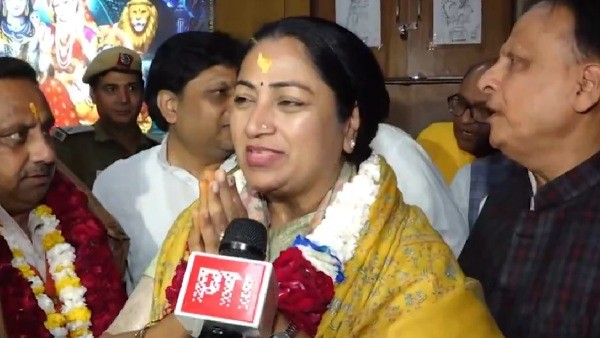
CM Rekha Gupta performing Puja On Last Sawan, In the corridors of political power, public figures are often seen as strategists, decision-makers, and policy drivers. But there are moments when they also become messengers of faith—reminding the masses that spirituality can walk hand-in-hand with governance. On the last Monday of the auspicious month of Sawan, Delhi Chief Minister Rekha Gupta gave such a moment to the people of the capital. Dressed in a saffron saree and simplicity, she performed Puja and Abhishek of Lord Shiva, offering prayers with devotion and reverence.
Her act resonated deeply not just with her supporters but with citizens across the country, cutting across political lines. It wasn’t just a ritual—it was a reflection of a deep cultural tradition and a gesture that reinforced the values of Dharma and Bhakti in the public life of an elected leader.
Who is Rekha Gupta? A Leader With a Cultural Core
Rekha Gupta, the newly elected Chief Minister of Delhi, is not new to public life. A firebrand leader with a strong background in the Akhil Bharatiya Vidyarthi Parishad (ABVP) and a deep connection with ground-level party workers, Gupta has risen through the ranks due to her people-centric approach and ideological commitment.
But what makes her unique is her cultural rootedness. From celebrating traditional festivals to actively participating in religious events, she has always maintained that India’s cultural identity is its strength. Her visit to a Shiva temple on the last Sawan Somwar was not just a personal act of faith—it was a symbolic reaffirmation of India’s civilizational ethos.
Sawan: The Sacred Month of Lord Shiva
Before delving further into the significance of Rekha Gupta’s devotion, it’s important to understand why the month of Sawan holds such reverence.
- Sawan (Shravan) is the fifth month of the Hindu lunar calendar and is considered extremely auspicious for the worship of Lord Shiva.
- Mondays in this month, known as “Sawan Somwar,” are especially sacred. Devotees observe fasts, perform Jalabhishek (water offering), Rudrabhishek, and chant mantras like Om Namah Shivaya.
- According to mythology, it was during this month that Lord Shiva consumed the deadly poison halahala during the Samudra Manthan, saving the universe. His neck turned blue, giving him the name Neelkanth.
- Sawan is a month of penance, devotion, inner cleansing, and spiritual growth.
When a public leader participates in such devotion, it connects the leadership with the cultural heartbeat of the people.
The Puja: Simplicity, Spirituality, and Sankalp
Rekha Gupta’s visit to a prominent Shiva temple in Delhi was marked by simplicity and serenity. Accompanied by a small team of aides and local party workers, the Chief Minister:
- Offered sacred water (Jal) and milk on the Shivling as part of the traditional Abhishek ritual.
- Chanted Shiv Panchakshari Mantra and participated in the Rudra Path, conducted by temple priests.
- Lit a diya and offered bilva leaves, white flowers, and sandalwood paste, symbolizing purity and surrender.
- Observed a brief meditative silence, her eyes closed in prayer, reflecting both faith and focus.
It was not a media event, not a political gimmick. No grand stage, no slogans, no speeches—just a leader bowing her head before the Mahadev, seeking blessings, perhaps not just for herself but for the people of Delhi.

Symbolism in Leadership: Why It Matters
In a nation where faith and festivals are not just religious practices but social and cultural unifiers, the gesture of a leader performing such rituals has far-reaching implications.
- Bridging the gap: Rekha Gupta’s presence in a temple connects her with millions of Hindus across India who revere Lord Shiva and observe Sawan as a spiritual discipline.
- Leading by example: When a Chief Minister keeps fasts or performs puja, it sends a message about spiritual discipline and rootedness in traditions.
- Cultural continuity: It shows that modern governance need not be at odds with ancient culture; they can coexist with respect and harmony.
In a time when secularism is often misunderstood as the absence of religion in public life, Gupta’s act showcased that spirituality can be a source of strength, not division.
Public Reaction: A Wave of Emotional Support
Social media was flooded with pictures and videos of Rekha Gupta performing the Puja, and the public reaction was overwhelmingly positive.
- #RekhaGuptaWithShiva began trending on Twitter, with devotees praising her humility and cultural alignment.
- Prominent saints and seers lauded the Chief Minister for upholding Sanatan values and honoring India’s spiritual heritage.
- Common citizens, especially women devotees, connected deeply with her presence in the temple on such a significant day.
One user wrote:
“When our CM bows before Bholenath, it gives us confidence that Dharma is alive in politics.”
Political Overtones or Personal Faith?
While critics tried to interpret the act as political symbolism—especially in the backdrop of the upcoming civic body elections—Gupta’s team maintained that the Puja was a personal spiritual expression.
In her own words (as reported by local media):
“I have always been a devotee of Lord Shiva. Sawan Somwar is not about politics—it’s about surrender, simplicity, and seeking blessings for all.”
Indeed, Rekha Gupta has been consistently participating in religious and cultural events, even before becoming CM. Her connection with temple activities, satsangs, and community Pujas has been genuine and long-standing.
The Temple and the Rituals: A Spiritual Setting
The temple visited by Rekha Gupta was the historic Prachin Shiv Mandir, located in central Delhi. Known for its age-old Shiva Lingam and vibrant celebration of Sawan Somwar, the temple attracts thousands of devotees every year.
Here’s how the rituals unfolded:
- Rudrabhishek began early in the morning, followed by collective chanting of Mahamrityunjaya Mantra.
- CM Rekha Gupta joined the temple pandits at 9:00 AM, barefoot, carrying her own offering plate.
- She offered panchamrit (milk, curd, honey, ghee, and sugar), followed by holy Ganga jal.
- The aarti at the end of the ceremony saw her joining hands with other devotees, without any VIP distinction.
The humility displayed was noted by all. No protocol, no entourage interruptions—just pure Bhakti.
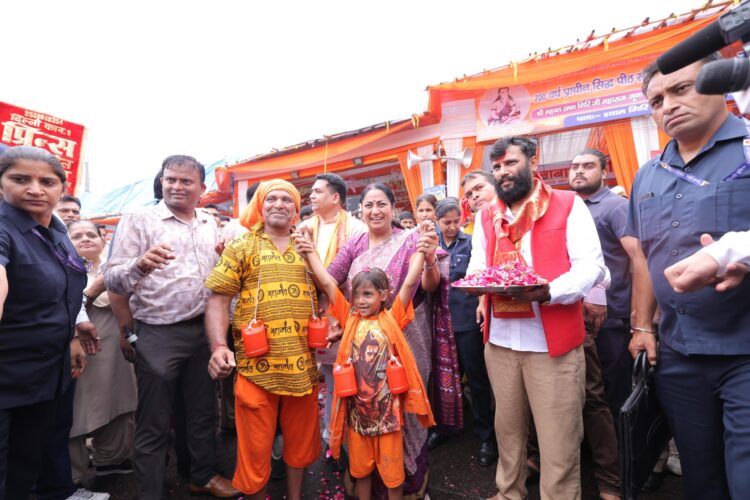
The Role of Women in Sanatan Dharma: Rekha Gupta as a Symbol
Rekha Gupta’s devotion on Sawan Somwar also rekindled discussions about women’s role in spiritual and political spaces.
- In a society where Devi is worshipped as Shakti, a woman leader leading both administration and ritual is symbolically powerful.
- Her actions challenged the stereotype that powerful women disconnect from traditions; instead, she showed how traditions can empower women in public life.
- Her temple visit inspired many young girls and women who look up to her not just as a politician but as a spiritual role model.
Beyond Rituals: Rekha Gupta’s Plans for Temple Development
Post her temple visit, the CM announced plans for a new initiative:
“We will launch a ‘Mandir Vikas Yojana’ to ensure cleanliness, security, and digital accessibility in Delhi’s temples.”
The plan includes:
- Clean drinking water and sanitation in temples.
- Digitization of donations and virtual darshan facilities.
- Heritage conservation of ancient temples in Old Delhi.
This initiative blends her personal faith with public policy, and gives a new dimension to how spirituality and development can go hand-in-hand.
The Spiritual-Political Balance in India
India has always been a land where kings became sages, and sages guided kingdoms. Whether it was Chandragupta Maurya taking advice from Chanakya or Swami Vivekananda inspiring India’s freedom fighters, the blending of Dharma and Rajneeti is not new.
Rekha Gupta’s Sawan Puja is part of this tradition:
- A symbolic act with deep spiritual meaning.
- A reflection of how modern leadership can still draw strength from Sanatan principles.
- A reminder that in India, governance without spiritual consciousness is incomplete.
Conclusion: A Leader in Devotion, A Message for the Nation
On the last Monday of Sawan, Delhi Chief Minister Rekha Gupta didn’t just perform a Puja—she sent out a message. A message of humility, devotion, cultural rootedness, and spiritual strength.
In a world of breaking news and fast-paced politics, such moments bring calm, character, and connection. Rekha Gupta, through her act of worship, has reminded the nation that leadership is not just about power—it is also about values, traditions, and spiritual service to society.
As the bells of the temple echoed and the chants of “Om Namah Shivaya” filled the air, one could sense that this was not just about a Chief Minister—it was about India’s eternal identity shining through in its leaders.
Read More Latest news

