
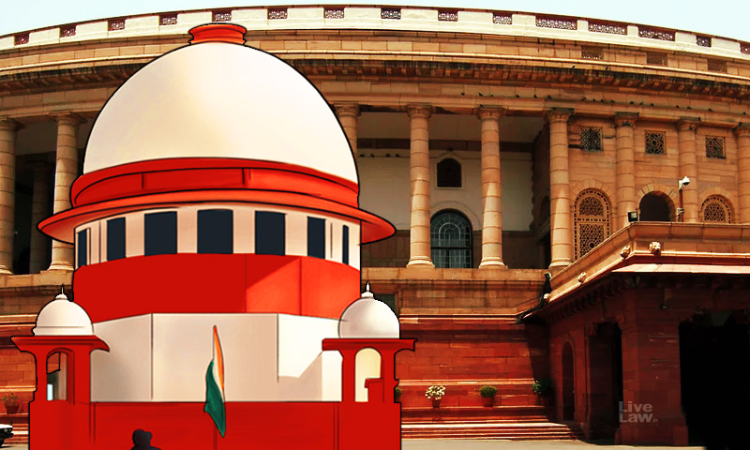
Can the Supreme Court Stop a Law Passed in Parliament?
In any democracy, the delicate balance of power between the legislative, executive, and judiciary branches is critical for ensuring justice, safeguarding human rights, and maintaining the rule of law. This separation of powers is especially important when it comes to the question of whether a law passed by Parliament, the highest legislative body in a democratic system, can be stopped or struck down by the judiciary. The role of the judiciary in reviewing laws passed by Parliament, particularly the Supreme Court, is one of the most significant aspects of constitutional law in many democratic countries, including India, the United States, and the United Kingdom.
The question of whether the Supreme Court can stop a law passed by Parliament is both constitutional and political. It involves understanding the power of judicial review, the nature of the relationship between the legislature and the judiciary, and the interpretation of constitutional principles. This blog explores the judicial power to strike down laws passed by the legislature, with a particular focus on the Indian context, while also drawing upon examples from other countries like the United States and the United Kingdom.
The Principle of Judicial Review
At the heart of the question lies the concept of judicial review. Judicial review refers to the power of courts, particularly the highest court in the country, to review the constitutionality of laws passed by the legislature and executive. This power ensures that any laws or actions that violate the Constitution or fundamental principles of justice are declared invalid or struck down. Judicial review is a cornerstone of the rule of law and helps prevent the abuse of power by any branch of government.
Judicial review has its roots in Marbury v. Madison (1803), a landmark case in the United States, in which Chief Justice John Marshall famously asserted that “It is emphatically the province and duty of the judicial department to say what the law is.” This principle was groundbreaking, as it established that courts have the authority to declare laws passed by the legislature unconstitutional if they conflict with the Constitution.
In India, judicial review is similarly enshrined in the Constitution of India. Under Article 13, laws that are inconsistent with or violate the fundamental rights guaranteed by the Constitution can be struck down by the judiciary. In addition, Article 32 grants individuals the right to approach the Supreme Court if they believe their fundamental rights have been violated by any law or government action.
Judicial Review in India
The Indian Constitution empowers the judiciary to engage in judicial review through several provisions. The Supreme Court of India is granted the power to review laws passed by Parliament to ensure that they comply with the Constitution. However, there are specific limits and conditions under which this power can be exercised.
Article 13 and Judicial Review
Article 13 of the Indian Constitution plays a crucial role in judicial review. It states that any law or ordinance that violates the Constitution, specifically its fundamental rights, is void. This gives the judiciary the authority to declare laws unconstitutional if they infringe upon the fundamental rights of citizens. The article applies to both laws passed by Parliament and state legislatures. If a law violates fundamental rights, the Supreme Court can declare it invalid, even if it has already been passed by the legislative body.
For instance, in the landmark case of Minerva Mills Ltd. v. Union of India (1980), the Supreme Court held that any law that curtails or violates the basic structure of the Constitution can be struck down. This case established the concept of the basic structure doctrine, which suggests that certain fundamental principles of the Constitution, such as democracy, federalism, and the separation of powers, cannot be altered or violated by any law, no matter the majority support in Parliament.

Article 368 and the Amendment Power
While Article 13 grants the judiciary the power to strike down laws that violate fundamental rights, it is important to note that the Constitutional amendment process (under Article 368) presents a unique challenge. Amendments to the Constitution made by Parliament are considered valid unless they violate the basic structure of the Constitution.
In Keshavananda Bharati v. State of Kerala (1973), the Supreme Court held that while Parliament has the power to amend the Constitution, it cannot alter its “basic structure.” The Court established that judicial review applies to constitutional amendments, particularly when the amendment changes the fundamental values of the Constitution. Thus, the judiciary can strike down a constitutional amendment if it violates the basic structure, even though Parliament passed it.
The Role of the Supreme Court in Stopping a Law
The Supreme Court of India has played a pivotal role in reviewing laws passed by Parliament, especially those that have been challenged for violating the Constitution. While Parliament is sovereign and can legislate on a wide range of issues, its laws are subject to judicial review if they infringe upon fundamental rights, violate the Constitution, or contradict established constitutional principles.
Case Study: The Kesavananda Bharati Case (1973)
A crucial case in understanding the power of the Supreme Court in striking down laws passed by Parliament is Kesavananda Bharati v. State of Kerala (1973). In this case, the Court was tasked with determining whether Parliament had the power to amend any part of the Constitution, including the fundamental rights. The Court ruled that while Parliament has the power to amend the Constitution, it cannot alter its “basic structure.” The basic structure doctrine essentially means that the core principles of the Constitution—such as democracy, rule of law, and the independence of the judiciary—cannot be amended or violated by Parliament.
This case reaffirmed the power of the judiciary to stop laws or amendments passed by Parliament if they violate the Constitution’s basic structure, thus preventing any arbitrary or unconstitutional amendments from taking place. The judgment also established that even constitutional amendments are subject to judicial review.
Case Study: The Right to Property and Judicial Review
In the Golaknath v. State of Punjab (1967) case, the Supreme Court ruled that Parliament could not amend the Constitution to remove fundamental rights, specifically the right to property. This case reinforced the idea that Parliament’s legislative power is not absolute and that the judiciary has the authority to stop or strike down laws that infringe upon fundamental rights.
This decision, however, was overturned in Kesavananda Bharati, where the Court clarified that although Parliament could amend fundamental rights, it could not alter the Constitution’s basic structure. In this sense, the judiciary acts as a check on Parliament’s power, ensuring that laws passed by the legislature are in accordance with the core principles of the Constitution.
Limitations on the Judiciary’s Power
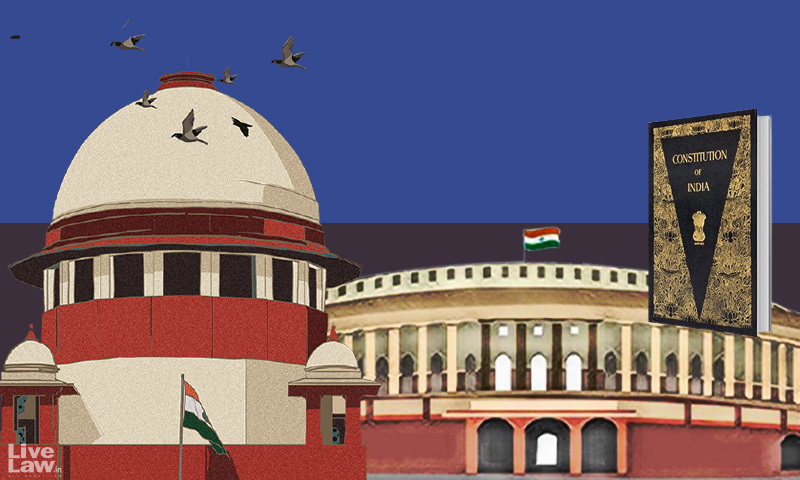
Although the judiciary can strike down laws passed by Parliament, there are certain limitations on its power. For instance, the judiciary cannot stop laws merely because they are unpopular or because they contradict the will of the people. The role of the judiciary is to interpret the Constitution and ensure that laws passed by the legislature adhere to constitutional principles.
The Doctrine of Separation of Powers
The judiciary’s power to stop a law is limited by the doctrine of the separation of powers. While the judiciary has the authority to interpret the Constitution and ensure that laws do not violate its principles, it cannot interfere in the legislative process unless a law is clearly unconstitutional. The judiciary is not meant to replace Parliament in matters of policy-making or lawmaking.
In cases where laws passed by Parliament are challenged, the judiciary only steps in if the law infringes upon the rights of citizens or violates the Constitution. If a law is constitutionally valid and aligns with the democratic process, the judiciary typically refrains from striking it down.
The US Supreme Court’s Role in Judicial Review
The concept of judicial review is not unique to India. In the United States, the Supreme Court has a long history of reviewing laws passed by Congress to ensure they align with the US Constitution. The landmark Marbury v. Madison case (1803) established the principle of judicial review in the US, and since then, the Court has exercised this power regularly.
For example, in Brown v. Board of Education (1954), the US Supreme Court struck down laws that allowed racial segregation in public schools, declaring them unconstitutional. This decision marked a significant moment in the history of judicial review, as the Court used its power to overturn laws that were in violation of the Constitution’s guarantee of equal protection under the law.
The Doctrine of Judicial Activism in the US
The US Supreme Court’s role in reviewing laws is often cited as a model of judicial activism. While the judiciary in the United States does not seek to interfere with the democratic process, it has played an essential role in ensuring that laws are in line with the values and principles set out in the Constitution, especially in cases involving civil rights and liberties.
The Role of the Judiciary in the UK
Unlike the United States and India, the United Kingdom does not have a codified constitution. However, judicial review plays a crucial role in the UK’s constitutional framework. The House of Lords (now the Supreme Court of the UK) has the authority to review laws passed by Parliament to determine whether they are consistent with European Union law (when the UK was a part of the EU) and international human rights law. However, as Parliament is sovereign, UK courts have a more limited ability to strike down laws passed by Parliament compared to other countries with written constitutions.
Conclusion
The question of whether the Supreme Court can stop a law passed by Parliament is fundamental to understanding the balance of power in democratic societies. In India, the Supreme Court can strike down laws that violate the Constitution or the fundamental rights of citizens, as enshrined in Article 13 and reinforced by the basic structure doctrine. Judicial review ensures that laws passed by Parliament align with constitutional principles and safeguard the rights of individuals.
However, the power of judicial review is not unlimited. The judiciary can only intervene in cases where a law is clearly unconstitutional or violates fundamental rights. The separation of powers doctrine ensures that the judiciary does not overstep its role in policymaking and that the legislature retains the authority to pass laws that reflect the will of the people, as long as they are constitutionally valid.
Ultimately, judicial review acts as a crucial check on the power of Parliament, ensuring that laws passed by the legislature are consistent with the Constitution’s core principles, thereby protecting the rule of law and the rights of citizens. The ability of the Supreme Court to strike down laws passed by Parliament is a critical safeguard in maintaining a fair and just democratic system.
read more latest news

