
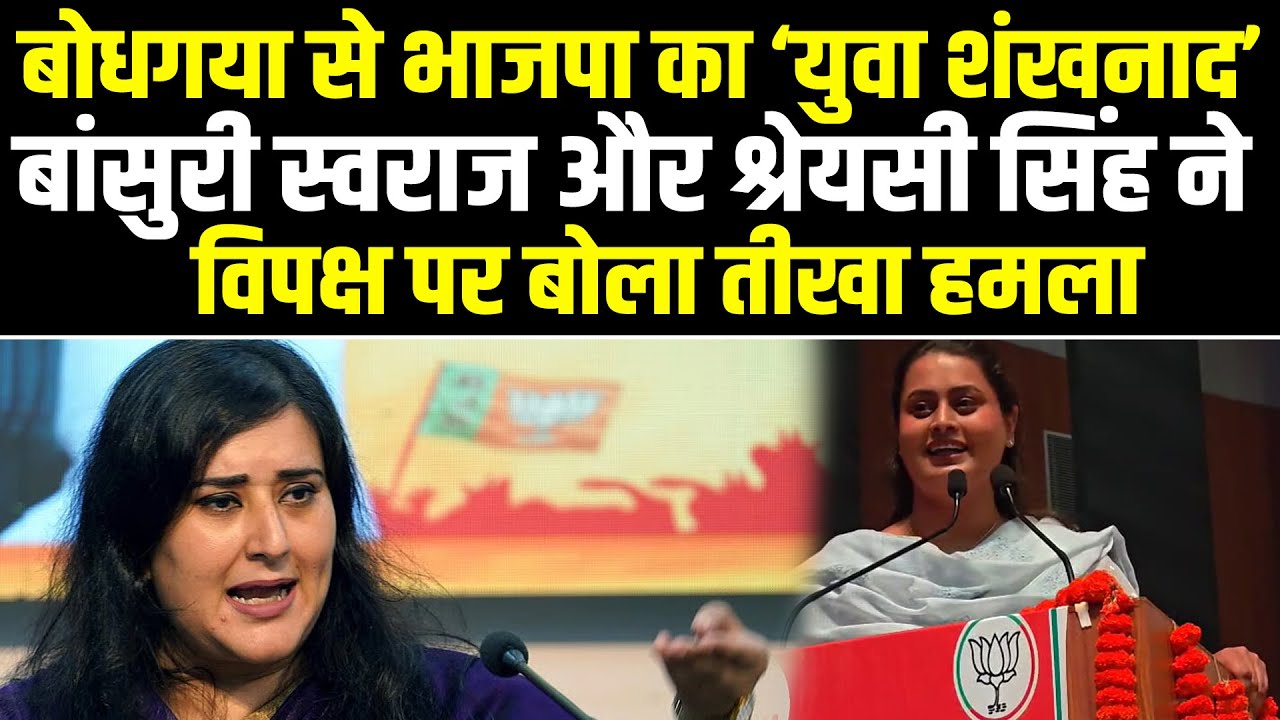
Bihar Needs Development, Not Abuses: MP Bansuri Swaraj Targets the Opposition in Bodh Gaya – Watch the Video
Introduction
Bihar development, one of the most politically vibrant states of India, has once again become the epicenter of heated political debates. The land of Buddha, Chanakya, and Mahavir continues to remain a crucial battleground for national parties. Recently, Bharatiya Janata Party (BJP) MP Bansuri Swaraj, daughter of the late leader and former External Affairs Minister Sushma Swaraj, made a striking statement during her visit to Bodh Gaya, Bihar.
In her sharp address, Bansuri Swaraj emphasized that Bihar needs development, not abuses and negativity. Her remarks came as a direct attack on the opposition parties, particularly those forming alliances under the INDIA bloc, who, according to her, indulge more in criticism and verbal attacks rather than presenting a concrete roadmap for Bihar’s progress.
Her speech, which has now gone viral across social media platforms, reflects not just political rhetoric but also the BJP’s renewed strategy to establish deeper roots in Bihar ahead of the upcoming elections. In this blog, we will explore her statement, analyze the political context, the reactions from opposition leaders, and what it truly means for Bihar’s future.
Bodh Gaya: The Symbolic Stage
Bansuri Swaraj choosing Bodh Gaya as the stage for her sharp political message was not accidental. Bodh Gaya is not only a world-renowned religious and cultural site but also an emblem of peace, wisdom, and transformation. For centuries, it has been associated with enlightenment and change—an image BJP strategically tapped into by sending Bansuri Swaraj there.
By making her remarks in such a significant location, Bansuri connected her message of “development over abuses” with the deeper aspirations of the people of Bihar. The message was clear: while opposition leaders are stuck in political mudslinging, BJP is focusing on the real issues that matter to the people—employment, infrastructure, women empowerment, and youth opportunities.
The Core of Bansuri Swaraj’s Speech
During her address, Bansuri Swaraj highlighted several key points:
- Focus on Development – She underlined that Bihar, with its rich cultural history, needs policies that bring industrial growth, educational reforms, and better healthcare, not leaders who waste their energy in hurling abuses.
- Criticism of Opposition – Without naming specific leaders, she targeted opposition parties for creating a politics of hatred and insults, where debates are dominated by personal attacks rather than policy alternatives.
- Youth & Employment – She specifically reached out to the youth of Bihar, saying that BJP is committed to creating opportunities that prevent migration of Bihari talent to other states.
- Women Empowerment – Like her mother Sushma Swaraj, she highlighted the importance of women’s participation in politics and development, promising that Bihar would see major steps for women’s empowerment under BJP’s vision.
- Positive Politics – Her repeated emphasis was on maintaining dignity in public discourse. According to her, “Politics should be about ideas, not insults.”
Why “Abuses” Became a Talking Point
In Indian politics, the tone of debate has increasingly become aggressive, especially during election season. Bansuri Swaraj’s statement that Bihar needs “vikas, not gaali (development, not abuses)” is both a critique and a strategy.
Opposition parties, especially RJD, Congress, and other allies in Bihar, often accuse the BJP government of centralizing power and failing to address unemployment and poverty. In return, BJP leaders argue that the opposition relies heavily on personal attacks and abuses against Prime Minister Narendra Modi rather than presenting constructive solutions.
By calling out this behavior in Bodh Gaya, Bansuri Swaraj positioned herself as a torchbearer of dignified politics, directly contrasting herself with opposition leaders who are accused of mudslinging.

Political Context in Bihar
Bihar politics has always been turbulent. With Nitish Kumar’s frequent shifts between alliances, RJD’s dominance in opposition, and BJP’s push to expand, the state remains a critical ground for national ambitions.
- BJP’s Strategy in Bihar – BJP is eyeing a stronger hold in Bihar by expanding beyond urban centers and tapping into rural constituencies. Leaders like Bansuri Swaraj, with national appeal and a fresh face, are being projected to attract educated youth and women voters.
- Opposition’s Challenge – The INDIA bloc, led by RJD in Bihar, is banking on anti-incumbency and social justice politics. However, their aggressive tone often backfires when BJP frames them as “abusive and negative.”
- The Development Narrative – Bihar has long been plagued by migration, poverty, poor infrastructure, and unemployment. By raising the slogan “Bihar needs development, not abuses,” BJP is attempting to turn the election narrative towards governance and growth.
The Legacy of Sushma Swaraj and Bansuri’s Political Journey
Bansuri Swaraj is not just any BJP MP—she carries the legacy of Sushma Swaraj, one of the most respected and admired leaders in Indian politics. Her mother was known for her sharp wit, compassion, and oratory skills that combined firmness with dignity.
Bansuri, a Supreme Court lawyer by profession, entered politics with a commitment to carry forward her mother’s principles. Her rise within BJP is also seen as part of the party’s strategy to bring young, educated, and articulate leaders into the spotlight.
By invoking dignity and rejecting abusive politics, Bansuri Swaraj is clearly trying to align herself with the political ethics her mother stood for, while also crafting her own identity as a strong leader who can connect with Bihar’s aspirations.
Public Reaction: Applause and Criticism
Like every strong political remark, Bansuri Swaraj’s speech in Bodh Gaya triggered mixed reactions:
- Supporters’ Applause – BJP supporters and neutral voters welcomed her emphasis on development. Many on social media appreciated her calm yet firm style of criticizing the opposition without resorting to insults.
- Opposition’s Counterattack – RJD and Congress leaders dismissed her remarks, saying BJP has been in power for years both at the Centre and in Bihar, yet the state still suffers from unemployment and backwardness. They argued that blaming opposition for abuses is a way to hide BJP’s own failures.
- Media Spotlight – News channels and digital platforms amplified her video, making “Bihar needs development, not abuses” a trending phrase. This suggests that her message resonated widely and has entered the broader electoral discourse.
The Larger Message for Bihar
At its heart, Bansuri Swaraj’s Bodh Gaya speech is about shaping the political narrative. Instead of letting elections become a slugfest of insults, she is attempting to redirect focus towards real issues:
- How can Bihar stop the migration of its youth?
- How can industries be attracted to the state?
- How can education and healthcare be improved?
- How can women get equal opportunities in politics and society?
Her emphasis on dignity and positive politics also raises an important question for voters—should leadership be measured by how loudly leaders insult opponents, or by how clearly they present a roadmap for development?
The Role of Development Politics in Bihar
Bihar has historically been trapped in identity politics and caste-based mobilization. While these factors remain strong, there is now a growing demand among youth and middle-class voters for development-driven politics.
- Economic Aspirations – With increasing exposure to urban lifestyles and opportunities outside Bihar, people now expect similar growth in their own state.
- Employment Crisis – Migration of labor to states like Delhi, Punjab, and Maharashtra continues to haunt Bihar. Development is seen as the only way to stop this trend.
- Infrastructure Gaps – From roads to electricity, progress has been made, but not enough. A fresh push for infrastructure can change Bihar’s image.
- Social Change – Women’s participation, education, and entrepreneurship are growing areas of expectation.
By making “development” the central slogan, BJP is clearly trying to break free from the caste-abuse narrative and establish a new model of politics in Bihar.
Election Implications
Bansuri Swaraj’s Bodh Gaya speech is not just a standalone event—it is part of BJP’s larger election campaign. Her remarks have three immediate implications:
- Reframing the Debate – Instead of being dragged into abusive political exchanges, BJP is reframing the debate around “Who will bring development to Bihar?”
- Mobilizing Women & Youth – Bansuri’s presence and style appeal to women voters and the educated youth who are frustrated with both unemployment and negative politics.
- Building a Positive Image – By positioning herself as a dignified yet assertive leader, Bansuri Swaraj is helping BJP project an image of fresh leadership that values growth over grudges.
Conclusion
Bihar stands at a crossroads. On one side lies the traditional politics of caste, identity, and abuses, which often dominates election rallies. On the other side is the call for development, dignity, and positive politics.
Bansuri Swaraj’s sharp statement in Bodh Gaya—that “Bihar needs development, not abuses”—captures the essence of this choice. It is not just a political attack on the opposition but also a larger message to the people of Bihar to rise above negativity and demand real progress.
Her words echo the spirit of a new generation of leaders who want to combine political strategy with genuine aspirations of the people. Whether this narrative succeeds in winning votes will be seen in the upcoming elections, but one thing is clear: the video of her Bodh Gaya speech has already made an impact, sparking conversations on what Bihar truly needs—vikas (development), not gaali (abuses).
read more latest news

