

When Devotion Turns Volatile: Tension During Kanwar Yatra in Modinagar, Ghaziabad
1. The Sacred Journey Disrupted
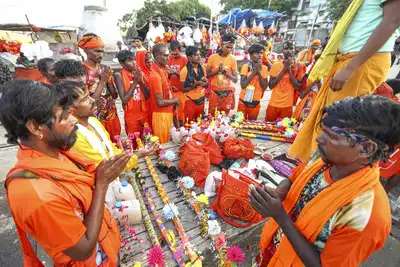
Kanwar Yatra Every July/August, over 12 million devotees march from Haridwar and other shrines to their homes with the holy Ganga water (Kanwar Yatra). In 2025, the pilgrimage brought out its vibrant spiritual side—but in Modinagar, Ghaziabad, a small collision turned the mood from peaceful to tense.
On July 15, 2025, a taxi lightly brushed against a Kanwar carrier on Delhi–Meerut GT Road (NH-58) near GT Road 58, causing the precious water to spill. What followed was an unforeseen escalation—what could have been a calm resolution became a flashpoint of anger and unrest amid the religious fervor.
2. The Incident: Details, Drivers, and Pilgrims
📌 What Exactly Happened
- A car, reportedly a cab, lightly bumped a pilgrim sitting on the central divider, causing his Kanwar to sway and spill the Ganga water.
- Video footage captured pilgrims surrounding the vehicle, chanting and brandishing sticks, quickly shattering its windows with stones and rods .
- Police arrived as tempers flared and arrested the driver—identified as Ujagar Singh/Ujagar from Noida—for fleeing the scene.
👤 The Driver in Focus
Kanwar Yatra The taxi driver fled immediately, but was later identified by ACP Gyan Prakash Rai. Though severely injured himself, his main offense was leaving the spot. Under Indian Penal Code, hit-and-run is treated seriously—even if property damage?.
3. The Belief Behind the Tempest
💧 Why Ganga Jal is Sacred
Kanwar Yatra For sincere devotees, Ganga water isn’t just liquid—it is home, tradition, mourning, healing.
- A close bump sending that consecrated water rolling was perceived as a blow to both faith and soul.
- In religious psychology, when sacred symbols are desecrated—even unintentionally—it often results in collective, emotional backlash.

🔥 Why Anger Spiraled
- Immediate escalation: spilled faith = spilled emotion.
- Large groups: group dynamics intensify reactions.
- Sense of justice: fleeing driver seen as disrespectful.
- Media amplification: videos circulated rapidly, fanning tension.
4. Context: Pilgrimage Meets Infrastructure Stress
🚗 Congestion on NH‑58/GT Road
Kanwar Yatra Modinagar is on a key pilgrim corridor. Multiple incidents occurred:
- On July 9 and 8, similar attacks involving cars and bus drivers occurred after minor brushes.
- Traffic controls backfired in incidents of buses being forbidden from piloted roads and having diverters removed too early.
Authorities responded:
- Dedicated one lane for pilgrims, the other for vehicles.
- Police blocked vehicle access, delaying closures till July 11 for heavy vehicles and July 17 for cars.
Despite this, enforcement lagged—sound trucks continued to operate, officers remained overwhelmed.
5. The Role of Authorities
🚓 Policing Under Stress
Police were there but outnumbered:
- In videos, officers stood by as violence unfolded .
- ACP Rai noted driver would be held accountable, pilgrims escorted along—but no FIR yet on Kanwariyas.
This highlights a regulatory friction: pilgrims receive deference; traffic laws take a backseat during yatra.
🛣️ Administrative Response
- Multiple crashes triggered new restrictions and diversions.
- NPC officials and police worked to maintain order, but heavy congestion and repeat incidents strained control.
6. Pilgrims Speak
Testimonies emerged:
“We were carrying 81 litres. The car hit two of us and sped away” — Harkesh from Mewat.
Social media fuelled responses—pilgrims demanded respect while many viewers criticized group violence and mob mentality .
Reddit comments reflect public anger:
“Last week also… Kanwariyas… need to be banned”
“They think they are above law—they can stop traffic”.
7. Societal Reactions: Faith or Folly?
✅ Supporters Say
- Faith teaches forgiveness, but respect must be mutual.
- Minor collisions—should driver have fled and broken the code of empathy?
❌ Critics Argue
- Violence is illegal, no religion grants license to harm.
- Public facilities and citizen rights must remain prioritized.
The polarized discourse reveals broader issues: When faith clashes with modern law, who wins?
8. Infrastructure & Noise Pollution
A pilgrimage usually brings crowds, but increasing noise pollution is also a concern:
- DJ trucks and boomboxes on GT Road blasted bhajans & Bollywood tunes—repeatedly hitting 100+ decibels, exceeding norms and creating chaos.
- Areas near schools and hospitals reported violated noise regulations despite earlier High Court bans.
Mitigating chaos while preserving piety remains a challenge for urban planners and law enforcers.
9. Repeat Incidents: A Pattern of Tension
- July 8: pilgrims attacked Swift and driver near Muradnagar.
- July 15: another taxi struck the shoreline of pilgrim carry.
- Amplified by tribal-style incivility: flight, anger, retaliation.
Same pattern. Different day.
10. Legal & Policy Reflections
⚖️ Can Road-Rage Be Excused?
- Driver’s fault? He was drunk—but panicked and didn’t resist.
- Pilgrim assault? Mob violence is punishable—yet pilgrims were spared FIR.
- Systemic double standard: Pilgrim violence overlooked; citizen arrest enforced?
📜 Policy Mistake or Legacy Fault?
- Creating dedicated “pilgrim-only lane” helps—but reactive rather than proactive.
- Enforcement must be preemptive vigilance and fair accountability, not just crowd control.
11. Lessons Learned
- Infrastructure Must Respect Faith – Segregated lanes need clear signage and enforcement.
- Civic Education – Pilgrims need to know law isn’t suspended during yatra.
- Fair Policing – Drivers and pilgrims should be held equally accountable.
- Noise & Order – Decibel levels must be controlled even during celebrations.
- Media Sensitivity – Reporting must avoid fueling outrage.
12. Conclusion: Balancing Belief and Order
The Modinagar clash should not be dismissed as a mere accident. It reflects a core urban dilemma: How do we accommodate mass religious sentiment without compromising public rights—rule of law, traffic safety, and urban civility?
For India’s pilgrimage culture to thrive peacefully, it needs stronger frameworks—legal, civic, logistical—where devotion and discipline walk together.
read more latest news

