
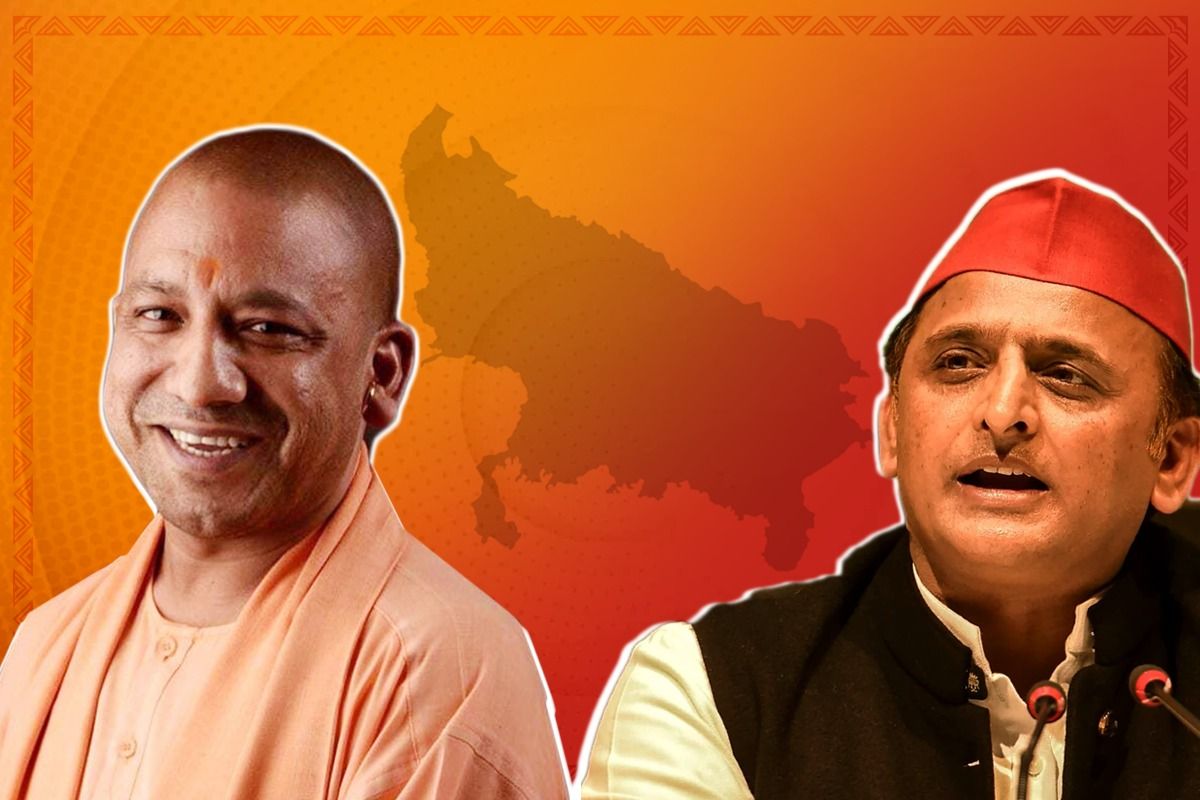
“G Can Also Be for Gareeb”: Akhilesh Yadav’s Retort to Yogi Adityanath Sparks Political Alphabet War
Introduction: Alphabet Politics Takes Center Stage in Uttar Pradesh
In a dramatic turn of events in Uttar Pradesh’s ever-charged political battlefield, Samajwadi Party (SP) chief Akhilesh Yadav responded with a scathing retort to Chief Minister Yogi Adityanath’s now-viral statement — “We teach children G for Ganesh, they teach G for Gadda (donkey).” Addressing a public rally, Akhilesh Yadav declared, “G can also be for Gareeb (poor),” shifting the narrative from religious symbolism to socio-economic issues.
His response not only aimed to counter the BJP’s cultural rhetoric but also strategically brought attention back to the ground realities that concern a significant portion of the electorate: poverty, unemployment, and inequality. With this sharp rejoinder, Akhilesh reignited the debate around political priorities in India — should politics revolve around tradition and symbolism, or should it address the lived experiences of common citizens?
This blog delves into the context, impact, and political messaging behind Akhilesh Yadav’s “G for Gareeb” remark, as well as the evolving narrative war between the BJP and SP.
1. The Origins of the Alphabet Controversy: Yogi’s “G for Ganesh” Jibe
It all began during CM Yogi Adityanath’s address in Moradabad. While speaking to a large crowd, he remarked:
“The Bharatiya Janata Party teaches ‘G for Ganesh’ to children, connecting them with our culture and values, while the Samajwadi Party taught ‘G for Gadda’ (donkey).”
The statement was intended to mock SP’s past campaigns and portray BJP as the custodian of Indian culture and sanskaar (values). However, it also carried an undertone of political arrogance, which the opposition was quick to seize upon.
Within hours, the remark was trending across news portals, social media, and political circles. It provided the perfect opening for Akhilesh Yadav to mount a counterattack.
2. Akhilesh Yadav Strikes Back: “G for Gareeb” — A Punch Packed with Purpose
At a Samajwadi Party rally held in eastern Uttar Pradesh, Akhilesh Yadav turned the tables. Taking the stage with confidence and wit, he said:
“Yes, G can be for Ganesh, but G is also for Gareeb — for the poor, who are suffering under this government.”
The statement was more than just a clever reply — it was a politically calibrated response. With a single line, Akhilesh redirected the public discourse from religious symbolism to the BJP government’s perceived failure to uplift the poor.
His comment connected with multiple voter segments — the marginalized, farmers, laborers, unemployed youth, and middle-class families reeling under inflation.
3. “G for Gareeb”: A Loaded Political Message
Akhilesh’s statement may appear as a simple wordplay, but it carried profound political significance:
- Highlighting Economic Distress: He implicitly accused the BJP government of focusing on religious rhetoric instead of solving real issues like inflation, unemployment, and hunger.
- Aligning with SP’s Socialist Legacy: “G for Gareeb” is a direct nod to the socialist principles that the Samajwadi Party claims to represent — welfare for the poor, affirmative action, and empowerment of backward communities.
- Undercutting BJP’s Cultural Narrative: By inserting a socio-economic reality into the “alphabet war”, Akhilesh reminded voters that elections should be about livelihood, not religious identity.
- Broadening Electoral Appeal: In a state like UP, where caste and class dynamics intersect, positioning oneself as the champion of the poor resonates deeply with rural and lower-middle-class voters.
4. Media Frenzy and Public Reactions
Once again, media channels picked up the soundbite and ran with it. Headlines screamed:
- “Akhilesh Hits Back at Yogi: G is for Gareeb, Not Just Ganesh”
- “Alphabet Politics Heats Up in UP”
- “From Ganesh to Gareeb: The Political G-Round”
On social media, memes exploded. Some depicted a tug-of-war between Lord Ganesh and a poor farmer. Others listed alternative interpretations: “G for Gas Cylinder Price, G for Ghoos (bribe), G for Gyaan (education crisis).”
The public reaction was equally diverse. BJP supporters mocked Akhilesh for trying to dilute cultural identity. SP supporters hailed him for bringing the conversation back to real issues. Neutrals enjoyed the verbal fireworks but questioned whether either party would actually deliver on their promises.
5. Past Tensions Between SP and BJP: Context Matters
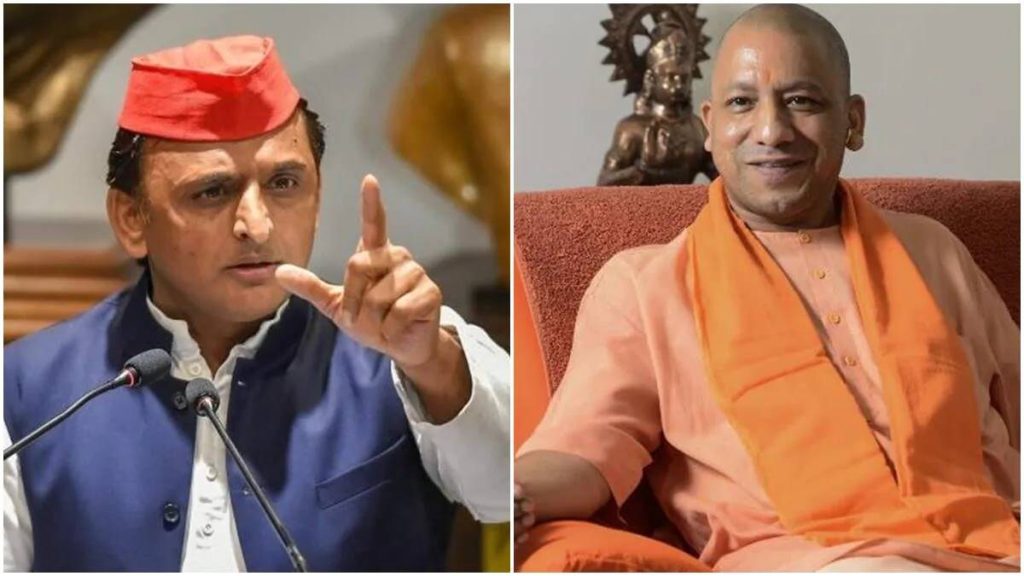
This isn’t the first time Yogi Adityanath and Akhilesh Yadav have clashed in such theatrical fashion. The two leaders represent opposing ends of the ideological spectrum:
- Yogi Adityanath: A Hindu monk-turned-politician, representing BJP’s blend of Hindutva, nationalism, and governance with a spiritual touch.
- Akhilesh Yadav: A U.S.-educated engineer-turned-politician, representing SP’s socialist, secular, and youth-focused politics.
Their previous confrontations include:
- Akhilesh mocking BJP’s “double engine” narrative by calling it a “double loot” model.
- Yogi accusing SP of shielding criminals and fostering “goonda raj”.
- SP’s “cycle” campaign vs BJP’s “bulldozer” image.
This latest exchange is just another chapter in a long saga of ideological jousting.
6. Ground Realities: Is “G for Gareeb” a Winning Issue?
Let’s consider the economic conditions that give weight to Akhilesh Yadav’s retort:
- Unemployment: UP faces high youth unemployment rates despite various skilling initiatives. Many graduates remain jobless or underemployed.
- Rising Prices: Essential commodities like onions, pulses, and cooking gas have become more expensive. Middle-class households feel the pinch.
- Agricultural Woes: Farmers continue to struggle with low MSPs, poor irrigation, and delayed subsidies.
In this context, “G for Gareeb” is not just symbolism — it’s reality for millions. Whether Akhilesh can transform this into votes remains to be seen, but the issue definitely resonates.
7. BJP’s Response: Doubling Down on Culture and Development
The BJP was quick to respond to Akhilesh’s comment. Party spokespersons dismissed the “G for Gareeb” remark as a “cheap gimmick” and reiterated their government’s welfare achievements:
- Over 80 crore people receive free rations.
- Lakhs of homes built under PM Awas Yojana.
- Ujjwala gas connections distributed to women from BPL families.
CM Yogi Adityanath himself stated:
“The poor are being empowered by Modi-Yogi ki sarkar. Those who failed to provide even electricity and roads during their tenure are now giving lectures.”
Thus, while Akhilesh focused on economic distress, BJP tried to reclaim the “gareeb” narrative by citing their welfare record.
8. Educating the Masses: The Role of Alphabet Politics
The focus on the English alphabet in these political barbs also reveals something deeper: both parties are trying to influence how education and culture are perceived by the next generation.
- BJP’s approach: Replace colonial references like “A for Apple” with Indianized alternatives like “A for Arjun”, “G for Ganesh”.
- SP’s approach: Focus more on access, affordability, and inclusivity in education, rather than symbolism.
Akhilesh’s “G for Gareeb” can also be interpreted as a reminder that millions of poor children in UP still lack access to quality education, making any debate about alphabets seem disconnected from ground reality.
9. The Larger Electoral Strategy: Identity vs Welfare
This exchange reflects the core difference between BJP and SP’s political strategies:
| BJP Strategy | SP Strategy |
|---|---|
| Hindutva + Nationalism | Social Justice + Welfare |
| Culture + Temples | Castes + Poor Empowerment |
| Bulldozer Politics | Cycle of Development |
| Strong Leader Projection | Humble, relatable leader image |
| Central Schemes Amplified | Regional Issues Prioritized |
By saying “G for Gareeb”, Akhilesh is reminding voters that temple-building alone won’t put food on the table. It’s a subtle but sharp pushback to the cultural wave the BJP rides on.

10. Youth Engagement: Which Message Connects More?
The youth of Uttar Pradesh — which forms a huge part of the voter base — is torn between these two narratives:
- Some are inspired by the Hindutva nationalism of BJP, seeing it as empowering and assertive.
- Others are disillusioned by joblessness and poor economic opportunities, and are drawn to SP’s welfare promises.
Akhilesh’s “G for Gareeb” slogan could find traction among unemployed graduates, first-time voters, and those who feel left out of India’s economic growth story.
11. Intellectuals, Economists, and Public Policy Experts Weigh In
Political analysts see this war of alphabets as symbolic of Indian politics today — where style often overshadows substance, but style still shapes perception.
Dr. Ajit Mehta, a political commentator, says:
“Akhilesh’s reply is clever. He is reclaiming the narrative and reminding people that hunger, not Hanuman, is the bigger issue for many families.”
Meanwhile, educationists have raised a pertinent point — why are we politicizing how kids learn the alphabet instead of focusing on better infrastructure, teachers, and curriculum?
12. What Lies Ahead: Is This Just the Beginning?
The elections in Uttar Pradesh may still be months away, but the battle lines are already drawn. As the alphabet war shows, every small statement is now a potential campaign plank.
Expect more such symbolic clashes:
- Will “C” be for “Culture” or “Corruption”?
- Will “R” be for “Ram” or “Rozgaar”?
- Will “E” be for “Education” or “EVM”?
The battle of G — Ganesh vs Gareeb — is only the beginning of a deeper debate on the direction India is taking.
Conclusion: A Single Letter, Two Narratives
In the world of political messaging, even a single alphabet can carry volumes of meaning. CM Yogi’s “G for Ganesh” was a call for cultural pride. Akhilesh Yadav’s “G for Gareeb” was a cry for economic justice. Both struck a chord — but with different audiences.
As UP heads into another high-stakes electoral season, it will be the people — the poor, the young, the aspirational, the devout — who decide which “G” defines their future.
Ganesh or Gareeb?
God or Ground Reality?
Faith or Food?
Only the ballot box holds the answer.
Read More latest news

