
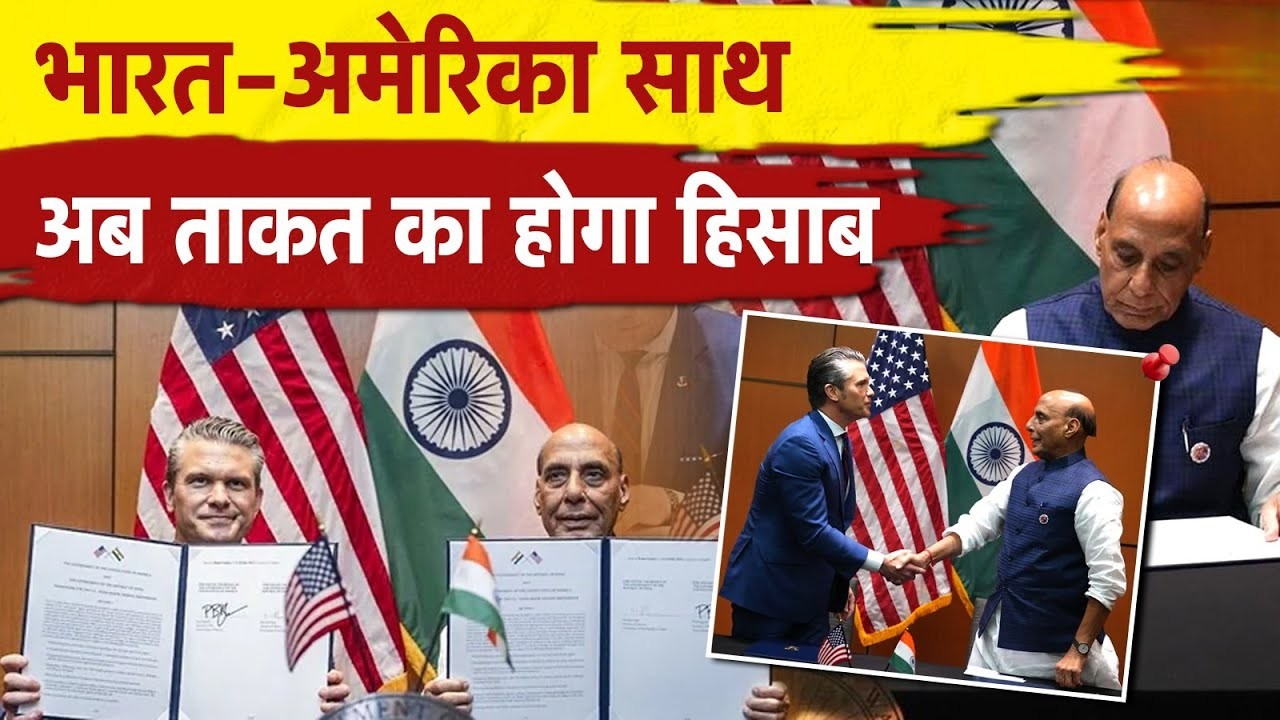
India signs 10-year defence deal with US amid tariff tensions
Introduction
Defense Deal In a remarkable turn of events, India and the United States have signed a 10-year defense cooperation agreement, marking a significant milestone in their evolving strategic partnership. This long-term defense pact comes at a time when bilateral trade relations are under strain due to tariff tensions triggered by U.S. President Donald Trump’s aggressive protectionist policies and India’s firm stance on safeguarding its domestic industries.
The timing of the agreement has drawn global attention. While trade issues between the two democracies have often been contentious, defense cooperation has consistently deepened. The 10-year defense deal reflects New Delhi’s strategic vision to balance economic challenges with long-term security interests in an increasingly volatile geopolitical environment.
The Context: Tariff Tensions Between India and the US
Before delving into the details of the defense agreement, it’s crucial to understand the backdrop of economic friction that defines current India-US relations.
Earlier this year, Washington imposed increased tariffs on several Indian exports, citing unfair trade practices and India’s dependence on protectionist measures. India, in response, announced retaliatory tariffs on certain American goods, including agricultural and industrial products.
Despite these trade tensions, both nations have managed to keep strategic and defense relations insulated from economic disputes—a sign of maturity and shared global interests.
The tariff dispute may affect short-term trade flows, but it has not shaken the foundation of India-US collaboration in defense, technology, and security. In fact, the new 10-year defense pact is a testament to both nations’ recognition that security partnerships transcend economic disagreements.
Key Highlights of the 10-Year Defense Deal
The new defense cooperation agreement, signed during the India-US Strategic Dialogue in New Delhi, lays out a broad framework for defense collaboration for the next decade. It is being hailed as a comprehensive, future-oriented, and strategic pact designed to strengthen military capabilities, enhance interoperability, and boost technological cooperation.
Here are the major highlights:
- Long-Term Defense Industrial Partnership:
The deal extends defense industrial collaboration, encouraging joint ventures between Indian and American defense firms. This will promote ‘Make in India’ initiatives, particularly in advanced defense manufacturing. - Joint Production and Technology Sharing:
India will gain access to cutting-edge US military technologies, including advanced drones, fighter jet engines, and cyber defense systems. Joint production lines will be established for defense hardware and critical components. - Military Exercises and Training Programs:
The agreement strengthens the framework for joint military exercises like Yudh Abhyas, Malabar, and Cope India. It also expands officer exchange programs and specialized training. - Defense Supply Chain Security:
Both nations agreed to secure critical defense supply chains and reduce dependency on other nations—especially in the Indo-Pacific region. - Intelligence Sharing and Cybersecurity Cooperation:
Enhanced real-time intelligence sharing mechanisms will be implemented to tackle emerging threats such as terrorism, cyberattacks, and space-based surveillance risks. - Maritime Security and Indo-Pacific Strategy:
The deal aligns with the Indo-Pacific vision, strengthening maritime security cooperation to counter China’s growing assertiveness in the region.

Why This Deal Matters for India
For India, this 10-year defense deal with the United States is not just about military hardware—it’s a strategic necessity. As the world’s largest democracy surrounded by complex security challenges, India’s defense modernization has become an urgent priority.
Here’s why this pact is significant:
- Boost to Defense Modernization:
India’s defense modernization plans have often been slowed by bureaucratic delays and limited access to advanced technology. This agreement promises uninterrupted technology flow, making India more self-reliant. - Reducing Dependence on Russia:
Traditionally, India has relied heavily on Russia for defense supplies. However, recent geopolitical shifts and global sanctions have made diversification essential. This deal with the US offers a reliable alternative for critical defense systems. - Empowering ‘Make in India’:
The collaboration in defense production will directly benefit domestic industries, generating jobs, innovation, and new research hubs. - Strengthening India’s Global Standing:
Partnering with a superpower like the US boosts India’s diplomatic leverage in global forums. It signals that India is a responsible and capable security partner in the Indo-Pacific. - Securing Maritime Borders:
With China’s growing naval presence in the Indian Ocean, the pact gives India access to better maritime intelligence and surveillance systems, vital for protecting trade routes and national interests.
Why the US Signed the Deal Despite Tariff Tensions
From Washington’s perspective, this defense deal is equally important. The US views India as a key strategic partner in balancing China’s influence in the Indo-Pacific region.
Despite the ongoing tariff war, the US decided to push forward with this agreement for several reasons:
- Strategic Partnership Over Economic Rivalry:
For Washington, defense cooperation with India transcends trade differences. The US recognizes that India’s rise as a regional power aligns with its long-term strategic interests. - Arms Market Potential:
India is one of the world’s largest defense importers. For the American defense industry, this partnership opens massive commercial opportunities worth billions of dollars. - Countering China’s Influence:
The US sees India as a critical pillar in its China containment strategy. Strengthening India militarily helps maintain balance in Asia. - Shared Democratic Values:
Both nations emphasize democracy, freedom of navigation, and international law—values that reinforce their strategic compatibility.

The Economic Angle: Security vs. Trade
The coexistence of defense cooperation and trade disputes between India and the US presents a fascinating diplomatic paradox.
While Trump’s tariff policies have caused friction, economic disagreements are transactional, but security ties are structural. Both nations understand that defense collaboration serves mutual interests that go beyond market access and tariffs.
Economically, India remains cautious of the US’s protectionist stance. However, by signing a long-term defense deal, New Delhi sends a clear signal: it is willing to engage on multiple fronts—cooperating on defense deal while negotiating hard on trade.
This dual-track diplomacy reflects India’s growing strategic maturity and its ability to compartmentalize issues for national benefit.
Impact on Indo-Pacific Geopolitics
The signing of this 10-year pact is being widely interpreted as a message to Beijing.
In recent years, the Indo-Pacific region has become the epicenter of global power competition. China’s expanding military footprint—from the South China Sea to the Indian Ocean—has raised concerns among democracies.
India and the US, as key members of the Quad alliance (along with Japan and Australia), have pledged to ensure a free, open, and inclusive Indo-Pacific.
Through this defense deal:
- India enhances its strategic deterrence.
- The US secures a reliable defense deal partner in South Asia.
- The Quad alliance gains operational depth and shared infrastructure advantages.
This development is expected to shift regional dynamics significantly—particularly in terms of naval dominance, maritime intelligence, and defense deal logistics.
Political Reactions in India
The announcement of the deal has sparked political debates across India. The ruling NDA government led by Prime Minister Narendra Modi and Defense Minister Rajnath Singh has hailed it as a historic breakthrough in defense diplomacy.
However, opposition parties have raised questions about India’s growing dependency on the US and the impact of American tariffs on domestic industries. Some leaders have called for greater transparency in the terms of technology transfer and local manufacturing.
Political analysts, however, largely agree that this pact strengthens India’s strategic autonomy while ensuring access to modern defense deal infrastructure.
Expert Opinions and Global Reactions
Strategic experts worldwide have applauded the India-US defense deal as a transformative step.
- Dr. Ashley Tellis, a renowned South Asia analyst, described the deal as “a decisive moment in India-US defense deal cooperation that locks both sides into a shared security future.”
- C. Raja Mohan, Indian foreign policy expert, noted that this agreement “reflects India’s coming of age as a confident, globally aligned democracy.”
Nations like Japan, Australia, and the UK welcomed the move, calling it a stabilizing factor for the Indo-Pacific. Meanwhile, China and Pakistan expressed concern, interpreting the pact as a potential strategic encirclement.
Challenges Ahead
Despite its many advantages, the 10-year defense deal faces potential challenges:
- Implementation Delays:
Large defense projects often get bogged down by bureaucratic hurdles and budgetary constraints. - Technology Transfer Bottlenecks:
While the US has agreed to share technology, certain restrictions may still apply to sensitive systems, affecting joint production. - Balancing Russia Relations:
India must maintain its traditional ties with Moscow, especially in areas like missiles and nuclear submarines, without upsetting Washington. - Economic Tensions:
The ongoing tariff war could impact the broader trust factor in the relationship.
Nonetheless, both sides appear determined to navigate these challenges through continued diplomatic engagement and mutual respect.
A Vision for the Future
The 10-year defense deal represents a vision of strategic interdependence between India and the United States. It is not just about weapons and equipment—it’s about shared goals, trust, and mutual recognition of each other’s role in global stability.
In the coming decade, India is expected to:
- Expand its defense manufacturing base under the Make in India initiative.
- Strengthen joint operations in the Indian Ocean and Indo-Pacific.
- Collaborate with US tech firms for AI, cyber, and space-based defense systems.
This collaboration has the potential to redefine India’s role as a global security provider rather than just a defense consumer.
Conclusion
India’s decision to sign a 10-year defense deal with the US amid tariff tensions is a clear demonstration of its diplomatic agility. It shows that New Delhi can defend its economic interests while pursuing long-term security goals.
For Washington, it underscores the reality that India is an indispensable partner in maintaining peace, balance, and stability in Asia.
As trade negotiations continue, this defense pact lays the foundation for a stronger, more resilient India-US partnership—one that transcends short-term disagreements and focuses on shared democratic values, global security, and a common vision for the future.
In essence, this agreement isn’t just a defense deal—it’s a strategic declaration of trust between two of the world’s largest democracies at a defining moment in history.
Read more latest news

