
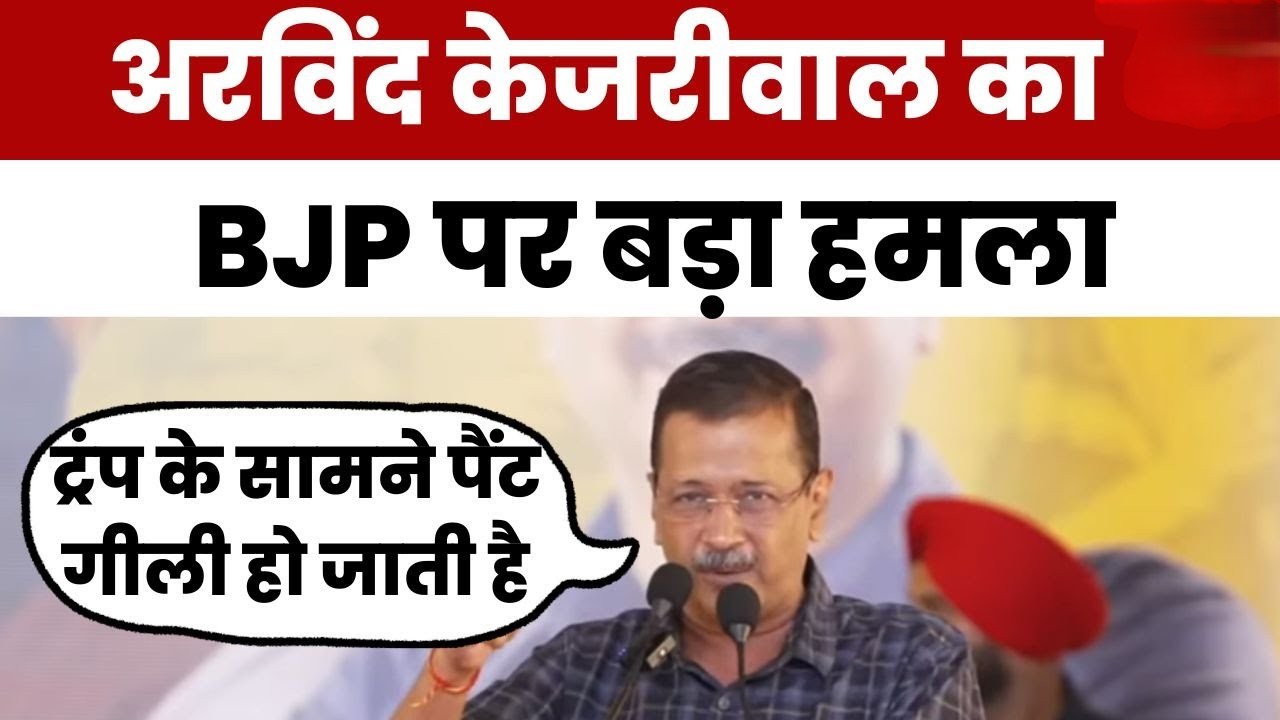
Arvind Kejriwal’s Big Attack on the BJP Government: “Sardar Patel’s Soul Must Be Crying After Seeing the Condition of Gujarat and the Kheduts”
Introduction
In a fiery political statement that has reignited debate over governance, development, and agrarian distress in Gujarat, Delhi Chief Minister and Aam Aadmi Party (AAP) national convenor Arvind Kejriwal launched a scathing attack on the BJP government, saying that “Sardar Vallabhbhai Patel’s soul must be crying after seeing the current state of Gujarat and its farmers (Kheduts).”
Kejriwal’s statement came during a political rally in Ahmedabad, where he addressed a large crowd of supporters and farmers. The remark, loaded with emotion and symbolism, directly challenges the BJP’s long-standing claim of Gujarat as a “model state” of development under its rule.
This speech is not just another political jibe—it’s a calculated strike at the BJP’s ideological roots, as Sardar Vallabhbhai Patel, the Iron Man of India, was one of the most revered figures associated with Gujarat’s identity and the nationalist movement. Arvind Kejriwal invocation of Patel’s name carries deep political and emotional undertones aimed at questioning the BJP’s moral legitimacy in its home turf.
In this comprehensive analysis, we explore the context, content, and implications of Arvind Kejriwal remarks, the state of Gujarat’s farmers, the political reaction across parties, and what this confrontation reveals about India’s changing political landscape.
The Context: Why Gujarat and Why Now?
Arvind Kejriwal’s remarks come at a politically crucial time. With Gujarat Assembly elections approaching, the political atmosphere in the state has heated up.
The Aam Aadmi Party, which made significant inroads during the last elections, is eyeing Gujarat as its next major expansion ground after Delhi and Punjab. AAP’s strategy has been clear: to portray the BJP as having lost touch with ground realities and to position itself as a party of the people—especially farmers, small traders, and the working class.
Arvind Kejriwal decision to target Gujarat’s agrarian distress reflects a strategic shift. While the BJP flaunts Gujarat as a success story of industrialization, AAP is highlighting the growing divide between industrial prosperity and rural suffering.
By invoking Sardar Patel, Arvind Kejriwal touched the emotional chord of Gujarat’s identity. Patel, born in Nadiad, was not only the architect of India’s unity but also a symbol of honesty, simplicity, and service to farmers. Kejriwal’s statement—“Sardar Patel’s soul must be crying”—is thus a direct moral challenge to the BJP’s governance narrative.
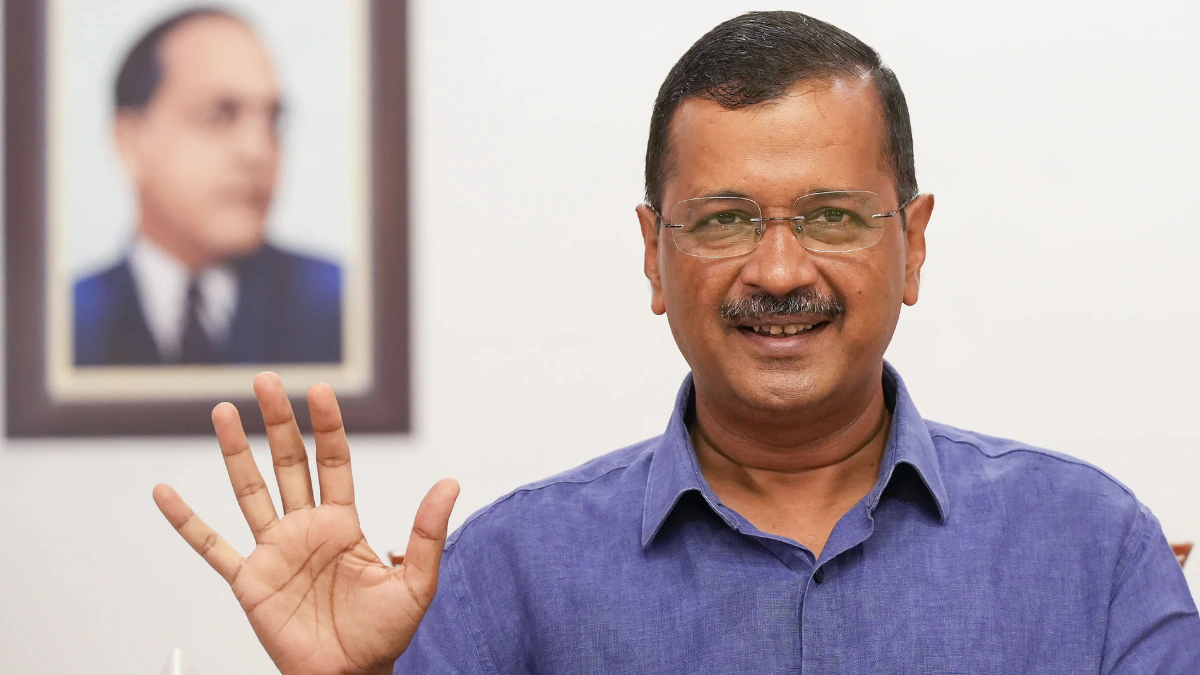
Arvind Kejriwal Speech: A Scathing Critique of BJP’s Gujarat Model
In his speech, Arvind Kejriwal launched a multi-pronged attack on the BJP, focusing on issues that have long been simmering beneath Gujarat’s glossy development narrative.
1. Farmers in Distress
Arvind Kejriwal began by focusing on the plight of Gujarat’s farmers (Kheduts), saying:
“The farmers who once fed the nation are now burdened by debt. They don’t get fair prices, they don’t get water for irrigation, and they don’t get electricity when they need it. Sardar Patel, who came from a farmer’s family, would be heartbroken today.”
He alleged that Gujarat’s agricultural sector has been neglected, with policies favoring industrialists over cultivators. He also highlighted reports of increasing farmer suicides, land acquisition issues, and lack of MSP (Minimum Support Price) assurance.
2. Electricity and Water Woes
Arvind Kejriwal accused the BJP of failing to provide uninterrupted electricity and irrigation to rural Gujarat, despite tall claims of 24-hour power supply:
“Go to any village, ask the Kheduts. They will tell you they get electricity only for a few hours. The government says 24 hours—who are they fooling?”
He contrasted this with Delhi’s free electricity and water model, positioning AAP as the party that delivers real governance instead of slogans.
3. Corruption and Cronyism
Arvind Kejriwal further accused the BJP government of corruption and favoritism:
“Gujarat’s resources are being sold to a few billionaires. The land that belongs to farmers has been handed over to big companies. This is not Sardar Patel’s Gujarat.”
He demanded transparency in land allocation, industrial subsidies, and public spending, asserting that the BJP’s development model serves a select few while leaving the common people behind.
4. Unemployment Crisis
The Delhi CM also raised concerns about rising unemployment:
“Young people are wandering without jobs. Even those who are educated are forced to migrate to other states. What kind of development is this?”
He pointed to failing industries, closure of small businesses, and lack of government recruitment as key reasons for joblessness.
5. Education and Healthcare
Arvind Kejriwal emphasized that while Gujarat built statues and grand infrastructure, it ignored schools and hospitals:
“If Sardar Patel were alive today, he would have asked: why are Gujarat’s government schools in such poor condition? Why are poor people dying without medical treatment?”
He cited AAP’s success in Delhi’s education and health reforms as proof that honest governance can transform lives.
Invoking Sardar Patel: A Political and Emotional Masterstroke
Arvind Kejriwal invocation of Sardar Vallabhbhai Patel’s legacy was not accidental—it was a calculated rhetorical move with multiple political layers.
- Emotional Appeal to Gujarati Identity:
Patel is revered across Gujarat as the Iron Man who unified India. By suggesting that Patel’s soul is crying, Arvind Kejriwal portrayed himself as the defender of Patel’s ideals against the BJP, which claims his legacy. - Questioning the BJP’s Moral Authority:
The BJP often celebrates Patel as a symbol of nationalism, even constructing the world’s tallest statue in his honor—the Statue of Unity. Arvind Kejriwal statement questions whether the BJP has lived up to Patel’s values of integrity, justice, and service to the people. - Symbolic Contrast:
While the BJP built Patel’s statue, Arvind Kejriwal symbolically claimed Patel’s ideology—service, simplicity, and honesty. He essentially said: “You built his statue; we follow his path.” - Targeting the ‘Gujarat Model’:
The Gujarat Model, once the BJP’s crown jewel, is now being reframed by AAP as a model of inequality and neglect. Patel’s name gives moral weight to that critique.
The Condition of Gujarat’s Farmers: Ground Reality Check
To understand the power of Arvind Kejriwal statement, one must examine the real situation of Gujarat’s agricultural sector.
1. Water Scarcity and Irrigation Gaps
Despite projects like the Sardar Sarovar Dam, many regions in Saurashtra, Kutch, and North Gujarat still struggle with irrigation shortages. Farmers depend heavily on rainfall, leading to unstable crop cycles.
2. High Input Costs
Fertilizer prices, diesel costs, and electricity bills have risen, eating into farmers’ profits. Even as industrial tariffs are subsidized, agricultural users face inconsistent support.
3. Market and MSP Issues
Farmers in Gujarat often have to sell their produce at below-MSP rates. Middlemen dominate the market, leaving cultivators vulnerable to exploitation.
4. Land Acquisition Concerns
Industrial expansion has led to large-scale land acquisition, sometimes without fair compensation. Kejriwal tapped into this resentment, accusing the BJP of favoring corporates over cultivators.
5. Rising Debt and Suicides
According to recent data, farmer suicides have been increasing due to crop failures and mounting debts, especially in drought-prone regions. This grim reality contrasts with the BJP’s narrative of prosperity.
Political Reactions
Kejriwal’s statement created a political storm across Gujarat and Delhi.
1. BJP’s Response
The BJP accused Kejriwal of insulting Gujarat and politicizing Sardar Patel’s name. Gujarat BJP spokesperson Yagnesh Dave said:
“Kejriwal is using the name of Sardar Patel for cheap politics. He has no right to speak about Gujarat’s pride.”
They defended the Gujarat Model, citing growth indicators, infrastructure, and industrial success as evidence of development.
2. Congress’s Stand
Interestingly, the Congress largely welcomed Kejriwal’s remarks but with caution. Party leaders said the issues raised were valid, though they accused AAP of vote-bank theatrics.
3. Farmers’ Organizations
Many Khedut unions and rural associations supported Kejriwal’s comments, stating that he “spoke the truth” about the ignored rural sector.
AAP’s Political Strategy in Gujarat
Arvind Kejriwal’s speech reflects AAP’s strategic pivot towards rural politics in Gujarat. The party is focusing on farmers, teachers, and small traders—groups that feel alienated by the BJP’s pro-industry policies.
AAP is positioning itself as a clean, welfare-oriented alternative, promising:
- Free electricity up to 300 units
- Assured MSP for crops
- Modern government schools
- Free healthcare for all
- Zero corruption administration
The emotional narrative of Sardar Patel’s ideals gives AAP a moral edge while drawing a contrast between Patel’s simplicity and BJP’s grandeur.
Symbolism of Sardar Patel in Gujarat Politics
Every political party in Gujarat claims Patel’s legacy, but few invoke him as emotionally as Kejriwal did. The BJP built the Statue of Unity as a symbol of national pride, but Kejriwal turned that symbol into a mirror of moral accountability.
His message was clear:
“Sardar Patel united India; BJP is dividing Gujarat between rich and poor.”
This transformation of Patel’s legacy from nationalism to moral governance is a bold political re-interpretation that may resonate with both urban and rural voters.
Media and Public Reaction
Media houses across India widely covered Kejriwal’s statement.
- Some hailed it as a powerful and emotional speech that struck a chord with farmers.
- Others criticized it as political theatrics, accusing Kejriwal of exploiting sentiment.
On social media, hashtags like #KejriwalInGujarat, #SardarPatel, and #KhedutVoice trended, showing mixed reactions—while many lauded his honesty, BJP supporters called it propaganda ahead of elections.
Kejriwal’s Political Messaging: Beyond Words
Behind the emotional rhetoric lies a clear political calculation. Kejriwal knows that attacking the BJP in Gujarat means confronting it on its strongest ground. His messaging strategy combines:
- Emotion (Sardar Patel’s soul)
- Empathy (for farmers and common people)
- Evidence (on unemployment, water, and power issues)
- Empowerment (AAP’s model of governance)
This fusion makes his narrative more relatable and impactful, particularly among rural and lower-middle-class voters.
Comparing the “Gujarat Model” and the “Delhi Model”
Kejriwal often contrasts BJP’s Gujarat Model with AAP’s Delhi Model:
- In Gujarat, he says, industries prosper but farmers suffer.
- In Delhi, citizens enjoy free, quality public services.
This contrast aims to undermine the BJP’s credibility by presenting an alternative that promises both development and welfare.
Implications for Gujarat’s Political Future
Kejriwal’s statement could have several outcomes:
- Mobilizing Rural Voters:
His emotional appeal could energize farmers and rural voters who feel left behind. - Shifting the Debate:
By invoking Patel, AAP has forced the BJP to defend its record rather than control the narrative. - AAP’s National Positioning:
This also strengthens AAP’s national image as a party that challenges power with moral conviction.
If AAP gains even a moderate foothold in Gujarat, it will mark a major political breakthrough and set the tone for upcoming Lok Sabha elections.
Conclusion
Arvind Kejriwal’s statement—“Sardar Patel’s soul must be crying after seeing the condition of Gujarat and the Kheduts”—is not just a political attack; it’s a moral indictment of the BJP’s governance model.
By invoking the father figure of Gujarat’s political identity, Kejriwal has reframed the debate from one of economic numbers to human dignity and justice. His words tap into the pain of farmers, the frustration of youth, and the disillusionment of citizens who feel the “Gujarat Model” has left them behind.
Whether this emotional and strategic attack translates into electoral gains remains to be seen. But one thing is certain: Kejriwal has once again demonstrated his ability to seize the political narrative—not with empty rhetoric, but with words that compel the nation to reflect.
In Gujarat’s political history, this may well be remembered as the moment when AAP dared to challenge the BJP’s moral monopoly on Sardar Patel’s legacy.
Read More latest news

