

Akhilesh Yadav’s Scathing Attack on BJP Over Bulldozer Action: “The Same Bulldozer That Demolished the Party Office Will Find and Take Away His Memorial as Well”
Introduction
Akhilesh Yadav The bulldozer has become one of the most symbolic tools in Indian politics in recent years. Once just a machine of construction and demolition, it has now been elevated to a metaphor of power, dominance, and governance—particularly under the Bharatiya Janata Party (BJP). From Uttar Pradesh Chief Minister Yogi Adityanath’s aggressive anti-encroachment drives to its symbolic representation in election campaigns, the bulldozer has carved a permanent space in the political discourse of India.
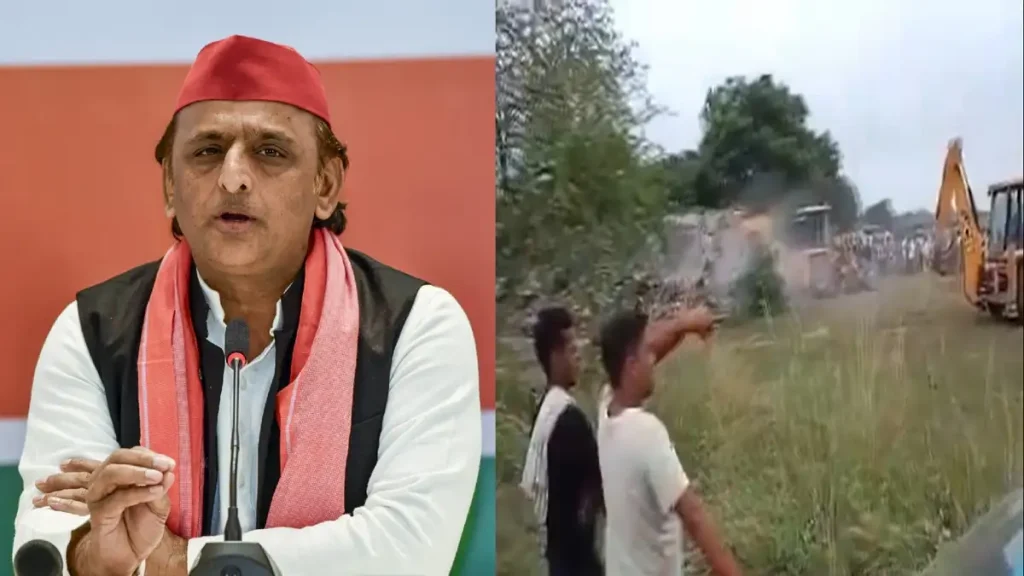
But recently, Samajwadi Party (SP) chief and former Chief Minister of Uttar Pradesh Akhilesh Yadav turned this metaphor on its head. In a press conference at the SP headquarters, Yadav launched a blistering attack on the BJP’s selective use of bulldozer action. He remarked:
“The same bulldozer that demolished the party office will find and take away his memorial as well.”
With this statement, Akhilesh not only targeted the ruling BJP but also injected a new narrative into the bulldozer politics that has long been used against his own party and its workers. His sharp words sparked a debate across political circles, raising questions on the misuse of state machinery, selective justice, and the erosion of democratic values.
This blog explores the background of bulldozer politics, the context of Akhilesh Yadav’s remarks, the immediate political reactions, and the long-term implications of such rhetoric in Indian politics.
The Rise of Bulldozer Politics in Uttar Pradesh
The “bulldozer” phenomenon gained prominence in Uttar Pradesh during the tenure of Yogi Adityanath. Under his governance, bulldozers were deployed to demolish properties allegedly owned by criminals, mafias, and those accused of unlawful activities. While the government defended these actions as steps to maintain law and order, critics alleged that the drives disproportionately targeted members of minority communities and political opponents.
From Law and Order to Election Symbol
What began as an administrative action soon turned into a political symbol. During the 2022 Uttar Pradesh assembly elections, the BJP proudly showcased bulldozer action as a sign of strong governance and no-nonsense administration. Campaign vehicles even displayed bulldozers, and Yogi Adityanath was nicknamed “Bulldozer Baba.”
However, the very same bulldozer symbol also carried undertones of fear, suppression, and injustice. Many opposition leaders accused the government of bypassing judicial processes and using demolition as a tool of political vendetta.
The Immediate Trigger: Bulldozer Action on Party Office
The spark for Akhilesh Yadav’s fiery remarks came after reports that a bulldozer action was carried out against a building associated with the Samajwadi Party. For Akhilesh, this was not just an administrative matter—it was symbolic of how the BJP allegedly weaponizes state machinery against rivals.
At the press conference, held in the presence of senior party leaders and workers, Akhilesh accused the BJP of double standards. He highlighted how the bulldozer is used to silence dissent while ignoring the illegalities and corruption of those close to the ruling party.
By saying that “the same bulldozer will find and take away his memorial,” Akhilesh hinted that the politics of revenge and suppression will not spare even those who today appear invincible. Though he did not name anyone directly, the reference was understood to be a sharp jibe at BJP leaders and their carefully built legacies.
The Symbolism of Akhilesh’s Statement
Akhilesh Yadav’s remark is more than just political rhetoric—it is layered with symbolism.
- Reclaiming the Bulldozer Narrative
For years, the bulldozer has been an emblem of BJP’s governance model. By turning the metaphor against them, Akhilesh attempted to strip it of its one-sided symbolism and suggest that the same instrument of power could also dismantle BJP’s stronghold. - Attack on Legacy Politics
The mention of “memorial” hints at a deeper attack on how BJP leaders seek to cement their legacies through grand memorials, projects, and political symbolism. Akhilesh implied that no memorial is safe if the bulldozer becomes the weapon of political revenge. - Warning Against Arrogance of Power
Bulldozers represent raw state power. Akhilesh’s remark is a cautionary note that political power is not permanent, and those who use bulldozers against others might face the same fate when power equations change.
Political Reactions
The statement immediately stirred a storm across the political landscape of Uttar Pradesh and beyond.
BJP’s Response
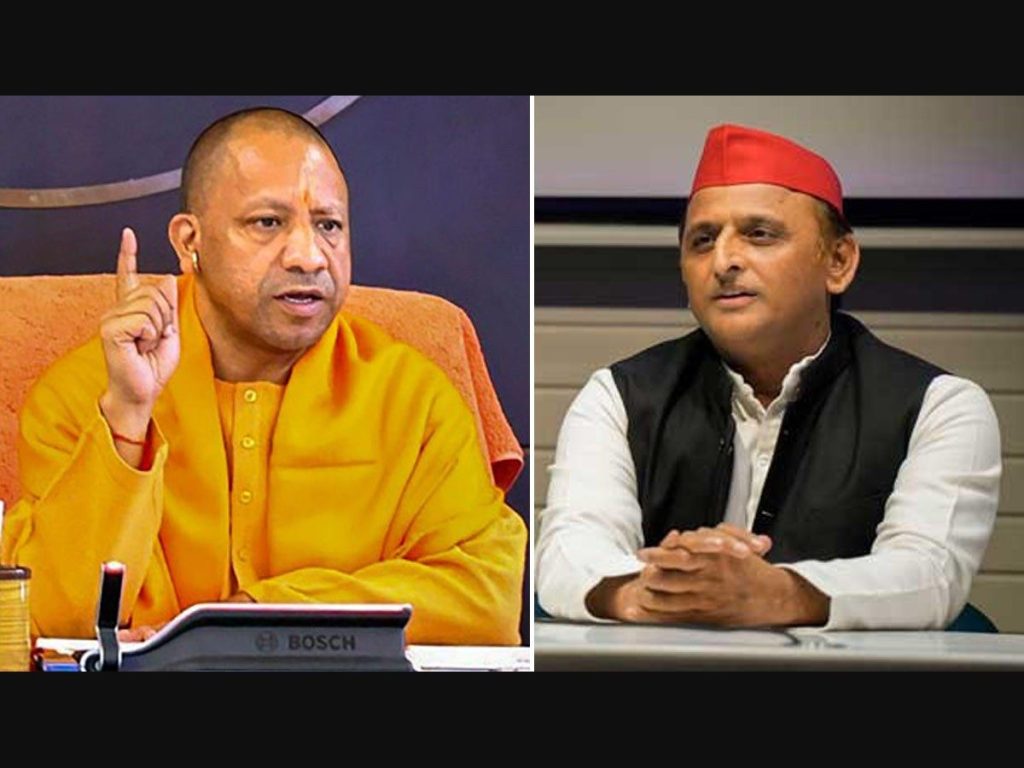
The BJP dismissed Akhilesh’s comments as “frustration of a defeated leader.” Spokespersons argued that bulldozer action is only taken against illegal constructions and criminal elements, not for political vendetta. They accused Akhilesh of shielding land mafias and criminals under the garb of political victimhood.
Opposition’s Reaction
Leaders of the Congress, RLD, and Left parties expressed solidarity with Akhilesh, noting that bulldozer action without due process undermines democracy. They argued that what is happening to the SP today could happen to anyone tomorrow.
Civil Society and Public Opinion
Among common people, reactions were mixed. Some saw Akhilesh’s words as a powerful comeback against bulldozer politics, while others viewed it as mere rhetoric without substantial action. Social media platforms buzzed with memes, debates, and arguments about who controls the bulldozer narrative.
Bulldozer Politics and Its Impact on Democracy
The controversy highlights a critical question: what happens when administrative machinery is used selectively against political opponents?
- Erosion of Rule of Law
Legal experts argue that demolishing properties without proper judicial orders violates constitutional rights. Rule of law requires that punishment be decided by courts, not bulldozers. - Chilling Effect on Opposition
When opposition parties feel that their offices, properties, and supporters can be targeted arbitrarily, it weakens democratic resistance and creates an environment of fear. - Normalization of Extra-Judicial Action
By celebrating bulldozer action in electoral campaigns, governments risk normalizing extra-judicial measures. This could set a dangerous precedent for future administrations.
Akhilesh Yadav’s Political Strategy
Akhilesh’s attack is also part of a larger political strategy.
- Positioning as Defender of Democracy: By raising the bulldozer issue, he projects himself as standing up against authoritarian governance.
- Reconnecting with Core Voter Base: Many among his voter base, especially minorities and marginalized groups, feel directly affected by bulldozer actions. His remarks reaffirm his solidarity with them.
- Countering BJP’s Strongman Image: By suggesting that the bulldozer could turn against BJP itself, he challenges their monopoly over the narrative of strength.
The Larger Battle: 2027 Uttar Pradesh Elections
Though the next assembly elections are still a couple of years away, every statement by Akhilesh Yadav is aimed at positioning the Samajwadi Party as the principal challenger to the BJP in Uttar Pradesh.
The bulldozer issue will likely feature prominently in upcoming campaigns. If Akhilesh succeeds in reframing it from a symbol of governance to a symbol of injustice, he could shift the narrative in his favor.
Historical Parallels
Indian politics has often seen metaphors become central to campaigns—the bicycle for SP, the hand for Congress, the lotus for BJP. The bulldozer is a more recent entrant, symbolizing both power and fear. Akhilesh’s attempt to flip the metaphor recalls earlier political moments when opposition leaders turned ruling party slogans against them.
For instance:
- In the Emergency era, Indira Gandhi’s slogan of “discipline” was turned into a critique of authoritarianism.
- During the Mandal era, “social justice” was reframed as a counter to upper-caste dominance.
Similarly, bulldozer politics may undergo a narrative shift if opposition leaders like Akhilesh persistently challenge it.
Media Coverage
Mainstream and regional media extensively covered Akhilesh’s statement. Headlines highlighted the boldness of his words and the sharpness of his attack. Editorials debated whether his rhetoric was an effective political move or just a desperate attempt to stay relevant.
Television debates pitted BJP spokespersons against SP leaders, often descending into heated arguments over the legality and morality of bulldozer actions. Social media amplified the story, with hashtags like #BulldozerPolitics, #AkhileshVsBJP, and #DemocracyAtStake trending for hours.
Public Sentiment: A Double-Edged Sword
While some sections of society appreciate bulldozer action as quick justice, others fear its misuse. Surveys suggest that urban middle-class voters often view it as a sign of decisive governance, while minorities and marginalized communities see it as targeted harassment.
Akhilesh’s challenge is to unite these divergent perceptions and build a narrative that emphasizes due process and equality before the law. His latest statement is a step in that direction.
Conclusion: The Future of Bulldozer Politics
Akhilesh Yadav’s scathing remark—“The same bulldozer that demolished the party office will find and take away his memorial as well”—is not just an attack on the BJP. It is a broader commentary on the dangers of turning governance tools into instruments of political revenge.
The bulldozer, once a machine of development, has now become a metaphor for fear, suppression, and authoritarianism. Whether Akhilesh succeeds in redefining this metaphor will depend on his political strategy, the unity of the opposition, and how the people of Uttar Pradesh perceive justice and governance.
One thing is certain: bulldozer politics is here to stay in India’s political discourse. The question is—who will control its narrative in the years to come?
Read more lates news

