
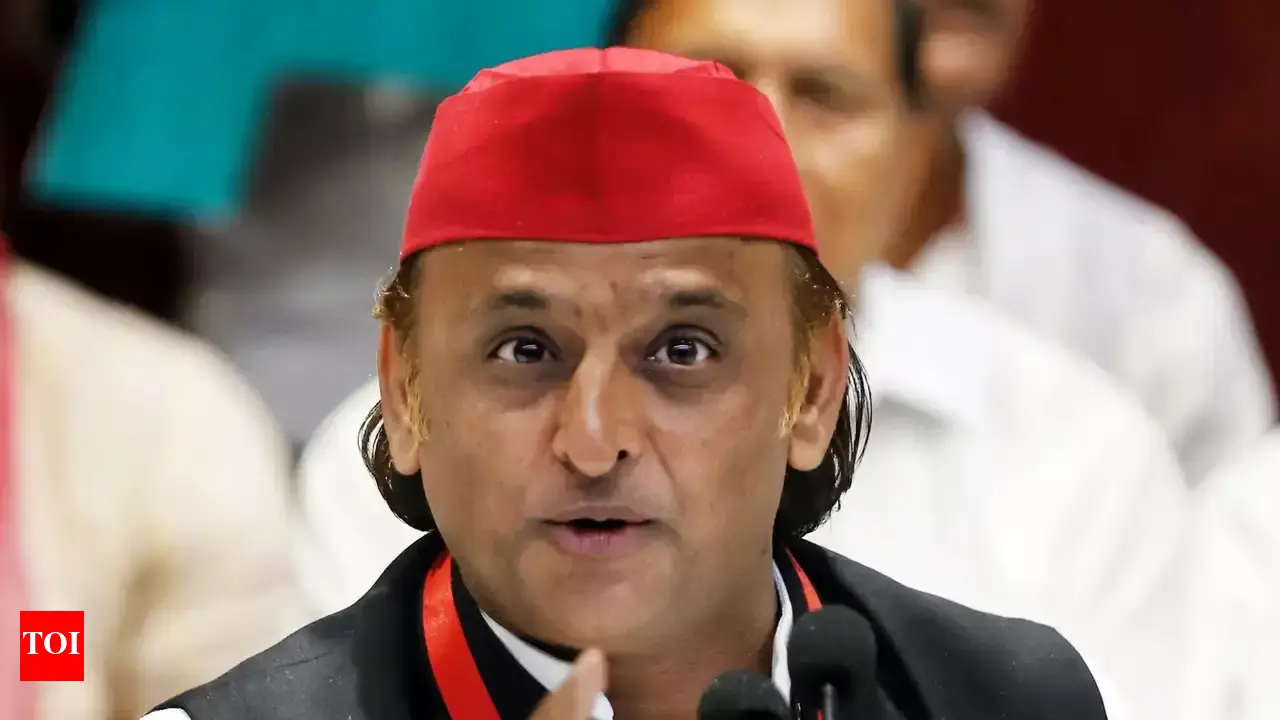
Akhilesh Yadav’s Statement: “It is Not Right to Spoil Relations with America”
Introduction
Akhilesh Yadav’s statement: Indian politics thrives on a mix of domestic issues and international diplomacy. While foreign policy is usually considered the domain of the central government, opposition leaders often use global issues to criticize the ruling dispensation and present their alternative vision. Recently, Samajwadi Party (SP) chief and former Uttar Pradesh Chief Minister Akhilesh Yadav made a remark that has caught everyone’s attention. He said:
“It is not right to spoil relations with America.”
This simple yet powerful statement has multiple layers. It touches on India’s strategic relations with the United States, the impact of trade and tariffs, and the political discourse within India. At a time when U.S.-India relations are going through ups and downs, especially with trade tensions and diplomatic challenges, Akhilesh Yadav’s words carry weight.
In this blog, we will analyze the context of his statement, its political significance, what it means for India-U.S. relations, and how it fits into the larger opposition narrative against the Modi government.
Context Behind the Statement
Akhilesh Yadav’s statement comes amid growing debate over India’s foreign policy under the Narendra Modi government. Recently, tensions have surfaced due to:
- Trade Tariffs: U.S. President Donald Trump announced steep tariffs on several Indian goods. India retaliated with counter-tariffs.
- Geopolitical Balancing: India has deepened relations with Russia, particularly after the Ukraine war, raising eyebrows in Washington.
- Technology and Defense Deals: The U.S. and India are collaborating in defense and technology, but differences remain on market access and protectionism.
- Human Rights Concerns: Sections of the U.S. Congress have criticized India on democratic backsliding and minority rights.
Against this backdrop, Akhilesh’s statement is not just about diplomacy—it is a political critique of how the government is managing one of India’s most crucial bilateral relations.
Why Did Akhilesh Say This?
Akhilesh Yadav, as leader of the Samajwadi Party and a prominent face of the opposition INDIA bloc, has his reasons for speaking out:
- Economic Concerns: Uttar Pradesh’s economy is tied to exports, especially textiles, leather, and agriculture. U.S. tariffs directly hurt industries in the state.
- Political Messaging: By speaking about America, Akhilesh is projecting himself as a national-level leader concerned with global diplomacy, not just regional politics.
- Opposition to Modi’s Approach: He wants to show that the Modi government’s aggressive foreign policy is creating unnecessary rifts.
- Appealing to Youth & Businesses: America is a dream destination for Indian students and IT professionals. By emphasizing good ties, Akhilesh resonates with this aspirational class.
U.S.-India Relations: A Historical Overview
To understand the gravity of Akhilesh Yadav’s concern, we must look at the history of India-U.S. relations:
- Cold War Era: India maintained non-alignment, tilting towards the USSR, while the U.S. supported Pakistan. Relations were strained.
- Post-1991: Economic liberalization brought India closer to the U.S. Trade and investment grew.
- 2005 Nuclear Deal: A landmark agreement under PM Manmohan Singh and U.S. President George W. Bush deepened ties.
- Modi Era: Relations with U.S. Presidents Barack Obama, Donald Trump, and Joe Biden have seen highs and lows, ranging from defense deals to tariff wars.
This historical context shows why any suggestion of worsening ties is a matter of concern.
The Economic Angle
Akhilesh Yadav’s statement reflects the economic importance of U.S.-India ties:
- Trade: The U.S. is one of India’s largest trading partners, with bilateral trade crossing $190 billion in 2023.
- Exports from UP: Uttar Pradesh exports goods like carpets, handicrafts, and leather products—many destined for U.S. markets. Tariffs directly hurt local industries.
- IT & Services: Indian IT companies depend heavily on U.S. clients. Strained relations can lead to stricter visa rules or outsourcing barriers.
- Investment: American companies like Apple, Amazon, and Google are investing in India. Hostile ties could slow this momentum.
Thus, Akhilesh is indirectly linking foreign policy with local livelihoods.

Diplomatic Significance
Diplomacy is not just about leaders meeting—it has practical consequences:
- Defense Cooperation: India is purchasing U.S. defense equipment, strengthening military ties.
- Geopolitical Balancing: With rising China, the U.S. sees India as a strategic partner in the Indo-Pacific.
- Technology & Innovation: Collaborations in AI, semiconductors, and space require stable ties.
By cautioning against spoiling relations, Akhilesh is emphasizing the strategic necessity of maintaining cordiality with Washington.
Opposition Politics and Foreign Policy
Traditionally, opposition parties in India have used foreign policy as a platform to criticize the government. Akhilesh’s statement fits into this pattern.
- Congress: Has often accused Modi of focusing more on photo-ops than substance in diplomacy.
- Left Parties: Criticize excessive closeness with the U.S. but also highlight economic dependency.
- Samajwadi Party: By making this statement, Akhilesh positions himself as someone who values balance—neither extreme dependence on the U.S. nor confrontation.
This could help him project himself as a moderate national leader in the INDIA bloc.
America in Indian Public Imagination
For ordinary Indians, America symbolizes:
- Opportunities: Education, jobs, and immigration dreams.
- Power: A global superpower that influences world politics.
- Partnership: A country that can help India grow technologically and militarily.
When Akhilesh says it’s not right to spoil ties, he’s also echoing this public sentiment.
Critics of Akhilesh’s Statement
Not everyone agrees with Akhilesh’s perspective. Critics argue:
- National Interest First: India must take tough stands when required, even if it strains U.S. ties.
- Self-Reliance: Over-dependence on the U.S. can compromise India’s sovereignty.
- Electoral Rhetoric: Some see Akhilesh’s words as mere political posturing, not a serious foreign policy vision.
Thus, his statement has sparked debate across political circles.
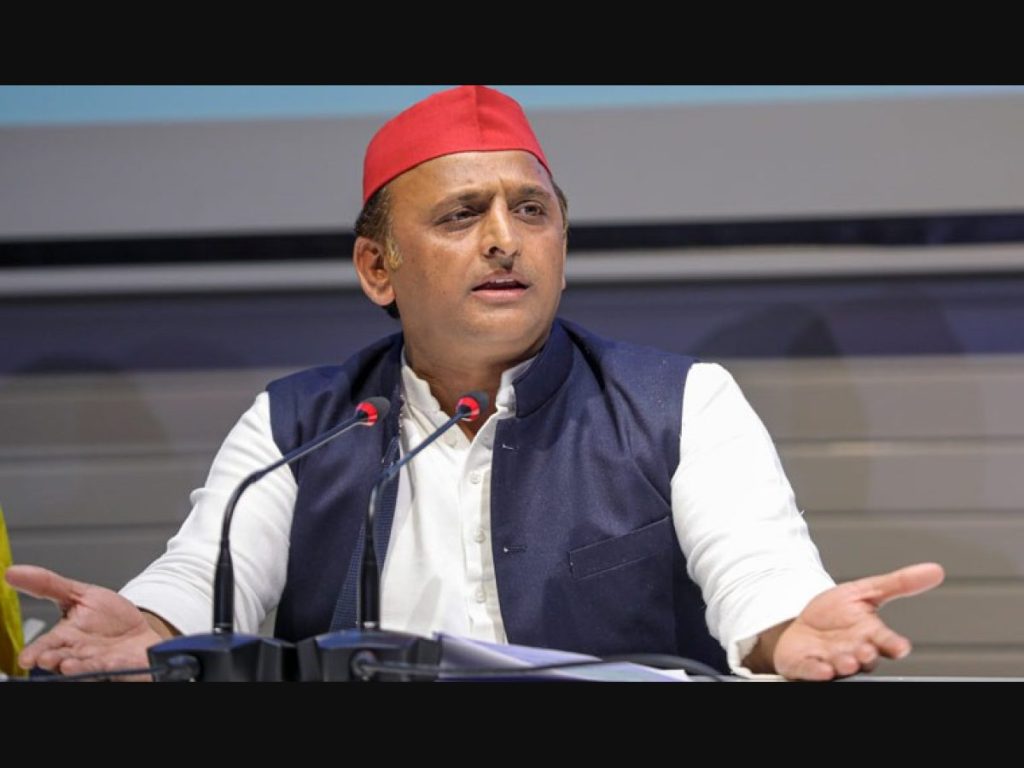
Social Media and Public Response
On social media, Akhilesh’s words have been widely discussed:
- Supporters praise him for speaking about diplomacy and global concerns.
- Critics accuse him of lacking understanding of international relations.
- Neutral Voices see it as a sensible warning against avoidable hostility.
This shows the polarized reception of his remark.
Akhilesh Yadav’s Political Strategy
This statement is not isolated—it’s part of a broader political strategy:
- Positioning as a National Leader: By commenting on foreign policy, Akhilesh goes beyond UP-centric politics.
- Appealing to Aspirational Voters: Youth, students, and professionals who care about ties with America will relate.
- Targeting Modi’s Weak Spot: Trade tariffs and visa restrictions under Trump and Biden are areas where Modi government has struggled.
- Shaping INDIA Bloc Narrative: He signals that opposition is not anti-America, but pro-balance.
India’s Balancing Act Between U.S. and Russia
Another angle to Akhilesh’s remark is India’s balancing diplomacy:
- India buys oil and weapons from Russia.
- U.S. wants India to reduce dependence on Russia.
- India needs U.S. tech and market access.
Akhilesh’s caution is indirectly about avoiding overplay with Russia that could anger Washington.
Global Context
The world is undergoing major shifts:
- U.S.-China Rivalry: India is seen as a counterbalance to China.
- Ukraine War: Russia-West conflict affects India’s choices.
- Climate Change & Trade: Areas where India and U.S. must cooperate.
Spoiling ties with America could isolate India internationally—a point Akhilesh is hinting at.
Challenges in U.S.-India Relations
Despite being strategic partners, challenges remain:
- Trade Deficit: India has a surplus, but faces U.S. pressure for market access.
- Human Rights: U.S. lawmakers often raise concerns about democracy in India.
- Visa Policies: Restrictions on H1-B visas worry Indian techies.
- Tariff Wars: Both countries have engaged in protectionist measures.
Akhilesh’s statement resonates because these challenges affect ordinary Indians.
The Road Ahead
India cannot afford to ignore America, nor can it blindly align. The road ahead requires:
- Balanced Diplomacy: Maintaining ties with U.S. while preserving independence.
- Economic Focus: Ensuring trade disputes don’t hurt Indian industries.
- Strategic Partnerships: Deepening defense and technology collaboration.
- Public Diplomacy: Ensuring that relations also benefit ordinary citizens, not just governments.
Conclusion
Akhilesh Yadav’s statement—“It is not right to spoil relations with America”—is more than just a casual remark. It reflects:
- Concerns about the impact of foreign policy on domestic economy.
- A critique of the Modi government’s handling of global diplomacy.
- A strategic attempt by an opposition leader to project a balanced and responsible image.
In a world where global politics and local livelihoods are deeply connected, Akhilesh’s warning carries significance. Whether or not his words influence India’s foreign policy, they have certainly added a new dimension to the political debate within India.
As elections approach, this statement could become part of a broader narrative where opposition leaders challenge the government not only on domestic governance but also on its handling of international relations.
Read more latest news

