
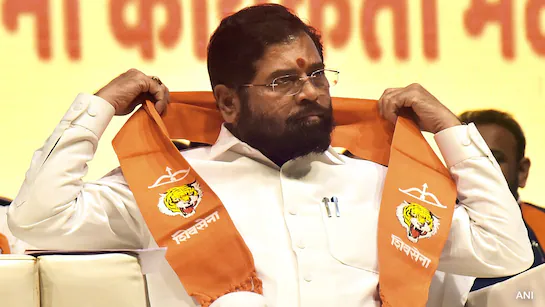
Eknath Shinde’s Statement: “There is No Competition to Take Credit…”
Introduction
Eknath Shinde Maharashtra’s politics is never short of headlines. In the middle of power struggles, coalition equations, and the upcoming electoral mood, Chief Minister Eknath Shinde made a statement that has sparked wide discussions: “There is no competition to take credit, what matters is work for the people.”
At first glance, this might sound like a simple political remark, but in reality, it reflects the deep undercurrents within Maharashtra politics. With the Shiv Sena split, the BJP-Shinde Sena alliance, and the threat of Uddhav Thackeray-led faction, such words are both a message to his allies and a counter to his critics.
In this blog, we will explore the context of Eknath Shinde statement, its political significance, the implications for the MahaYuti (BJP-Shinde Sena-NCP Ajit Pawar faction), and how it could shape the future of Maharashtra politics.
The Background: Maharashtra’s Political Turmoil
To understand the weight of Eknath Shinde’s statement: ‘There is no competition to take credit…’ statement, we must revisit the events of the past few years:
- 2019 Assembly Elections: BJP and Shiv Sena fought together but split over power-sharing.
- Uddhav Thackeray’s Maha Vikas Aghadi (MVA): Shiv Sena joined hands with Congress and NCP, making Uddhav CM.
- Shinde’s Revolt in 2022: Eknath Shinde, along with a group of MLAs, split the Shiv Sena and joined hands with BJP to form the government.
- Recognition by EC: The Election Commission later granted the Shiv Sena name and symbol to Shinde’s faction, cementing his political authority.
Amid these developments, Eknath Shinde’s statement: ‘There is no competition to take credit…’ has often faced criticism that his government is run under BJP’s shadow and that he is more focused on maintaining power than delivering governance. His statement on credit vs. work seems to be a direct response to these criticisms.
What Did Eknath Shinde Say?
In his address, Eknath Shinde’s statement: ‘There is no competition to take credit…’ made a clear point:
“There is no competition to take credit for work in this government. Whether the initiative comes from me, from Deputy CM Devendra Fadnavis, or from Ajit Pawar, we are united in working for the people of Maharashtra. What matters is delivery, not credit.”
This is not just a statement of humility—it’s a carefully calibrated political message:
- To his allies, it shows unity.
- To his critics, it shows focus on governance.
- To the people, it signals maturity.

The Politics of Credit in Coalitions
Coalition governments in India often face a battle for credit. From developmental projects to welfare schemes, each ally wants the people to remember them as the architect of progress.
- Shinde’s Position: As CM, he wants to project himself as a leader above petty fights.
- BJP’s Role: With Devendra Fadnavis as Deputy CM, BJP has a strong hand in governance.
- NCP (Ajit Pawar faction): Recently joining hands with BJP-Shinde Sena, Ajit Pawar also wants to prove his relevance.
In such a scenario, Eknath Shinde’s statement is an attempt to calm tensions within the MahaYuti and ensure that voters don’t see a fractured alliance.
Why is This Statement Important Now?
The timing of Shinde’s remark is significant:
- Upcoming Elections: Maharashtra faces local body elections soon, and the Assembly elections in 2024-25. Every alliance partner wants credit before polls.
- Internal Shiv Sena Rivalry: Uddhav Thackeray has consistently accused Eknath Shinde of betraying the party for power. Shinde, by downplaying credit, is countering this narrative.
- Opposition Pressure: MVA leaders, especially Sanjay Raut, often mock Eknath Shinde as a “puppet CM.” His focus on work rather than credit is aimed at neutralizing such jibes.
- Unity Signal: With Ajit Pawar’s entry, the MahaYuti is seen as fragile. Eknath Shinde message is a reassurance of unity.
Governance vs. Credit: Shinde’s Political Identity
Eknath Shinde wants to build an image distinct from both Uddhav Thackeray’s emotional Shiv Sena brand and BJP’s nationalistic appeal. His identity rests on:
- Grassroots Connect: Shinde rose from a humble background and has maintained ties with ordinary people.
- Development Politics: Infrastructure projects like the Mumbai-Nagpur Samruddhi Mahamarg are close to his heart.
- Balancing Act: Managing BJP’s dominance while protecting his Sena’s identity.
By saying “no competition for credit,” Shinde portrays himself as a leader of action rather than ambition.
How the Opposition Reacted
The MVA opposition has not missed the chance to interpret Shinde’s words politically.
- Sanjay Raut (Shiv Sena UBT): Mocked Shinde, saying, “When you have no real credit, you naturally don’t fight for it.”
- Congress: Claimed that Shinde’s government is run entirely by BJP, so his statement reflects helplessness.
- Sharad Pawar (NCP Chief): Alleged that Ajit Pawar’s group is only being used, and Shinde is downplaying credit to hide the imbalance.
Such responses show that Shinde’s statement is not being taken at face value but is being seen as political posturing.
The BJP Factor
One cannot analyze Shinde’s statement without considering BJP.
- BJP as Big Brother: In the MahaYuti alliance, BJP is the largest party and has the strongest cadre.
- Devendra Fadnavis: As Deputy CM, he commands authority, often overshadowing Shinde.
- Shinde’s Balancing Act: By saying “no competition for credit,” he tries to reassure BJP while also asserting his own dignity.
This reflects the complex power-sharing arrangement between BJP and Shinde Sena.
Ajit Pawar’s Entry: New Equations
The induction of Ajit Pawar’s NCP faction into the alliance has created fresh challenges.
- Ajit Pawar is ambitious and wants to prove his faction’s strength.
- His inclusion has sparked unease among Shinde Sena MLAs who fear dilution of their importance.
- Shinde’s statement may also be aimed at preventing any visible cracks caused by Ajit Pawar’s presence.
Thus, the remark also acts as a soothing message to allies.
Voter Perception: Will People Believe Shinde?
For ordinary voters, credit politics matters less than results. People want:
- Better roads,
- More jobs,
- Law and order,
- Affordable housing,
- Welfare schemes.
If Shinde’s government delivers on these, his statement will be seen as genuine. But if governance falters, critics will dismiss his words as political cover-up.
The Symbolism of Humility
In Indian politics, humility is often a carefully used tool. By saying there is no competition to take credit, Shinde projects himself as a:
- Team Player (working with BJP and NCP harmoniously),
- People’s Leader (prioritizing welfare over self-promotion),
- Mature Politician (not driven by ego).
This symbolism is important for his political survival and growth.
The Road to 2024 and 2025 Elections
Shinde’s statement must also be viewed in light of upcoming elections:
- 2024 Lok Sabha: BJP will lead the campaign, but Shinde’s Sena must prove its utility in votes.
- 2025 Assembly: Here, Shinde’s role will be more critical as voters will judge his CM tenure.
His words are part of the broader narrative management to ensure that his leadership remains relevant in both elections.
Challenges Ahead for Eknath Shinde
While the statement is politically clever, challenges remain:
- Maintaining Sena Identity: Many believe Shinde’s faction is dependent on BJP.
- Handling Uddhav Thackeray’s Attack: Uddhav continues to brand Shinde as a betrayer.
- Internal Alliance Tensions: Managing the ambitions of BJP and Ajit Pawar simultaneously.
- Public Delivery: Ultimately, voters will judge on governance, not rhetoric.
If Shinde fails to deliver, his statement about “no competition for credit” may backfire.
Conclusion
Eknath Shinde’s statement—“There is no competition to take credit, only work for people matters”—is more than just a remark. It is a political signal, an image-building exercise, and a balancing act within Maharashtra’s fragile coalition politics.
- To his allies, it is reassurance.
- To his critics, it is a counter.
- To the public, it is a promise.
Whether this narrative succeeds will depend on the performance of his government and the unity of the MahaYuti alliance. As Maharashtra moves toward crucial elections, Shinde’s ability to maintain balance between credit, delivery, and perception will define his political future.
In the end, his words may be remembered not just as a statement but as a reflection of coalition-era politics in Maharashtra—where survival often depends not on who takes credit but on who can deliver results together.
Read more latest news

