
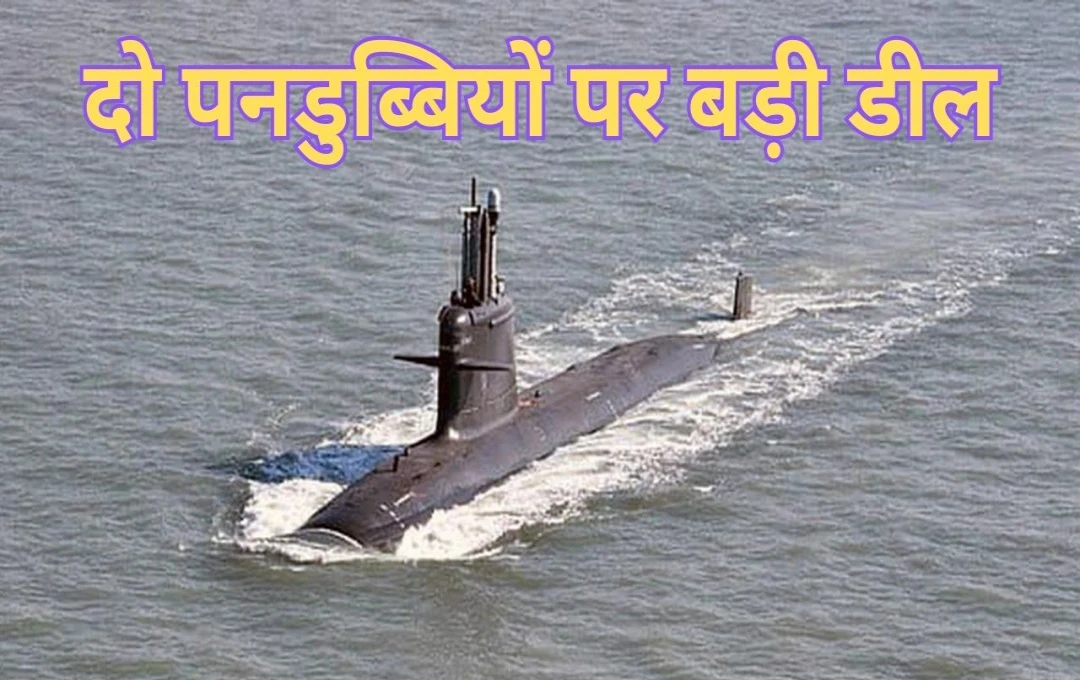
India to Seal Two Mega Submarine Deals: A Strategic Leap in Defence and Maritime Security
Introduction
India to Seal Two Mega Submarine Deals India has been steadily building its naval and maritime strength, considering the growing threats in the Indian Ocean Region (IOR), South China Sea tensions, and China’s increasing naval presence. Recent developments suggest that India is all set to finalize two mega submarine deals, marking one of the most significant defence acquisitions in its modern history.
This step is not just about strengthening the Indian Navy but also about securing India’s maritime borders, ensuring dominance in the Indo-Pacific, and balancing power against rivals like China and Pakistan. The deals are being termed “game-changers” by defence experts because they align with India’s long-term security vision and Atmanirbhar Bharat (self-reliant India) in defence production.
In this blog, we will explore:
- The background of India’s submarine force
- Why sub-marines are crucial in modern warfare
- The two mega deals under consideration
- Strategic implications for India
- Global and regional reactions
- Challenges and opportunities
- How this will reshape India’s future naval strength
India’s Submarine Fleet: Current Status
The Indian Navy currently operates a mix of nuclear-powered and diesel-electric submarines.
Existing Sub-marines
- Nuclear-powered Ballistic Missile Sub-marines (SSBNs) – INS Arihant and its successors give India its much-needed second-strike nuclear capability.
- Nuclear-powered Attack Submarines (SSNs) – India leased Akula-class sub-marines from Russia. Another lease is under discussion.
- Diesel-electric Submarines (SSKs) – The aging Sindhughosh-class (Russian origin) and Shishumar-class (German origin) form the bulk of India’s fleet.
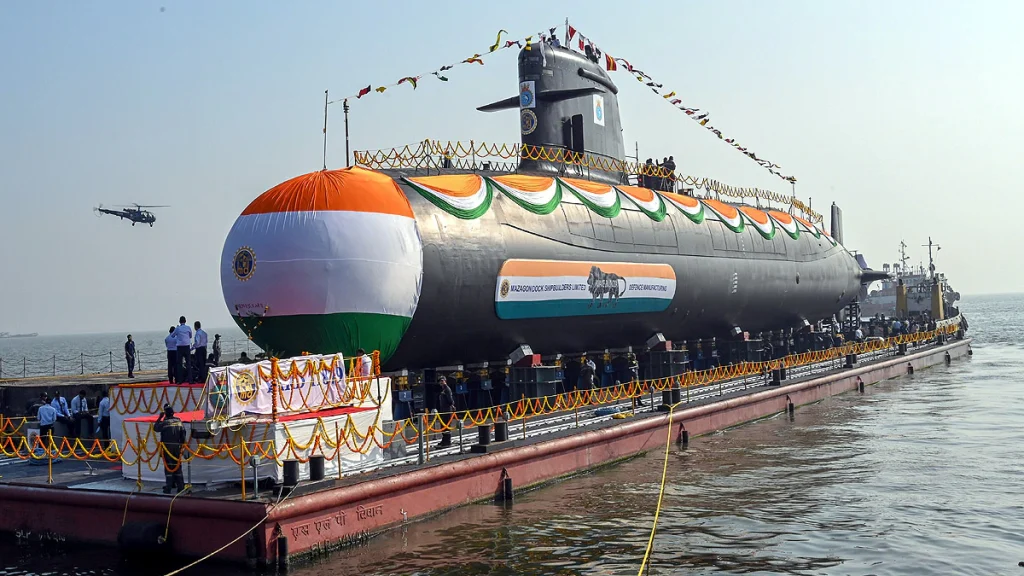
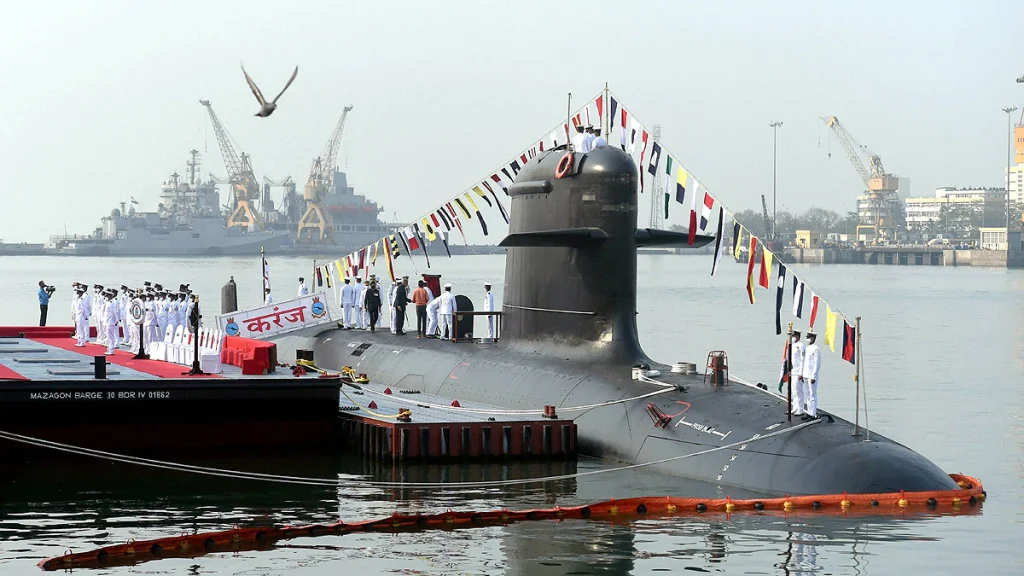
- Scorpene-class (Kalvari-class) – Built under Project 75 with France’s Naval Group at Mazagon Dock Shipbuilders Limited (MDL).
The Gap
Despite these assets, India lags behind China, which operates over 60 sub-marines, including advanced nuclear ones. Pakistan too is modernizing its fleet with Chinese help. India, on the other hand, has around 16 operational submarines, many of which are aging.
Thus, the two upcoming submarine deals aim to fill this strategic gap.
Why Submarines are Crucial in Modern Warfare
Submarines are known as the “silent killers of the seas.”
- Stealth Operations: They can remain undetected for months and strike deep into enemy waters.
- Deterrence: Nuclear submarines carry ballistic missiles, making them crucial for nuclear deterrence.
- Maritime Dominance: Control of the Indian Ocean requires a strong underwater fleet.
- Surveillance: Submarines can monitor enemy naval movements discreetly.
- Asymmetric Power: Even a small sub-marine fleet can threaten larger navies.
Given India’s strategic location, with over 7,500 km of coastline and dependence on sea trade routes, submarines are vital to protect Sea Lanes of Communication (SLOCs).
The Two Mega Submarine Deals
1. Project 75(I) – Diesel-Electric Submarines with AIP Technology
Under Project 75(I), India plans to acquire six next-generation diesel-electric sub-marines with Air Independent Propulsion (AIP) technology.
- Features:
- AIP allows sub-marines to remain submerged for longer without surfacing.
- Equipped with advanced stealth features.
- Capable of firing long-range cruise missiles.
- Designed for modern electronic warfare and surveillance.
- Countries in Competition:
- Germany’s ThyssenKrupp Marine Systems (TKMS)
- South Korea’s Daewoo Shipbuilding & Marine Engineering (DSME)
- Spain’s Navantia
- France’s Naval Group
- Make in India Push:
These submarines will be built in Indian shipyards with foreign collaboration, boosting local manufacturing under Atmanirbhar Bharat.
2. Nuclear-Powered Attack Sub-marines (SSNs)
The second mega deal involves at least six nuclear-powered attack sub-marines (SSNs).
- Why SSNs?
- Unlike diesel-electric submarines, SSNs can remain submerged indefinitely, powered by nuclear reactors.
- They are faster, stealthier, and can carry advanced weaponry.
- Capable of long-endurance missions in the Indo-Pacific.
- Indigenous Development:
India is developing these SSNs with domestic technology, but support from France and Russia is being explored. - Strategic Edge:
SSNs will allow India to track Chinese warships and sub-marines in the Indian Ocean and maintain deterrence against Pakistan.
Strategic Significance of the Deals
Countering China
China’s growing presence in the Indian Ocean Region (IOR) and its naval expansion under the Belt and Road Initiative (BRI) pose a major security concern. Sub-marines are China’s strong suit, and India must match that capability.
Neutralizing Pakistan
Pakistan’s acquisition of Hangor-class sub-marines from China increases its undersea warfare potential. India needs stronger deterrence.
Indo-Pacific Strategy
India, being a part of the Quad (India, US, Japan, Australia), must strengthen its naval role in Indo-Pacific security. Submarines will provide depth to this strategy.
Maritime Trade Security
Over 90% of India’s trade by volume and 70% by value moves through the seas. Protecting these trade routes is vital for economic security.
Global Reactions
- United States: Likely to welcome India’s move as it complements Washington’s Indo-Pacific strategy.
- China: Expected to raise concerns, accusing India of “militarizing” the Indian Ocean.
- Russia: Keen to collaborate with India, especially on nuclear sub-marine technology.
- France & Germany: Interested in winning the Project 75(I) contract and strengthening defence ties with India.
Challenges in Implementation
- High Costs: Each submarine can cost billions of dollars.
- Technology Transfer Issues: Foreign partners may hesitate in sharing critical sub-marine technology.
- Delays in Defence Procurement: Past Indian submarine projects faced bureaucratic delays.
- Training & Maintenance: Submarine operations require highly trained crews and advanced infrastructure.
- Geopolitical Sensitivity: Acquiring nuclear submarines can spark regional arms races.
Opportunities for India
- Boost to Defence Industry: The deals will create jobs and promote Indian shipbuilding.
- Technological Leap: India will gain access to next-gen naval technologies.
- Atmanirbhar Bharat: Strengthening domestic defence manufacturing.
- Export Potential: In future, India could emerge as a sub-marine exporter to friendly nations.
Conclusion
India’s decision to finalize two mega sub-marine deals is a watershed moment in its defence history. As the country aspires to become a major global power, maritime dominance is non-negotiable.
These sub-marines—diesel-electric under Project 75(I) and nuclear-powered attack sub-marines (SSNs)—will significantly enhance India’s naval capability, strengthen deterrence against China and Pakistan, and ensure security in the Indo-Pacific.
While challenges remain in cost, technology transfer, and execution, the long-term benefits far outweigh the risks. The deals not only secure India’s present but also shape its future as a blue-water navy power.
In a world where the battle for supremacy is increasingly shifting to the seas, India’s bold sub-marine push is nothing short of a game-changer.
Read more latest news

